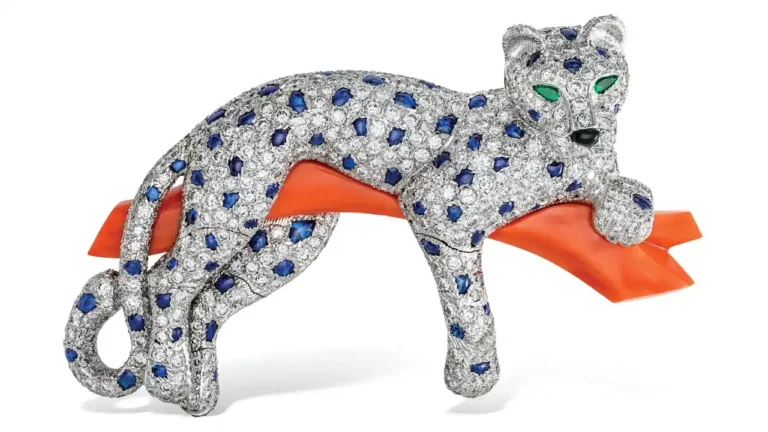


With jewelry sales on the rise and analysts estimating that 60% of the market is still unbranded, it’s understandable that brands are intensifying their efforts to shine brighter through marketing initiatives. However, not all brands have the same wattage. When a brand like Cartier, with billions of dollars in annual turnover, has virtual panthers prowling on Place Vendôme in Paris and museum blockbuster shows in London and Melbourne, small brands may wonder how they can make their voices heard, especially with consumers becoming increasingly difficult to reach and impervious to advertising.
But luxury analyst Luca Solca of research firm Bernstein believes that “in a polarizing market, there is significant room for high-end niches, or for new brands selling to second-generation luxury consumers wanting to stand out from their parents.” The key, he says, is “to be different and recognizable.”
Yet having a beautiful and impactful product is not enough without the right marketing strategy to support it. The brand still needs to make it visible to potential customers, retailers and the press so they can naturally fall in love with it. And strategies require creativity, too.
Here are some of the boldest marketing strategies – replicable on various scales with a bit of inventiveness – that have put small brands front and center in the jewelry arena.
The magic red carpet
The red carpet would usually be the last place an emerging brand would turn for growth. The common view is that it’s a costly business involving hefty payments to agencies, stylists and talents, and offers meager hope even then, since larger brands typically scoop up the most relevant personalities. While much of that skepticism rings true, there are cases in which the red carpet has turned into a magic beanstalk.
“Jewelry is often the final piece of the puzzle, and the right piece on the right person at exactly the right moment produces an impact that reaches beyond the red carpet,” says Charlotte Piccio, celebrity and influencer director at luxury agency EBPR, which has paired its brand clients’ products with the likes of Taylor Swift, Bad Bunny and Rihanna.
The company recently transformed vintage jewelry dealer Barron London into one of the most talked-about names on the internet. This summer, during the press tour to promote Christopher Nolan’s film The Odyssey, actress Zendaya wore a pair of disc-shaped earrings from the UK-based jeweler, featuring Iranian artifacts dating back to 700 BCE. Zendaya’s red-carpet looks have often set the internet ablaze, but this time, the effect was compounded by social media debate about cultural appropriation. Legacy media such as Vogue and The New York Times ran images of Zendaya wearing the earrings, and Barron London’s Instagram account grew by a few hundred followers in the days following the incident, with a noticeable uptick in website traffic, according to Piccio.
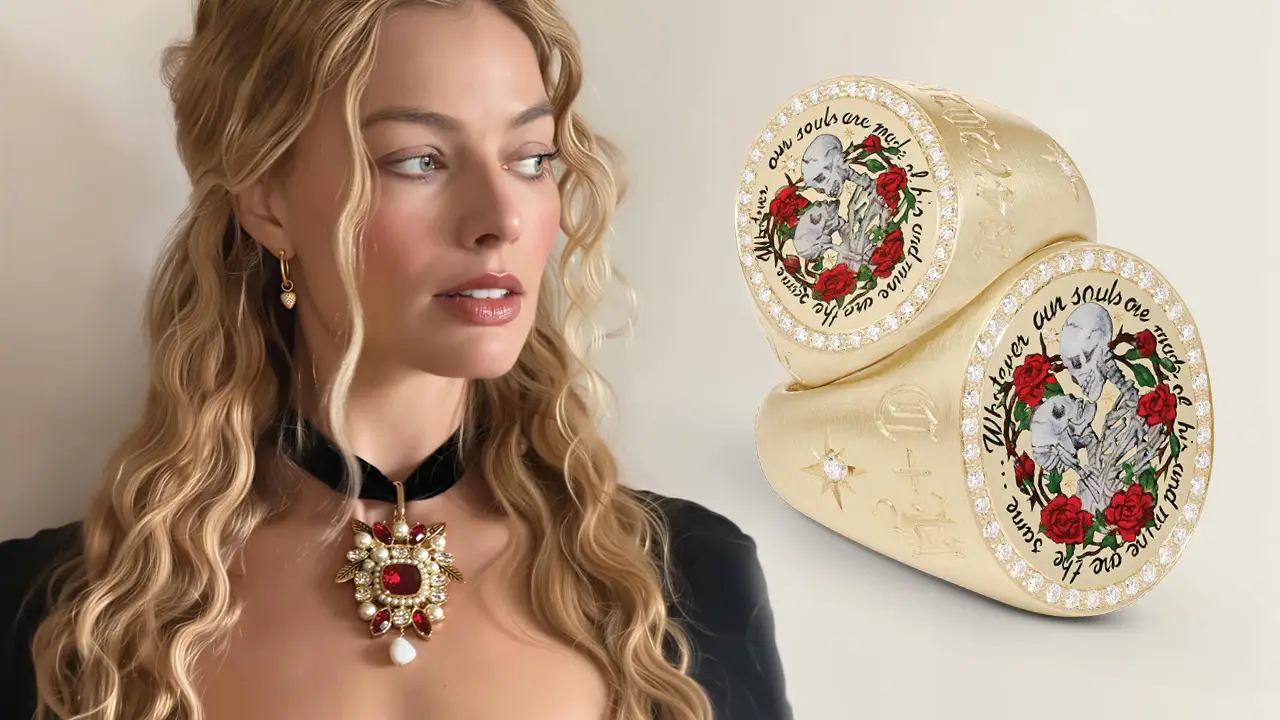
Opportunities may also arise if brands are willing to create bespoke pieces. London-based PR agency Rosie Lillis approached actress Margot Robbie’s stylist Andrew Mukamal with the idea of having client Cece Jewellery craft two matching signet rings for Robbie and her Wuthering Heights costar Jacob Elordi to wear while promoting the movie earlier this year. The agency also orchestrated the release of behind-the-scenes pictures showing the drawing and crafting of the jewelry, which further magnified the red-carpet opportunity and extended its impact.

Unusual ambassadors
Actor Patrick Dempsey, tennis star Roger Federer and Olympic runner Usain Bolt were only some of the high-caliber celebrities who attended the Watches and Wonders fair this year, and yet none of them riveted the public as much as two robots did. Both about 1.2 meters tall, the humanoid machines were the unusual ambassadors of watchmaker Ulysse Nardin, with one bearing the inscription “Freak 25 Years” across its back, and the other wearing a blue jacket that read “Super Freak.” They were paying homage to the brand’s most daring creation, the Freak, designed by Ludwig Oechslin, whose face loomed over the booth in the form of a giant 3D-printed head. The robots shook hands, danced for spectators, and at one point, even waltzed together. They quickly became the fair’s most photographed item, and its most shared on social media.
“We heard people asking, ‘Who did this?’ And then reacting with ‘Of course, it’s Ulysse Nardin!’ when they spotted the logo,” comments Matthieu Haverlan, the brand’s managing director. “That was exactly the reaction we were looking for, which is something unexpected, innovative, and immediately recognizable as Ulysse Nardin.” The brand is deploying these robot ambassadors for animations in some of its key stores, notably in southeast Asia, he adds.
The Ulysse Nardin operation brings to mind a 2009 campaign for Guerlain’s La Petite Robe Noire fragrance, which featured a stylish sketch of a woman in black ink as its unusual ambassador.
Independent strategy consultant Laurent François interprets Ulysse Nardin’s move as pioneering a new social media era – one that makes the audience an active part of the content, harnessing the power of communities that he says “now want to inhabit a brand world, to have a role to play, to be physically involved in the digital wake of a brand they appreciate or get to know.”
Philanthropy projects
With an estimated annual turnover of EUR 305 million, Pomellato is only about 3% of Cartier’s size, according to Morgan Stanley. Yet around March 8, to coincide with International Women’s Day, the Milanese brand dominates the cultural conversation with its Pomellato for Women project.
The initiative launched in 2017 to raise awareness around the many forms of violence against women. This year, the brand focused on economic violence and partnered with ambassadors such as actress Kerry Washington and Mayu Ishikawa, captain of Japan’s national women’s volleyball team.
“Economic violence is invisible, but its impact is devastating,” says Pomellato CEO Sabina Belli. “When a woman loses her economic freedom, she loses the power to choose her own life. Financial independence is dignity. It is the foundation of true freedom.”
Working on a philanthropy project can put the brand in touch with stakeholders that it would not necessarily have been able to reach, and create a network of profound and long-lasting relationships. However, it is important to choose causes that align authentically with a brand’s values, says independent jewelry-business consultant Donatella Zappieri. “Brands have to put their message first,” she stresses. “The cause has to come first, and the visibility only the natural result of it.”
Main image: Margot Robbie during the Wuthering Heights press tour, with the matching signet rings the jeweler made for the film. (Cece Jewellery)