

With the holiday season representing $7.3 billion in consumer jewelry spending last year in the US – according to the National Retail Federation (NRF) and Prosper Insights – this year’s marketing campaigns are ramping up for what is often a jewelry business’s single largest selling period. Here’s what marketing experts and retailers recommend for a successful end-of-year campaign.
Start early
Timing is everything for winter holiday campaigns, which typically launch in October. Depending on the media and strategy, “retailers should begin preparing their holiday campaigns no later than September,” says Megan Crabtree of Crabtree Consulting, which advises jewelry manufacturers and retailers. “By the time late October hits, you’re already in peak selling season, and at that point, it’s too late to build a strategy; you’re just executing. [Starting earlier] gives you the runway to plan [the creative elements], segment your database, and align inventory with the messaging.”
For retailers and brands managing fall deadlines, the slower summer season can also be a good time to make a head start on content, according to Liz Kantner, who works with independent designers and founded the Stay Gold Collective jewelry-marketing community.
Don’t treat all clients the same
Digital outreach, including online advertising and socials, is usually the main – and most cost-effective – pillar of a holiday marketing strategy. However, Kantner also encourages her clients to “lean into local print [media], collaborations, and targeted events. A direct outreach plan – a handwritten note, small gift, or personal email to top clients – goes a long way.”
The key word here is “personalized.” For Crabtree, targeted direct marketing with digital reinforcement is a winning combination, yet she believes that segmentation is more important than the channel itself.
“Retailers who are leveraging their client data to send tailored messages are outperforming those who rely on broad, one-size-fits-all campaigns,” she says. A client who has spent under $1,000 in the past should be receiving a very different message than a VIP client. Breaking down clientele into several distinct customer segments, each with tailored marketing, can pay dividends.
Pull on the heartstrings
Regardless of the media, holiday messaging needs to be consistent and coherent. Most holiday marketing appeals to emotion, and this is where jewelry can come into its own, especially if products are handcrafted. “Jewelry is personal and meaningful – something that lasts and is passed down,” says Kantner. “Leaning into this side of the story is impactful.”
For Lauren Wolf, cofounder of independent retailer Esqueleto, emotion is best conveyed with a sophisticated, elevated tone: “For the holiday season, gifts should be special and memorable. We sell unique, high-end pieces; our customers already covet the designers we sell.”
Be authentic
This year, Wolf expects to spend “well over $100,000” on marketing, but for Kantner, planning is more important than budget.
“It’s about putting in the time to brainstorm, create and plan the content,” says the latter, adding that “raw, authentic content is working best right now.”
As with many independent retailers and brands, Wolf’s campaigns are in-house, with the support of contract photographers or marketing strategists.
One big no-no from all the interviewed experts is using artificial intelligence in the creative stages, which is counterproductive for brands searching for the all-important authentic feel.
“We’re AI-averse for all creative campaigns,” states Wolf. “We are not planning on using it in any fashion for the holiday season. We will continue with marketing strategies that are designed, crafted and executed by our talented human team.”
Kantner also cautions against the practice, adding that taking the time to design a distinct brand voice can be a point of difference.
Where AI can be useful is analysis “on the backend of holiday campaigns,” says Crabtree. “Analyzing purchase history can help retailers segment their audience more effectively. You can upload reporting, identify patterns and build targeted campaigns,” all of which help retailers and brands stay a step ahead of the market at a crucial time of year.
Glamour shots: Esqueleto
Esqueleto’s “All That Glitters” holiday campaign from 2024 is cofounder Lauren Wolf’s personal favorite. The retailer – which has stores in New York and California – began mood-boarding in June, shot the campaign in July, and finalized the assets by August for an October launch. Wolf and her team designed the campaign to reflect the voice of the Esqueleto brand, which she describes as “playfully sophisticated.” The images they chose “had a really decadent, glamorous 1970s vibe that our customers loved,” relates Wolf, who also cofounded Melee the Show and has her own namesake brand, Lauren Wolf Jewelry.
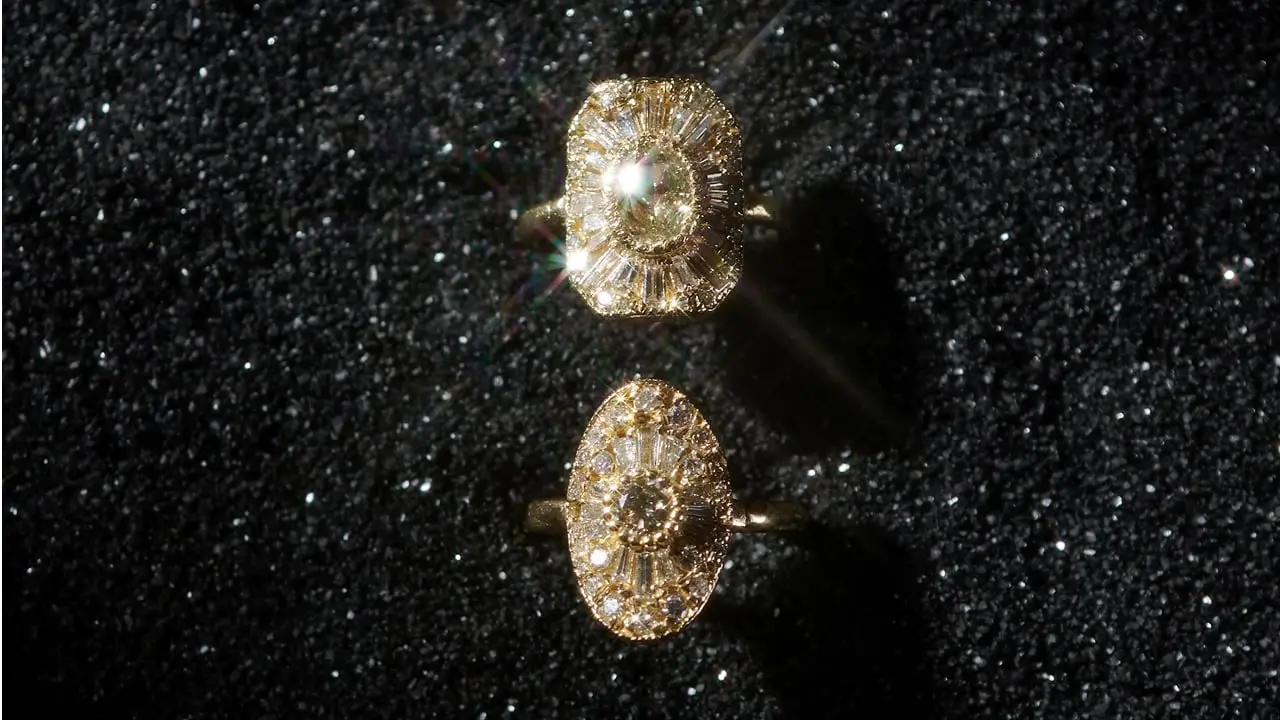
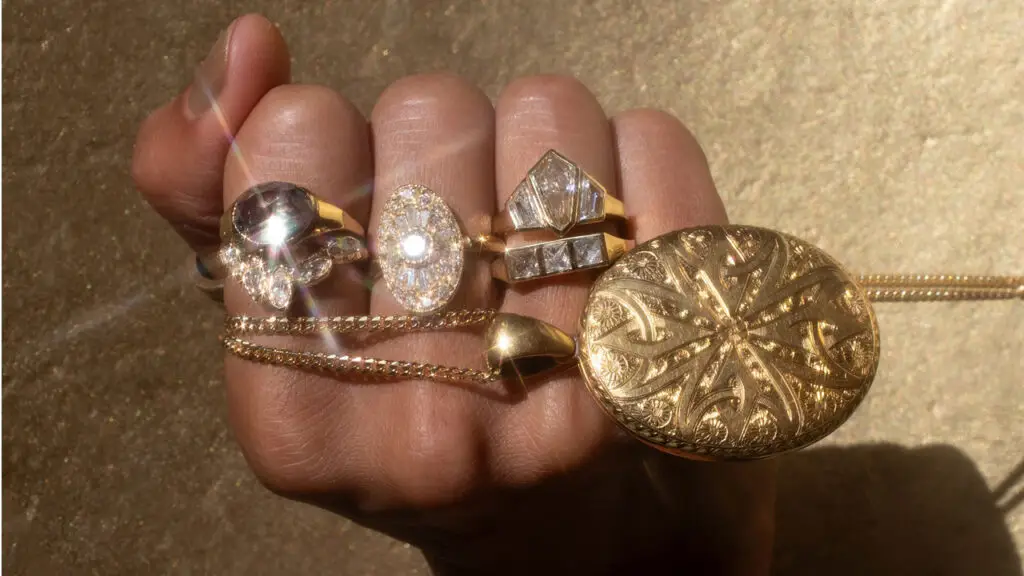
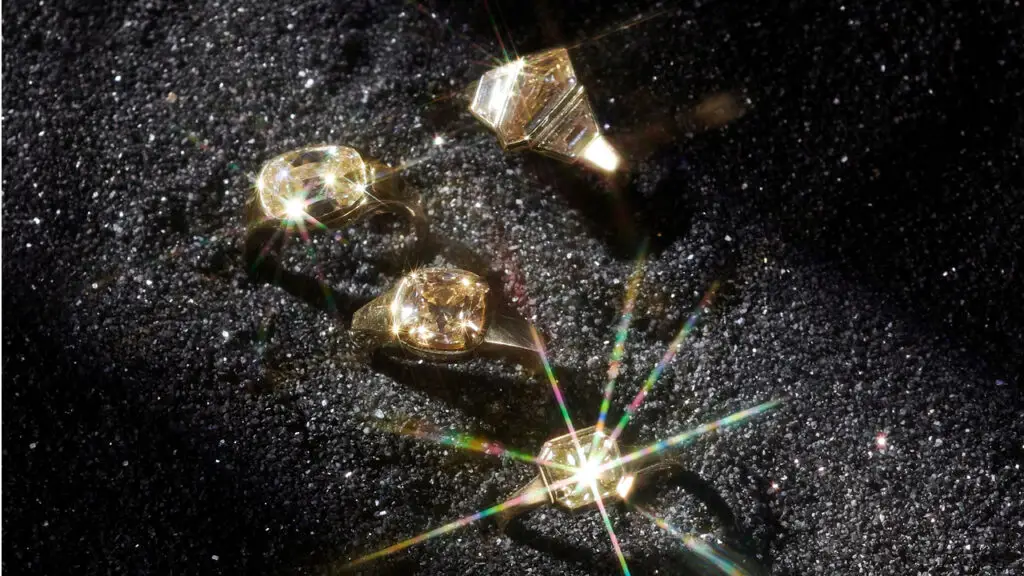
Close-up lifestyle shots for “All That Glitters” showed big, bold pieces from jewelers like Ellis Mhairi Cameron, TAP by Todd Pownell, and Anthony Lent, stacked on a gold-manicured hand or styled on black sand for maximum contrast and sparkle. The aesthetic underscored the intended message: that Esqueleto jewelry is “the perfect wow-worthy holiday gift,” says Wolf.
Main image: Ellis Mhairi Cameron rings in Esqueleto’s “All That Glitters” holiday campaign.