

Jewelry has never lacked stories, from associations with status and aspiration to deeply personal histories and emotions. What has changed is the distance between those stories and the people hearing them.
In a fragmented, fast-moving media environment, the polished campaign is increasingly sharing space with workshop footage, founder-led videos, education, and spontaneous moments.
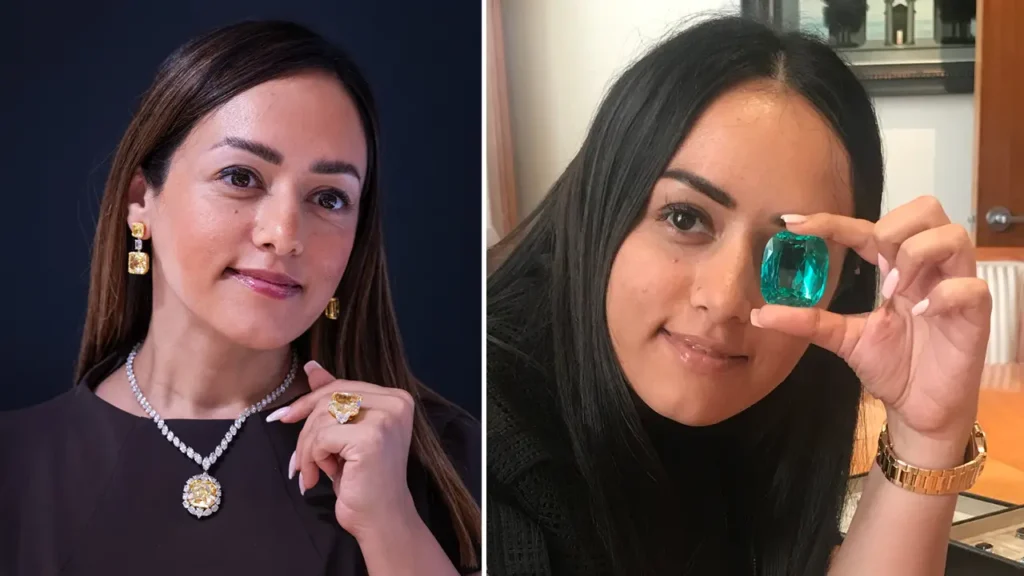
Jewelry influencer Bebe Bakhshi, founder of the Champagne Gem blog, recalls being at the cusp of this shift about a decade ago. “Jewelry content was very polished at the time, mostly beautiful still photography and very controlled imagery,” she says. “Quite early on, I moved away from that and started filming more spontaneous, almost unfiltered videos.”
In 2015, she filmed the Blue Moon diamond at Sotheby’s, later renamed the Blue Moon of Josephine. The unpolished footage offered audiences a glimpse into a traditionally inaccessible world.
“Champagne Gem became not just about showing beautiful jewelry, but about access,” she says. “Aspiration will always be part of jewelry; that is part of its magic. But social media has really bridged the gap between looking at jewelry from a distance and actually feeling part of that world.”
Accessible aspiration
Even long-established houses are navigating this balance. At 114-year-old Oscar Heyman, social media has expanded how the jeweler communicates its heritage.
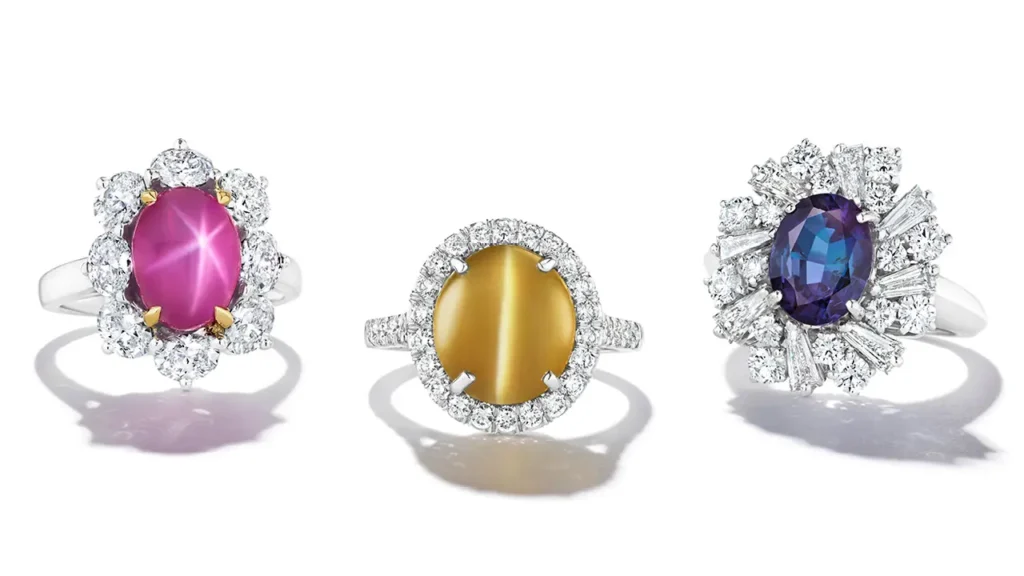
“In the past, we had to rely on a single still image on a page to convey the core values of our brand. That was a daunting task,” says president Tom Heyman. Carousel posts and short-form video now offer glimpses of its craftsmanship, family involvement and workshop. “Our story remains the same, but what differs now is how we tell that story.”
While most craftspeople remain out of view for security reasons, Heyman believes carefully calibrated access can reinforce the brand’s exclusivity. “There are some secrets we keep to ourselves, but we believe that allowing a peek into the artistry that exists in our workshop only adds to the wonder, excitement and wow-factor of our exquisite jewels.”
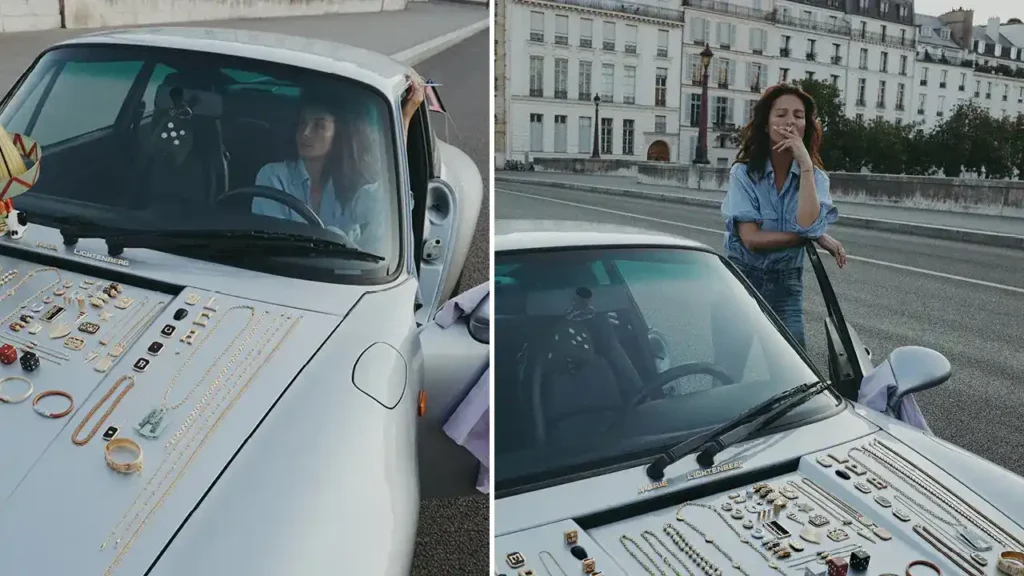
Marie Lichtenberg, founder of the eponymous Paris-based brand, has found that “people still want to dream, but perfection alone is boring. They want personality, emotion, a point of view – something they can connect with.” She separates her brand’s curated account from her personal one, where she shares inspiration and works in progress. “Beautiful imagery gets attention. Personality makes people stay,” she says – “though the jewel still comes first.”
Discovery in seconds
While platforms reward increasingly fast communication, Bakhshi does not believe audiences have lost their appetite for substance.
“A beautiful jewel can stop someone for a few seconds, but giving them something to discover is what keeps them there,” she says. And that doesn’t mean it has to be a long post. “You can still teach someone something in 15 seconds.”
For Lichtenberg, the challenge is telling richer stories in faster formats without chasing every trend. “We’re a brand that grew through social media, but we never really followed its rules,” she says. “The next step is really about inventing our own rhythm.”
Oscar Heyman, meanwhile, uses educational series to explore phenomenal gemstones, collectability, and its in-house lapidary. “Consumers love discovery,” says the company president. Such content allows the house to share specialist knowledge that consumers are unlikely to encounter elsewhere.
Yet short-form storytelling also requires knowing what to leave unsaid. “The images tend to capture the imagination, so the words must support that and leave a little room for wonder,” explains Heyman.
Expertise is also becoming more decentralized as dealers, gemologists, collectors and creators build audiences of their own. “There are many more voices now, and I think our industry is better for it,” says Bakhshi.
For her, the effect is most powerful when the content shows an understanding of the material. “People can tell when someone has spent years looking at stones, asking questions and learning,” she says. “That knowledge gives the jewelry more context and, importantly, builds trust.”
Breaking luxury tropes
Independent jeweler Marla Aaron, who spent 25 years in advertising before founding her eponymous brand, has deliberately challenged the traditional luxury conventions for presenting fine jewelry. “I know exactly how those highly controlled campaigns are built. They rely on distance,” she says. “They set jewelry on a pedestal that the customer can only look at, never touch. But jewelry is physical; it’s a tool. It is meant to be worn, swiveled, stacked and played with.”
Aaron has extended that philosophy to experiences ranging from jewelry vending and gumball machines to scavenger hunts and unexpected collaborations. While traditional luxury says “Keep your distance,” she says her projects instead communicate “Come play with us.”
“We don’t take ourselves too seriously, but we take our craftsmanship very seriously,” she says.
Dynamic dialogues
Social media has also changed storytelling from periodic campaigns into a continuous, immediate exchange, with audiences increasingly helping shape the conversation.
Aaron’s approach has remained relatively consistent since the company’s earliest days. “We experiment. We play. We show the jewelry in action. We explain how we make it. We ask opinions,” says the designer.
Jewelry storytelling is becoming less prescriptive; audiences have become more active participants rather than just passive consumers. Aaron’s #TellMeAColor project transformed customers’ contributions into part of the creative process. “That wasn’t us telling them a story; it was us listening to theirs and making something out of it.”
Bakhshi has witnessed a similar shift. “Audiences are much more opinionated now, which I actually love,” she says. “They ask questions, compare, challenge, have favorites and form their own views.”
She predicts that “jewelry storytelling will become both faster and deeper” – that short-form video will continue to drive discovery, but once audiences are engaged, they will increasingly seek substance. “They want provenance, craftsmanship, rarity, geology and the people behind the piece.”
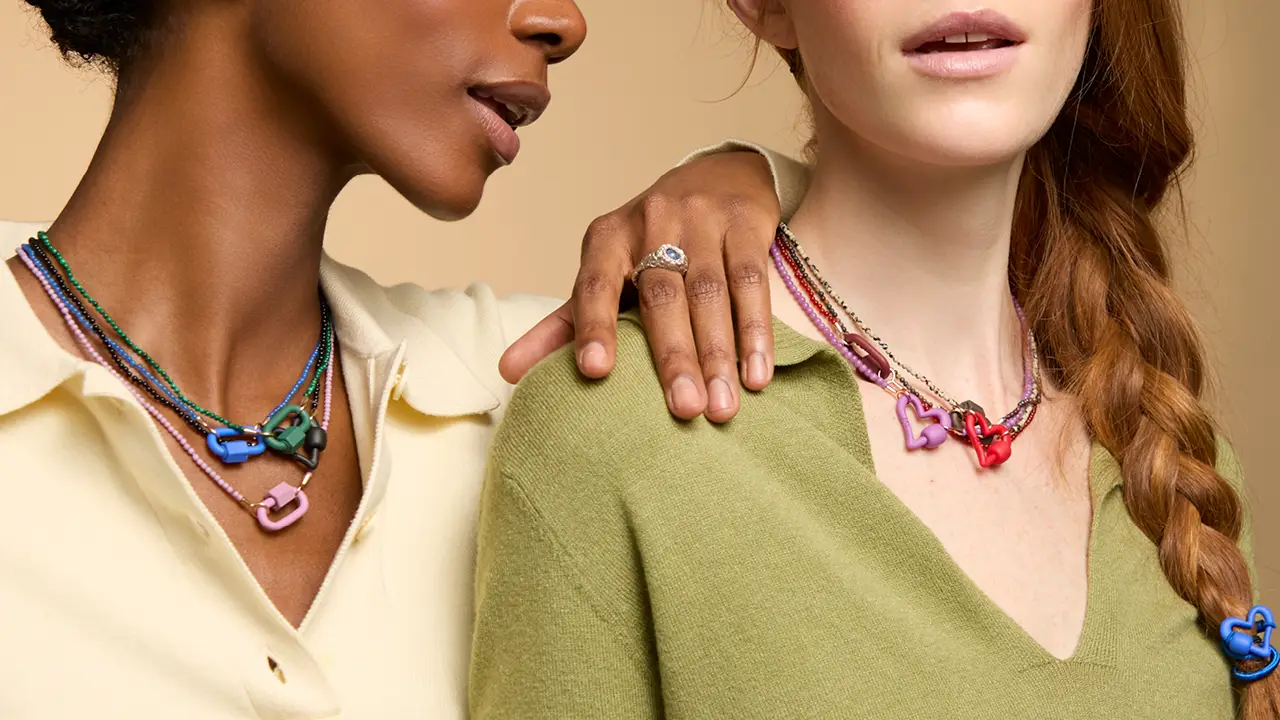
Main image: Marla Aaron carabiner jewelry on models. (Marla Aaron)