

Everything is bigger at some jewelry trade shows – attendance, marketing outreach, booth prices, the works. Those who can spring for a presence at JCK Las Vegas and Couture feel that they’ve “arrived,” given the prestige and financial commitment those shows require. Still, many jewelry designers are opting to give the smaller shows a try.
These events tend to have 500 booths or fewer, and among other things, they are a chance to tap into a different market than the large fairs offer. The Retail Jewelers Organization (RJO) and Independent Jewelers Organization (IJO), for instance, rotate the locations of their shows, holding them twice a year in different cities. There are plenty of retail shoppers to go around, including mom-and-pop shops that reorder quickly.
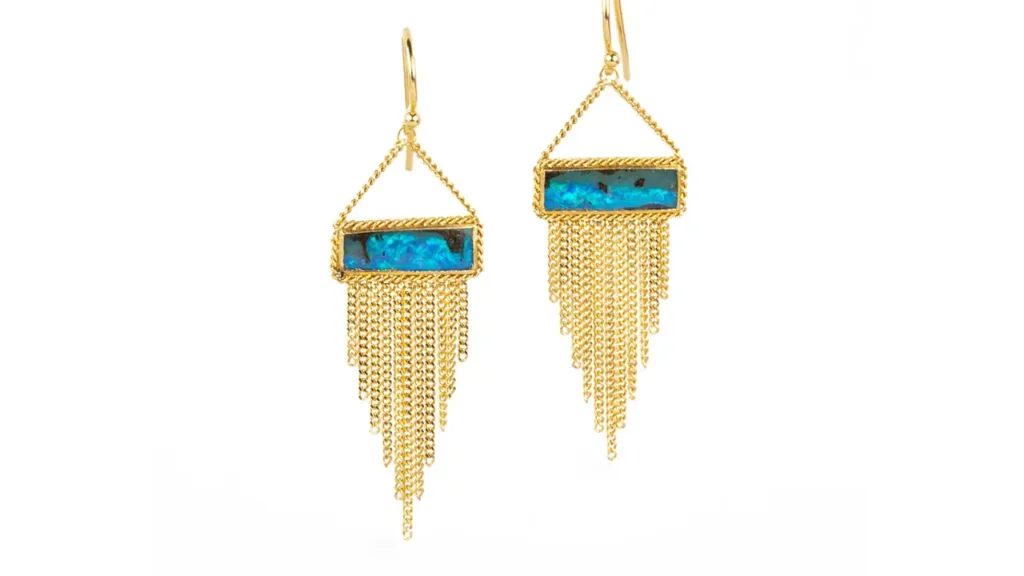
“They sell the blue ring, and they call you for another blue ring,” says Andrea Kamhi, co-owner of jeweler Izi Creations.
Marketing mix
Letting folks know that you’ll be attending a show of any size is imperative. Bigger events have more money to fuel promotion, including hosting influencers and editors to cast a spotlight on attendees. The exposure available from smaller show organizers can be limited. To ensure visibility among attendees, exhibitors at smaller events exercise a range of promotional efforts. Among them: Emails and good old-fashioned phone calls to select stores that carry finer goods, as opposed to the common pre-show practice of mailing postcards to hundreds of merchants.
“[Sending postcards is] like throwing stuff against a wall, figuring that some of it’s bound to stick,” says Carlos Chanu, founder of PCD Pearls. Chanu has participated in a wide range of shows in the last 15 years, from Couture at the Wynn in Las Vegas to the Gem and Jewelry Exchange (GJX) show in Tucson, Arizona. Both are larger affairs guaranteed to draw crowds, but in the past few years, he’s joined the smaller-scale Out of the Jewel Box (OJB) Experience, which hosts about 12 exhibitors at Tucson’s Scottish Rite Cathedral and six in the OJB section at JCK Las Vegas.
The RJO buying shows and IJO conferences are larger than the OJB Experience, with numbers ranging from 300 to 500 vendors.
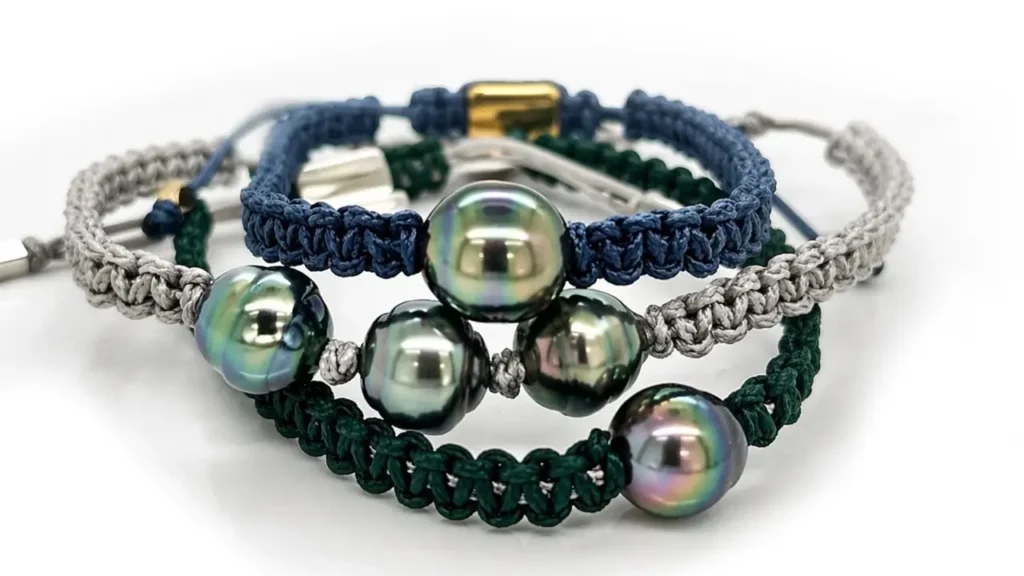
Pearl supplier Imperial Pearl sends out targeted emails to clients ahead of both shows; the 109-year-old family business has exhibited at IJO and RJO for 50 and 40 years, respectively. “We limit how many emails we send, so our customers know that when they do get one from us, it’s worth reading,” says Kathy Grenier, Imperial’s vice president of business development.
Her sales team also makes appointments with customers in advance. And when the fair is over? Post-show advertising.
“There is so much noise prior and then little after, [so] we take that opportunity to be seen,” she explains.
Martha Seely of the eponymous design firm used to rely solely on emails but found that the efforts fell flat at times. She still emails her 250-person retailer list, but also opted to participate in some paid social media promotion for her eighth year at the 2026 American Gem Trade Association (AGTA) GemFair Tucson. Some of the social media was serious, but some was also silly, so she can’t say exactly what drew folks to her booth.
“I had a number of encounters where people came and said, ‘Oh my God! I see you on social media! Can I take a picture with you?’” she recollects.
For Kamhi, social media is key to driving traffic to her booth at RJO. “I think people don’t look at their emails,” she says. “You have to put something interesting on the internet, something that pops color-wise.”
In-person impact
Sometimes the strength of a show isn’t reliant on email or social media outreach at all; it’s about what’s in your cases at the venue.
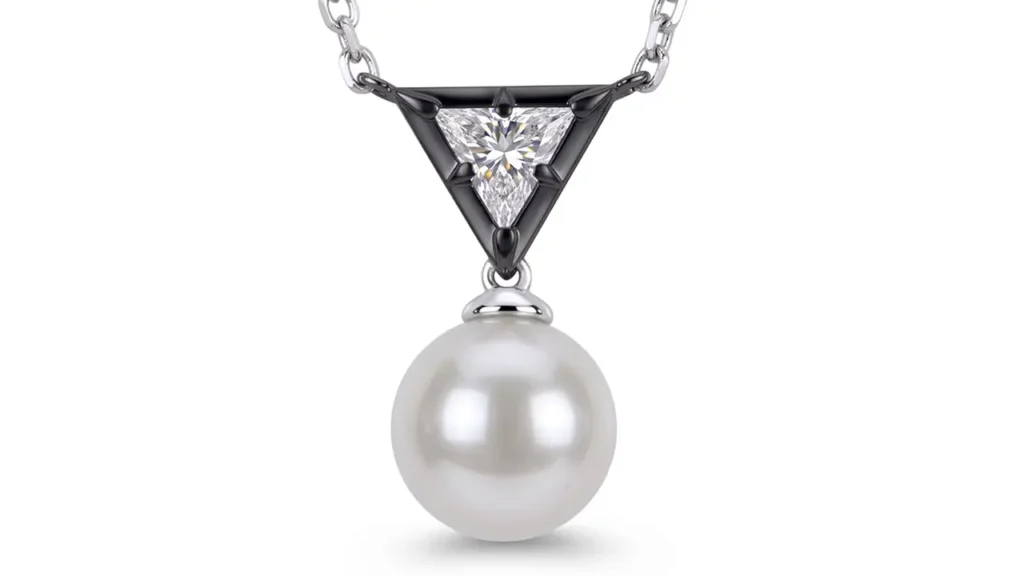
“Your display needs to be strong enough,” states Daniel Tishbi, who owns the Amáli jewelry brand with his designer wife Sara Freedenfeld, and exhibits at Melee the Show in both New York and Tucson. “It’s hard for stores to put groupings together when you have few pieces in your cases. Your assortment needs to make an impact.”
Many vendors feel that smaller shows offer intimate conversations with clients and staffers, enabling them to be more in tune with exhibitors’ needs.
In Seely’s experience, the AGTA GemFair “attracts serious buyers who come with a genuine intention to discover and purchase, not simply to attend another industry event.”
RJO and IJO staffers and attendees are a big part of both Kamhi’s and Grenier’s loyalty to the two trade groups and their events. “We’re all family businesses sharing and celebrating life’s special times for people in small towns as well as big ones,” says Grenier.
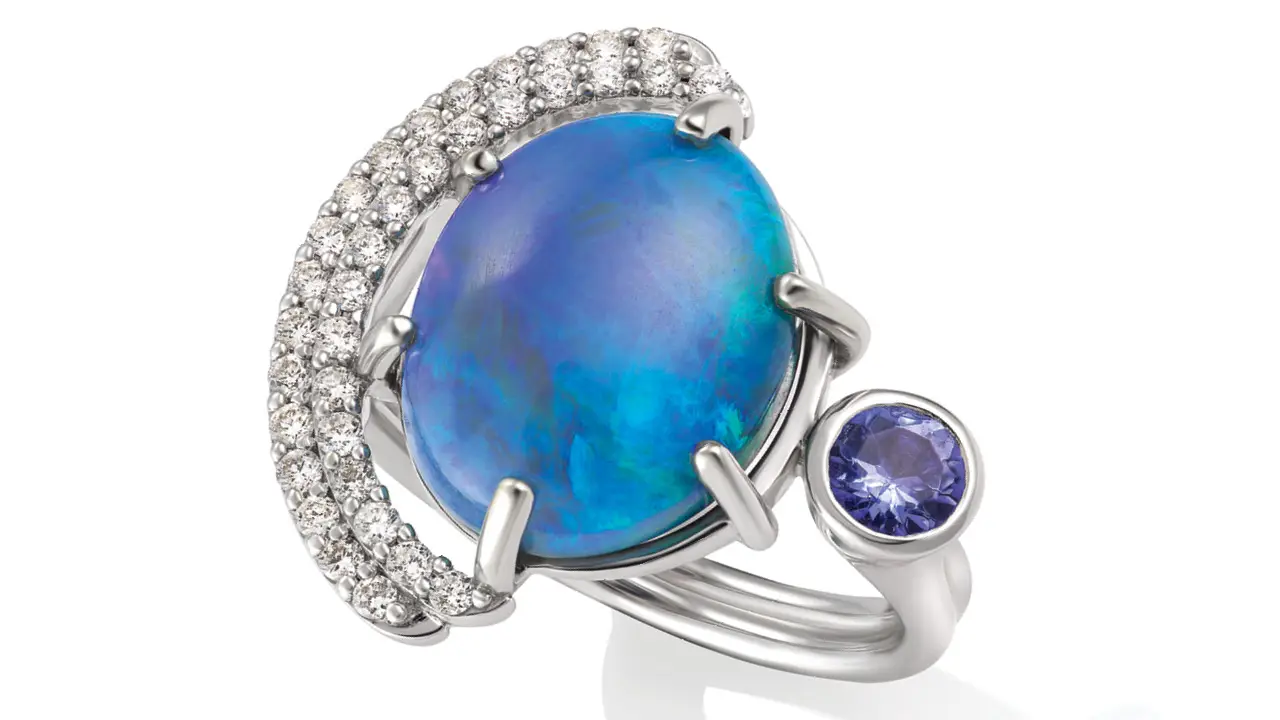
Main image: Opal Eclipse ring by Martha Seely Design in 14-karat white gold with a cabochon-cut blue moonstone, a tanzanite, and diamonds. (Martha Seely Design)