
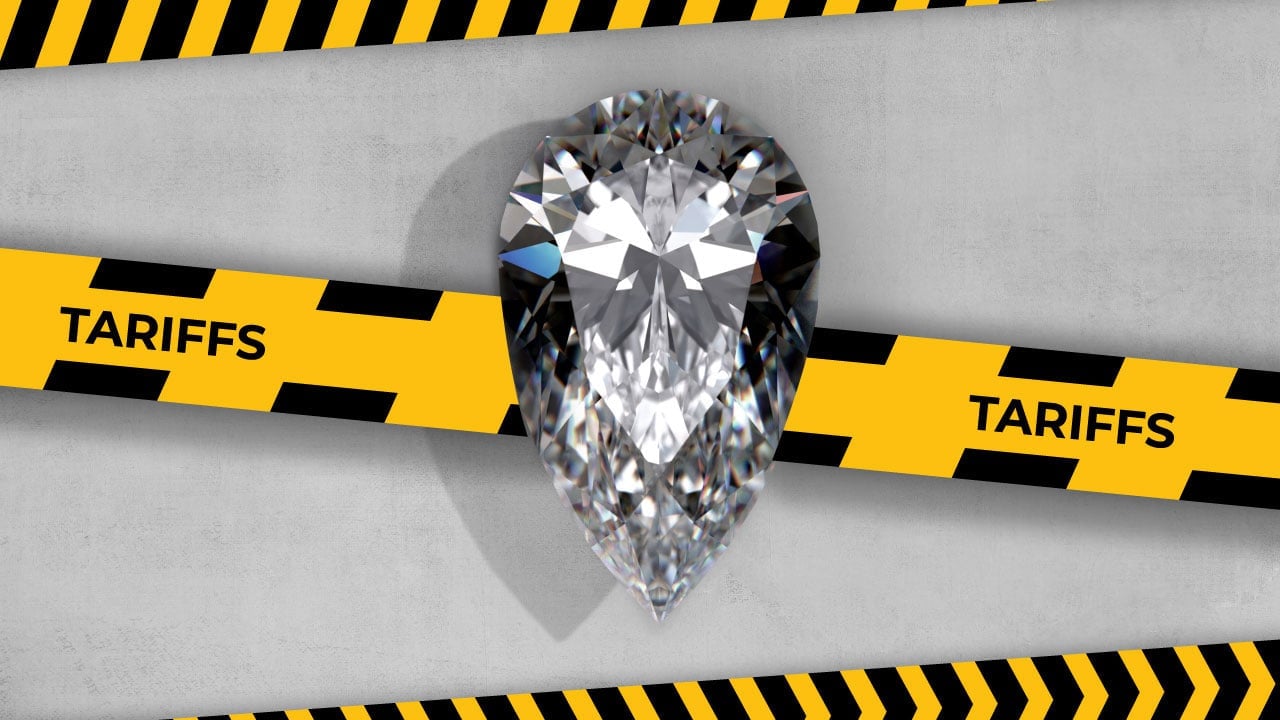
The White House has expressed a willingness to remove reciprocal duties on natural diamonds for select countries — but a full exemption is still some way off.
US President Donald Trump “may be willing to provide a 0% reciprocal tariff rate” for a long list of products for which domestic manufacturing is not enough to meet demand, according to an executive order he signed on Friday.
Included in this list — called “Annex III” — are Harmonized System (HS) codes 7102.10 (unsorted diamonds), 7102.31 (rough diamonds), and 7102.39 (polished diamonds). Several codes in the 7103 range — covering rough and faceted precious and semiprecious stones — also appear, though jewelry and lab-grown diamonds do not.
The potential exemptions are only for “aligned partners” that have concluded an agreement on reciprocal trade with America, the documents explain.
The move would not impact most diamonds yet, since India — which produces the majority of polished goods — is not an “aligned partner.”
Attaining that status requires a negotiated framework or final agreement followed by a formal US action, such as a Federal Register notice or a presidential proclamation, said Supreme Kothari, a partner in Mumbai-based law firm Economic Laws Practice (ELP).
“While Annex III signals openness to negotiating exemptions for certain products, no immediate tariff relief applies to India,” Kothari — who recently appeared on RapNet’s The RapLoupe podcast — told Rapaport News on Sunday. “This development does, however, create a more concrete pathway India could leverage in future negotiations.”
No official list of aligned countries has been published, Kothari pointed out.
However, in a note to industry members, the Antwerp World Diamond Centre (AWDC) distributed a list of 11 entities that, it claimed, were “aligned partners.”
The European Union — which reached a trade deal with the US last month — is one of those, according to the AWDC list. There is no official confirmation that the exemption will automatically apply to diamonds cut and polished in the EU, which includes Belgium, the note cautioned.
Either way, diamonds manufactured in India but exported from Antwerp would still count as Indian diamonds and be tariffed accordingly, an AWDC spokesperson pointed out.
Annex III, titled “Potential Tariff Adjustments for Aligned Partners,” contains products that “cannot be grown, mined, or naturally produced in the US or grown, mined, or naturally produced in sufficient quantities in the US to satisfy domestic demand.”
In May, the World Diamond Council (WDC), representing the industry, called on the US government to consider an exemption from tariffs for natural diamonds with HS codes 7102.10, 7102.31 and 7102.39.
The other “aligned partners” on the AWDC list are the UK, Japan, South Korea, Vietnam, Malaysia, Indonesia, the Philippines, Thailand, Cambodia and Pakistan.
The latest executive order “positions diamonds and colored gems for potential tariff removal in the individual country-level deals that are being negotiated,” added Sara Yood, CEO and general counsel at the Jewelers Vigilance Committee (JVC), which provides legal guidance to the industry. “As one of the stated goals of the administration is to encourage domestic manufacturing, I believe this action aligns with that goal.”
The US currently charges 50% tariffs on imports of Indian goods, including a 25% “reciprocal” rate and a further 25% as a penalty for buying Russian oil. US duties on EU imports are 15%.
The order also removes tariffs fully from six additional categories of gold and other metals that were not already exempted.
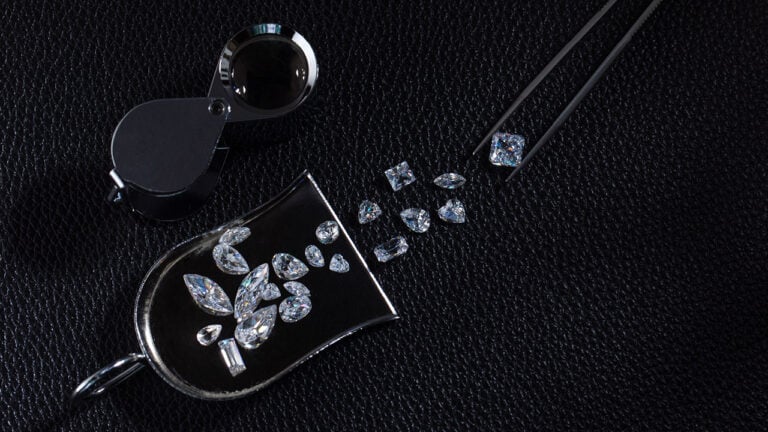
Image: A polished diamond. (Shutterstock)