

RAPAPORT… The Gemological Institute of America (GIA) has identified a
synthetic moissanite stone that had been submitted to one of its laboratories as a
natural rough diamond.
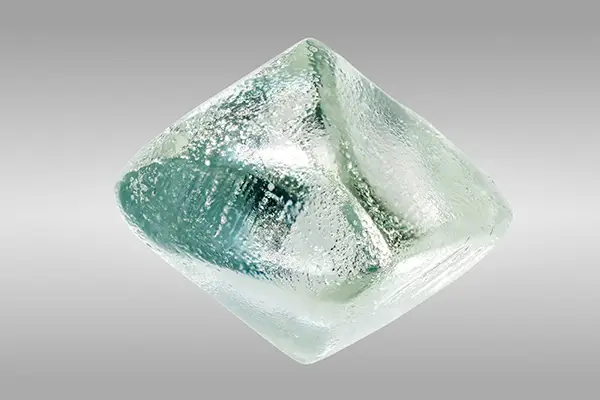
The GIA’s Carlsbad lab recently examined the 9.71-carat
stone, whose shape was similar to an octahredron, staff gemologist Rebecca
Tsang wrote in the Winter 2017 edition of the institute’s journal, Gems
& Gemology.
“While there is no evidence that this specimen was
deliberately deceptive, gemological knowledge is important in preventing
accidental and intentional acts of fraud and preserving the integrity of the
trade,” Tsang noted.
Several physical traits of the piece of rough made it hard
for experts to identify it as a fake. These included a dimpled surface, as well
as lines that resembled a genuine rough diamond’s growth features. In addition,
the uneven surface made it difficult to reach the parts of the stone — such as
inclusions — that would indicate its origins, Tsang wrote.
In the end, the moissanite’s “dichroism” — the appearance of
two distinct colors under special light — showed the stone had a doubly
refractive nature. Unlike diamonds, which are only singly refractive,
moissanite splits light rays in two, and has a higher refractive index.
The researchers could tell it was synthetic, partly because natural moissanite
is extremely rare, having never been found in gem-quality form, Tsang
explained. When the material does occur naturally, it usually comes in much
smaller pieces — which was, of course, not the case with this 9.71-carat stone.
The GIA has publicized several discoveries of synthetic stones
disguised as natural diamonds, including, most recently, a laboratory-grown polished diamond possessing a forged GIA inscription.
Last year, two topaz stones, weighing 50.08 carats and 38.18 carats, were submitted to HRD Antwerp as rough diamonds. The stones were manipulated to resemble rough diamonds’ growth features, the organization claimed.
Image: Rebecca Tsang/GIA

Rapaport Appoints Yosi Botzer as CTO to Lead AI Transformation
Rapaport has appointed Yosi Botzer, former Chief Technology Officer of Perion Network, as its new CTO.

Richemont and Signet Consider Participating in Bid for De Beers
Retailers are in discussions with GDC to join the group.
TAGS Tender Generates $27.1M in Revenue
94% of lots find buyers, including many special-sized and fancy-colored stones.