

RAPAPORT… Fraudsters forged a Gemological Institute of America (GIA)
inscription on a synthetic diamond to make it appear that the stone was the
true bearer of a natural-diamond grading report, the institute said.
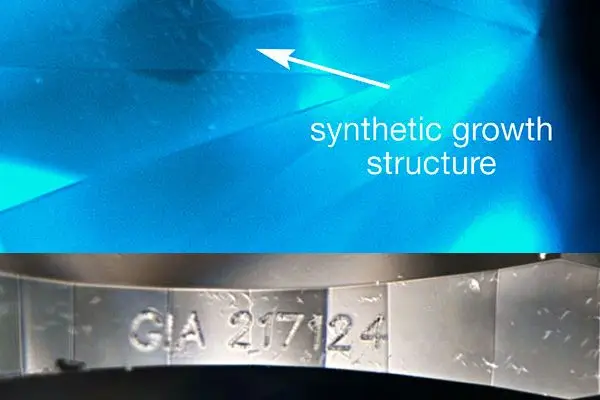
The engraving on the polished diamond’s girdle contained a genuine
GIA report number for a mined diamond the institute had graded in 2015, the
laboratory explained. However, while the “real” diamond with that code was a
round brilliant-cut, 1.74-carat, D-color, VVS1-clarity stone, gemologists at
the GIA’s lab in Carlsbad, California, found the submitted diamond to be 1.76
carats, with F color and VS1 clarity.
The graders referred the stone for additional testing, which
confirmed it as a synthetic diamond created through High Pressure-High Temperature
(HPHT). The growth structure and phosphorescence — or light emission — visible
via DiamondView technology betrayed this fact.
The discrepancies between the stone and the 2015
report gave the gemologists a good indication that the diamond they were
looking at was not the same one. In addition, a test using Fourier-transform
infrared spectroscopy (FTIR) revealed it was
type IIb, while the stone the original report described was type Ia.
Even the attempt at forging the number did not get past the
lab staff: Careful examination revealed the font was different from the GIA’s
usual one, confirming it was a fake.
The person who submitted the stone had probably noticed the
inconsistencies with the GIA grading report and sent it to the lab for an
updated report, senior research scientist Christopher Breeding and senior staff
gemologist Troy Ardon wrote in the lab note.
“Rarely do we encounter the type of blatant fraud described
here,” the authors explained, urging traders to send suspicious-looking
diamonds to a gemological laboratory for verification.
“It is important for the industry and public to exercise
caution, because these types of misleading practices do occur,” they warned.
Image: GIA

Rapaport Appoints Yosi Botzer as CTO to Lead AI Transformation
Rapaport has appointed Yosi Botzer, former Chief Technology Officer of Perion Network, as its new CTO.
Richemont and Signet Consider Participating in Bid for De Beers
Retailers are in discussions with GDC to join the group.
TAGS Tender Generates $27.1M in Revenue
94% of lots find buyers, including many special-sized and fancy-colored stones.