


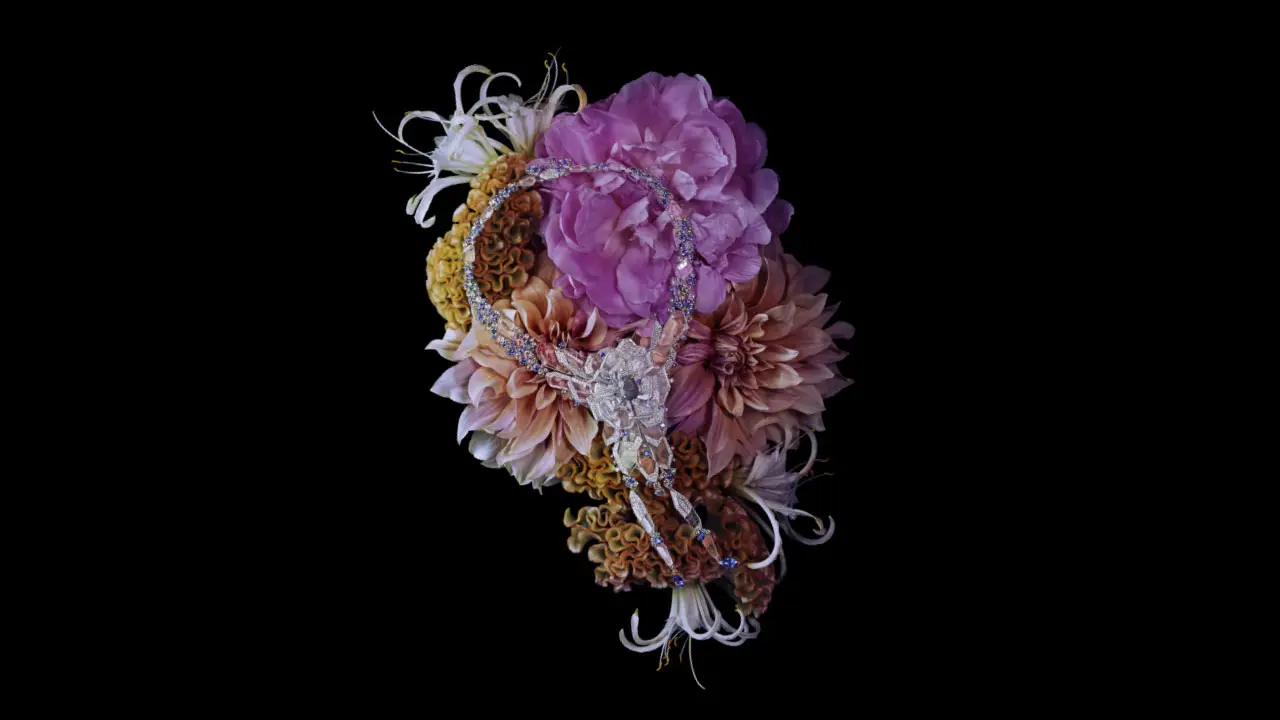
Like magic before our eyes, color-change gems transform under different lighting, appearing almost like an entirely different stone – two gems for the price of one.
The most celebrated example is alexandrite, the rare chrysoberyl discovered in Russia’s Ural Mountains that famously shifts from vivid green in daylight to rich red under incandescent light, earning its moniker of “emerald by day, ruby by night.” Fine samples of these gems – particularly above 3 carats – are exceptionally rare, although miners have also found notable deposits in Brazil, Sri Lanka, India and east Africa.
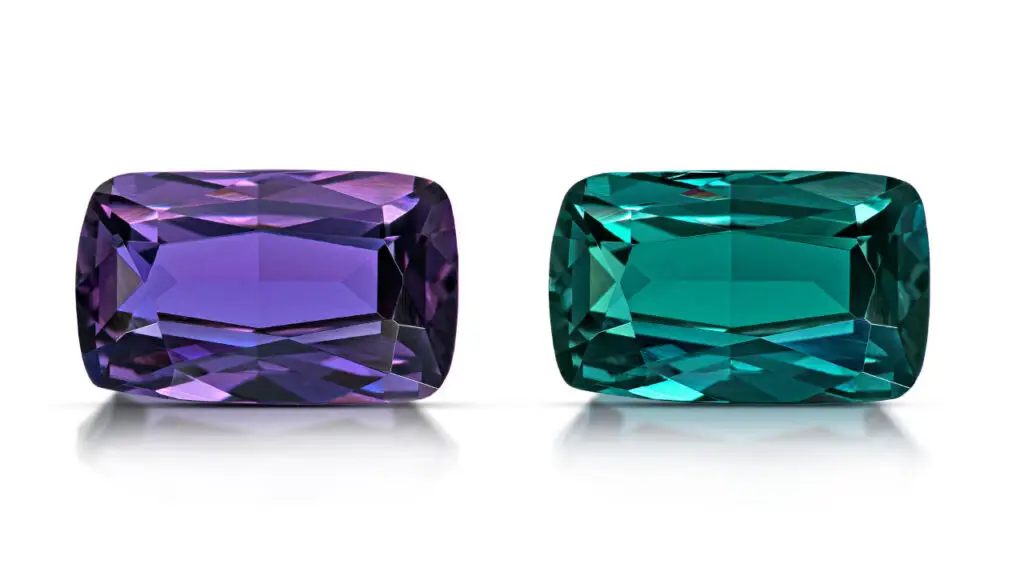
Unlike gems that simply appear lighter or darker, true color-change stones display two distinct hues under different light sources. This phenomenon occurs when trace elements such as chromium, vanadium or iron selectively absorb and transmit different wavelengths of light. Beyond alexandrite, the phenomenon occurs in sapphire, garnet, spinel and diaspore, although their color transformation is generally less pronounced.
The finest examples exhibit a vivid change between two colors rather than a subtle shift in tone, making them among the gem world’s most prized and scientifically intriguing chameleons.
“What I love most is that nature creates something so unusual and almost magical,” says Niveet Nagpal, president of Omi Gems and Omi Privé. “When a stone can move from one distinct color to another, it feels alive.”
Strength matters
For experts, the strength and beauty of a gemstone’s color change are the most important factors in determining value and quality.
“That is usually the first thing people notice and the reason the stone is special,” says Nagpal. “But strength alone is not enough. The colors themselves also have to be beautiful.”
While saturation, clarity and size all contribute to value, he observes that the highest-quality gemstones combine all of these qualities with a striking color change.
For alexandrite, the best specimens display a strong, dramatic transition from a vivid green or bluish-green in daylight to a purplish-red under incandescent light.
“Color change is the most important element when you’re talking about the value of alexandrite,” affirms gem dealer Eric Braunwart, owner of Columbia Gem House. “Next would probably be size, with clarity still being important, but not as important as the color change itself.”
As a result, an alexandrite with a strong color change and minor inclusions is generally considered more valuable than a flawless stone with only a weak shift.
The same holds true for color-change sapphires, although remarkable examples are rare. “Many show only a slight shift in color, as opposed to two separate colors [such as] teal to purple [or] grey to teal,” says Navneet Agarwal, marketing and sales manager at Navneet Gems. Prime samples originate in Sri Lanka, Madagascar, and Montana – though Montana material is exceptionally scarce, accounting for 0.01% of the US state’s total sapphire production, particularly in sizes over 1 carat.
“You should get [the stones] certified from a reputable lab such as the Gemological Institute of America (GIA) to determine the strength of the color change,” Agarwal adds.
Collectors are also prioritizing quality over size. “Demand for no-compromise gems [and] a concurrent trend toward wearability has led to [smaller] stone sizes being given a respect and level of value that has not been the case historically,” says Alexander Eblen, senior vice president and senior specialist at Christie’s. A flawless 3-carat Brazilian alexandrite or a vividly saturated 8-carat Burmese color-change sapphire can now command prices at auction that a decade ago required roughly double the size, he elaborates.
Fetching attention
Industry experts say demand for color-change stones has grown steadily over the past decade, owing less to auction headlines than to increasing consumer awareness and a broader appetite for rare, distinctive gems.
“I don’t think the auction results have played a part in demand, but in terms of pricing, they always have a bit of influence,” says David Nassi, president of gem supplier 100% Natural. “I feel the increase in demand is more of an organic growth as customers seek more unique gems and collectors look to expand their portfolios.”
Braunwart credits the growing interest partly to social media, which has introduced these gems to collectors who might never have encountered them otherwise, and partly to a rising preference for distinctive, personalized jewelry.
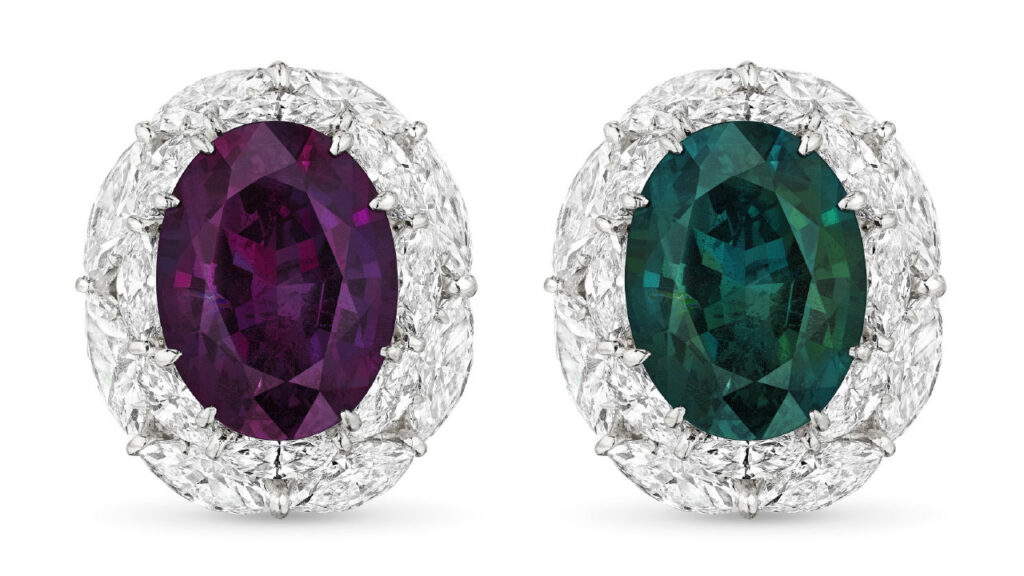
Auction results continue to reinforce the market, however. In late 2024, a 16.53-carat alexandrite ring sold for a record $1.9 million at Sotheby’s New York, more than tripling its high estimate. At Christie’s, Eblen has seen the finest Brazilian alexandrites become the benchmark for collectors. A 14.74-carat Brazilian alexandrite from the auction house’s June Magnificent Jewels sale fetched four times its presale estimate.
“Alexandrite is the undisputed leader of this fascinating category, and has held that distinction for many decades,” says Eblen. While fine Russian stones over 5 carats remain exceedingly rare, exceptional Brazilian stones – particularly those from the Lavra de Hematita deposit, which caused a rush when it was discovered in the 1980s – now dominate the auction market. The strongest demand is for Brazilian material displaying vivid blue-green to purple-red shifts, according to Eblen, while warmer-toned stones, typically associated with Sri Lanka, attract less interest. However, Nassi points out that exceptional color changes also take place in stones from India and east Africa, challenging the idea that origin alone determines quality.
Nassi has witnessed a rise in demand over the past five years, and not only among collectors. “We’ve also seen many first-time gem purchases and engagement rings with these stones.”
While alexandrite remains in the lead, dealers report rising interest in sapphires and garnets, with specialist collectors exploring rarer color-change varieties such as spinel and zircon. However, these tend to be niche due to their exceptional scarcity, says Nassi.
Demand has also become more global. While many early collectors came from North America, Europe and Japan, says Nagpal, interest has expanded significantly across Asia – particularly China – as more collectors compete for an extremely limited supply.
In the broad global market, Agarwal cites growing interest in color-change Montana sapphires. In the US, reports Nassi, the market favors alexandrites between 0.50 and 3 carats, often for engagement rings, while Asian collectors typically seek stones exceeding 5 carats.
Ringing true
The extreme rarity of color-change gemstones makes them ideal for limited-edition or one-off luxury jewelry rather than for mass production.
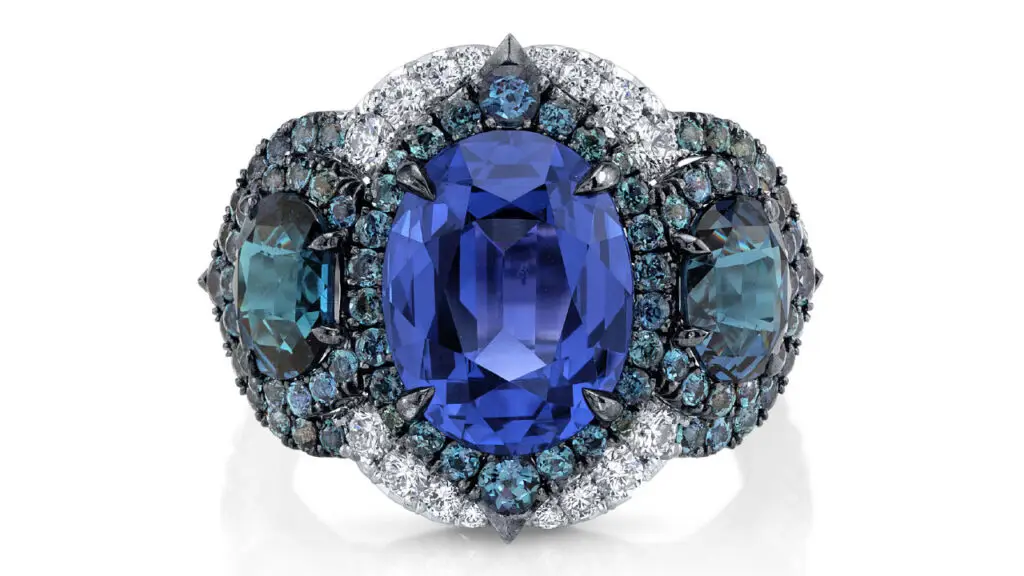
“As designers seek newer material to work with, contemporary fine jewelry has seen more use of color-changing gems,” says Nassi. “However, because it’s relatively difficult to acquire a suite of these stones, most designs we have seen have been in rings.”
Leading brands working with alexandrite and other color-change gems today include Hemmerle, Bario Neal, Mark Henry, and Omi Privé. Munich-based Hemmerle sets these dual-personality stones in unconventional patinated metals such as iron, copper and anodized aluminum to complement the exotic shifting hues.
One standout example is Rubeus Milano’s Imperial collection, which features unusually large alexandrites from Russia’s Ural Mountains in emerald and oval cuts. Setting them alongside red and grey spinels, rock crystal, and black titanium, the jeweler creates a refined yet edgy black, grey and white palette that comes to life when the stones shift dramatically from greenish in daylight to vivid raspberry under artificial light.
Working with color-change gems requires a different design approach than most other stones. “You have to respect both personalities of the gem – how it looks in daylight, how it changes in incandescent light – and how the design can support that experience without overpowering it,” says Nagpal. “The stone already has a story. The design should help tell it.”
Affordable alternatives
When it comes to price appreciation in this category, experts agree that natural alexandrite, especially from Brazil, has shown the strongest growth over the past decade.
“Its combination of extreme rarity, limited annual production, and enduring collector prestige has placed it well ahead of most other color-change gemstones,” says Agarwal. “Fine stones over 2 or 3 carats with a strong green-to-red color change have become especially scarce, and values for exceptional examples have risen significantly over the past decade.”
Nagpal, too, attributes alexandrite’s accelerated rise to collector demand outpacing an extremely limited supply. “When you are dealing with a gemstone that is beautiful, rare, historic and increasingly difficult to replace, prices naturally move upward.”
Garnet offers collectors a compelling alternative with a similar optical phenomenon at a more accessible price point. According to Braunwart, premium color-change garnets, particularly from Madagascar, can closely resemble alexandrite in both appearance and color shift – so much so that early miners initially mistook them for the rarer gem. Tanzania produces similar material, though it commonly shows a transition of green to brownish-yellow.
“The best color-change garnet is nearly as nice as good alexandrite,” Braunwart says, “but at about 5% of the cost.”
More hues to choose
Color-change spinel: Less famous than alexandrite but often more affordable, these stones typically shift from blue or bluish-grey in daylight to purple, violet, or reddish tones under incandescent light. Fine examples come from Sri Lanka, Tanzania, and Myanmar (Burma), with Sri Lankan stones often prized for their clarity and distinct color shift.
Color-change diaspore (also known as zultanite or csarite): Originating primarily in Turkey’s Anatolian Mountains, this stone alters dramatically from pale green or yellowish-green in daylight to rich pink, raspberry, or champagne under artificial light. Its strong color change and relatively large crystal sizes have made it increasingly popular for bold, wearable jewelry.
Color-change tourmaline: Found primarily in Brazil, with smaller deposits in Mozambique, Nigeria and Afghanistan, color-change tourmaline remains one of the stone’s rarer varieties. Fine examples typically shift from green or olive green in daylight to reddish or purplish tones under incandescent light.
Color-change zircon: Rare color-change zircon is mined mainly in Tanzania and Cambodia. The finest stones display a shift from blue-green or greenish hues in daylight to brownish-red or reddish tones under incandescent light.
Hackmanite: This variety of sodalite found in Afghanistan, Myanmar, Canada, Greenland and Pakistan is most notable for its unusual optical behavior. Rather than exhibiting a classic color change under different light sources, it displays tenebrescence, which is a reversible color change resulting from exposure to ultraviolet light. This unique quality makes it primarily a collector’s stone.
Main image: Rubeus Milano Eternal necklace centering a 10.30-carat color-change Russian alexandrite. (Rubeus Milano)