

No two relationships are the same, and neither are the engagement-ring styles that today’s couples are choosing. These are rings that speak to the freedom of self-expression and the desire to wear something that is part of the bride-to-be’s love story – a commitment to originality that has been an ongoing trend in both the estate and contemporary markets.
Antique and vintage styles lead the way, offering historical interest, sustainability, and distinctive designs, as earlier rings were traditionally handmade and one-of-a-kind. Celebrity engagement rings with antique diamonds that evoke the romance of the past are also driving sales.
Era to era
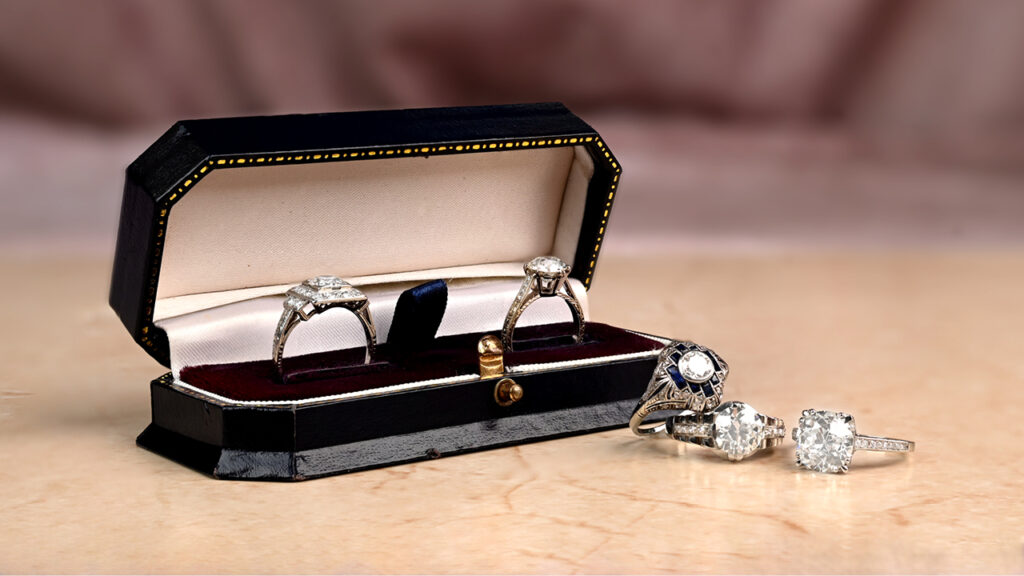
Brides-to-be are attracted to multiple periods of antique and vintage rings. Art Deco styles, many originally created as cocktail or dress rings, continue to be strong sellers in the estate market. Some dealers report renewed interest in late Georgian and early Victorian styles, while others are seeing a revival of rings from the 1940s and ’50s, around the time De Beers launched its “A Diamond Is Forever” campaign. That line, which copy writer Frances Gerety composed for agency N.W. Ayer & Son in 1947, cemented diamond rings as the quintessential symbol of enduring love.
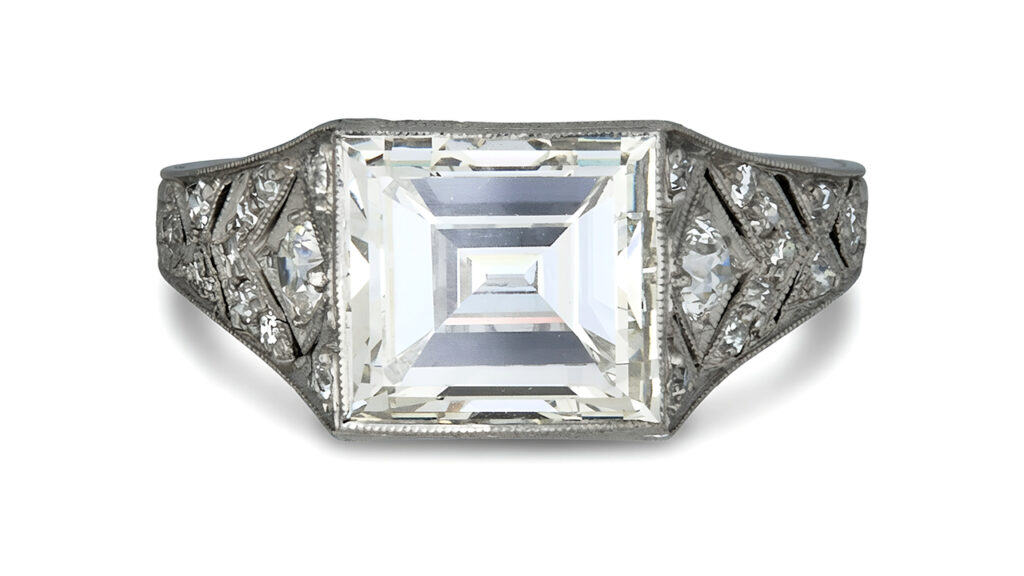
Krombholz Vintage Jewelers in Cincinnati, Ohio, is seeing strong demand for engagement rings from the 1910s through the 1960s, according to founder Lee Krombholz. “Edwardian and early Art Deco platinum rings remain especially popular for their elegant, linear silhouettes and substantial diamonds in the 0.75- to 1.50-carat range. Classic 1950s rings with emerald-cut centers flanked by tapered baguettes continue to appeal to buyers seeking timeless sophistication.”
Benjamin Khordipour does most of his engagement business in Art Deco designs. “They still feel exceptionally relevant due to the geometry, symmetry, platinum work, and architectural details, which have become something of a gold standard for fine jewelry,” explains the sales manager and estate engagement-ring specialist at Estate Diamond Jewelry in New York. “Another major factor is availability. Georgian and early Victorian rings are much harder to find in wearable condition, but authentic Art Deco rings still exist in enough quantity that shoppers can realistically pursue them.”
Elizabeth Doyle, cofounder of New York estate jeweler Doyle & Doyle, has noticed Georgian styles making a comeback. These pieces have traditionally been less desirable for engagement rings due to their age and construction, but “the darkness of aged silver creates a romantic moodiness against the subtle sparkle of antique-cut diamonds,” she says. “Georgian rings can be simple but full of unusual details. Brides are also drawn to the mix of gold and silver often seen in them.”
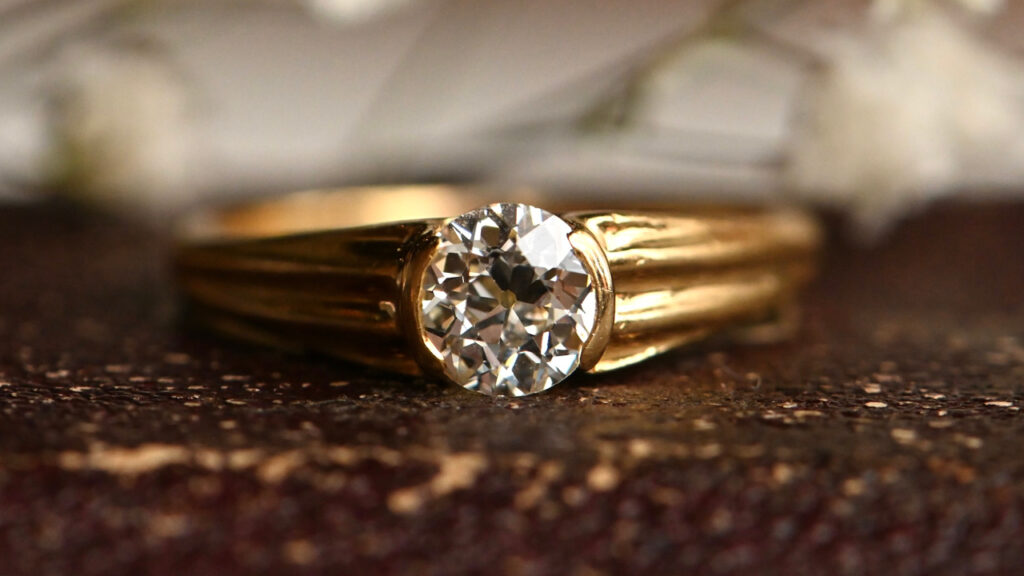
Emily Duffelmeyer, owner of Jean Jean Vintage, is seeing the rise of 1940s rings at her Lansing, Michigan, store. “The economic designs of war and postwar bridal rings feature just the right amount of detail without the excess intricacies of filigree, piercing and other ornate elements, while still offering uniqueness. Additionally they were primarily rendered in yellow gold and two-tone designs, which have been outselling platinum and white gold.”
Jewels by Grace owner Grace Lavarro agrees. “Mid-20th-century creates new interest for clients wanting streamlined designs, simple and less stylized than Deco and Edwardian,” says the Los Angeles-based jeweler. “And demand for yellow gold is as strong as ever.”
The center of it all
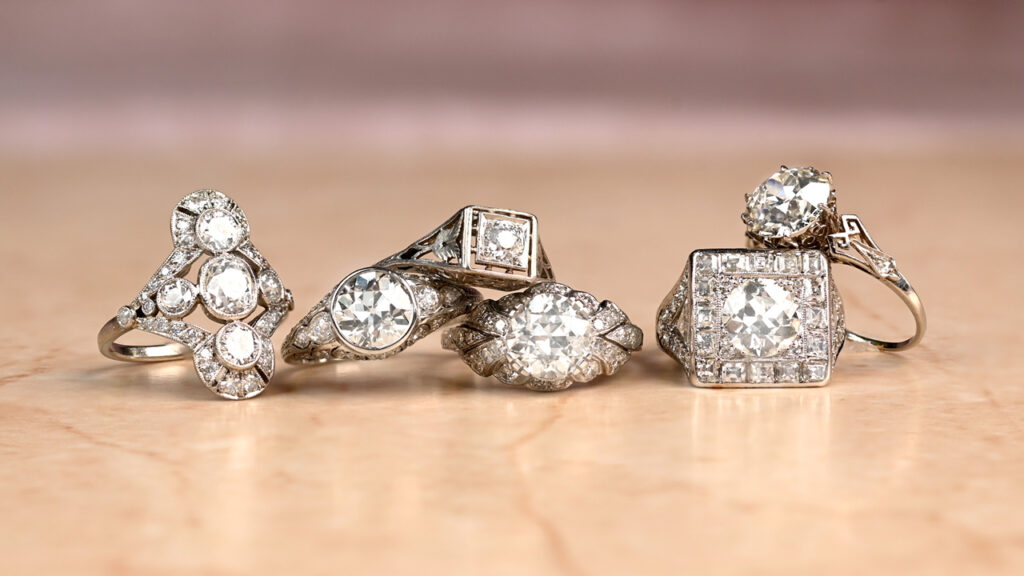
Certain diamonds steer the trend in estate engagement rings. Old mine and European cuts have helped define the one-of-a-kind personality of rings from the past, but recent viral celebrity engagements have placed even more emphasis on these cuts, as well as on fancy shapes.
Like many jewelers, Doyle, Lavarro and Khordipour cite pop icon Taylor Swift’s engagement ring as bringing newfound attention to the elongated antique cushion cut. “These are dominating the conversation right now,” says Khordipour. “Customers are drawn to the softer outline, chunkier faceting and romantic character.”
At New York estate jeweler Gray & Davis, “rose and old mine cuts with warmer tones [are] increasingly popular,” according to co-owner Alexandra Cervellero. These stones are “appreciated for their authenticity, signaling a stone is natural and true to its antique period.”
Krombholz also mentions old European and transitional rounds for their softer brilliance and distinctive character, adding that “more recently, oval and marquise cuts have also become more desirable.”
Among colored gems, the interviewed dealers all agree that blue sapphires are the biggest draw for center stones in the estate bridal market, though Krombholz and Cervellero also cite sapphires in other colors, particularly pink.
Sizing up the stone
Size is often less of an issue with antique and vintage rings than with contemporary engagement rings. This has become even more apparent to Doyle, who reports that “couples are shying away from larger diamonds in simple mountings because they do not want their natural diamond to be mistaken for a lab-grown diamond.”
Lavarro agrees, adding that clients are choosing lower color grades instead of the icy white of lab diamonds.
However, Cervellero has noticed the opposite: “The rise of lab-grown diamonds has influenced the antique market; large stones were once less common, but they’re now more widely accepted, and we’re seeing a trend toward bigger sizes. The primary focus, though, is that the piece feels special and significant.”
All report an average center-stone size of 1 to 1.50 carats. Price ranges depend on factors including the couple’s ages, careers, life stages and, importantly, the rarity of the ring.
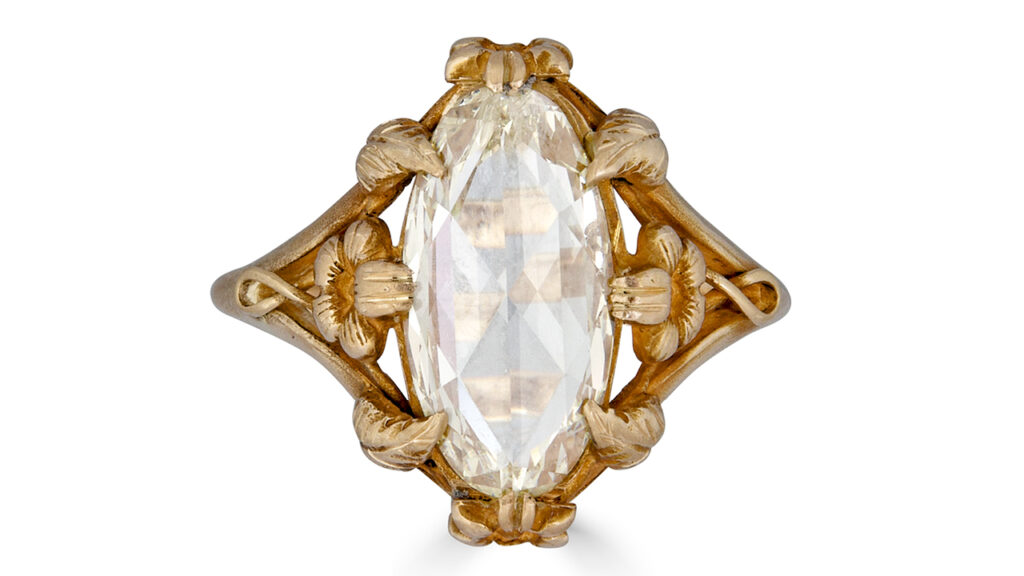
‘One-of-a-kind appeal’
Whatever the demographic, antique and vintage clients all factor history, character and sustainability into their engagement-ring decisions.
Krombholz’s customers appreciate that they can give a second life to a ring without the environmental impact of newly mined materials. For Duffelmeyer, antique and vintage rings offer “the ‘one-of-a-kind’ appeal that couples crave without the stress of managing a custom process.”
Cervellero keys into the personal connection a modern bride can find in an antique or vintage ring. “There is a deep reverence for history, design and craftsmanship that often outweighs other factors. In a tech-dominated world, these rings offer a rarity and authenticity you cannot replicate today.”
Khordipour echoes that sentiment: “Each hand-cut diamond differs from the next. The settings are also handcrafted, which leads to a combination of individuality, craftsmanship, old-world techniques, and design language that resonates strongly with couples in 2026.”
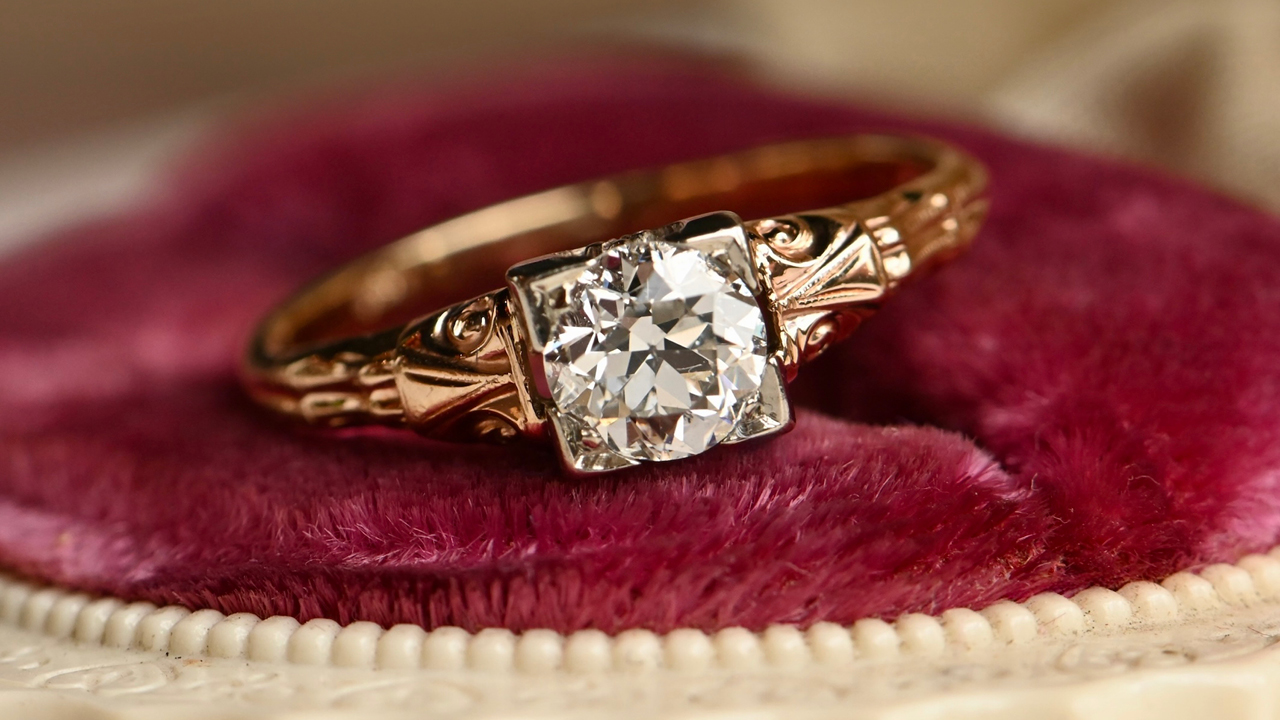
Main image: Solitaire ring featuring an old European-cut diamond in yellow gold, circa 1940s. (Jean Jean Vintage)