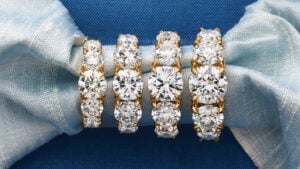

Image background: Shutterstock.
The Retro period that spanned the late 1930s through the 1950s provides rich pickings for any designer with a weakness for bold gold. It was an era of innovation, excess and economizing, and it is once again hitting the mark as pandemic-rocked jewelry collectors seek a metallurgic safe haven.
The excess aspect found expression in scale. Enveloping ear clips, exaggerated gold chain links on necks and wrists, heavily embellished cuffs, ornate brooches, scene-stealing cocktail rings and nearly-but-not-quite-matching parures were in. Transformable jewels were also hugely popular, as were other kinetic curiosities such as diamonds set en tremblant.
Countering this maximalism was the austerity that came with World War II. Designers had to deliver glamour on a budget, and this led to pieces that were large but light. Popular workarounds such as tubogas chains and bombé ring silhouettes are now defining our own era of optimistic rebuilding. Jewelers like Nikos Koulis have reinvented the snake chain, and the rounded gypsy-ring profile has become ubiquitous.
Another Retro hallmark that lands well today also started as a compromise. Yellow gold was the preferred shade of the time, but single pieces would often display a rainbow of colors as jewelers tinkered with alloys to stretch the dwindling supply. Now, of course, such alchemy stems more from creativity than necessity. Like other homages to this dramatic chapter of jewelry history, it’s all about celebrating the past rather than masquerading as it.


To Market Natural Diamonds, The Entire Trade Must Do Its Part
No single company can carry the responsibility for reinvigorating interest in our product, nor should it.
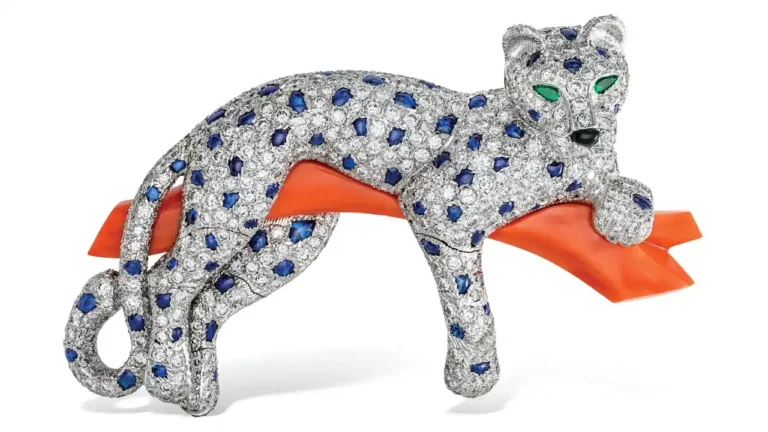
What Can Diamond Marketers Learn from Other Sectors’ Campaigns?
Instead of rehashing the same old advertising that hasn’t worked in years, the industry needs to offer a real sense of connection, experts say.
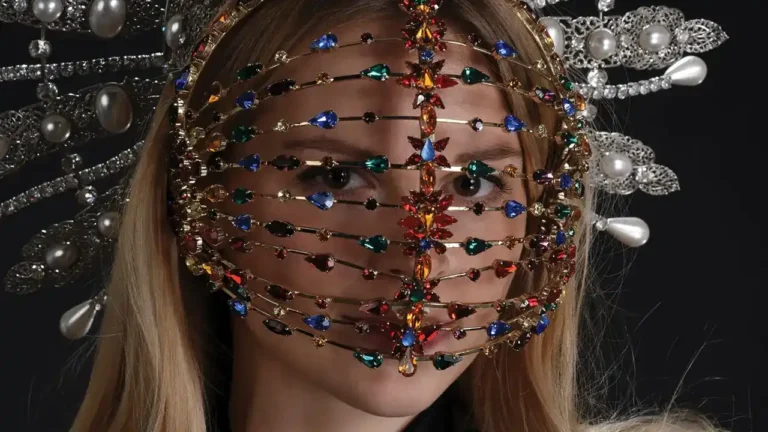
The Luxury World’s Authenticity Crisis
As AI-generated content floods feeds and brand messaging becomes increasingly homogenized, jewelry marketers face a new challenge: proving what is real.