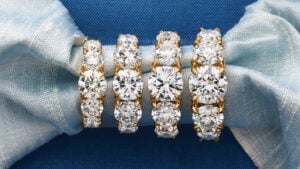

Image background: Shutterstock
Marquise diamonds have always been provocative. Considering they were named for French King Louis XV’s mistress, the Marchioness Madame de Pompadour, in honor of her sultry lips, could they have been anything but?
While it may not be scandal and adultery that attract designers to this elongated cut today, the shape does lend an edge to their work. As Maria Carola Picchiotti of Italian jewelry house Picchiotti puts it: “If a piece of jewelry is attractive with a twist of originality, then a marquise diamond can be the perfect stone.” Using one in place of a round diamond on an engagement ring is indeed a striking swap — and one that is kind to fingers, as it makes them appear longer. These stones also add interest to classic diamond designs such as eternity rings, line bracelets and ear studs, particularly when claw settings are sharpened to continue the tapered effect.
Marquise cuts are evocative in their sensuality, making them an excellent choice for evil eyes, flower petals, and the bodies of butterflies. Indeed, they can inspire the entire silhouette of a jewel. And for those who want to craft a celebration of mixed cuts — an increasingly popular theme — no piece would be complete without a marquise or two. The marchioness would be proud.


To Market Natural Diamonds, The Entire Trade Must Do Its Part
No single company can carry the responsibility for reinvigorating interest in our product, nor should it.
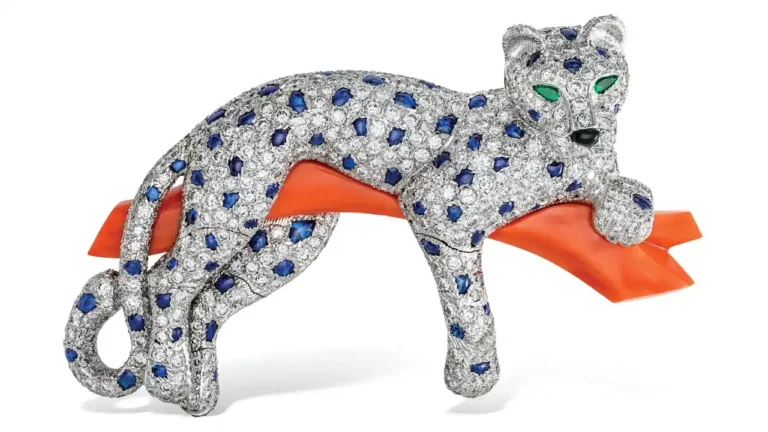
What Can Diamond Marketers Learn from Other Sectors’ Campaigns?
Instead of rehashing the same old advertising that hasn’t worked in years, the industry needs to offer a real sense of connection, experts say.
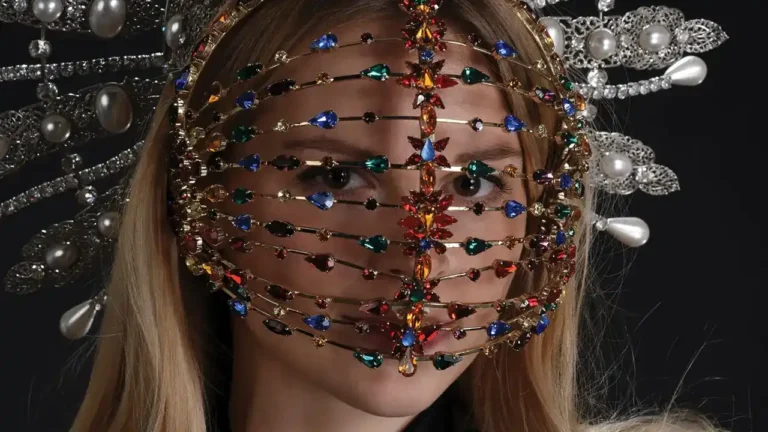
The Luxury World’s Authenticity Crisis
As AI-generated content floods feeds and brand messaging becomes increasingly homogenized, jewelry marketers face a new challenge: proving what is real.