

Trey Herring
Director of operations, Alex Moss New York
From campaign imagery to videos to research, we incorporate AI into a lot of what we do. It can be as simple as replacing backgrounds on real photography so a piece reads better. At the other end, it’s fully-generated creative, video included, cut and run as ads. We’ve also incorporated AI into the build and design of our new website, which is the highest form of marketing. An efficient and user-friendly site is the backbone of a retail business. That’s been the bigger shift. AI writes the code, and our job becomes steering it. We can go from an inception to live development in days rather than weeks. Being able to make changes in real time has opened the door for creativity. Our email campaigns are built the same way. What used to take days takes hours. We experiment far more than we used to, because experimenting stopped being so costly and time-consuming. The site has the same story. We’re able to work out ideas and adjust layouts or functions immediately, depending on what’s working. Data collection is much more efficient, so we’re able to gauge the market and determine what items are working versus what isn’t, which assists in product-offering discussions.
Tamara Titizian
Communications manager for digital and client care, L’oro
AI has become a useful tool within digital marketing, particularly given the volume of information it’s given to manage. We’re an authorized retailer for around 20 watch brands across three locations, so specification accuracy matters more to us than almost anything. Our agency develops and executes our marketing strategy, using AI to help build and optimize campaigns while drawing information we have gathered through brand assets and reliable resources to ensure accuracy and consistency. It allows us to work more efficiently while maintaining the standards expected of the brands we represent.
How we sell hasn’t changed; we’re still true to our values. How we reach our clients has evolved. AI has helped us get the right products in front of the right consumers. Using the product images and information we provide, it can adapt our advertising to make it more relevant to different audiences, while still maintaining the essence and identity of each brand. For a multi-brand retailer like L’oro, that’s been a valuable way to make our advertising more targeted without losing what makes each brand unique.
Parin Moradiya
Founder and CEO, Diamond Soirée
AI has become a major part of keeping our systems running smoothly. We use it in a lot of different ways, from refining client emails so that our tone of voice stays consistent, to helping us visualize jewelry for clients. More than anything, it has made the entire sales and marketing process much faster. We’re not spending as much time composing and refining professional emails, creating different visual concepts for clients, or organizing extensive jewelry photoshoots. Jewelry photography can be extremely expensive and time-consuming, especially when you constantly have new pieces coming into inventory. AI allows us to create or enhance certain marketing visuals in minutes, which we can then use across our social media and website. It saves us money, but just as importantly, it allows us to move much faster as a business.
I would say it has had an indirect but meaningful impact on our sales. A large part of our customer acquisition comes through Google, Meta and SEO, and we use AI to help analyze how those channels are performing. We can look at our marketing data, identify where we may be overspending or underperforming, compare different strategies, and evaluate how we should allocate our budget. That helps us continuously refine where our marketing dollars are going and focus on attracting higher-quality leads to our showroom. Ultimately, AI hasn’t replaced the personal element of selling jewelry; that is still extremely important in our business. What it has done is make everything around that interaction faster and more efficient, so our team can spend more time actually working with the client.
Josefina Baillères
Founder, Josefina Baillères
We’re still relatively early in using AI specifically for marketing. So far, we’ve mainly used it to generate visuals and experiment with original content for Instagram. Where it has become much more valuable is behind the scenes. We use AI to turn sketches into more realistic visualizations, which helps us communicate design proposals to clients before a piece actually exists. We’re also beginning to integrate AI into the operational side of the company – monitoring production, identifying bottlenecks, keeping track of client inquiries and communication, and analyzing things like margins, sale, and the amount of time we spend on each piece. The biggest impact has been speed and clarity, particularly during the early stages of the design process.
But for us, the most important impact isn’t necessarily being able to make more pieces. It’s being able to redistribute our time. We can spend less time going back and forth deciding which design to pursue and dedicate more time to the engineering and actual development of the chosen piece.
The agency perspective

Luxury marketing agency H & Co. specializes in jewelry and watch retailers, including L’oro and Alex Moss New York. Among other things, it has used AI to streamline its clients’ operations. At L’oro, recalls H & Co. managing partner Hagop Imasdounian, “staff used to hand-enter specs and descriptions for every reference off each brand’s own website. We built software that does that instead.” At Orosergio, another client, H & Co. built the jeweler’s site with AI, and “our copywriters wrote the copy working with it. We also used AI to turn his real photographs into videos.”
Budget and time used to be the main constraints on coming up with campaign ideas, says Imasdounian: Agencies would have to see whether they could afford the photo shoot, whether they could book the model, and whether the images would be ready on time – all concerns that AI mostly eliminates. However, he cautions, it’s important to check the AI-generated images against the real pieces to avoid misleading the customer.
Image: Hagop Imasdounian. (Davit Ter-Haroutiunian)
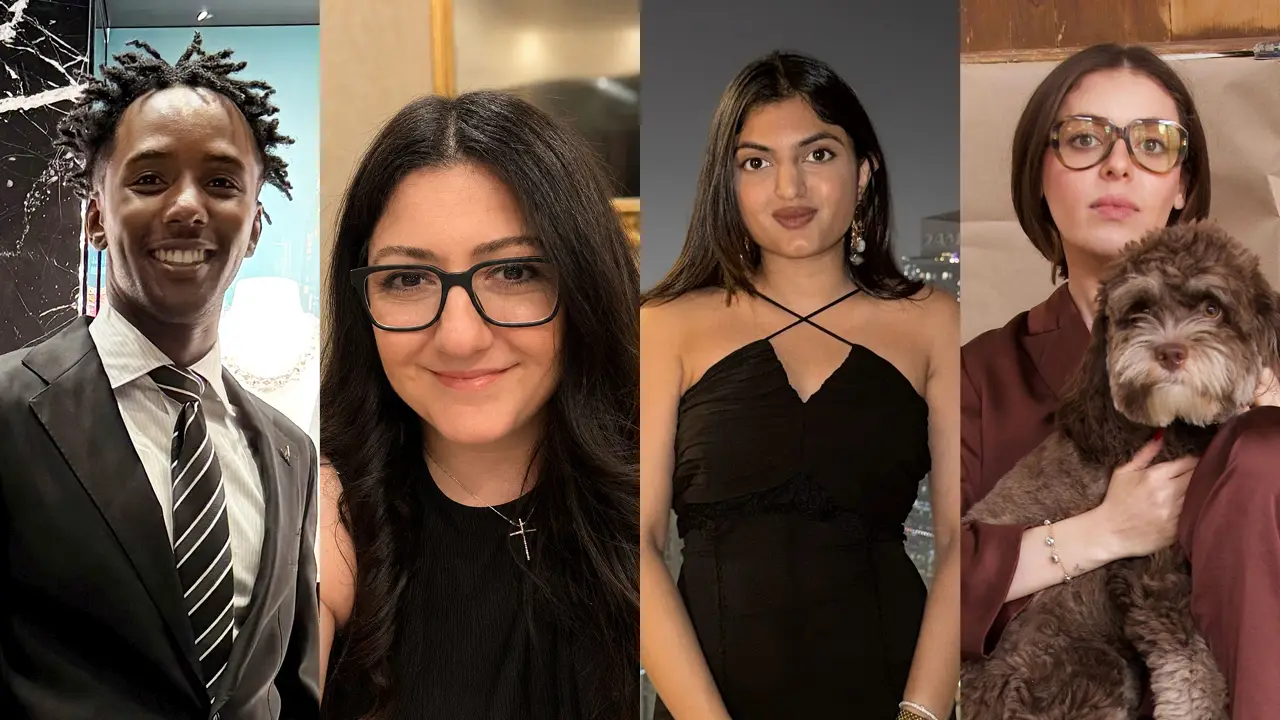
Main image, from left: Trey Herring, Tamara Titizian, Parin Moradiya, Josefina Baillères. (Alex Moss New York; L’oro; Klaudia Szostak; Mariana Lopez/Una Misma)