

If there is one jewelry category that has quietly but decisively surged in popularity since the start of the pandemic six years ago, it is brooches. We simply can’t seem to get enough of them. Contemporary brooches from international jewelry houses or individual designers continue to flourish, yet it is the vintage and antique segment that has emerged as a top source. Why are these seemingly old-fashioned ornaments resonating so strongly? When did this shift occur, and what is driving it? And crucially, which styles are worth seeking out?
Zooming in
Jewelry has long functioned as a form of tangible yet subtle communication. We express our identity, our place in society, our beliefs, and what we want the world to know about us through adornment. The pandemic proved to be a pivotal moment for brooches. In 2020, during global lockdowns, digital screens became our primary interface with the outside world — dinners with loved ones over Zoom or Teams, video calls with clients, colleagues and superiors.
In this environment, jewelry visibility was limited to the shoulders and up. Necklaces were often repetitive, but brooches offered something different: scale, symbolism, and a broad scope for self-expression.
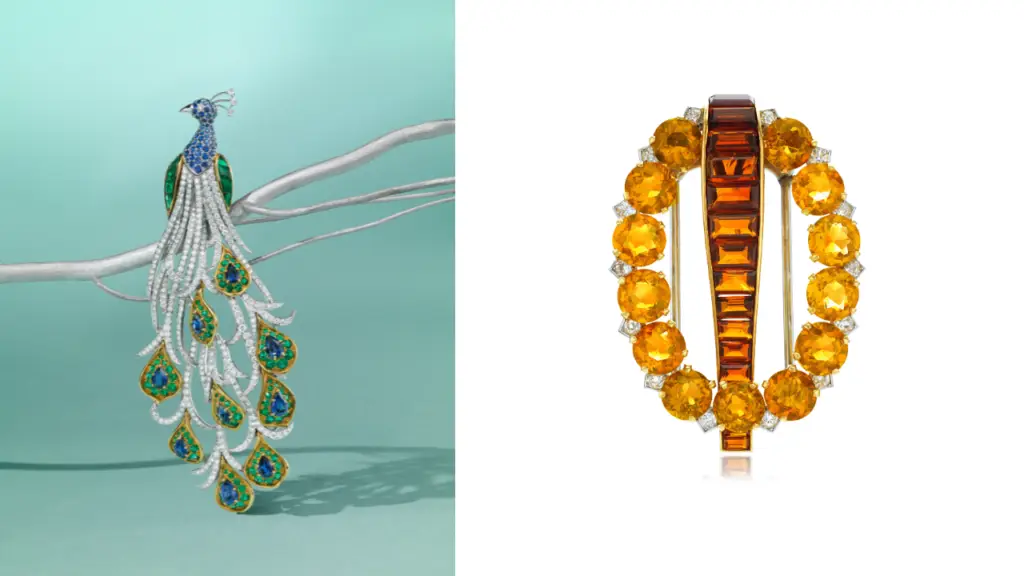
This took place as government support, reduced travel, and curtailed discretionary spending boosted household savings. At the same time, jewelry auctions began to attract a new generation of first-time bidders. Many were seeking pieces they could wear at home while navigating their newly digital lives. Brooches proved particularly compelling: They made an immediate statement on screen, delivered artistry and precious materials, and often came with a layer of history — all at a more approachable price than necklaces or important earrings.
“Brooches were always part of jewelry history, but they only began gaining real traction in the vintage market about 20 years ago, with a renewed surge in the past few years,” says Marianne Fisher, sixth-generation jeweler at Paul Fisher Jewelry. Besides the rise of video calls, she points to fashion as a key driver, adding that “cultural shifts such as men wearing brooches have helped reposition them as contemporary.”
Victorian origins
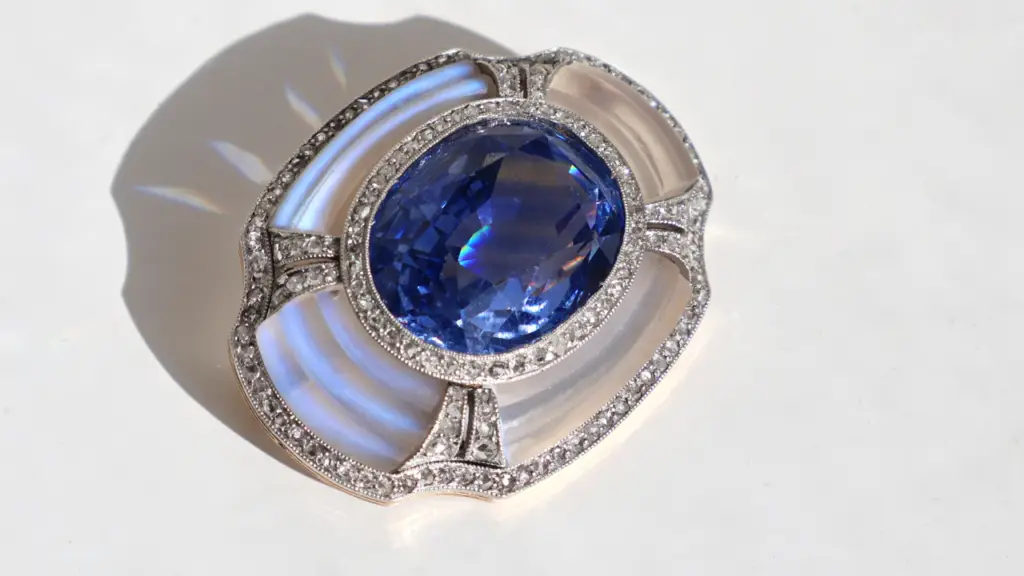
Brooches came to prominence during the Victorian era, when layered clothing concealed necklaces, making lapel and collar pieces the most visible form of jewelry, says Ross Nacht, fourth-generation jeweler at Bernard Nacht & Co. and Under the Crown. In the US market, he relates, the category never truly disappeared, even if its visibility fluctuated. Senior vice president Wendy Nacht points to the 1950s and ’60s as another significant peak, with a strong postwar economy fueling prolific production across styles and price points.
On the auction circuit, the brooch category, while small, is defined less by quantity and more by originality, rarity, provenance, and strong design signatures.
“In today’s digital age, male collectors are also seeking to demonstrate their individual style, and statement brooches offer an excellent opportunity to stand out,” says Henry Bailey, head of jewelry at Christie’s London. “Popular examples include Art Deco clips, which can often be worn in various ways on a jacket, novelty examples by the great houses — particularly animals and insects —[and] unusual colored gemstones…. Regardless of gender, standout brooches such as Tiffany’s iconic Bird on a Rock and Van Cleef & Arpels’s Mystery-Set examples remain highly sought after, and we have seen heated competition for the best and most original [pieces].”
Versatility continues to underpin the brooch’s renewed appeal. “There are so many ways to wear a brooch: a devant de corsage, to fasten a shirt or a scarf, [as a] hatpin [or] hair ornament, or on a jacket,” remarks Yaëlle Totah, third-generation antique-jewelry merchant at Hororvitz & Totah. “We encourage clients to think beyond traditional placement and to have fun with their brooches, styling them in unexpected ways. It’s about showing that the brooch isn’t fixed in the past; it can be reintroduced as a modern statement jewel.”
Animal attractions
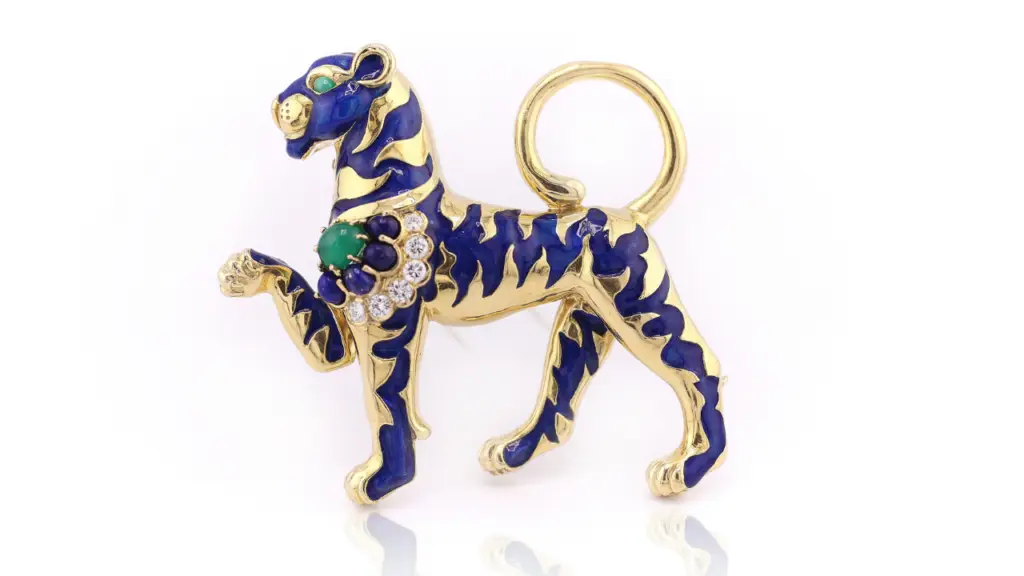
Among figurative motifs, animal brooches remain some of the most instantly recognizable and widely collected, cutting across periods, materials, and levels of connoisseurship.
“Birds are the most popular,” says Totah. “Likely because of the wings and sense of movement. Animal brooches are easy to understand and easy to wear in everyday life; you don’t need a lot of knowledge to relate to them. We focus particularly on Van Cleef & Arpels and Cartier animal brooches because of their style, quality and market value, but unsigned pieces can be just as compelling.”
Fisher affirms that “first choice for clients right now is signed animal brooches — lions, cats, birds, anything wildlife related. Second would be whimsical pieces more broadly. And third are Art Deco clips, which are always very popular.”
Sending a message
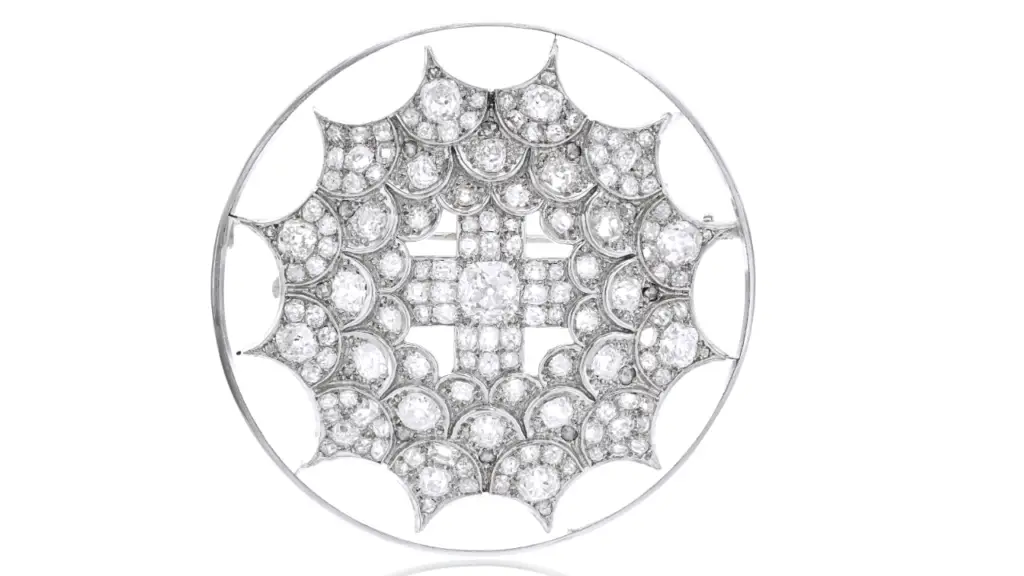
Few modern figures have demonstrated the brooch’s communicative power as clearly as Madeleine K. Albright, the 64th US secretary of state, who used jewelry as a form of deliberate diplomatic signaling in addition to ornament. After Iraqi state media referred to her as “an unparalleled serpent,” Albright responded by wearing a snake brooch to her next meeting with Iraqi officials, a calculated visual message of resolve that she later documented in her book Read My Pins. Her jewelry choices underscored how brooches could function as a concise, highly visible language of intent.
Ultimately the resurgence of brooches reflects a convergence of history, fashion, and market pragmatism rather than a passing trend. These jewels have moved decisively from the margins back to the center of contemporary collecting, valued not simply as nostalgic objects, but as deliberate expressions of identity and connoisseurship.
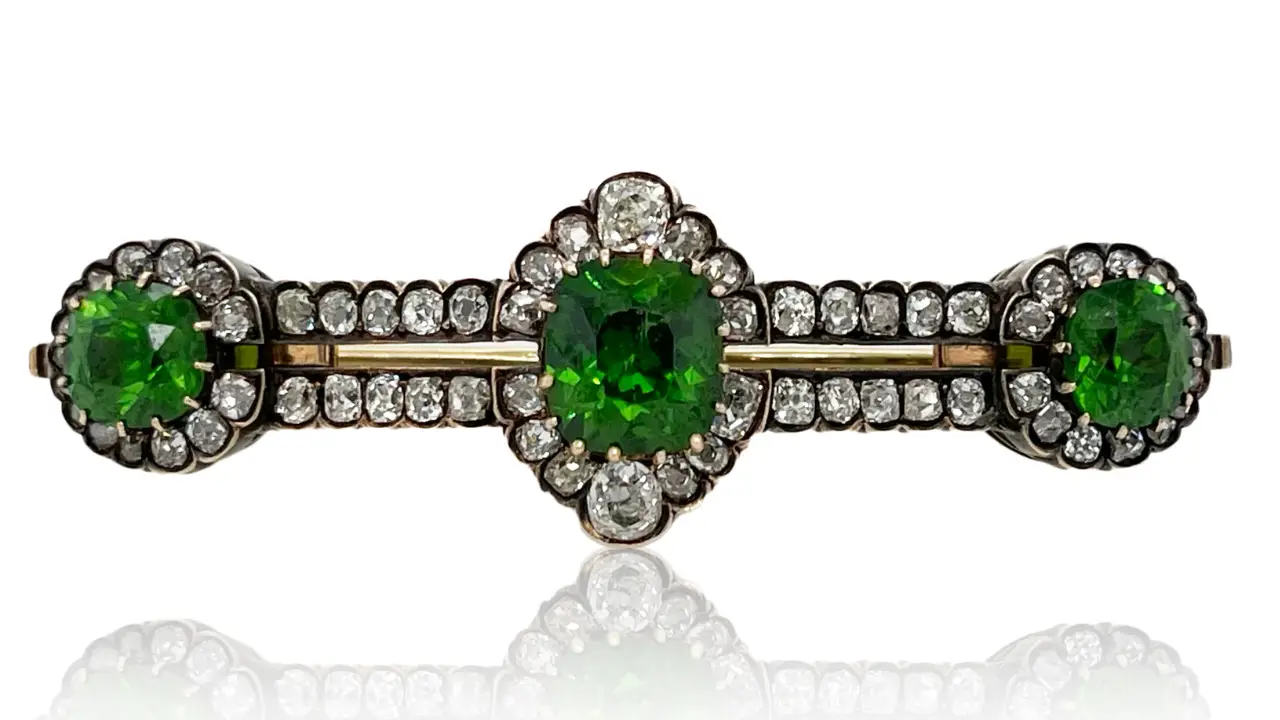
Main image: A demantoid-garnet and diamond Fabergé brooch, circa 1880. (Paul Fisher Jewelry)