

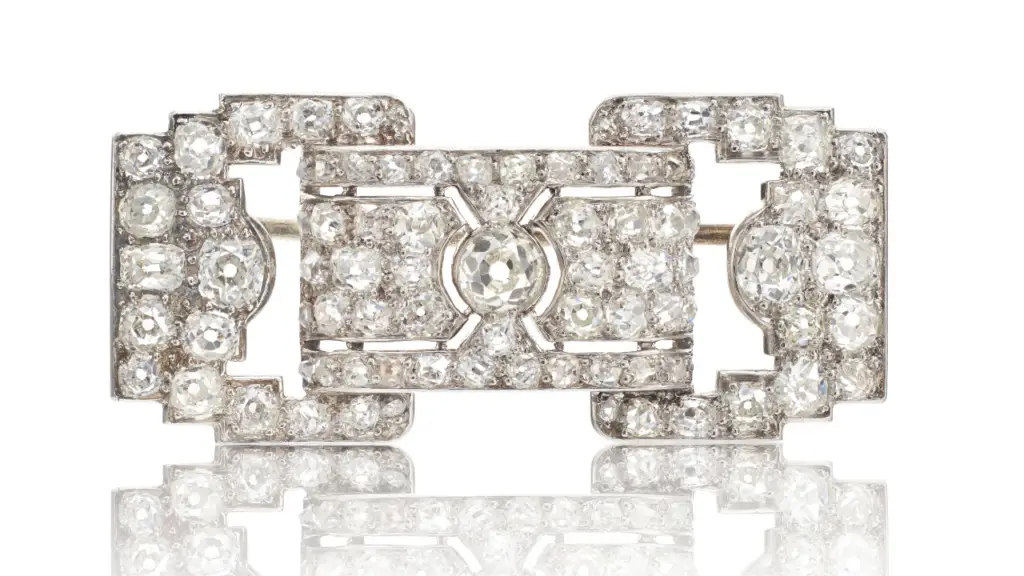
Platinum double clips
Originally a Cartier creation that other brands later adopted, this style exemplifies early-20th-century jewelry’s shift toward adaptability and intelligent design. The format consists of two matching clips secured by a removable central mount, allowing the jewel to function either as a single brooch or as two independent ornaments. This flexibility anticipated modern ideas of modular jewelry, while platinum’s strength enabled fine-diamond setting and crisp geometry. Today, double clips are valued as much for their engineering as for their design, with strong demand stemming from their wearability, Art Deco pedigree, and association with leading maisons.
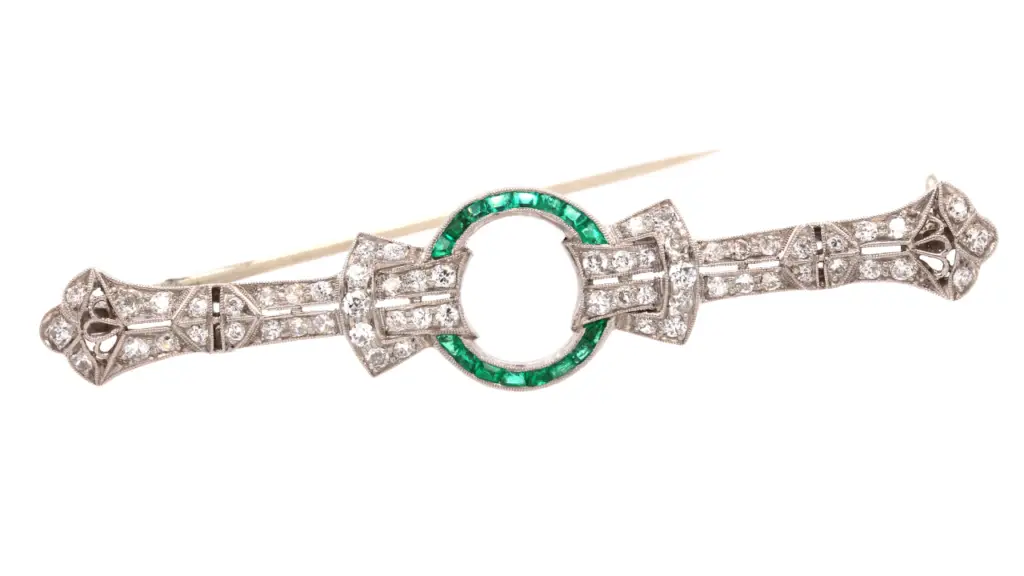
Bar brooches
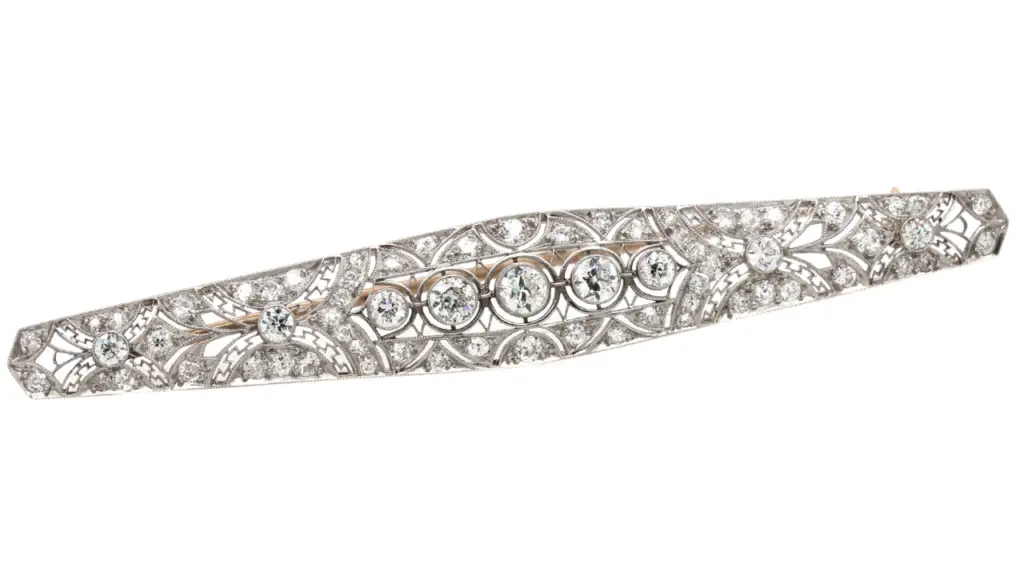
These reflect a preference for restraint and proportion that emerged at the turn of the 20th century. Their elongated, linear format provided a discreet yet elegant way to introduce diamonds or colored stones into everyday wear, particularly tailored garments. Produced throughout the Edwardian and Art Deco periods, bar brooches balanced ornament with utility, favoring precision over excess. Collectors continue to value them for their quiet sophistication, adaptability, and enduring relevance to modern wardrobes.
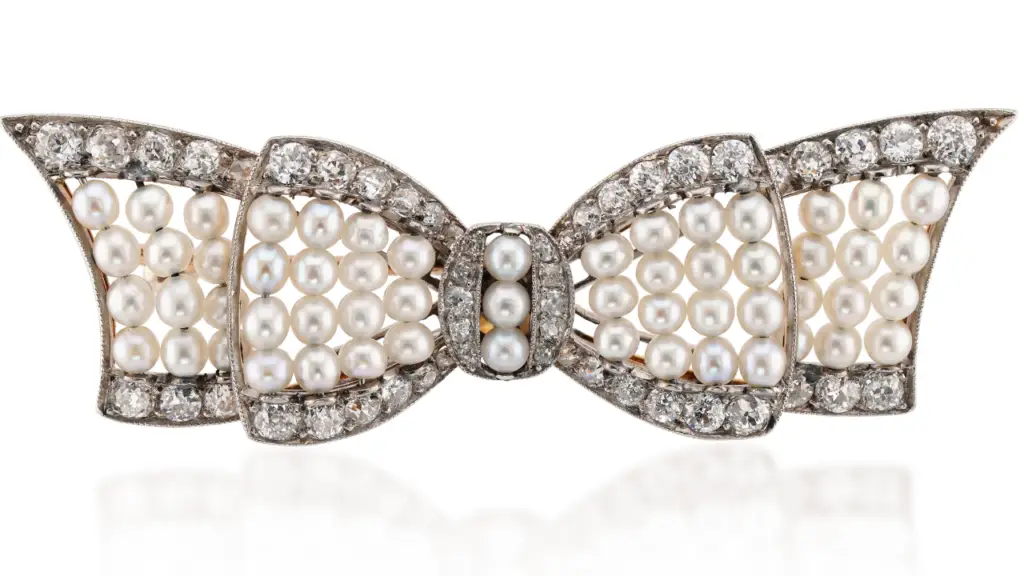
Bows and ribbons
This style translates the softness of fabric and ribbon into metal, using loops, curves and symmetry to suggest movement and elegance. Popular in multiple periods from the late 19th century to the heyday of Art Deco, the motif could take either a fluid or architectural form depending on era and execution. Containing diamonds, pearls or colored stones, bow brooches offered visual impact without heaviness. Their lasting appeal lies in their ability to combine decorative charm with structural discipline.
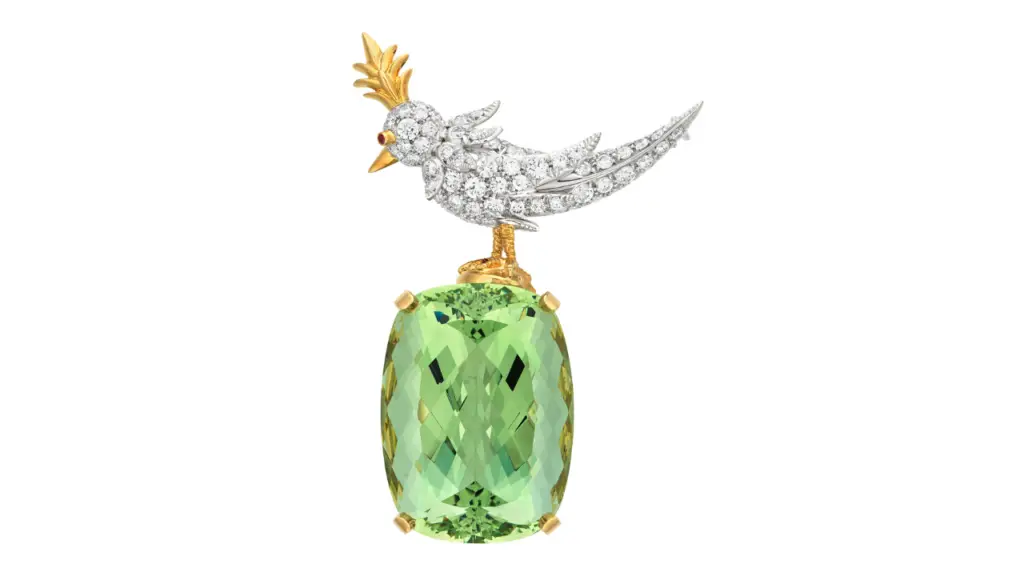
Animals
Animal brooches stand apart for their immediacy and narrative clarity. Whether abstracted or naturalistic, they capture movement, character and symbolism in a way few other motifs can. Birds, insects and felines have proven especially enduring, appearing across periods, materials and price points. Their appeal spans diverse levels of collecting, from casual wearers to serious connoisseurs, while signed examples remain particularly competitive for their combination of recognizability, craftsmanship and personality.
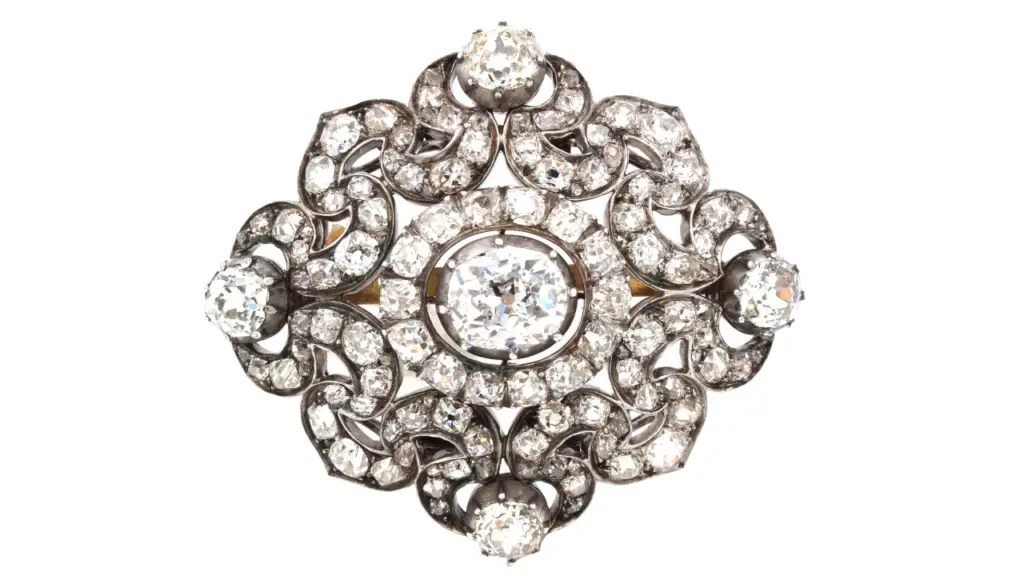
Chunky, early-cut diamonds
Brooches with diamonds from the 18th and 19th centuries embrace an aesthetic rooted in material presence rather than precision. Sporting old mine, old cushion, or table-cut diamonds — often with visible inclusions and irregular facets — in silver-topped gold or early gold mountings, these pieces prioritized weight retention and the ability to sparkle in candlelight. Their appeal today lies in that very imperfection, offering collectors a tactile connection to early diamond craftsmanship and historical authenticity.
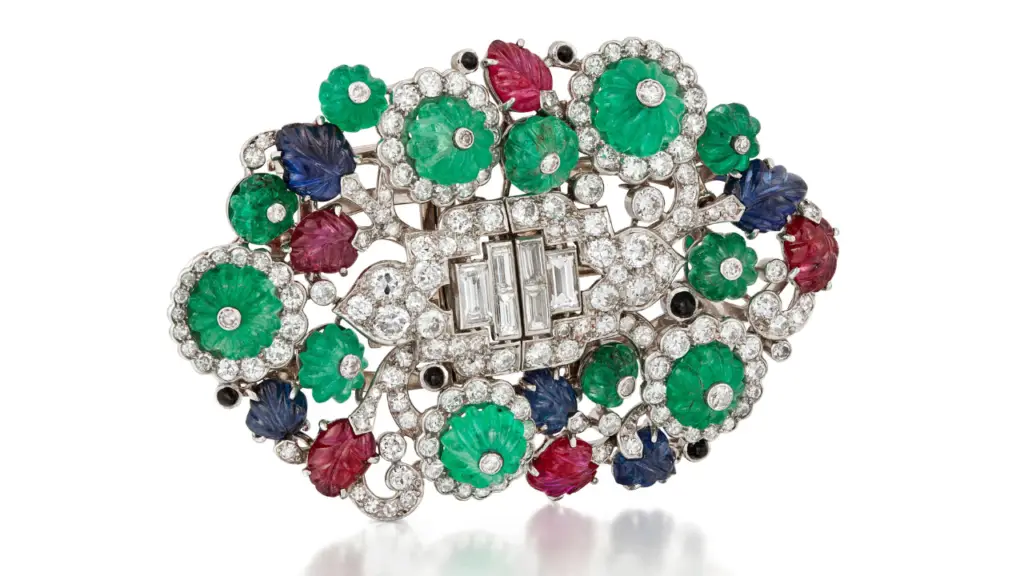
Carved gemstones
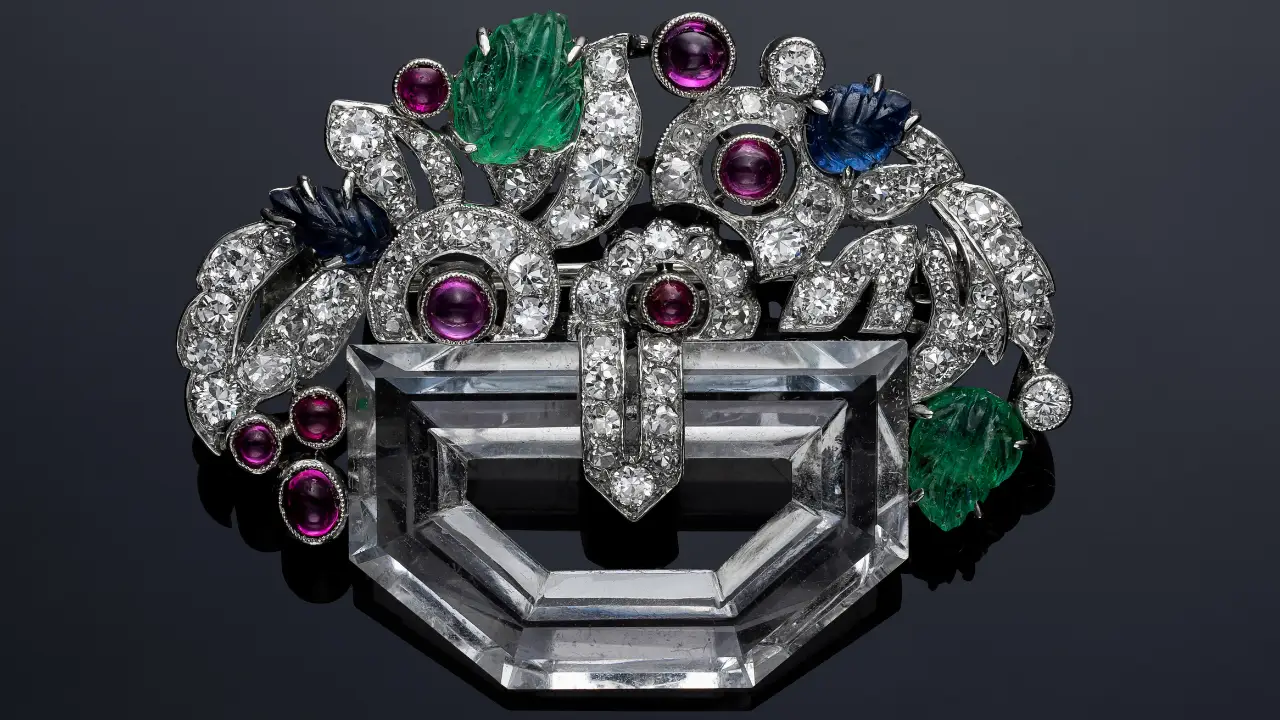
Brooches with these gems occupy a distinctive niche, combining lapidary artistry with jewelry design. The most celebrated expression of this style is the tutti frutti jewels that Cartier developed in the early 20th century, taking inspiration from carved Indian emeralds, rubies and sapphires that entered Europe through royal and aristocratic collections. Cartier reinterpreted the traditional Indian motifs of leaves, berries and blossoms into asymmetrical compositions in platinum and diamonds. Today, carved-gem brooches’ cross-cultural origins, technical complexity, and rarity make them a prized find.
Classic Art Deco
Square and rectangular diamond brooches are among the clearest expressions of Art Deco, with their sharp geometry and disciplined symmetry, though this style often mirrors other architectural or industrial-design forms as well. In crafting these pieces — traditionally in platinum — jewelers relied on precise stone calibration and careful proportion rather than mere ornamentation, arranging diamonds to emphasize structure and rhythm. Today’s connoisseurs appreciate that clarity of form and technical refinement.
Retro gold
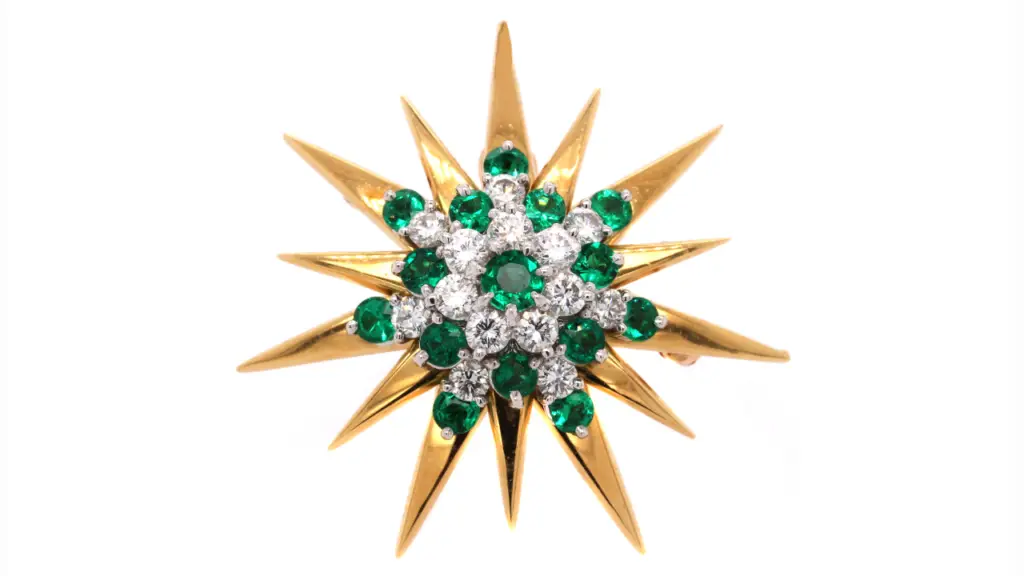
Examples of these brooches from the 1950s and ’60s show a confident, expressive period in jewelry design reflecting postwar optimism and economic growth. Predominantly featuring yellow gold, these brooches favored bold scale, sculptural forms, and textured surfaces over the restraint of earlier decades. Motifs ranged from abstract ribbons and scrolls to florals and stylized animals, often with sparingly-deployed diamond or colored-stone accents. Today, Retro brooches are increasingly in demand for their strong visual identity and wearability, and the way they capture a distinct moment in jewelry history.
Main image: Mauboussin brooch with rubies, sapphires, emeralds and diamonds. (Palais Royal)

What Does Love Look Like? Not Out-of-Touch Lab-Grown Messaging
The natural-diamond industry won’t attract couples by telling them synthetics devalue their relationship.

Bridal Shopping in the Age of AI
Couples are researching online, but they still want to make the ring purchase personal – and that creates opportunities.
Six Brands Serving Fresh Engagement-Ring Designs
Whether it’s hand-sculpted organic gold or reimagined divorce jewels, these designers are setting trends that resonate with bridal shoppers.