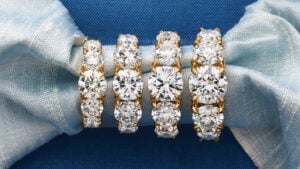

In Cartier’s latest high-jewelry collection, Sixième Sens par Cartier, you will find a secret rose-cut diamond. In addition to the cluster of rose-cut trillions lighting up its Phaan cocktail ring, there is one more hidden beneath its 8.20-carat central ruby.
The architects of this ring will tell you that this is not a frivolous display of haute-joaillerie excess, but rather a clever gemological trick. The positioning of the rose-cut diamond improves the lighting beneath the ruby, thus enhancing its color.
Understated beauty is a concept that has threaded through the history of this cut; from delivering masculine shimmer for maharajas, to playfully throwing shards of color across the faces of candlelit Victorian women.
Today, its soft power is still in vogue with a contemporary crowd. Designer Ellis Mhairi Cameron, who works with brown and orange rose-cut diamonds, has been inundated with orders for both male and female styles.
“With rose cuts, they can go for bigger stones, without the design being as flashy as a brilliant cut,” she says.
Omi Privé has similarly responded to “an uptick in desire” driven by demand for vintage styles. However, the brand argues that rose-cut diamonds are not only capable of understated shine — they also have a larger surface area, which adds depth and extreme sparkle.


To Market Natural Diamonds, The Entire Trade Must Do Its Part
No single company can carry the responsibility for reinvigorating interest in our product, nor should it.
What Can Diamond Marketers Learn from Other Sectors’ Campaigns?
Instead of rehashing the same old advertising that hasn’t worked in years, the industry needs to offer a real sense of connection, experts say.
The Luxury World’s Authenticity Crisis
As AI-generated content floods feeds and brand messaging becomes increasingly homogenized, jewelry marketers face a new challenge: proving what is real.