

In 1999, Ad Age named “A Diamond Is Forever” the best advertising slogan of the 20th century. Created by a young copywriter, Frances Gerety, in 1947, it was initially linked to the iconic solitaire engagement ring. Since then, it has come to be synonymous with the cultural and emotional power of all natural diamonds. All the great recent category-wide campaigns from De Beers — “Three-Stone,” “Journey,” “Right Hand Ring” — have come to market under that slogan’s umbrella. The line itself has enormous equity: The vast majority of consumers recognize it, and like all great lines, it is muscular enough to evolve and flex into fresh interpretations.
For that reason, when the company made the decision to support the natural-diamond category again in 2023, it launched its fourth-quarter promotion — a reimagining of the popular “Seize the Day” campaign — under this tagline. In 2024, this expanded into the “Forever Present” campaign, which ran for the holiday buying season in the US.
Bringing these De Beers-led, category-wide campaigns to consumers in a way that tapped into the existing brand equity of “A Diamond Is Forever” amplified their impact and provided a shortcut to imparting meaning. De Beers has therefore grown and expanded the role of marketing communications under the “A Diamond Is Forever” brand as the company deepened its investments in category marketing. This brings us to 2025 and the most recent iteration of the “A Diamond Is Forever” work: Desert diamonds.
Trust the process
At De Beers Group, we have always believed that the best marketing communications begin with a clear and simple consumer insight that is relevant, distinctive, and rooted in a real human need at that particular moment in culture.
For this reason, each and every campaign begins with extensive consumer research in order to understand where the opportunities with the most potential for our category exist. We then work on sizing the identified opportunities to understand the scale and revenue opportunities around each of them, including how much investment will be necessary at both the category level and the retail level to gain traction for a new idea, design or occasion. We also consider which idea will benefit the greatest number of manufacturers and retailers in the diamond pipeline, and which is the most resilient — which one will last over time and also defend against competition.
Once we have decided on the strongest opportunity, we formulate a group of concepts that express the idea in different ways, and execute a series of jewelry renderings. As before, these get tested in focus groups, this time against much more focused target audiences, before we move on to quantitatively testing those concepts and designs against a large, nationally representative sample to validate what we have learned in qualitative research and understand how different viable segments of the population respond.
Something a bit different
This is a long process, and it was exactly the process we followed in the development of the Desert diamonds campaign. Early on, women in the groups talked about wanting something a bit different, a piece of jewelry that was “not like everyone else’s.” For this reason, we went back to examining the essence of the diamond itself: rare, unique, and wondrously diverse in how it emerges from the earth — the opposite of cookie-cutter D-, E-, F-color, VVS-clarity laboratory-grown diamonds.
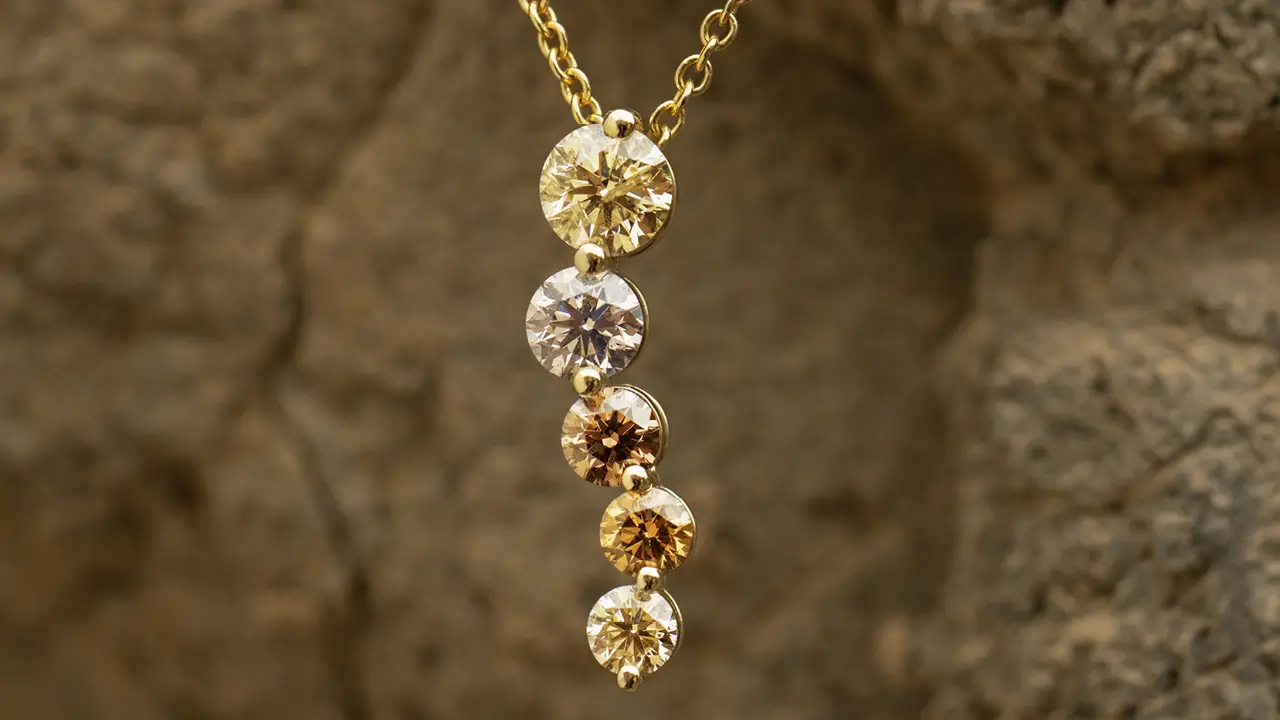
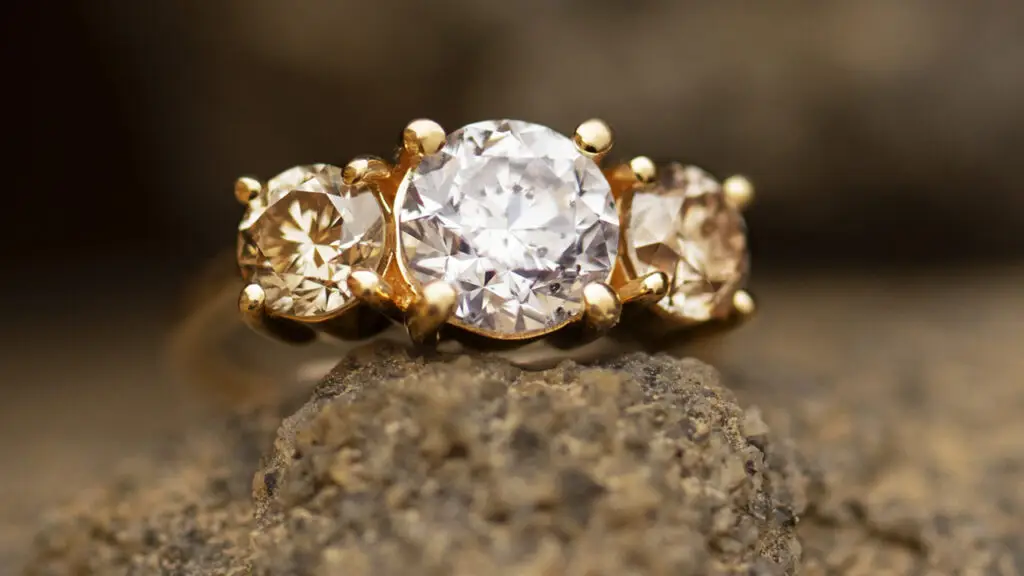
The strength of beacons is that they allow broad participation and let multiple partners at many key price points benefit from the umbrella campaign. To encourage this further in the case of Desert diamonds, we selected a broad palette — from whites to deep browns — and chose to illustrate the campaign with multiple piece types, including the classics that most retailers already stock, such as solitaire and three-stone designs. It was important to us that all retailers should already have something in stock — for example, a three-stone ring with soft white diamonds — that they could augment with new pieces and easily re-merchandise for the holiday season.
Our early learnings taught us that women want something unique, but also something classic and universal, when investing in natural diamonds. Beautifully colored stones in familiar settings allowed us to capture their attention in later rounds of research.
Tapping into cultural moments
However, the success of a campaign concept depends just as much on the marketing communications, and this is where “A Diamond Is Forever” plays such a key role. Through the “A Diamond Is Forever” branded communications, we can share news of cultural moments — such as celebrity jewelry styling at high-profile events — with consumer media outlets in a way that supports the natural-diamond category through connection not to a specific business or brand, but to a well-established marketing touchstone.
In the case of Desert diamonds, the advertising campaign launched in conjunction with strong celebrity support and social content, a key factor in embedding these diamonds as a cultural movement. At the launch event, music artists Teyana Taylor and Ciara sported the jewelry, and rapper Bad Bunny wore a football-shaped Desert diamond stud when he headlined the Superbowl halftime show. Desert diamonds also adorned Taylor Swift on her The Life of a Showgirl album cover and appeared in Doja Cat’s “Gorgeous” video. We are continuing to ensure that jewelry featuring this palette is visible throughout the season so it remains a fresh, modern, exciting idea, and “A Diamond Is Forever” provides us with the perfect way to promote it.
Putting diamonds front and center
The purpose of all these “A Diamond Is Forever” campaigns — and the way we measure their success — is to improve consideration of natural diamonds among our target audience: men and women ages 25 to 54 with household incomes of $100,000 a year or more. It is still early, but to date, we have had a very good consumer response to the campaign, with significantly increased consideration of not only the Desert diamonds products that feature in the ad, but all natural diamonds. We’ve also found that viewing the ads has driven high volumes of foot traffic to retailers, and we’ve seen ongoing press interest in the form of extensive positive coverage.
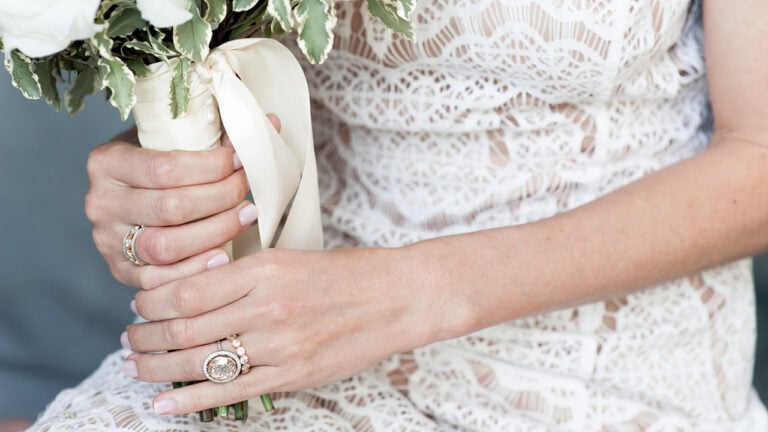
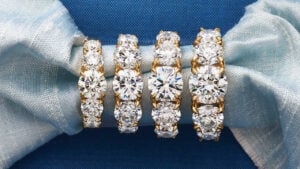
We have continued to support the self-purchasing and gifting campaigns in 2026’s first quarter, and are currently working on a bridal extension that will launch for consumers in early April — just in time for wedding season. That campaign will look a little different: It will leverage the same visual language, but it is editorially designed for a younger, pre-bridal customer and will be delivered to this target audience in the places and spaces where they consume media. This iteration will present the lighter end of the color spectrum — which tested better with the bridal audience for engagement purposes — and will focus on the three most popular designs for engagement and commitment: solitaire, three-stone, and anniversary bands.
For free materials, training, and campaign news, sign up on Promoboxx at adiamondisforevermarketing.com, and follow us on our social channels at @adiamondisforever.
Sally Morrison is the market lead for natural diamonds at De Beers.
Main image: An ombré pendant featuring Desert diamonds. (De Beers)