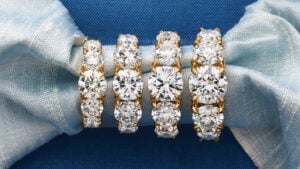

While the popularity of unusual gem shapes and innovative cuts has grown, they remain a niche segment compared to classic cuts — albeit an expanding one. Multiple factors go into determining which stones get these “special” cuts, and one of the most important is the material being used.
Good-quality rough in the holy trinity of ruby, emerald and sapphire is typically cut in the traditional manner, since it’s a safer bet for these more marketable stones. Special cuts are usually reserved for relatively accessible materials like tourmalines, aquamarines, amethyst, citrine, and others in the quartz and garnet families, since the cutter can afford greater wastage of rough. When cutters do employ innovative faceting on more precious stones, it’s either for special orders or to maximize the yield on the rough.
“On a special order, in order to match the unique measurements or shape the client has requested, the yield might be lower, which will result in a higher price in comparison to a classic cut,” explains emerald and diamond specialist Liran Eshed from Eshed Diam – Gemstar. “On the other hand, if there is no special order, the cutter will follow the shape of the rough emerald. [An alternative cut] might deliver a higher yield than a classic style, causing [it to have] a lower price point.”
Eshed has witnessed “more companies requesting distinctive cuts. We believe designers are looking to stand apart, make a statement, and this offers interesting opportunities for manufacturers.”
Here are some of the top figures who have gotten creative with their gem cuts.

To Market Natural Diamonds, The Entire Trade Must Do Its Part
No single company can carry the responsibility for reinvigorating interest in our product, nor should it.
What Can Diamond Marketers Learn from Other Sectors’ Campaigns?
Instead of rehashing the same old advertising that hasn’t worked in years, the industry needs to offer a real sense of connection, experts say.
The Luxury World’s Authenticity Crisis
As AI-generated content floods feeds and brand messaging becomes increasingly homogenized, jewelry marketers face a new challenge: proving what is real.