

Antwerp’s diamond industry has encountered plenty of hurdles in the past 20 years. India outcompeted it on costs, taking more and more of the city’s share in the global manufacturing business. Banks reduced Belgian dealers’ access to credit. Covid-19 lockdowns pushed business to Dubai. And Russian sanctions made Antwerp’s mainstays rethink their sourcing.
For once, though, the Flemish city has something going for it. Ever since the US removed tariffs on diamond imports from the European Union, local cutting and polishing has become a serious option, creating the potential for a miniature renaissance in the iconic gem hub.
Some of the most established local diamond companies are repatriating their manufacturing or considering doing so. Overseas manufacturers are asking Belgian units to cut diamonds for them. With America charging 50% duties on Indian goods, Antwerp suddenly has a competitive advantage.
Labor is about seven times more expensive in Antwerp than in India for 0.30 and larger polished, estimates Anshul Gandhi, CEO of Choron Group, which acquired Belgian manufacturer AMC earlier this year. Other market participants say this cost ratio can vary significantly with carat size. But the tariffs mean the Belgian hub is currently more cost-effective, Gandhi told Rapaport News this week.
The shift — still very gradual — has further benefited from the Flanders regional government’s decision to simplify the process of hiring foreign workers, enabling businesses to expand their capacity. Antwerp-based firms Pluczenik, Rosy Blue and AMC have all increased their local production or plan to do so starting January 1, when the new recruitment rule goes into effect.
Cost gap
In recent decades, Antwerp’s polishing sector has dwindled because of the higher costs relative to India, leaving the city with an almost exclusive focus on large stones and — to a lesser extent — high-quality smalls for luxury brands. Only 250 to 300 polishing workers are active, according to the Antwerp World Diamond Centre (AWDC).
But in September, the White House spared diamonds and certain other products from the 15% duty it had imposed on imports from the EU, of which Belgium is a member. The location where “substantial transformation” — namely manufacturing — takes place determines the product’s origin under US tariff rules.
Routing goods through Mexico has become a well-publicized — albeit controversial — work-around for Indian manufacturers looking to serve US clients. Taking advantage of the EU’s preferential terms has added another option.
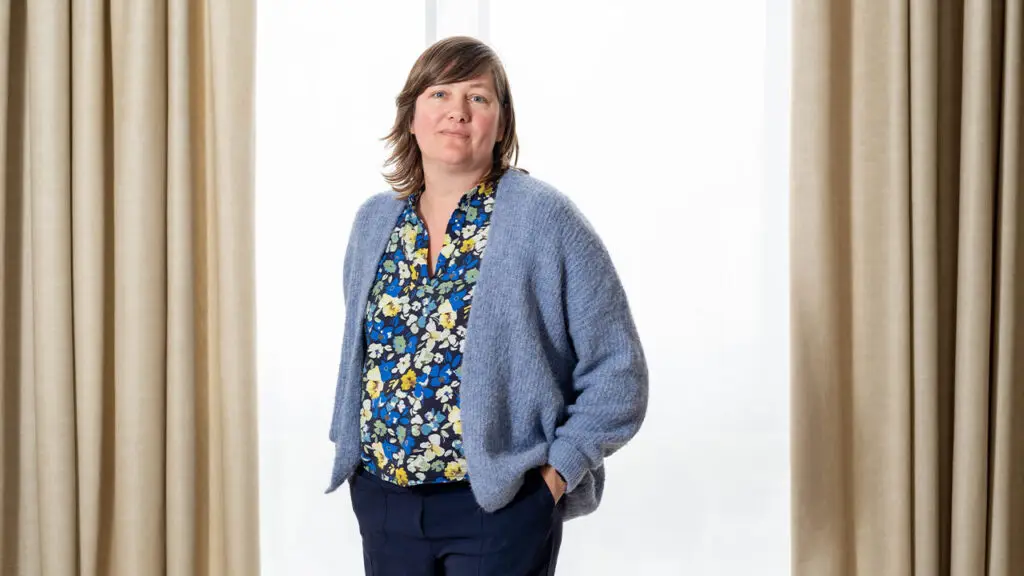
“When…the difference is zero versus 50%, a lot of people are calculating and saying, okay, how much does it cost me to polish this [in Antwerp] and how fast can I have it?” said AWDC CEO Karen Rentmeesters in a recent interview.
Slow change
That said, there has been no substantial increase in polishing activity or rough imports for manufacturing so far, a spokesperson for the AWDC pointed out on Wednesday. In fact, Belgium’s rough imports fell 19% year on year to $255.4 million in October and slipped 5% to $245.2 million in November, according to data from the trade body.
“Companies are adopting a ‘wait and see’ approach, rather than rushing to relocate their production to Belgium and reorganize themselves here to polish large volumes of goods,” the spokesperson explained. “What we do want to emphasize is that the 0% rate is a major advantage for the usual, regular polishing production in Antwerp.”
Cutting and polishing in Belgium is “nothing new,” acknowledged AWDC vice president Ravi Bhansali, who is also managing director at diamond manufacturer and trader Rosy Blue. However, the zero-tariff rate “naturally encourages companies to polish diamonds, mainly 1 carat and larger stones, [in Antwerp], as small goods are economically unviable to produce here.”
Conveniently, the range of goods viable for production in Belgium overlaps with the sizes most in demand in the US consumer market at present, namely 2-carat and larger rounds and fancies.
Furthermore, in November, the Flemish government added diamond polishers and sorters to its list of “medium-skilled shortage occupations.” This lets companies in the Flanders region, which includes Antwerp, apply to get work and residence permits for workers coming from outside the EU to fill employment gaps, without having to demonstrate shortages of local laborers.
Africa comparison
The tariff situation, along with the eased process of hiring foreign workers, has incentivized Pluczenik to increase production on the banks of the Scheldt and plan a more significant expansion starting January 1. Founded in 1948, the company operates its main factories in Botswana, Namibia and South Africa and has an additional facility in India.
American import duties on polished from Botswana and Namibia are currently 15%, while South African goods carry a 30% rate. Those three African nations otherwise have similar expenses to Antwerp and, like Belgium, are feasible mostly for larger stones.
“The cost of manufacturing in Belgium is the same cost [as] in Africa, in Botswana, in Namibia — there’s no difference,” Chaim Pluczenik, chairman and CEO of the namesake dealer and manufacturer, told Rapaport News last week. And thanks to technology, he added, that cost is also “not far away” from India’s.

Smaller goods
The zero-tariff development has even enabled Antwerp manufacturers to produce smaller sizes than before, since it helps offset the cost gap.
In normal circumstances, Pluczenik manufactures rough of at least 3 or 4 carats with SI2 or higher clarity in Antwerp, the company owner said. “Of course, we’ll continue with the 3 carats and upward [once our local production increases in January]. But if there’s a possibility of also starting to manufacture 8-grainers [2-carat rough], then we’ll do that as well.”
The company has plenty of space: It used to employ 150 polishing workers and sorters in they heyday of its Antwerp factory, but now has just 30 in the same location, Pluczenik added. He expects this to rise gradually to 50 as it relocates workers from its other sites.
Safe option
In this context, Antwerp firms are also receiving requests for contract work from overseas companies looking to cash in on the exemption without taking risks. AMC has seen a fivefold increase in these types of calls since September, said Gandhi at Choron.
AMC — which sold its Antwerp factory to fellow manufacturer HB in 2020 and relaunched in the city in 2022 — currently has three full-time and two part-time cutters, producing 0.30-carat and larger polished. The company has a historic focus on stones ranging from this size to 2.99 carats, which it supplies to US and European luxury brands.
“With current market conditions, manufacturers are unlikely to make significant investments in establishing new facilities in Antwerp until there is clarity on a potential US-India trade agreement,” Gandhi said. “In the meantime, companies are relying on state-of-the-art operations such as ours, along with other reputable factories in Antwerp, to provide contract manufacturing for polished diamonds heading to the US market.”
Uncertain situation
The shifts reflect the fact that the US is taking tariff enforcement seriously, requiring diamond companies to make genuine adjustments to their supply chains, said the AWDC’s Rentmeesters.
Those who try to lie, saying their goods were polished in Europe when they weren’t, run a “definite risk of being caught if they are not able to produce substantial evidence,” she warned. “We know of a number of cases where…polished diamonds were actually blocked by [US] border control in recent weeks.”
Meanwhile, the industry is dealing with many unknowns. Besides the shaky state of demand in general, the US and India are still negotiating a trade deal. Even if they reach an agreement, it is unclear whether this would result in a full tariff exemption for diamonds from the country. In September, diamonds appeared on a list of products that US President Donald Trump might consider exempting from import duties for countries that have clinched a trade pact with America. The US Supreme Court is also reviewing whether the tariffs are legal; a ruling could come at any moment.
“A lot of people will still be cautious about making rash decisions or moving entire teams,” Rentmeesters predicted. “Every [business owner] has to weigh the decision and see what works. It also depends on the entire market performance, which…is still also very fragile.”
US jewelers “likely have significant stocks of polished diamonds at the moment, as traders exported a large part of their inventory to the US in March [and] April,” the AWDC spokesperson added. “As soon as those stocks are noticeably reduced, demand will rise again, and this could lead to more activity in Antwerp.”
Main image: A diamond cutter at work in Antwerp. (Antwerp World Diamond Centre)