
It’s almost a year since De Beers made one of its biggest price cuts in history, slashing 10% to 15% off the value of its rough. Few sightholders expect anything similar in 2025, despite prolonged weakness in the market. The reason for this is clear: Anglo American is trying to sell the company.
The company has not made significant changes since that December 2024 realignment. The diamond miner kept prices steady at this week’s sight, which runs from Monday to Friday in Gaborone, Botswana insiders told Rapaport News. It did, however, give customers full flexibility to refuse goods without it affecting future allocations — continuing a policy it introduced at the last sight in October.
It’s not unusual for De Beers to expand its flexibility and maintain price stability when business slows. Price cuts risk flooding the market with inventory, devaluing polished, and harming the economic viability of mines.
But what is significant is how long it has kept up this protective strategy. While there are no guarantees, sightholders seem resigned that De Beers will probably maintain its price levels until the parent company succeeds in divesting from the iconic diamond brand.
“They don’t want to reduce the prices, because [it’s] more important for them to keep it as is for the sale of the company,” said a source in the rough market.
There is little demand at the current prices, the source noted. Sightholders mostly took advantage of the flexibility, with the possible exception of the in-demand and hard-to-find large goods.
The company does not comment on pricing on a sight-by-sight basis.
Sight and unseen
De Beers is essentially selling to sightholders in two ways: the sight system, which follows its official prices, and what Anglo American calls “stock-rebalancing initiatives” — a reference to the special cut-price deals that have been widely rumored since early this year.
The official sight prices have been steady throughout 2025. De Beers’ average price index, which tracks rough-price fluctuation on a like-for-like basis, stood at 94 for the first, second and third quarters of this year, Anglo American reported last month in its latest production report. The index is relative to 100 as at December 2006 and reflects an average of the sights that took place within the given period. The third-quarter index fell 12% year on year because of the price cut in late 2024.
The measure excludes the stock rebalancing. The special deals were rumored to entail discounts of 10% to 20%, though Rapaport News could not verify this.
Dual track
This comes in the context of bidding for De Beers, with the governments of Botswana and Angola among those expressing interest. Other suitors reportedly include former De Beers CEOs Bruce Cleaver and Gareth Penny, Australian mining veteran Michael O’Keeffe, and Indian billionaire Anil Agarwal.
Anglo American said it was “making good progress with the dual-track separation” — referring to efforts to execute a trade sale of the business and prepare for an initial public offering (IPO) at the same time. “A structured sale process is currently underway,” it said.
This all indicates a conclusion to this episode might be close. In the meantime, De Beers doesn’t want to change too much. A price collapse would require a further revaluation of the business, after two major write-downs in less than two years.
While the special deals have clearly impacted the market, a change to official prices would likely be more damaging.
This preference for stability is, in all probability, why De Beers also postponed rolling out a new sightholder roster to June 30, 2026, having planned to trim the list by the end of this year.
Supporting polished
The usual considerations are still there: De Beers doesn’t want to destroy the market with price reductions, especially given the difficulties the Indian manufacturing sector has had this year. The country imported hefty rough volumes earlier this year, just as the crisis over US import duties began.
“Because of the tariffs situation and the goods that came into the market in April, May and June, the miners all realized they sold too much into the market,” said a sightholder on condition of anonymity. “Now is the time to hold back and give support to the polished.”
But the sale process appears to be driving De Beers’ policy of keeping everything the same for as long as possible.
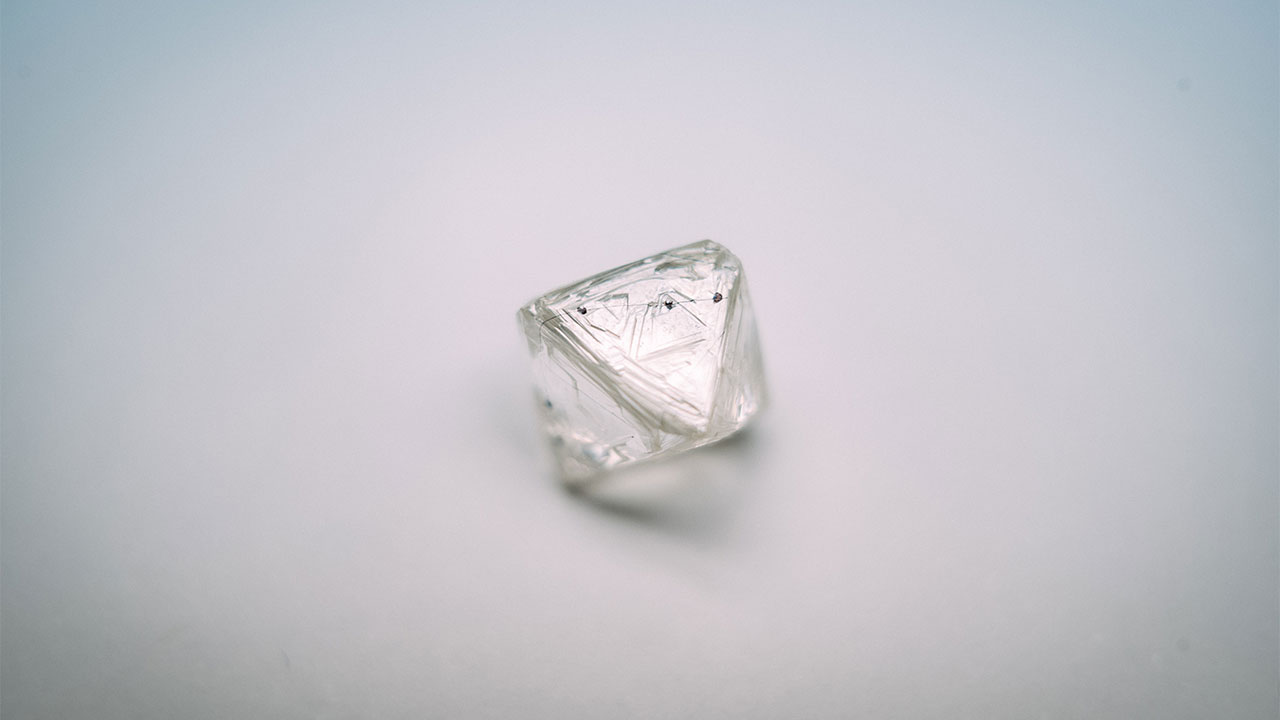
Image: A rough diamond. (Ben Perry/Armoury Films/De Beers)