 WhatsApp
 Email
Email
 Facebook
 Twitter
 LinkedIn

There are many reasons customers buy birthstone jewelry. Some purchase it to celebrate identity, family, and life’s milestones. Others choose it because it’s more budget-friendly than diamonds, while many simply appreciate the colors of gems such as amethyst, aquamarine, peridot and topaz – respectively the stones for February, March, August and November birthdays.
Already a popular category, “birthstones are likely to become more important in fine jewelry because they align with several broader consumer trends: personalization, storytelling, colorful gemstones, stackable styling, sentimental gifting, and everyday luxury,” says Samantha Moreau, product manager for fine jewelry at Stuller. “The opportunity is strongest when the designs feel elevated, modern and customizable.”
Aditi Daga, cofounder of jeweler Angara, sees the segment as “a great starting point” where buyers can “go in with something very thoughtful.”
Who’s buying?
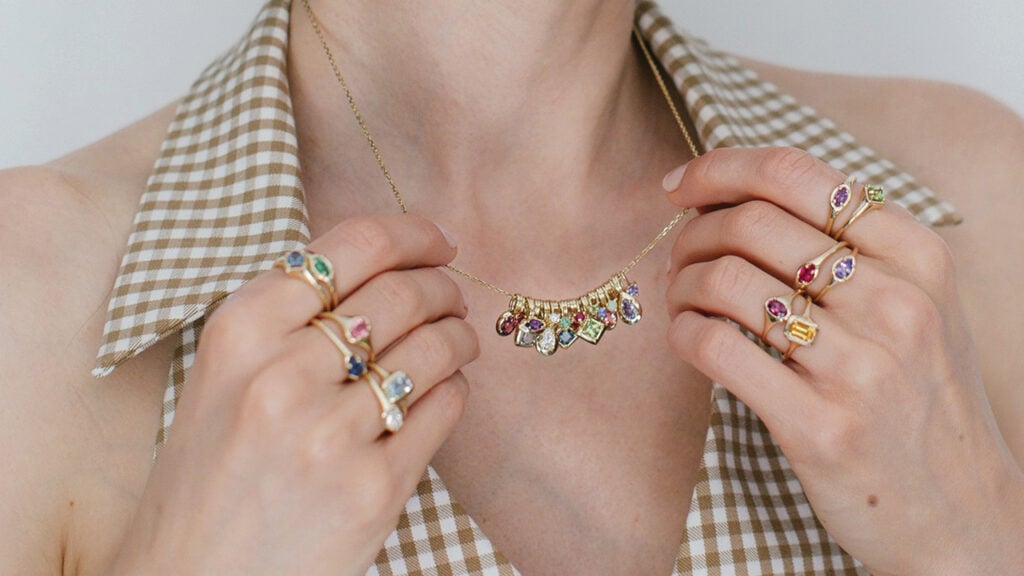
In the last decade, there’s been a shift in who purchases birthstone jewelry. “Millennials and Gen Z are definitely more interested in the symbolism and the meaning behind things,” says Daga. “[However], the value part is still driven by Baby Boomers and Generation X, [as] they are the ones who have hit all those sweet life-stage spots [like] birthdays, anniversaries, grandchildren.”
Jeweler Jason Arasheben has found that Millennials and Gen Z are the leading generations purchasing in this category. “Younger customers are much more comfortable incorporating color into fine jewelry, making birthstones a natural choice for custom designs,” explains the CEO and founder of Jason of Beverly Hills.
Rosanne Karmes, founder of Sydney Evan, estimates that around 60% of her brand’s birthstone purchases come from Gen Z consumers. She attributes much of that demand to social media platforms such as Instagram, and Gen Z’s “awareness of the world.”
Moments to celebrate
While birthdays remain the traditional occasion for this jewelry segment, consumers are increasingly buying birthstone pieces for other meaningful celebrations as well.
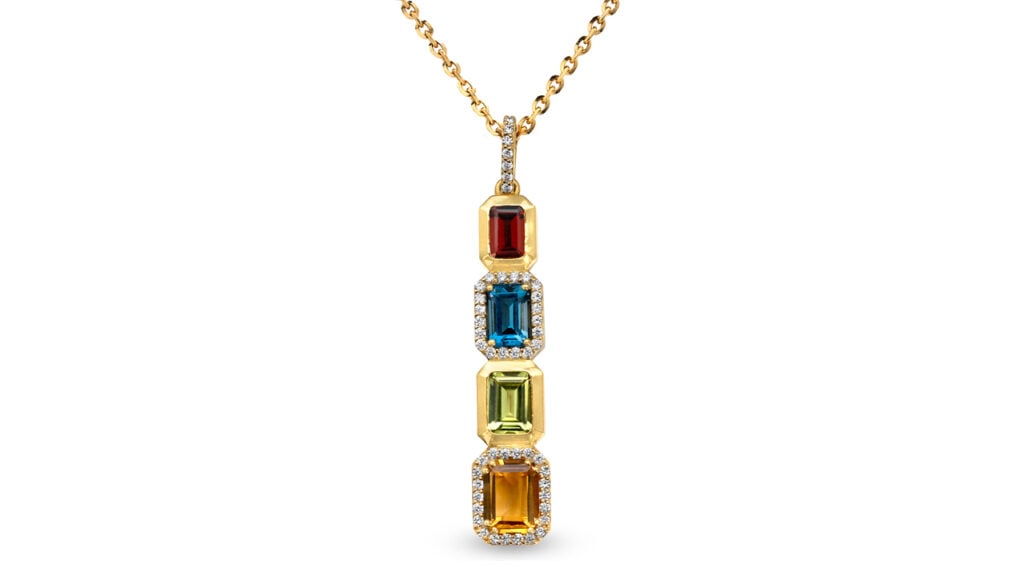
Mother’s Day is one of the biggest selling occasions for birthstones, according to Moreau. The colorful category is particularly significant for family-related jewelry, as customers can combine children’s or grandchildren’s birthstones in one meaningful piece, or add multiple pieces over time as their families expand and reach new milestones.
Engagement rings are also getting on board with this trend. Some jewelers are now designing rings with “his” and “hers” birthstones flanking a center diamond. “[It] really shows that women are wanting to personalize every piece of jewelry that they have, especially an engagement ring,” says Nadine Arzerounian, co-owner of jeweler Tacori. “It’s such a personal piece of jewelry that has so much meaning behind it.”
Gen Z consumers are even choosing birthstones as center stones on their engagement rings to inject more meaning and symbolism, reports Daga. That tracks with the general trend of colored-gem centers, which she’s seen triple from 5% of her engagement-ring sales 10 years ago to 15% now.
And it’s not always about symbolism. Arzerounian recalls a woman approaching her at a show in Kansas City and declaring, “I want amethyst in my engagement ring.” When Arzerounian asked her about the meaning behind the choice, the customer replied, “I just love the color purple, and I want my engagement ring to be purple.”
Changing hues
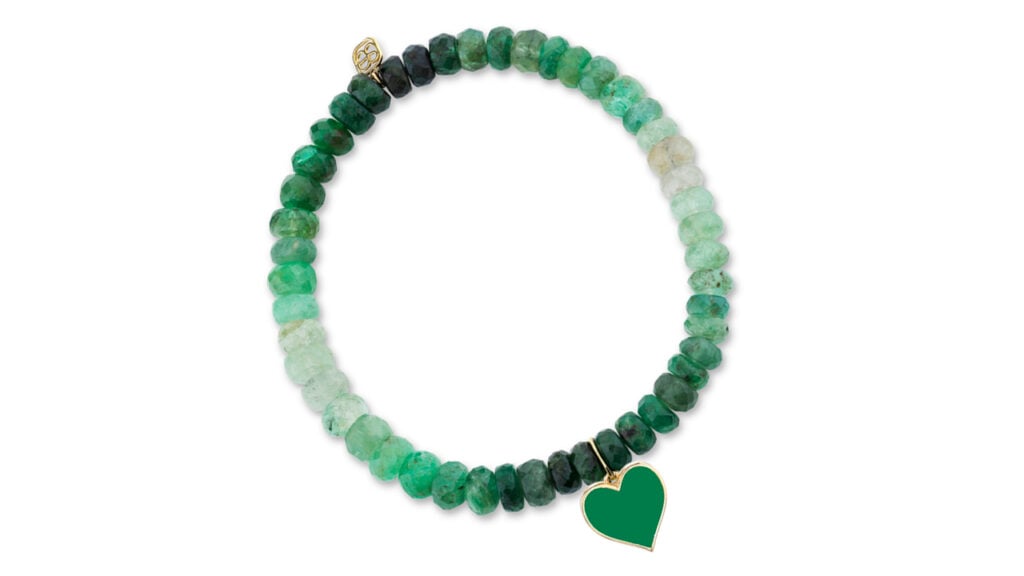
While many birthstone customers choose their own month’s gem for their jewelry, others may opt for an alternative because they prefer the color or because the traditional stone isn’t so desirable, says the eponymous founder of Emily Warden Designs. In the latter case, Warden might take the traditional birthstone and feature it in a more creative way to enhance its desirability.
“For the less-popular gem types, I incorporate more unique cuts – for example, the peridot [as] a princess cut, rather than a traditional round or oval stone shape, to add an extra element to the design,” she elaborates. “People have really been drawn to more unique shapes like marquise and princess cuts because they are less commonly seen among birthstone jewelry.”
Although the traditional birthstones are rich in symbolism and sentimental value, Arzerounian, too, has noticed a shift toward modern alternatives, especially with several months having more than one gem to choose from. “Old birthstone jewelry has been around for a very long time. I think everyone is looking for a fresh take on it,” she says. “We’re starting to see a lot more of things like green tourmaline” – one of the modern options for October – “versus the peridots and garnets,” which are standard for August and January.
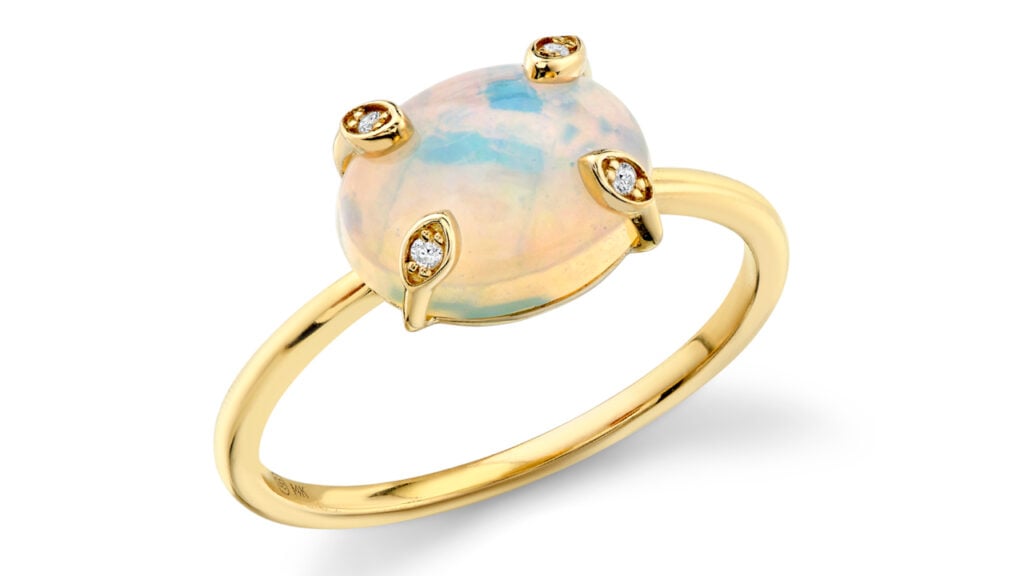
Arasheben finds that diamond – the stone for April – continues to be the gemstone of choice, as it is classic, versatile, and suitable for any occasion. He also highlights tourmaline and opal – both October stones – as popular options.
Stepping stones
Price is also influencing buying decisions, particularly among younger consumers. Gen Z has started to turn to lab-grown alternatives due to the lower price point.
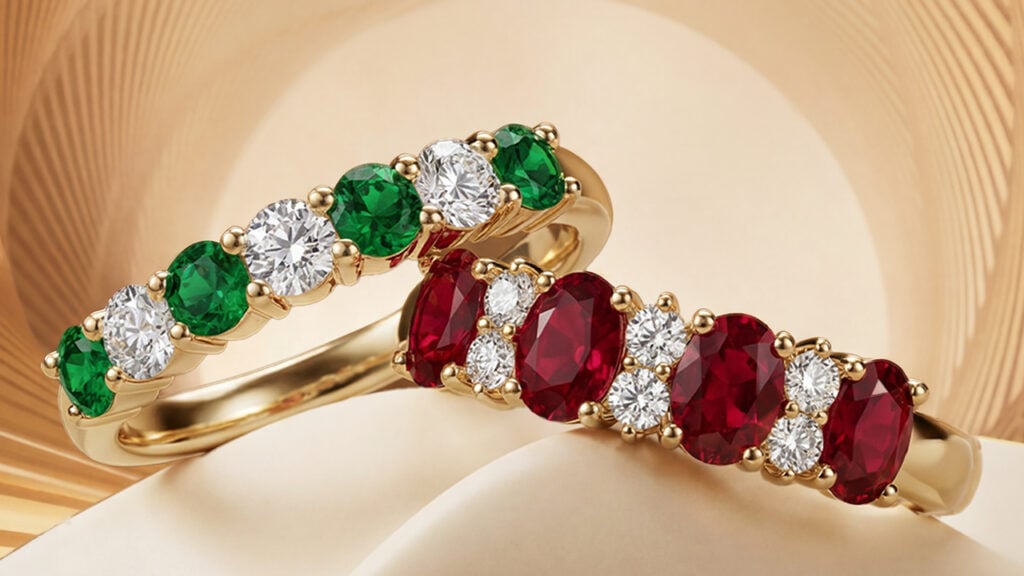
“Already 60% of all diamond engagement rings are lab-grown diamonds,” Daga says of her sales, while “50% of our emeralds, 40% of sapphires and 35% of rubies are now lab-grown.” The move toward synthetic gemstones looks set to continue, especially among Gen Z shoppers – though as they age and their budgets increase, some will likely transition to natural gemstones, making lab-grown jewelry a stepping stone to higher-value purchases, Daga predicts.
Warden primarily offers natural stones, but for rare and expensive gems like alexandrite – one of June’s birthstones – she has a lab-grown option that’s more affordable.
While birthstone jewelry still primarily remains a gift purchase, retailers say self-purchasing is steadily increasing, reflecting the broader trend of consumers buying jewelry for themselves. Women feel more financially independent and empowered as they meet milestones such as work promotions, and self-purchasing lets them creatively express themselves through the design – whereas “someone who’s gifting [may choose] to be a little bit safe…to make sure [it’s something the receiver wants to wear],” Daga explains.
Male order
Interest is also growing among male consumers. Men are increasingly choosing pieces featuring their birthstones or zodiac signs, according to Karmes, who notes that celebrities such as Harry Styles have helped normalize jewelry for men by wearing pearl necklaces and other gem-set pieces.
“The whole world [has] changed,” she says. “There’s no limit. Men [can] wear anything today.”
Some men are choosing a signet ring or a pendant with their birthstone – “they don’t want something as sparkly,” says Daga – while others opt for emerald or sapphire jewelry. Over the past decade, Arasheben has seen male clients show “increased interest in birthstones like pearl and opal, which are being incorporated into men’s custom pieces far more often than in previous years.”
As trends continue to evolve, retailers expect birthstones to remain a meaningful way for consumers to express their identity and celebrate life’s important moments.
What’s your month’s gem?
January – Garnet
February – Amethyst
March – Aquamarine, bloodstone
April – Diamond
May – Emerald
June – Pearl, alexandrite, moonstone
July – Ruby
August – Peridot, spinel, sardonyx
September – Sapphire
October – Opal, tourmaline
November – Topaz, citrine
December – Turquoise, tanzanite, zircon
Source: Gemological Institute of America (GIA)
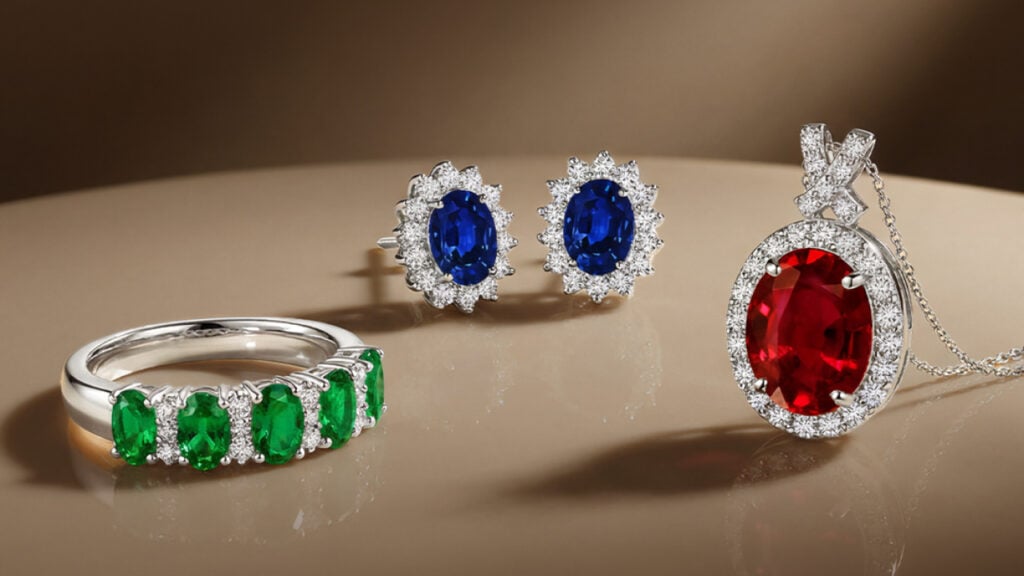
Main image: Sapphire and diamond earrings, an emerald and diamond pendant, and a three-stone ruby and diamond ring. (Angara)