
The US diamond and jewelry trade is supposed to spring into life in the last week of July as dealers return from their summer vacations ready to fill clients’ holiday demand. But this year it hasn’t.
America’s largest jewelry retailers are pushing off buying under the cloud of President Donald Trump’s tariff policy. The baseline 10% duty on imports from April 5 added to sourcing costs and created deep uncertainty. Major companies couldn’t predict whether the levy would increase, decrease or stay the same, and how this would affect prices.
Many were expecting this to have been resolved by July 9, but Trump pushed the final decision off to August 1.
On Monday, the US agreed to a deal with the European Union calling for 15% tariffs on imports from the bloc.
On Wednesday, Trump gave what appeared to be a glimmer of clarity on Indian tariffs, announcing on his Truth Social platform that duties on the main producer of polished diamonds would be 25%. However, the industry expects negotiations — and the uncertainty — to continue.
In this context, vendors that sell natural diamonds and jewelry to the heavyweight retailers say orders are around a month behind schedule. Any outright buying — as opposed to memo deals — is in small quantities, they reported, speaking before Trump’s Wednesday declaration.
“It’s not like it has completely stopped, but the volume has drastically gone down,” said an executive at an India-based company that supplies to some of the largest retailers.
Broken schedule
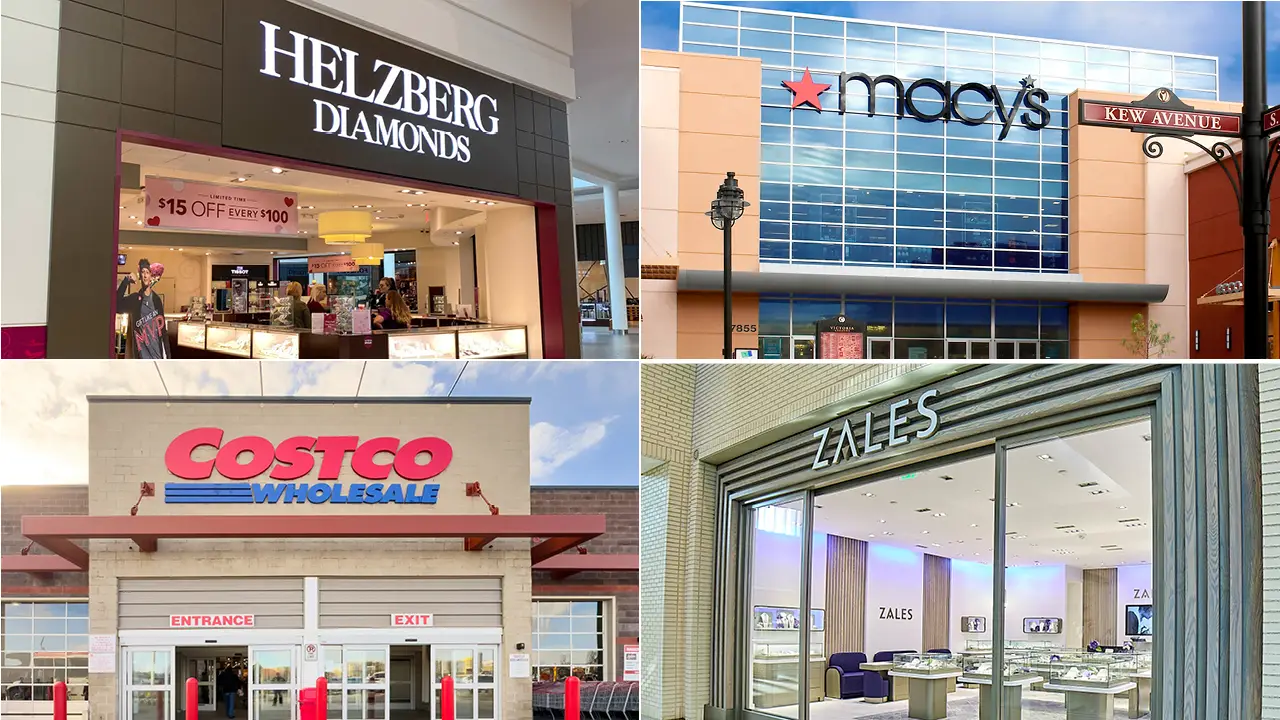
The majors — including Signet Jewelers and Helzberg Diamonds — mostly buy finished pieces from jewelry manufacturers and source some additional loose, especially for engagement rings.
They usually start their holiday procurement process at the JCK Las Vegas show in early June, where they visit vendors’ booths to discuss their plans and view new designs. Department stores such as Macy’s and JCPenney are also in this category, as are retail giant Walmart and warehouse club Costco.
They then place their orders of finished pieces by early or mid-July, enabling jewelry manufacturers to source loose stones from cutters and create the final pieces in time for delivery in the late summer. The stores have to be full of product by early November.
The sentiment at this year’s JCK was more cautious, with the majors placing fewer indicative orders. At the time of writing, vendors were still waiting.
One supplier said the slowdown was most intense in earrings, rings and pendants featuring diamond studs and solitaires. Fashion is also weak, vendors said, as companies such as Signet have shifted focus to lab-grown in this segment.
Signet and Helzberg declined to comment. Macy’s, JCPenney and Costco did not respond to requests for comment.
Confluence of factors
The principal driver has been a wish to avoid paying higher prices for tariffed inventory only to find that duties disappeared or were reduced. That looks like a bad decision in hindsight given the new rates that India and the EU face.
Jewelry is an even bigger issue than diamonds, since Trump has threatened 34% tariffs on goods from China, 36% on Thailand, and 32% on Indonesia — all important locations for jewelry manufacturing. Double tariffs could even be possible in cases where American companies import loose stones, send them to overseas manufacturers for mounting and reimport the finished items.
The majors are seeking ways to reduce the burden. In April, Signet told suppliers it would not accept any tariff-related charges on outstanding orders. Some of the large retailers are splitting the tariff with their vendors.
But wider issues are also at play.
Many of the majors have invested heavily in lab-grown. Walmart, for instance, has moved almost entirely over to that. Natural-diamond vendors feel that absence of demand.
In addition, the retailers prefer to keep lab-grown stock over natural since it costs less to hold the inventory and sells faster. The tariffs in dollar terms are also cheaper per carat given the product’s lower value.
More generally, the big players have been improving their inventory management, working down their existing stock, filling stores with the most sellable goods, and taking more goods on memo.
Signet’s consignment inventory stood at $601.5 million on February 1, 2025 — 13% more than a year earlier — according to the company’s most recent 10-K annual financial report. The company is also centralizing its diamond sourcing as part of its “Grow Brand Love” strategy, seeking more agility and ability to negotiate better pricing.
This more conservative approach to inventory entails buying later in the season — a phenomenon vendors have observed over the past two years.
“Retailers are cautious with overstocking, [while] shifting consumer priorities and global economic uncertainties have led major US retailers to delay purchases,” said Dinesh Lakhani, group director at Indian diamond manufacturer Kiran Gems. “They now prefer leaner inventories and are buying closer to demand, especially ahead of the holiday season, impacting early-year market momentum in the natural-diamond and jewelry trade.”
Stockpiles growing
The slower sales have had a trickle-down effect on the polished market. The majors are important outright buyers of diamond jewelry at this time of year, since independents tend to prefer memo and have smaller-scale inventory needs. The slowdown impacts demand for loose diamonds from the jewelry manufacturers that sell directly to the majors. Sentiment in the Indian market, weak since the tariffs begin in April, has remained low.

Inventory of the small diamonds typically destined for majors’ fashion-jewelry businesses has surged. The number of round, 0.30-carat diamonds on RapNet has more than doubled globally since April 1, rising 107%, according to data from the platform (see graph). Inventory of 0.40-carat stones in that shape has increased 74%, while the number of 0.50-carat diamonds has soared 100%.
“The uncertainty around tariffs has effectively frozen the loose natural-diamond market, as buyers hesitate to buy without clarity on costs and timing,” said a US-based loose-diamond supplier. “If there’s a resolution by late August, we could see a sharp rebound in September.”
Shortage of diamonds?
The trade is now waiting for more stability after Trump’s Wednesday statement on India. Once there is a final decision on tariffs, it will take time for the majors to decide on their policies and place orders. If that happens soon, the sourcing process might only be a few weeks behind schedule. But now suppliers know to expect the unexpected when Trump is in charge.
They are, however, optimistic that diamonds could be in shorter supply once the big players start buying later in the year. This might be wishful thinking given that most sizes are currently in oversupply. At best, it might balance this out or tighten supply in the more sought-after categories, such as long fancies, nice SIs, and 3-carat and larger rounds.
“[The majors] expect diamantaires are holding goods, but people have stopped manufacturing,” said an India-based manufacturer. “They could be in for some sort of a surprise in a portion of their business. It [would send] a message that [diamonds] are not available at their beck and call.”
Image (clockwise from top left): Helzberg Diamonds and Macy’s stores; a Zales story, part of Signet Jewelers; a Costco warehouse. (Shutterstock, Macy’s, Signet Jewelers)