
Signet Jewelers’ new CEO, J.K. Symancyk, has unveiled plans for reviving the company’s sales and profitability following a few disappointing quarters. Speaking to investors on an earnings call last Wednesday, he outlined a focus on brands, a careful balance between natural and lab-grown diamonds, and an operational restructuring, as well as store closures and revamps.
The purpose of the new strategy, “Grow Brand Love,” is to accelerate growth and improve value for shareholders, shifting the focus to Signet’s brands, expanding market share in core areas such as bridal and growing it in adjacent areas, notably everyday jewelry.
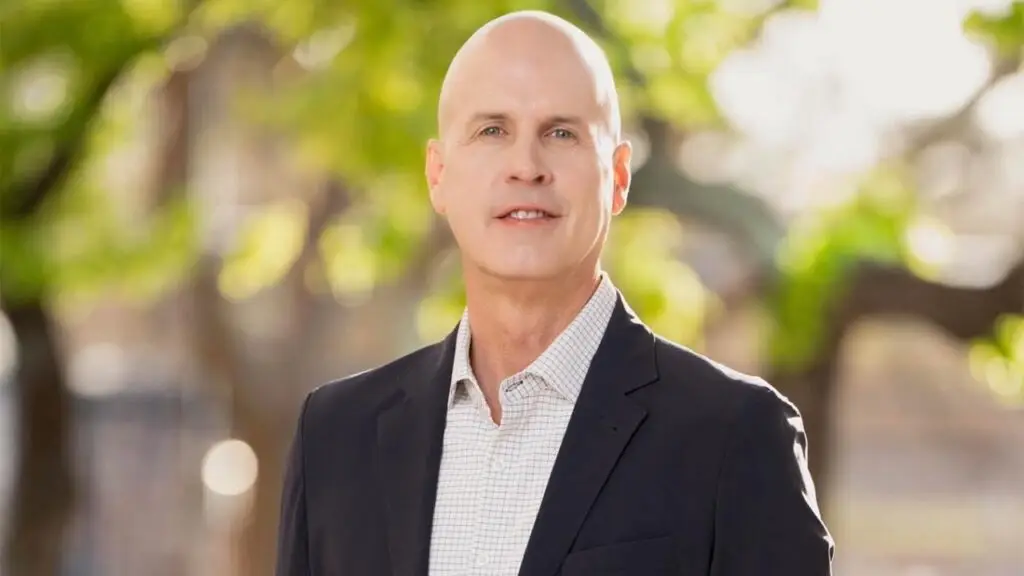
“It requires a relentless focus by our team to grow through style and product innovation, captivating experiences and building brand loyalty while harnessing centralized core capabilities,” said Symancyk, who succeeded Gina Drosos as CEO in November.
Here are five key takeaways from the new Signet approach.
1. Brands, not banners
Signet will refer to its store chains and websites as “brands,” not “banners” — a move that has more than symbolic significance.
“Brands build loyalty with customers through emotional and engaging connections, while banners are transactional, literally a static nameplate on the door,” the new boss said on the investor call.
His point is that Signet has excellent brands with high consumer awareness — household names such as Kay Jewelers, Zales and Jared — that are not meeting their potential.
“Growth has been elusive in recent years, reflecting lower consideration,” said Symancyk, referring to the likelihood of shoppers considering the brand when embarking on a purchase.
He wants to build brand loyalty, believing this will address this problem and drive revenue growth.
Doing this will involve creating a clear distinction between Signet brands, attracting customers who identify with specific labels. It will also entail an “outsized” focus on those three key brands: Kay, Zales and Jared.
Specifics include inviting consumers to follow the story of its new design collections and collaborations across media channels. This will “drive emotional and everyday connection rather than primarily relying on promotion,” Symancyk explained. “Alongside our strategic vendors, we are building in-house design and trend capabilities that will leverage fashion as a differentiator by brand, all with increased speed to market.”
As an example, he cited the “Blue Nile by Jared” collections, one of Signet’s best new performers over the recent holiday. Another example he gave was the Unspoken collection at Jared, combining 14-karat gold around a diamond. This, he reported, was “one of the stronger introductions over the holidays and gained traction into Valentine’s Day.”
The company will also redesign stores, find new ways of presenting product, and use e-commerce to tell stories about style launches, with a focus on “an experience reflecting each brand identity.”
2. Targeting fashion and everyday jewelry
Signet aims to grow its share in its core domains, such as bridal and gold, while expanding into adjacent categories, such as self-purchasing and gifting, the new CEO said.
Bridal expansion will come from “assortment and price-point architecture” — having the right products at the right prices — as well as “modern design enhancements.” These will come from in-house designers and vendors, making the company’s new and trending styles more timely and offering them at a range of prices.
The company will target everyday jewelry, for which Signet has only a “low single-digit” market share. This low base gives the company potential. Growing the market share of bridal by one percentage point would add around $100 million to annual revenue, whereas the same increase in share of fashion would have more than five times the impact, Symancyk elaborated.
“Given our high brand awareness and the significance of our scale, I believe we have the right to win here through both milestone gifting and self-purchase,” he said.
This would reduce the reliance on key holidays, he pointed out (though the fourth fiscal quarter is more fashion-focused than the other quarters are). It would decrease exposure to diamond pricing and the bridal market, while also being a valuable category in its own right. “Everyday jewelry is also the fastest-growing part of the industry, and we believe [it] will continue to grow for the foreseeable future,” he said.
Fashion sales disappointed over the recent holiday as the company did not have the right inventory to meet demand, especially in the $200 to $500 price point, the CEO reported.
In the short term, “quick adjustments” led to year-on-year growth in same-store sales in January and for the current quarter to date in both bridal and fashion, he noted.
“Since the holidays, the team has been focused on filling these assortment gaps and expanding the availability of on-trend merchandise,” he said.
The company has forecast same-store sales growth ranging from flat to 2% for the first fiscal quarter, which ends early May. So far, its performance is at the higher end of this range, according to Hilson.
The company is being conservative about the full year, projecting same-store sales ranging from a decline of 2.5% to growth of 1.5%. “This sales range anticipates a measured consumer environment, providing for variability in consumer spending over the year,” Hildon explained.
3. Simpler, leaner structure
The US’s largest diamond retailer wants to improve efficiency and accountability and reduce costs, “all in support of future sales and profit growth,” said the executive.
Signet will consolidate the leadership and operation of its brands into four segments: “Core milestone and romantic gifting jewelry,” which will encompass Kay Jewelers and Peoples; “style and trend,” which includes Zales and Banter; “inspired luxury,” containing Jared and Diamonds Direct; and “digital pure play,” covering Blue Nile, James Allen and Rocksbox.
It will centralize key functions, such as marketing, for which it has begun a search for a new chief marketing officer responsible for allocating advertising spend wherever the highest returns for the company lie while working with the brands on content and storytelling.
Certain merchandising functions will also come under one roof, as Signet has “many products that we consider core across most of our brands, including solitaires, pendants, stud earrings and some gold merchandise,” Symancyk said.
Buying for core products will also become a centralized function, increasing efficiency while allowing brands to focus on design, assortment and fashion innovation, he commented. “This change will also simplify the processes for our strategic vendors. It will enable continued improvements in working capital as we believe we will be able to rationalize the assortment and lower our inventory levels over time,” the CEO noted.
This will include streamlining diamond procurement through its new Signet diamond-sourcing team.
The company will also bring its repair capabilities under one leader and grow the services business in mail-in repairs, business-to-business (B2B), and personalization. Additionally, digital and IT will become an integrated function.
Meanwhile, a new executive leadership team will see the brands, merchandising, marketing and corporate functions report to Symancyk, while most operational teams will report to chief operating and financial officer Joan Hilson.
The company will slash its senior leadership team by 30%. As part of the reorganization, group president and chief consumer officer Jamie Singleton and chief digital officer Rebecca Wooters will leave the company, according to Signet’s full end-of-year report.
The reorganization will generate savings of $50 million to $60 million this year, Hilson estimated.
4. Fewer, better stores
Signet will close stores that have a negative contribution to the company. This is a small portion of the total, Hilson pointed out, but is the “lowest-hanging fruit.”
“There are 150 underperforming doors we are evaluating for potential improvement or ultimately closure over the next two years, leveraging our shorter-lease terms, primarily in mall locations,” Hilson elaborated.
The company will also work to transfer sales from shuttered stores to continuing ones and to online, using brand loyalty and product assortment.
In addition, stores in declining venues but with healthy performance — which number nearly 200 — will shift to off-mall locations. “This will also allow us to create an experience in primarily Kay, Zales and Jared that aligns to our Grow Brand Love strategy,” said Hilson.
It also plans to renovate approximately 200 stores this year, bringing more of its locations to “brand standard,” she said.
5. Clearer distinction between natural and lab-grown diamonds
Symancyk touted the potential benefits of pursuing opportunities while considering risk-mitigation tactics. To this end, Signet will “work to protect the allure and value of natural stones and engagement rings, while pursuing the significant opportunity lab diamonds provide to grow fashion, particularly within self-purchase and gifting.”
The company will be more “intentional” about diamond assortments and collaborate with De Beers and other industry leaders on marketing, traceability and consumer education.
Luxury-leaning brands such as Jared and Diamond Direct will likely feature more natural, whereas Kay will have more balance between the two categories.
Signet will meet demand for both products while being “good stewards” and taking “responsibility [for] educating consumers really well,” he added.
Lab-grown diamonds will appear more in fashion jewelry, since this combination has a strong average selling price. At the same time, the company is seeing a return to growth in natural-diamond engagement-ring demand.
“It’s really about having the right roles by brand, and the right assortment architecture in place by brand, to recognize what the consumer is telling us, which is there is a place for both in their life,” Symancyk continued.
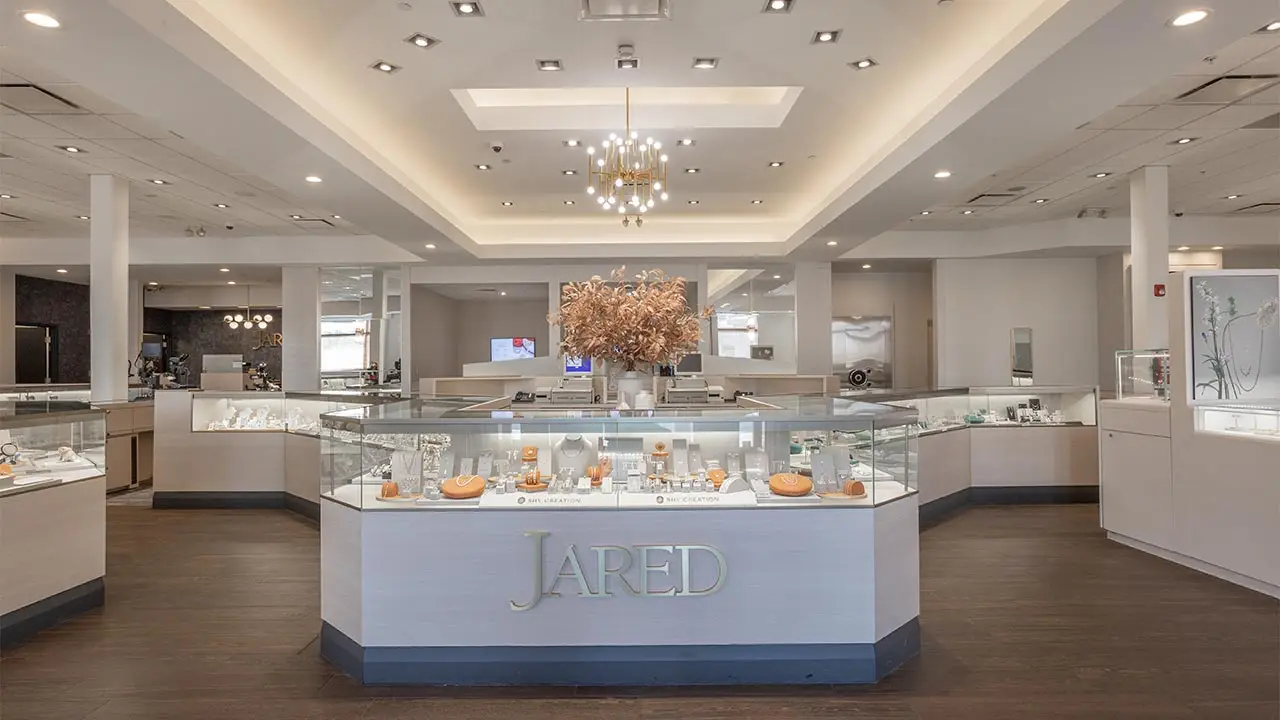
Image: The interior of a Jared store. (Signet Jewelers)