
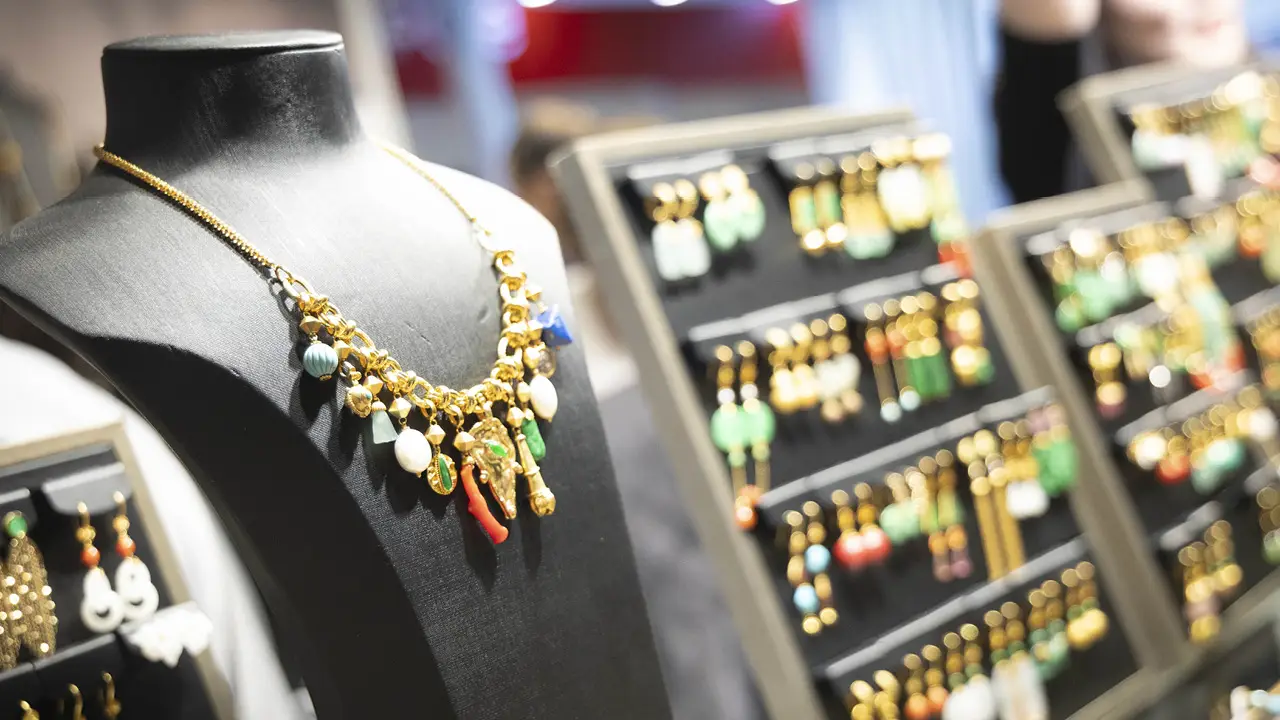
Soaring gold prices and economic challenges have dented Chinese consumer spending while also heightening the appetite for valuable investments, industry members explained at the recent Hong Kong International Jewellery Show.
The fair reflected the mainland’s difficult, complex jewelry market, which has seen shoppers shift to lower-priced items and shell out less on gold, diamonds, and high-end colored gemstones.
At the same time, the precious metal’s record-high price has enticed buyers in a consumer market known for its focus on long-term value, according to exhibitors at the event, which ended Saturday at the Hong Kong Convention and Exhibition Centre.
“The whole trade has evolved because of the high gold price,” said Winston Chow, chairman of the jewelry advisory committee for the Hong Kong Trade Development Council (HKTDC), which organizes the annual show.
“People, whether consumers or [trade] buyers, buy more when they expect the gold price [to go] up,” he elaborated, speaking at a media event during the show. But since the price continued to rise in 2024 and early 2025, “we see people are more cautious when they’re buying pure-gold jewelry.”
Mainland China’s gold-jewelry demand fell 24% to 479.3 tonnes in 2024, reflecting weak consumer confidence and surging gold prices, the World Gold Council (WGC) said last month in its quarterly trend report.
Weight and purity
In response to the soaring prices for the precious metal, shoppers are seeking lower gold weights, and in some cases also lower purities, exhibitors observed.
“They want to invest less money and have the same look,” said Mehmet Faruk Gürel, export manager at Turkish jewelry manufacturer and wholesaler Sina Mounting & Jewellery, who reported a slow show. “Either they’re decreasing the karats…or [buying] less gold weight or less diamond weight…. The main goal is having affordable prices.”
Yet consumer demand is showing signs of recovery, said Lawrence Ma, president of the Diamond Federation of Hong Kong, China. Ma is also CEO of the Lee Heng Diamond Group and chairman of the fair’s organizing committee.

Technological developments have produced a harder version of pure gold suitable for diamond jewelry — a usage that was previously difficult because of the metal’s softness when not mixed with other metals, Ma explained. This has driven orders for “hard” pure-gold settings with 0.01- to 0.15-carat diamonds, he reported.
Gemstone demand
The mainland’s economic slowdown, which derived mainly from a real-estate crisis, has had an outsized impact on diamond demand. Declines in polished prices have reduced consumer confidence in diamonds as an investment, while dwindling marriage rates have dented engagement-ring demand.
But the effect on other jewelry segments has been nuanced.
Colored gemstones at commercial price points have survived better because of their affordability relative to diamonds.
They have also benefited from consumers never associating them with enduring value in the first place, said an executive at a large Indian jewelry exhibitor, who preferred to remain anonymous.
“They don’t feel like it’s value[-based] — it’s a fashion product,” he said, noting that most of the value in his company’s gemstone-studded jewelry came from the gold and the accompanying diamonds.
In contrast, high-end gemstones have struggled, according to Ephraim Zion, founder of Hong Kong-based supplier Dehres, which deals in luxury diamonds, gemstones and jewelry. He reported slow activity last Tuesday and Wednesday, the show’s opening days.
“Colored stones and diamonds, as far as the Chinese market, [are] still in the doldrums,” he said at the fair on Wednesday. “Where there is demand, Chinese customers are seeking something that’s hard to provide — if they’re looking for a nice, 5-carat ruby, it has to be perfect. It has to be clean. It has to be pigeon’s blood.”
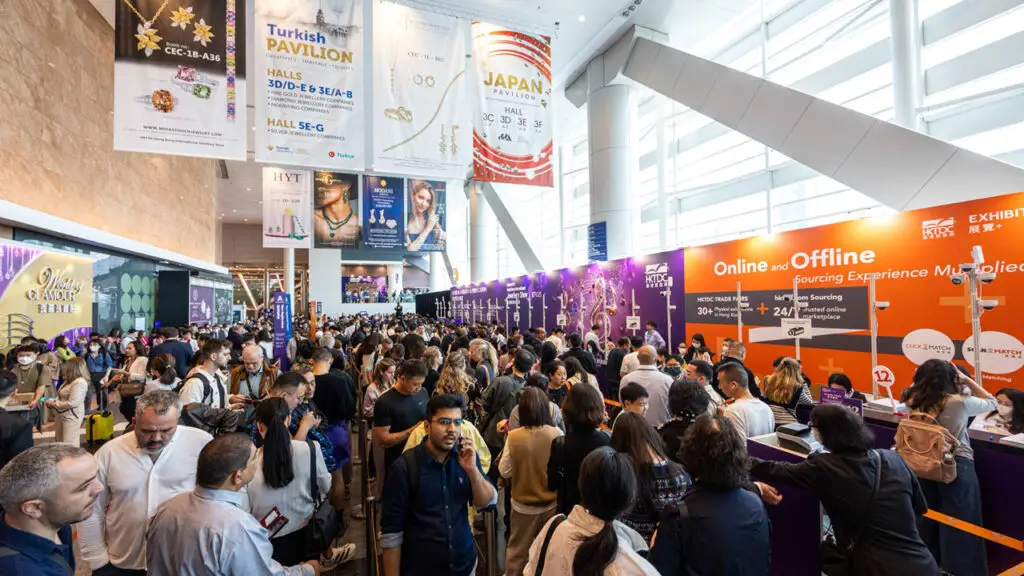
However, buyer interest picked up for him from Thursday onward, and the last three days of the show were better than expected, he said afterward.
He put the gemstone weakness down to China’s economic troubles rather than any lack of confidence in the product. The sector is doing marginally better than diamonds for that reason, Zion said.
Pearls and metal
Pearls also had a challenging 2024, said the HKTDC’s Chow — but the difficulties in other areas of the jewelry market could boost demand for these nacreous treasures.
“[The] gold price is so high, so people [who used to buy] pure-gold jewelry are looking for…[an] alternative,” he explained.
The pearl section at the Hong Kong International Diamond, Gem & Pearl Show — which ran from Sunday to Thursday last week — was packed with visitors, he observed. “I think this [was] the most crowded [section] of the fair…. So I believe the activities in pearl jewelry will be more substantial this year.”
As for gold, the bidirectional impact of high prices continues to puzzle the market: Gold prices are both attracting and repelling buyers.
This may come down to whether the customer is primarily interested in investment or not, according to Arly Tse, sales director at Hong Kong-based Glory Zenith Group, which manufactures jewelry featuring lab-grown diamonds.
“The high gold price attracts those people who did not buy gold jewelry before,” Tse commented. “That means more and more consumers are buying gold for investment, because the gold price is up year by year. But for those people who have the plan to buy gold jewelry as a gift or [for a] specific purpose, the high price is pushing them back from the retail stores.”
The writer attended the Hong Kong International Diamond, Gem & Pearl Show and the Hong Kong International Jewellery Show as a guest of the Hong Kong Trade Development Council (HKTDC).
Main Image: Gold jewelry on display at the Hong Kong International Jewellery Show. (Hong Kong Trade Development Council)