

Gianni Bulgari, former head of the famed Italian jeweler, once said that “Rome epitomizes the history of Western man — classical, medieval, Renaissance, baroque, the 19th and 20th centuries. Our jewelry has been influenced by the weight of this gigantic tradition.”
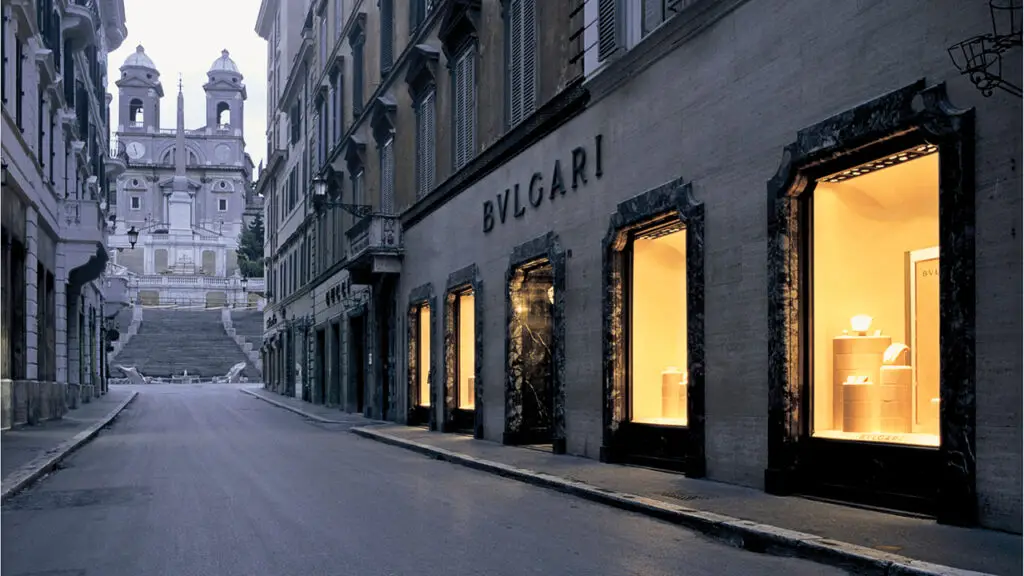
Bulgari itself is a jeweler with a big personality. Joy and exuberance run through its creations: the signature use of colorful cabochons, daring chromatic combinations, and geometric configurations. This is bold, beautifully made jewelry. One could say Bulgari is Italy. The country’s ancient history, its grand sculptures and even grander buildings, its mosaics and love of color have informed Bulgari’s designs since Greek silversmith Sotirios Boulgaris founded it in 1884. By 1905, the company had moved into 10 Via dei Condotti, where it still has its headquarters today.
La Dolce Vita
The fullest design expression of Bulgari is La Dolce Vita, the Italian good life of the 1960s. Fashion, film, fast cars, and food were making international headline news — think Pucci and Missoni, Alfa Romeo and Ferrari, pasta and gelato, and the 1960 film that gave its name to the period: Federico Fellini’s La Dolce Vita.
It is no coincidence that the ’60s going into the ’70s also heralded the greatest and most memorable jewelry from Bulgari.
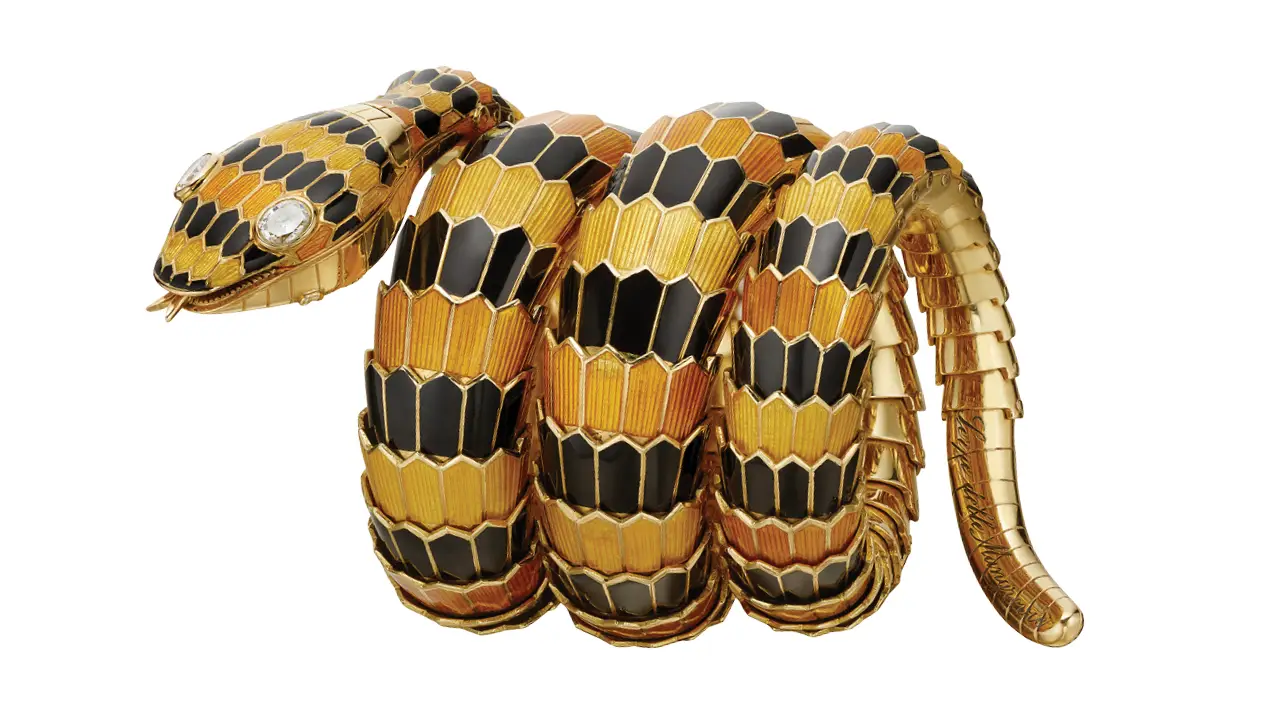
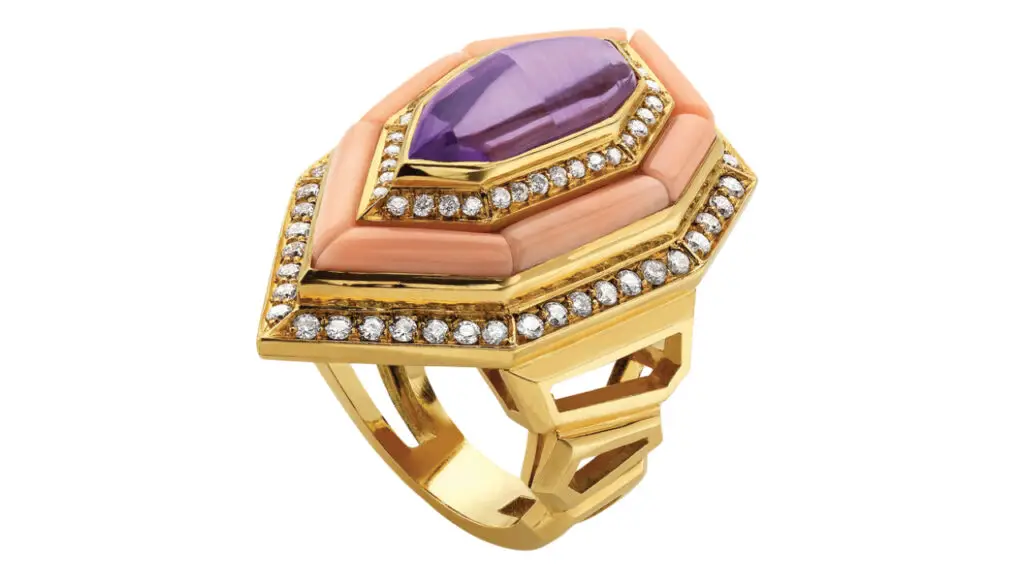
Ancient coins, a nod to the founding of Rome in 753 BCE, are a beloved signature of Bulgari’s; they feature in its Monete collection and in its flexible gold Tubogas bands. The Serpenti bracelet watches that spiked in popularity during this period display exquisite enamel work and color combinations, as well as unexpected use of precious stones and diamonds. The Bulgari sautoirs are so powerful, they are nearly heraldic in their impact. Floral brooches took on new vigor in the ’60s, too. The many versions of the house’s Giardinetto brooches are bursting with flowers made of cabochons, carved gems and diamonds, resulting in bouquets any gardener would envy.
Stars of the silver screen
For good reason, Rome in the ’60s became known as “Hollywood on the Tiber.” Actresses Ingrid Bergman, Ava Gardner and Raquel Welch were in Rome, and Audrey Hepburn lived there for 20 years. Then there was Cleopatra herself: Elizabeth Taylor, whose 1962 visit to Bulgari began a lifelong friendship with the jeweler.
Jewelry from this period is also among the most collectible, as auctions have shown. One widely known piece is the Revson bib necklace, a blazing arrangement of cabochon emeralds, amethysts and turquoises, which the house made for socialite Lyn Revson in 1965. Some 30 years later, in 1996, the necklace and matching earrings sold for $134,500. Another Revson piece, a Buddha sautoir with citrines and onyx from circa 1971, sold for $798,375 in 2024. The Bulgari Blue ring from circa 1972, featuring a 10.95-carat, fancy-vivid-blue diamond, went for nearly $15.8 million in 2010.
At Christie’s, the sale of Taylor’s legendary jewels in December 2011 broke auction records again and again. Particular standouts included the emerald and diamond jewelry she’d received from husband Richard Burton. The 1958 emerald pendant brooch that she wore when she married Burton brought in close to $6.6 million. Her emerald and diamond necklace from 1962 sold for about $6.1 million, while a remarkable sautoir with a 52.72-carat cabochon sapphire — a 40th birthday present from Burton in 1972 — went for just over $5.9 million. As Burton reportedly quipped some years earlier, “I introduced Liz to beer, and she introduced me to Bulgari.”
The dealer’s take
Stefan Richter, president of Florida jeweler Richters of Palm Beach, shares why mid-century Bulgari pieces are still turning buyers’ heads.
I have always been drawn to the jewelry of the 1960s and ’70s. When I first started my career at Richters, around 1980, mid-century jewelry was considered too new for the secondhand world. At the time, the jewelry trade was concentrating on Edwardian and Art Deco jewelry through the 1950s. No one was paying attention to ’60s jewelry.
But when I bought the store from my father in 1984, I sold the existing inventory. As a 25-year-old, I understood that my customer base — generally an older, affluent clientele — wanted to look young and hip. So what was younger and hipper? It was Bulgari and David Webb. I liked that jewelry, and I related to yellow gold. The world was getting less formal. Everything Italian — cars, fashion, even movies — from the ’60s and ’70s has great energy. Italians would ask, “Is it hot, is it sexy, is it current?”

Bulgari was always aware of the changes around it. Plus, it had the hippest celebrity loyalty, like Elizabeth Taylor, Cher and Sophia Loren. Moreover, the jewelry was available. I could buy a great piece of Bulgari at a better price than a piece of Art Deco. So it made economic sense as well. Generally speaking, the secondhand market didn’t appreciate it then, but it sure does now.
Bulgari’s color combinations and geometry are amazing. Who else would put amethysts with emeralds and citrines? It just wasn’t done. Bulgari instinctively knew color, including the amount of each color needed. Then there was the inlay and cabochons, the use of calibré stones — a cool, hip factor that other companies didn’t have.
At Richters, when we like something, we tend to go all in. Bulgari jewelry from 1975 fits today’s world and fashions. My clients want the classic, iconic designs. True collectors look at the Monete or Serpenti lines and tell me, “I want the original.” Bulgari jewelry has soul.
Main image: Bulgari Serpenti bracelet watch in 18-karat gold with yellow and black enamel, circa 1967. (Barrella/Studio Orizzonte Gallery)