


For years, traditional retail has searched for answers in all the wrong places: e-commerce, changing consumer behavior, shorter attention spans, price sensitivity. All valid, but none of them is the real issue.
The real issue is simpler, and harder to admit: Retail has (mostly) become passive.
Walk into many retail environments today, from high streets to luxury malls to airports, and you will find beautifully designed stores, strong brands, and well-trained teams. Yet foot traffic is inconsistent, engagement is low, and conversion remains under pressure. Why?
Because retail has become mostly optional, and optional gets ignored. Most stores are built to be discovered. Very few are built to attract. They wait. They wait for customers to walk in. They wait for interest. They wait for intent. And increasingly, customers are choosing not to engage.
After more than 30 years managing onboard retail, guest experience, and revenue across multiple cruise lines, I’ve seen a very different model succeed, consistently, across changing audiences and conditions.
Cruise retail doesn’t rely on traffic; it creates it.
What the cruise model does differently
Cruise retail operates in one of the most competitive environments imaginable. Guests are surrounded by alternatives: entertainment, dining, excursions, relaxation, and social experiences. Retail is rarely the primary intention. And yet, retail performs – not because guests have time, but because retail is activated.
On a typical cruise, a well-run retail operation is able to engage guests consistently throughout a sailing, with conversion rates that can exceed those in many traditional retail environments if there is strong activation and execution to support it. These are not passive walk-ins; they are the result of structured engagement that occurs on a daily basis.
Retail onboard is not static. It is programmed, and it includes:
- Scheduled events and product showcases.
- Trunk shows and limited-time collections.
- Educational sessions and storytelling moments.
- One-time offers on exclusive or never-before-seen products.
- Pre-event promotion through multiple touchpoints.
- In-store raffles and other traffic-driving activities.
- Staff trained to host, not just sell.
All of this gives guests a reason to walk in – and more importantly, a reason to return.

The core failure
Traditional retail, particularly in luxury categories, often relies on three assumptions:
- Location will drive traffic.
- Products will create interest.
- Staff will convert when needed.
These assumptions worked in the past, but they are no longer enough. Today’s consumer is overwhelmed with choice. Attention is fragmented. Expectations are higher. Retail that does not actively engage becomes invisible.
Impulse purchases still happen, but they are not a growth strategy. They are the baseline. What’s missing is activation.
Away from the passive
Activation shifts retail from passive to intentional. Instead of asking, “Will customers come in?” the question becomes: “Why would they come in now?”
Cruise retail answers this every day. There is always a reason: A presentation starting in 10 minutes, a limited-time collection available today, a hosted experience happening now, a specialist sharing knowledge and story. This creates urgency, curiosity and engagement.
It also creates emotional connection. And emotional connection drives spending.
Key lessons
The opportunity extends far beyond any single category. While luxury jewelry and watches are a clear example – being emotional, high-consideration purchases tied to milestones, identity and aspiration – the same principles apply across fashion, beauty, and premium lifestyle products.
Yet in many retail environments, these products are still presented passively, behind glass, waiting to be noticed. There is a better approach:
- Create scheduled retail moments. Introduce specific times during the day when something is happening – product presentations, brand storytelling sessions, or expert-led showcases. Retail should feel alive and time-sensitive.
- Turn staff into hosts. The role of the salesperson evolves into that of a guide or host, someone who engages, educates, and builds connection. The experience begins with people, not product.
- Build micro-experiences. Retail does not need large-scale events. Even short, well-designed interactions can create a reason to enter, stay and engage.
- Create reasons to return. A customer who does not purchase immediately should have a reason to come back, later the same day or on a future visit. Activation should extend beyond a single touchpoint.
- Leverage the relationship over time. Unlike cruise guests, many retail customers return repeatedly. This creates a powerful opportunity to build trust, familiarity and long-term value, not just one-time transactions.
The real opportunity
The future of retail is not about more traffic. It is about more meaningful engagement. Cruise retail has demonstrated that success does not come from waiting for customers, but from creating moments that customers do not want to miss.
The model is not dependent on ships. It is dependent on mind-set. For retailers willing to evolve from passive display to active engagement, the opportunity is significant. Because when retail becomes worth experiencing, customers don’t need to be convinced to enter; they choose to. And when they choose to engage, they are far more likely to buy.
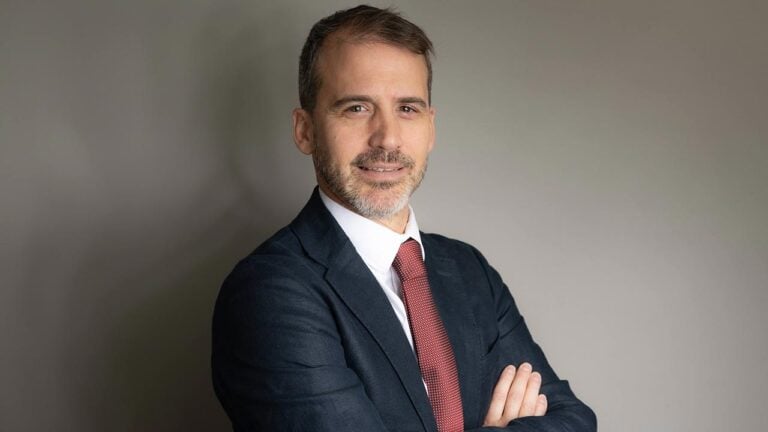
Ram Glick is a former onboard revenue and retail leader with over 30 years of experience across major cruise lines. He now advises hospitality, luxury and retail brands on performance, activation and guest engagement.
Main image: Ram Glick. (Ram Glick)