

Jewelry has always mirrored its times, but from the 1930s through the 1980s, it became a striking barometer of cultural and social change. Art Deco’s geometric precision channeled the optimism of modern travel and skyscrapers. Wartime shortages forced jewelers to experiment with alloys and vibrant colored stones. And the upheavals of the ’70s — from feminism to disco — inspired jewelry that was versatile and defiantly modern.
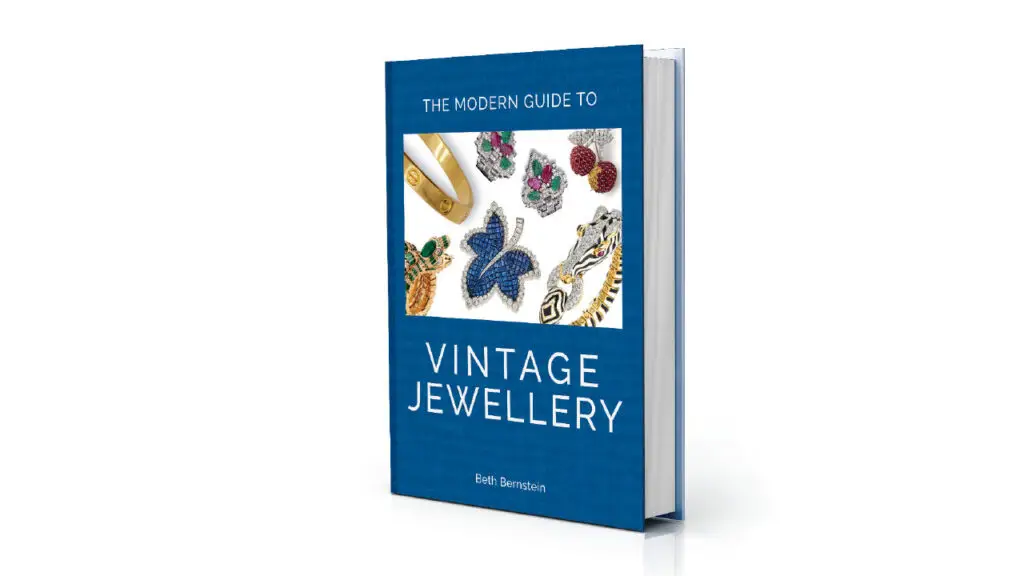
This interplay of culture and design is at the heart of Beth Bernstein’s new book, The Modern Guide to Vintage Jewellery. Far more than a showcase of dazzling pieces, it traces how jewelry reflected its era during the decades spanning the late ’20s to the early ’80s, while offering readers practical advice on sourcing, valuing and styling.
“It’s about connecting history to what collectors and wearers still desire today,” the author and jewelry historian explains.
The fruits of upheaval
The 1930s remain an anchor thanks to Art Deco’s clean, architectural style. Even a century on from the 1925 Paris exposition that gave the era its name, its iconic lines feel relevant.
“The streamlined geometric and three-dimensional silhouettes feel as contemporary today as when they were first designed,” says Bernstein.
During this period, pioneering women designers such as Suzanne Belperron, Coco Chanel, Jeanne Toussaint at Cartier, and Juliette Moutard at Boivin “shook up the status quo and opened the door for women designers later on in history,” the author continues. Their work remains highly collectible, prized for innovation and for capturing how women wanted to dress and move.
World War II pushed jewelers into radical resourcefulness. With platinum reserved for military use and gold restricted in France, clients often provided their own metal. Designers blended alloys to create rose, green and yellow tones within a single piece, accenting them with citrine, amethyst or aquamarine. The results were bold yet light, a distinctive wartime style that still resonates.
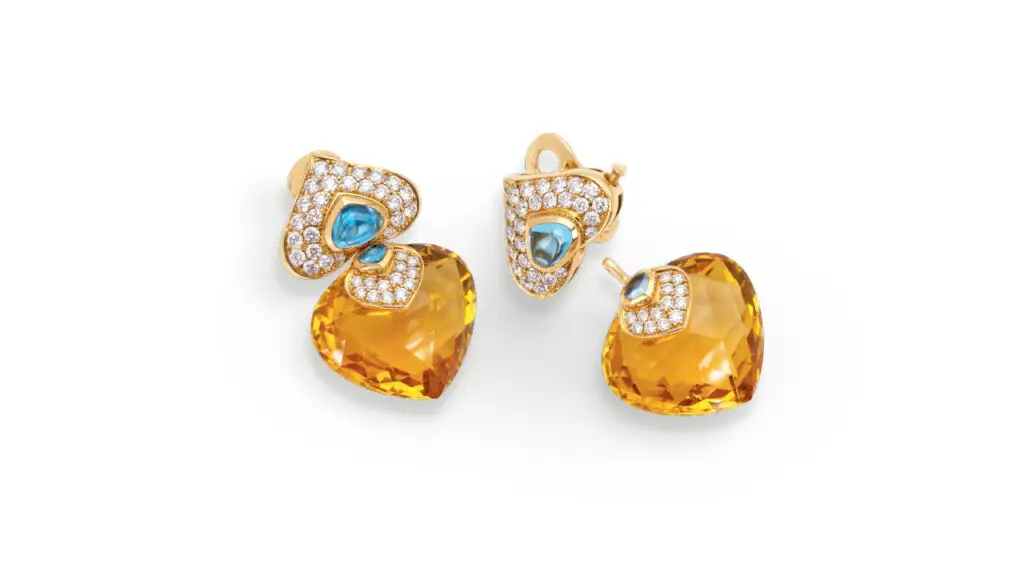
“The yellow and mixed-metal golds, the larger stones — all of these are in keeping with the trends we are seeing today,” Bernstein says.
While each decade left its mark, the author says the 1970s resonate most with contemporary collectors because of current fashion trends. Against the backdrop of Vietnam War protests, the Watergate scandal, second-wave feminism and the disco era, jewelry became casual, versatile and expressive. Houses like Bulgari — along with designers like Aldo Cipullo at Cartier New York, and Elsa Peretti for Halston and later Tiffany & Co. — responded with pieces that moved seamlessly from office to dance floor.
“There was so much upheaval…and all of it inspired the jewelry,” Bernstein says. Zodiac pendants and celestial motifs reflected a search for spirituality and individuality, while Cipullo’s Love bracelet and Peretti’s sculptural silver defined a new, independent way of wearing jewels.
Collectible treasures
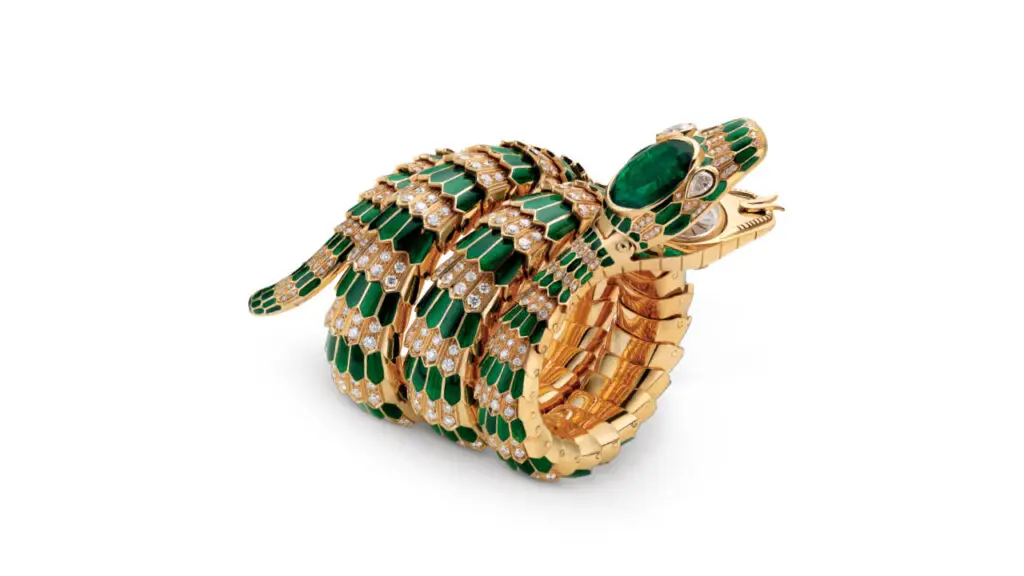
For estate buyers, these cultural shifts translate into clear opportunities. Tubogas bracelets, produced in Italy from the 1940s through the 1970s, are a standout. While Bulgari’s versions are in strong demand, unsigned examples remain accessible, their wraparound design in tune with today’s appetite for oversized gold. Cocktail rings of the ’40s and ’50s, often boasting colorful semiprecious stones, also provide entry points for blending vintage with contemporary jewels.
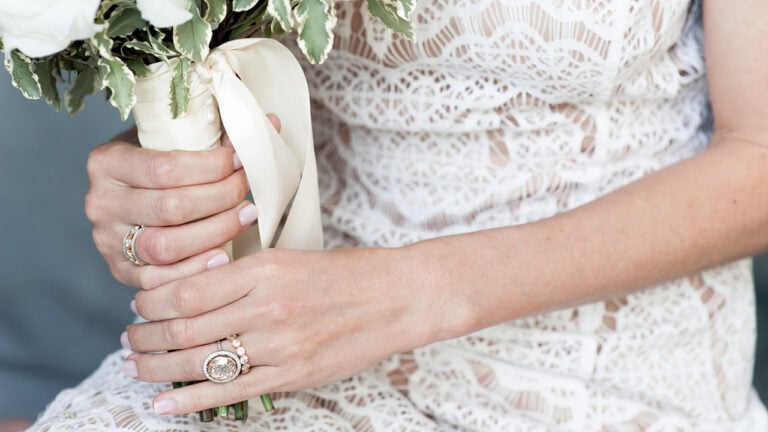
The evergreen Art Deco dress ring, with platinum settings and transitional-cut diamonds or colored gems, remains a cornerstone, especially as an alternative bridal option. Bernstein highlights its “amazing potential for retailers who sell all types of engagement rings.”
Equally appealing are astrological pendants and charms from houses like Chaumet, Van Cleef & Arpels, and David Webb, as well as whimsical charms by Henry Dankner & Sons, some with moving parts. These designs, says Bernstein — who previously explored jewels dating back 100 years or more in The Modern Guide to Antique Jewellery — connect to the Victorian tradition of sentimental jewelry but reinterpret it with the bolder scale of the mid-20th century.
For collectors of signed works, specific names hold an enduring allure. Tiffany’s Jean Schlumberger, Cartier, Van Cleef & Arpels, David Webb, Cipullo, Belperron, Verdura, Peretti — these names embody artistry while crystallizing the cultural shifts that defined their times.
The Modern Guide to Vintage Jewellery by Beth Bernstein was published by ACC Art Books in October.
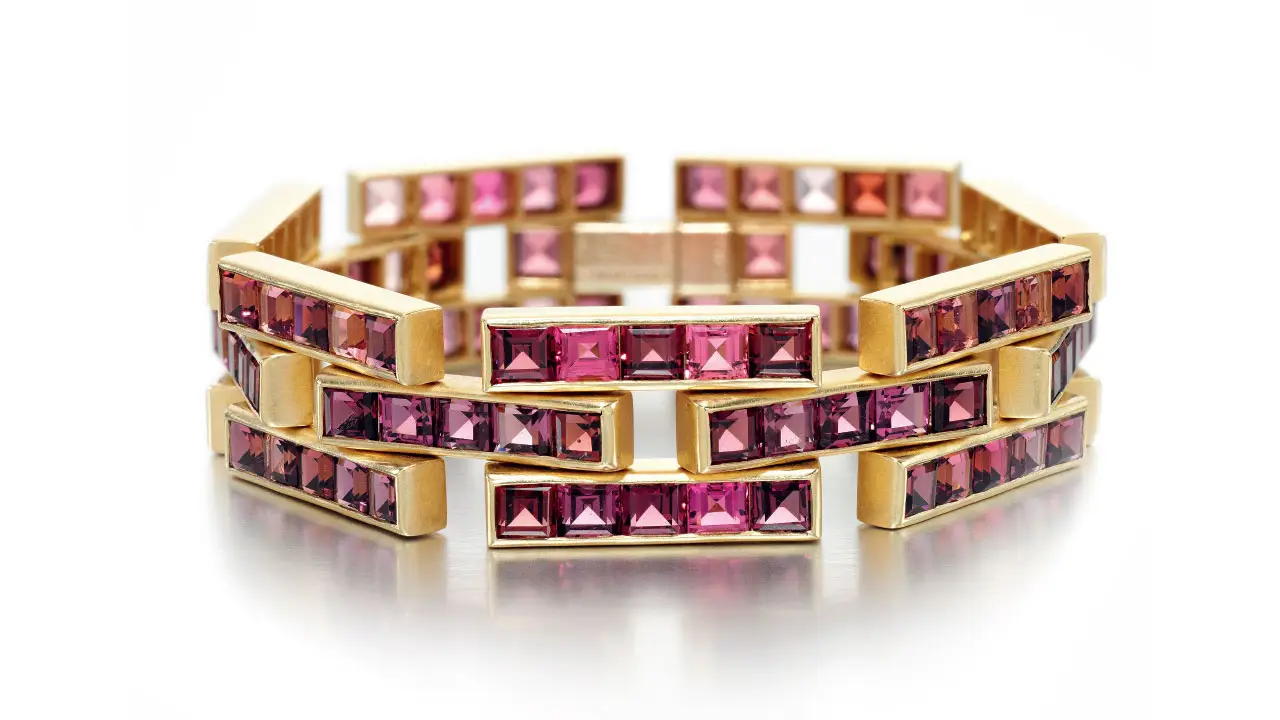
Main image: Tourmaline and gold link bracelet by Angela Cummings for Tiffany & Co., circa 1982. (Sotheby’s)