

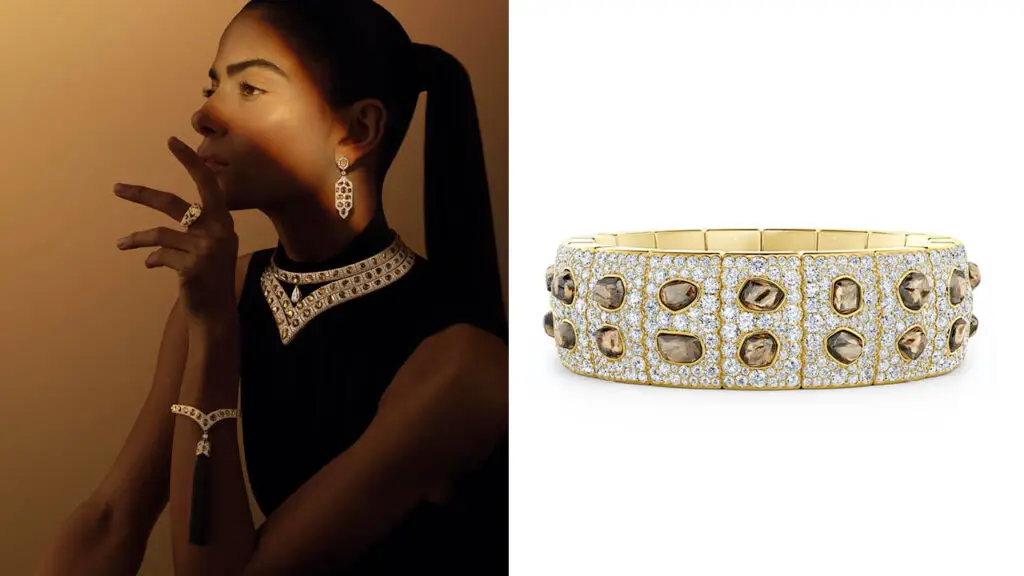
With shades ranging from palest beige to ochre and rich umber, brown diamonds have long been a part of the jeweler’s repertoire. Indeed, the largest surviving diamond from the ancient world, according to jewelry historian Jack Ogden, is a 7-carat brown stone in a ring from around 300 CE that turned up in what is now Syria. Other historic examples include the 34.98-carat, faint-brown Beau Sancy diamond, which has adorned European royal families since the 1600s; the brownish-yellow Eureka diamond, which a teenager found in South Africa in 1866, mistaking it for a pebble; and the 61.5-carat, cognac-hued Tiger’s Eye diamond, which was discovered in 1913 and which stars in a majestic turban ornament the maharaja of Nawanagar commissioned in 1937.
More recently, however, brown diamonds have repeatedly suffered from an image problem. Until the 1980s — when a marketing campaign by Australia’s Argyle mine successfully rebranded them with luxurious-sounding names like “champagne” and “cognac” — many viewed earthy-looking diamonds as inferior to colorless ones, and commonly used them for industrial or mining purposes, deploying their incredible hardness in drill bits and abrasives.
Things have changed since then. Today, brown diamonds are big news, with New York-based jeweler Le Vian offering trademarked Chocolate Diamonds, and companies like De Beers playing up the subtler sparkle of brown stones as an asset rather than an imperfection.
A quieter kind of luxury
“What we’ve seen over the last few years is that these diamonds have gone from simply being a part of a designer’s palette to being a preferred choice for special and meaningful jewelry,” says Lisa Levinson, UK head at the Natural Diamond Council (NDC).
Prices for these diamonds have increased alongside their popularity. Some categories have leapt by up to 40% in the past five years, Levinson reports. Scottish goldsmith Ellis Mhairi Cameron, who has set brown diamonds into her organic-looking jewels for years, has noticed increases of “around 75%” for higher-quality specimens, particularly “champagne or chocolate” stones with few inclusions.

Charlotte Rose, vice president of the London Diamond Bourse (LDB), links the current uptick with consumers’ ongoing appreciation for “quiet luxury” in fashion, a trend that first emerged during the pandemic.
“You can wear quite a large brown diamond, and it won’t feel as flashy as a white stone of the same size,” she observes. “Plus, their softer colors have a more romantic appeal, like vintage or antique stones. My clients now describe their ‘dream’ diamonds as much warmer in tone than before — anywhere from an H grade onward. They’re actually turned off by colorless D-, E- and F-graded stones.”
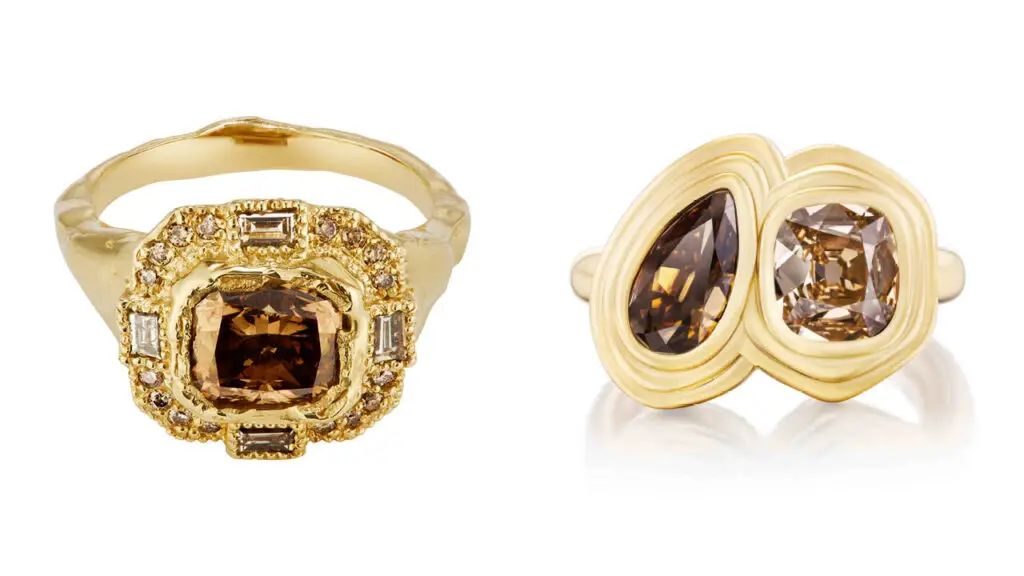
Star appeal
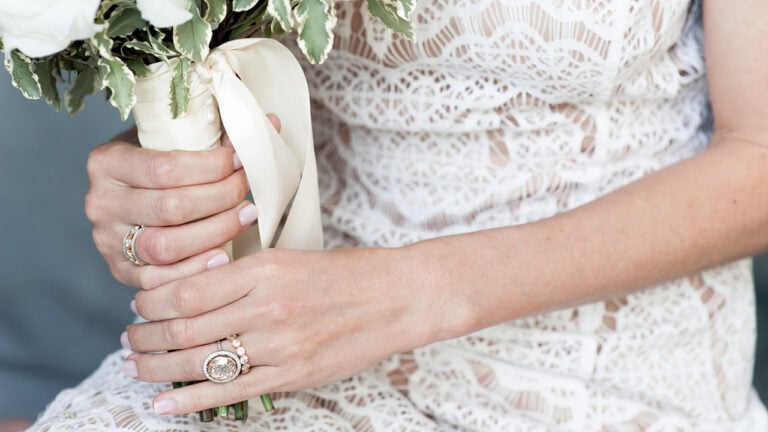
Another major contributor to the brown-diamond boom is celebrity endorsement. When pop icon Taylor Swift debuted her champagne-diamond engagement ring in August, online searches for similar-looking diamonds reportedly increased by almost 10,000%.
“The ‘Taylor Swift effect’ is very real,” says Levinson. “It’s become almost impossible to source an elongated cushion-cut champagne diamond from anywhere.”
A comparable surge happened in 2019, she adds, when actress Scarlett Johansson revealed her own engagement ring with its pear-cut, pale-brown diamond center stone — a design by James de Givenchy at Taffin Jewelry. “Independent jewelers like Taffin or Kindred Lubeck, who crafted Taylor Swift’s ring, have been crucial in driving awareness of brown diamonds. They are often willing to take more creative risks, resulting in distinctive jewels that are widely shared on social media.”
Los Angeles jeweler Lauren Harwell Godfrey, who recently designed a brown-diamond toi et moi ring for rapper and singer Doja Cat, couldn’t agree more. While white diamonds will always be desirable, she says, brown diamonds bring an added “depth and a grounded quality to jewelry” — one that seems to resonate especially well with discerning clients “who love and appreciate natural diamonds and are looking for something more unusual.”
A boost from De Beers
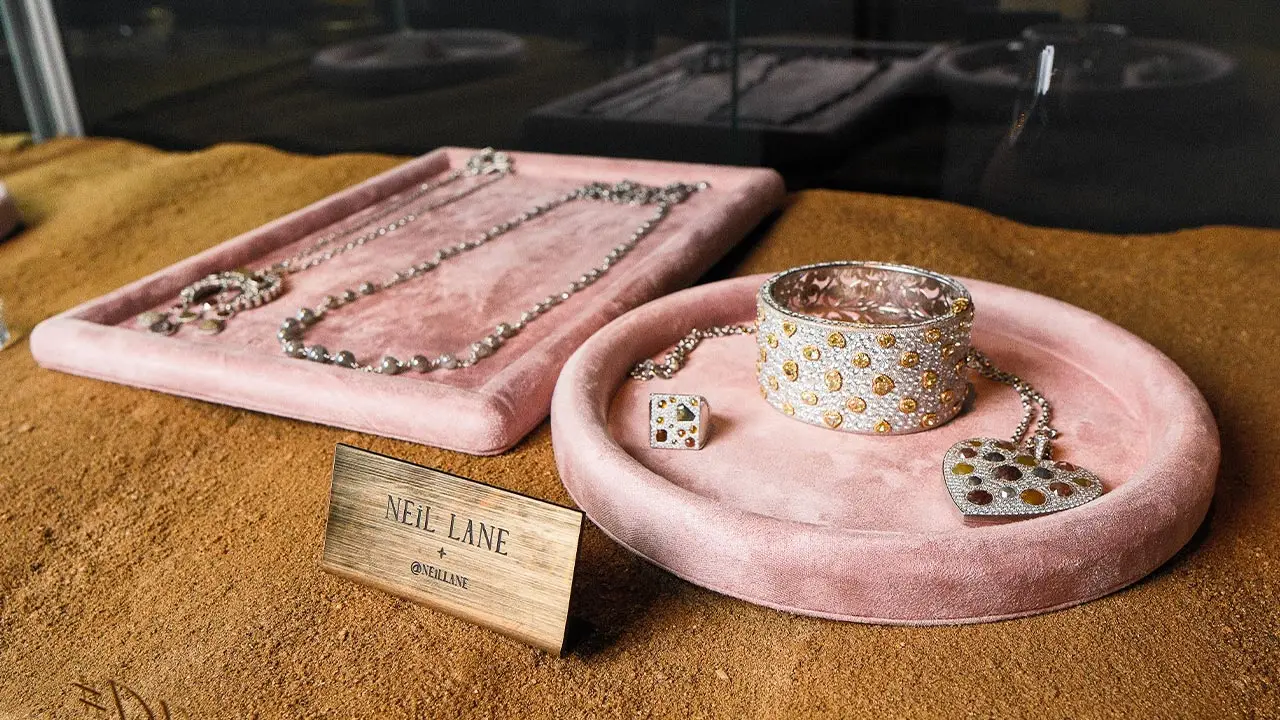
With consumer interest reaching new heights, the timing couldn’t be better for De Beers’ new “Desert Diamonds” marketing campaign, which aims to promote natural diamonds in shades from off-white to whisky. Spanning television, digital, social and other channels, the fully integrated operation launched in October with a celebrity-studded event at New York art center Artechouse. The campaign represents De Beers’ biggest marketing investment in over a decade.
“We’ve seen several shifts in consumer behavior lately…[including] an ever-increasing community of consumers looking for diamonds as individual as they are, and to connect with diamonds as gifts of nature,” explains Lynn Serfaty, general manager of natural-diamond category marketing at De Beers Group. “Desert Diamonds answer this desire and provide a new perspective, one that showcases the beauty and diversity of colors found in natural diamonds.”
Associating brown diamonds with the desert was a “hugely significant” choice for the company, she says, as they are landscapes “with high symbolic value” across many cultures.
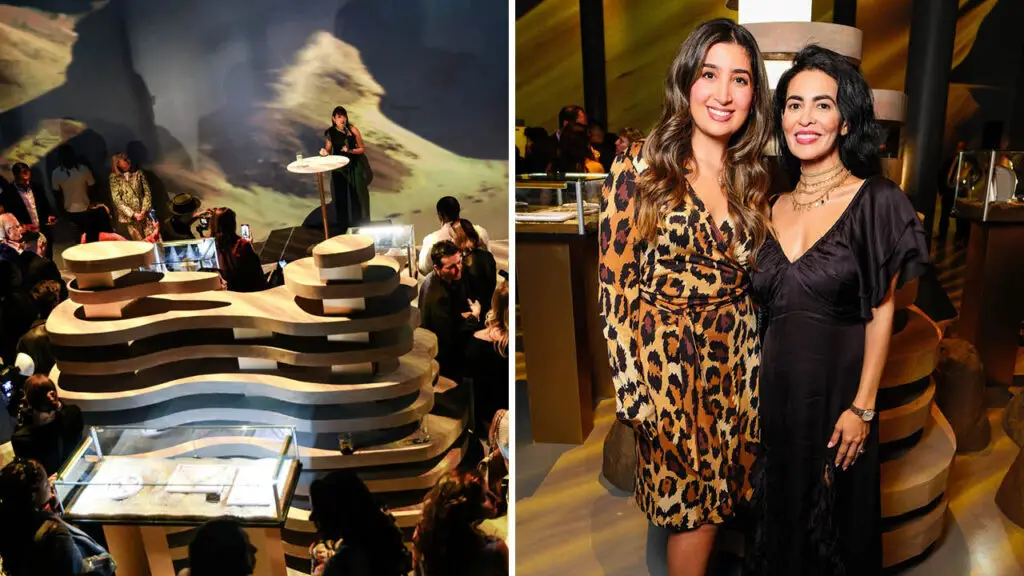
Essentially, it’s about owning a genuine piece of nature that no one else has. “In a market where lab-grown diamonds — which are predominantly high-color and high-clarity — are now affordable and ubiquitous, authenticity has become an appealing watchword for consumers,” says Rose. “The little irregularities that brown diamonds possess can now be regarded as a guarantee of their naturalness and their legitimacy, which is what this campaign is tapping into.”
Campaign promise
As with De Beers’ famous “A Diamond Is Forever” slogan from 1947, which indelibly linked diamonds and eternal love, or its early-1960s promotion associating eternity rings with existing unions — and setting up a convenient, profitable way to sell smaller diamonds in the process — many experts see the potential for real longevity in the “Desert Diamonds” campaign.
“It speaks to a movement that is already taking place in society, which is the acceptance of so-called imperfections as markers of uniqueness, especially within ourselves,” says Levinson, who recently added a brown-diamond ring to her own collection. “It’s also a reminder, whenever you look at your jewelry, that you are wearing something derived from the earth. Not man-made or created by AI. With everything that is going on in the world right now, that feels very reassuring.”
Look out for lab-grown
In early November, grading lab Gemological Science International (GSI) announced that it had found undisclosed synthetic stones in a piece of jewelry featuring natural brown diamonds — a timely discovery as the trade rebrands these earth-toned stones as fashionable under the “Desert Diamonds” banner.
Using advanced testing, including Fourier transform infrared spectroscopy (FTIR), DiamondView imaging, and Raman spectroscopy, GSI found lab-grown diamonds ranging from faint-brown tints to fancy-dark hues alongside natural stones.
“As the industry embraces natural brown diamonds, it is essential to safeguard their integrity,” said GSI president Debbie Azar following the discovery. The lab has urged rigorous screening and full disclosure — vital elements in maintaining consumer trust.
Main image: A display at the De Beers Desert Diamonds launch event. (De Beers)