

Despite alarmist headlines about inflation, tariffs and financial unease, the American bridal jewelry market remains remarkably resilient. Jewelers across the board report that for most couples, emotional commitment trumps economic volatility.
“People always gripe about the economy,” says Aleah Arundale, a fifth-generation jeweler who runs loose-diamond wholesaler Olympian Diamonds in Chicago, Illinois. “We could be at the highest economic boom, and you’ll still hear people complain. If he wants to marry her and she says it’s time, they don’t care about inflation or tariffs, they’re buying an engagement ring.”
Going strong
As the founder of the 35,000-member Jewelers Helping Jewelers community on Facebook, Arundale says she has seen “jewelers have record months.”
This bullish performance from independents matches that of national player Signet Jewelers, which reported a sales increase of 2% year on year to $1.54 billion for the 13 weeks that ended May 3. This is an encouraging return to form after some lackluster results in the previous quarters. Nearly half the retailer’s revenue stems from bridal sales.
“Since [the holidays], we increased our depth of assortment at key price points while also benefiting from improved bridal trends,” said company CEO J.K. Symancyk in a March statement.
As part of its “Grow Brand Love” strategy, Signet — which owns the Kay, Jared and Zales chains, as well as online retailers Blue Nile and James Allen — has restructured sourcing and store brands, renovated locations, and closed underperforming stores. While lab-grown diamonds have expanded across its fashion lines, the retailer has doubled down on natural stones for bridal, training associates to emphasize their rarity and emotional value.
Romance, it seems, is recession-proof.
“We’ve seen inflation make consumers more value-conscious, but not less emotionally invested” in buying diamond engagement rings, says Olivia Landau, cofounder and CEO of New York-based jeweler The Clear Cut.
Trish Carruth agrees, but points to other factors as well. “The economy definitely influences spending behavior, but how loudly the media talks about [economic challenges] determines how much the customer cares in the moment,” says the founder and lead designer of Your Personal Jeweler in Royal Oak, Michigan.
At the retail level, diamond demand for bridal has held steady, even after the JCK Las Vegas show, according to Kunal Shah, president of Pristine Gems. “There’s more midstream uncertainty, but retailers are seeing strong momentum and sell-through,” reports the New York-based supplier of fancy-shaped natural diamonds.
The price of love
Even within a resilient market, though, changes in behavior are surfacing — most notably in the average amount people are spending and the rising preference for lab-grown diamonds.
Arundale says lower-priced engagement rings are gaining traction, largely because they’re easier for sales staff to move and because they require less educational groundwork. She believes this has contributed significantly to the surge in sales of lab-grown, a segment where margins remain healthy.
The Knot’s 2024 Jewelry and Engagement Study underscores this point. Nearly two-thirds of the respondents — 64% — spent less than $6,000 on an engagement ring. Gen Z couples spent the least, averaging $3,800, with Millennials around $5,800 and Gen X around $5,500.
“Income is a major driver toward lab-grown,” says Sarah Hanlon, the digital wedding-planning resource’s lifestyle editor. “Over half of proposers said the economy affected their budget.”
By The Knot’s numbers, 2024 marked the second consecutive year in which the average cost of an engagement ring declined: Last year’s figure was $5,200, versus $5,500 in 2023 and $5,800 the year before.
“The way couples view the value and sentiment of engagement rings has shifted in recent years,” Hanlon says. “For the first time ever last year, [our study] found that couples valued the price and cost of their engagement ring more than any other factor.”
Cut and shape ranked second, with quality in third. For Hanlon, this signals that couples are looking to maximize their budget and the perceived value of their purchase.
The decline in cost — 5% year on year — correlates with the 6% increase in couples who said their engagement ring featured a lab-grown stone, the Knot survey pointed out.
Exceptional vs. accessible
Price is a powerful motivator, but it’s not the only one. “Natural-diamond buyers often spend more because they’re drawn to sentiment or the idea of rarity,” says Carruth. “But most clients lean toward lab-grown for visual payoff and cost savings.”
The jeweler sells mostly lab-grown diamonds, explaining that couples’ decisions are “less about flaunting wealth and more about making a smart, meaningful [purchase].” Her clients typically spend between $4,000 and $6,000 on an engagement ring.
Lab-grown’s popularity is also influencing cut, size and quality. “Most clients are choosing high color (D to F) and high clarity (VVS to VS) in the 2- to 4-carat range,” says Carruth. “They want sparkle, presence and clean lines, and lab-grown makes that very accessible.”
With natural diamonds, the landscape is nuanced, particularly at the high end. Corey Anthony Jones, founder of Gaudy Atelier in Los Angeles, works with luxury clients in Beverly Hills and has found that buyers of “average-quality goods” — those who typically spend between $15,000 and $40,000 — “have not pulled back as much as clients who invest in higher-grade stones.” The latter, he believes, “are still processing their financial decisions because of the uncertainty in the economy.”
Sustainability comes up often, Jones adds, but he believes lab-grown brands often mislead consumers by citing outdated mining practices without acknowledging improvements in the modern supply chain.
The topic of responsible sourcing doesn’t appear to be a deal-breaker for most couples. As Ann Grimmett, vice president of merchandising at Jared, remarks, “sustainability remains important, especially for younger consumers, but the key driving factor is always style.”
Shapes that flatter
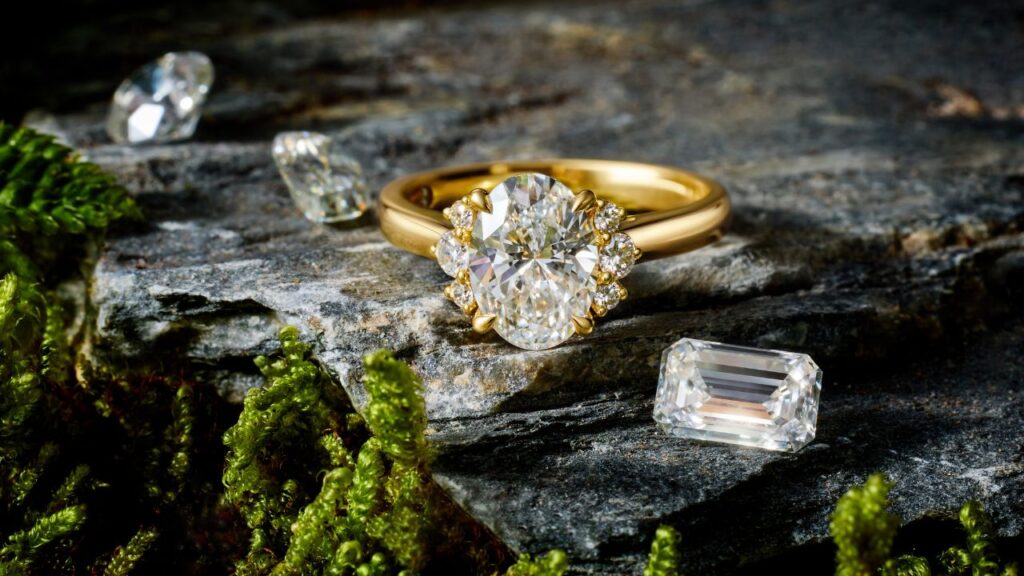
When it comes to shape, the oval remains the undisputed leader, but a variety of elongated fancy cuts are gaining momentum.
“Ovals are still the most popular request we get, though emerald cuts are starting to catch up,” says David Lampert, president of Lester Lampert in Chicago.
At Jared, rounds remain the top choice overall, but elongated fancies are driving the most growth. Landau highlights elongated cushion cuts as the clear favorite, calling them “elegant and flattering,” while noting spikes in marquise and pear shapes this year. Anne Russell — executive vice president at Hamilton Jewelers in Princeton, New Jersey, and Palm Beach, Florida — sees strong demand for round brilliants but acknowledges growing interest in ovals, elongated cushions, radiants, and marquises.
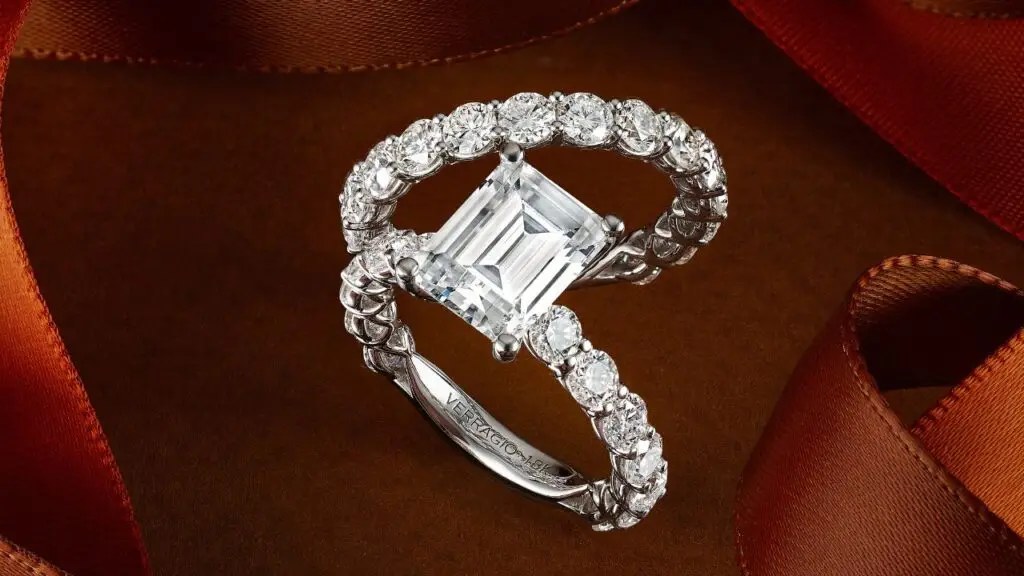
Pristine Gems’ Shah reports brisk sales of elongated fancies, especially marquises, elongated cushions, and emerald cuts. And at New York-based brand Verragio, founder and CEO Barry Verragio observes a similar demand for fancy-shaped solitaires in 2 to 5 carats, including ovals, emeralds, cushions, marquises and pears.
“Ovals dominate,” Carruth agrees, “but elongated cushions and radiants are gaining fast.”
Sizes, shades and styles
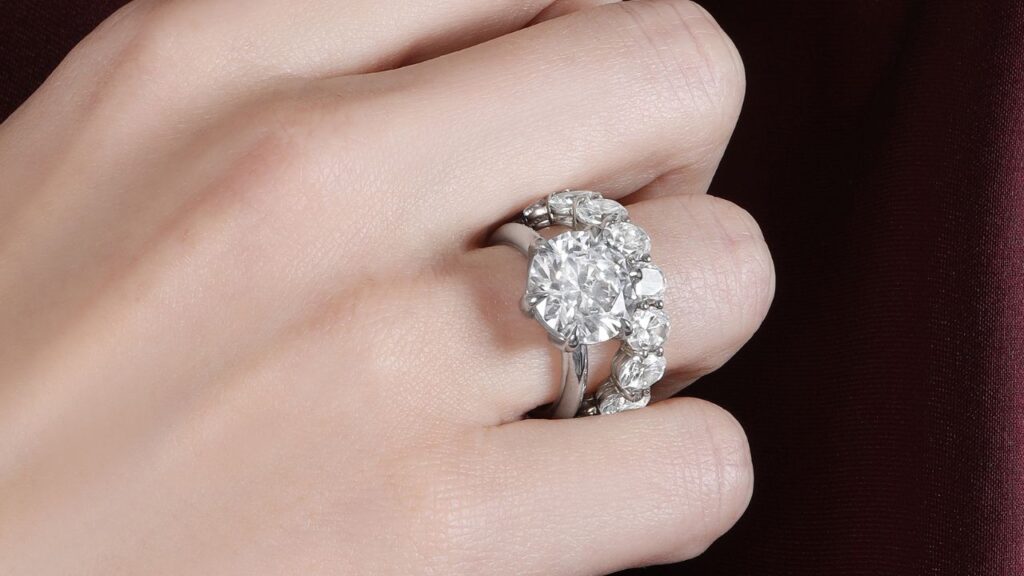
Complementing this evolution in shape is a shift in carat size. The 2-carat ring is quickly eclipsing the 1-carat. Lampert, who works exclusively with natural diamonds, says his clients typically start at 2.50 carats. Jared’s Grimmett says 2 carats is fast becoming the new norm.
Color trends also reflect shifting tastes. While classic colorless diamonds dominate, jewelers report growing interest in warm tones such as off-white, champagne, and subtle yellows. As Arundale notes, De Beers is actively promoting “desert diamonds” with faint colors to differentiate natural stones from synthetics, broadening acceptance of unusual shades of brown, yellow and faint pink. “People want personalization, and they want you to know it’s real, and these are the ways they do it,” she says.
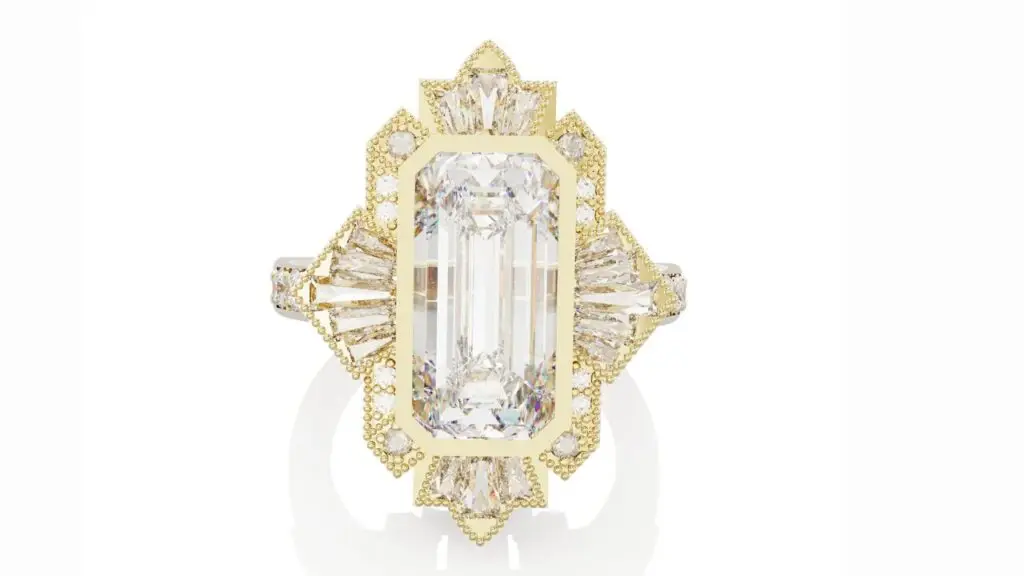
At the high end, Gaudy Atelier’s clients favor yellow diamonds for their engagement rings.
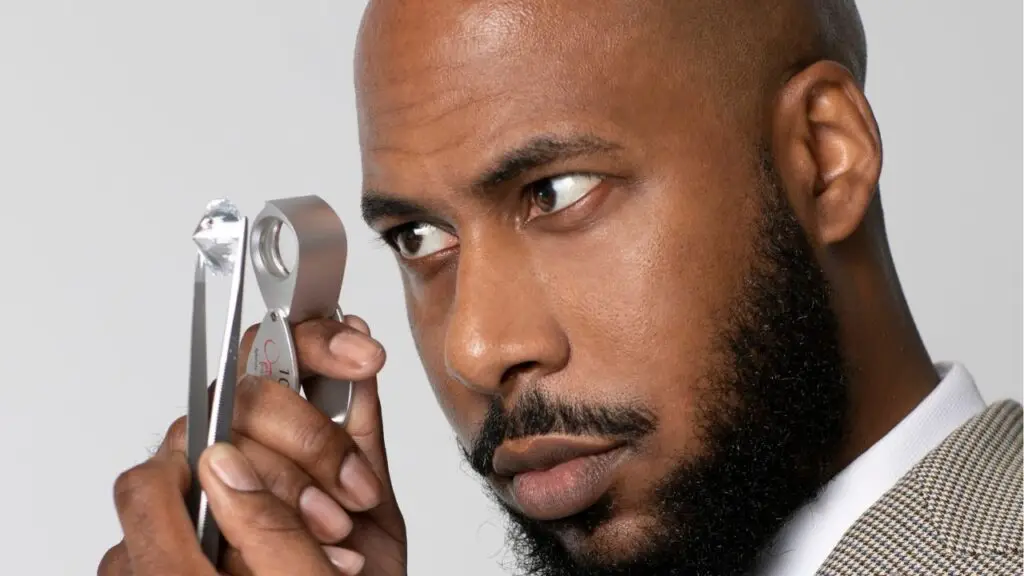
Style-wise, solitaires remain a cornerstone, with most consumers opting for clean, simple silhouettes. Customization adds intimacy to the design; Lampert points to details like engraved initials or bespoke prong and shank variations that make a ring feel personal, even within a classic framework.
Metal preferences are evolving alongside stones and shapes. Rising gold prices, remarks Verragio, have fueled a “seismic” return to yellow-gold settings, even for diamond-intensive designs that once defaulted to platinum or white gold. In uncertain times, he says, buyers are drawn to the permanence, both symbolic and material, that yellow gold represents.
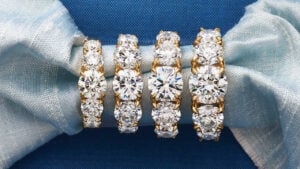
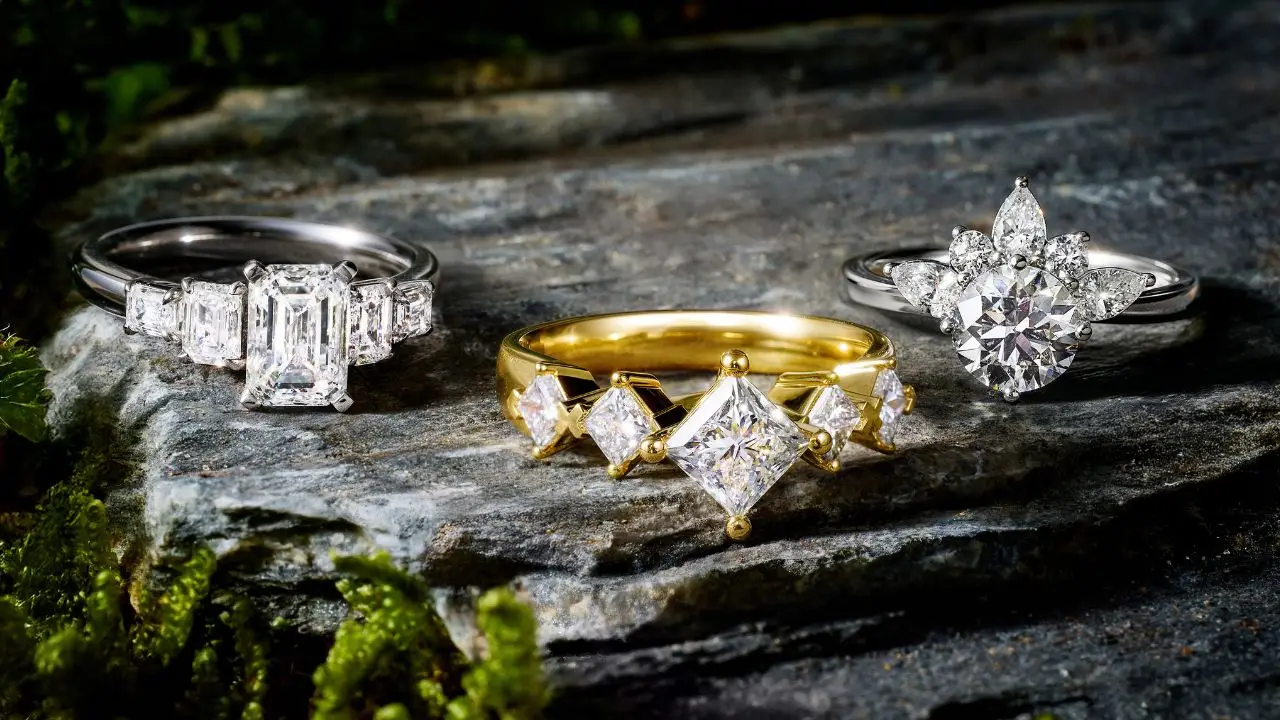
Main image: A selection of rings from Jared Jewelers’ Storied Diamond collection. (Jared Jewelers)