


In jewelry retail, a standout store isn’t just a nice place to shop — it’s a profit engine that stops traffic and jump-starts growth.
Mark Pimental, founder of MP Business Consulting, recommends that clients remodel their stores every seven to 10 years — and radically reinvent them every 15 to 18. When planning a new location, he says the strategy should be bold from the start: Choose a site and design that’s impossible to ignore.
“You want it to be a traffic stopper,” Pimental says. A dramatic architectural feature or “wow factor” adds excitement to the shopping experience and encourages customers to spend more. The investment pays dividends internally, too, with a fresh environment energizing owners and staff.
Sherry Smith, principal partner at consultancy The Retail Smiths, cautions that a store is ready to renovate or expand when the data, not emotion, says it’s the right time. That means the financials can comfortably support the investment, operations are stable enough to absorb the disruption, and the market shows clear demand for additional capacity, improved experience, or a stronger brand presence.
It also means understanding the return on investment: how long it will take to recover the cost, what measurable benefits the upgrade will create, and whether the long-term strategy of the business truly warrants the expansion.
“Renovation should be a business decision, not a vanity project, and the numbers, not the nerves, should make the final call,” Smith says.
Pimental stresses the importance of clarity about what the jeweler wants to achieve before undertaking any move or remodel — as well as a demographic study supporting the location decision. He also advises limiting the time frame for any moving sale so customers don’t spend their disposable income in the old store before the new one opens.
And once the new store is ready, he recommends a soft opening to give the team time to adjust, especially if there are changes in software, layout, or point-of-sale systems. “If your team isn’t well trained, your service levels will drop,” he says.
Thinking outside the box
These three jewelers’ dramatic remodeling choices not only changed how customers perceived the store, but also boosted growth — even through unexpected challenges
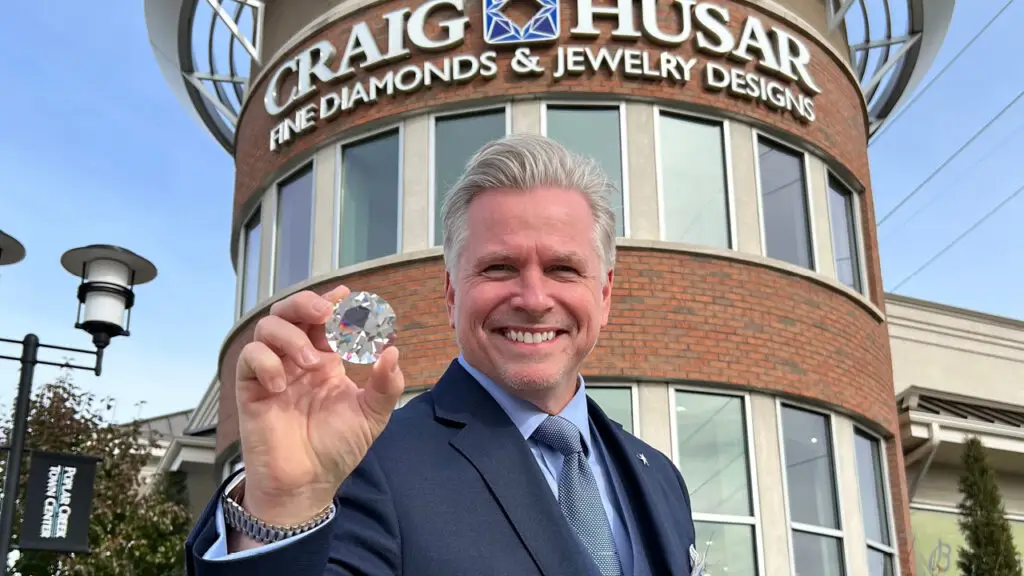
Craig Husar Fine Diamonds
Brookfield, Wisconsin
After nearly three decades in a strip mall, CEO Craig Husar was ready for a rebrand and a freestanding store that would put the business on the map. He searched for years before finding a high-profile corner with 75,000 cars passing daily — one of the busiest intersections in the state.
Designing and building from scratch was thrilling, but also overwhelming. The project ran nine months behind schedule, and when early snow hit Wisconsin before the windows were installed, Husar found himself shoveling it out of the unfinished space.
Still, when Craig Husar Fine Diamonds opened in January 2019, the impact was immediate. Glass on all sides, 30-foot ceilings, and a location built to draw attention communicated an entirely new level of luxury.
Then came the pandemic. “I spent two months running the business through the back door, delivering things through the parking lot like it was a drive-through diner,” he recalls.
The wow factor: A 35-foot tower houses the Star of Husar, a 15-foot, jewel-like sculpture that hangs from 480 steel wires and sparkles with 2,618 Swarovski crystals. When sunlight catches the crystals, the fiery glow is visible from the street.
The results: Despite the timing, the store quickly outperformed expectations as soon as it reopened post-Covid. Overall volume has more than tripled, and watch business has grown sevenfold. The visibility and elevated presence have helped attract key luxury brands. “Strip malls are convenient, but it’s difficult for a business to stand out,” Husar says.

Henne Jewelers
Pittsburgh, Pennsylvania
Fourth-generation owner John Henne wasn’t just remodeling — he was reimagining the footprint of his existing three-story building. The ambitious plan required removing five third-floor apartments and several second-floor offices, plus demolishing a massive basement chimney connected to an old incinerator. Piece by piece, the chimney was removed while the structure was reinforced with steel; the team held its breath until that part was complete. But Henne remained committed to creating a space that would set a new benchmark for the brand.
The wow factor: A dramatic, two-story entrance called the Library — complete with a showstopping chandelier and a towering display of curated objects representing the Henne family’s history, including a bust of Henne’s father and a photo of the original store.
The results: Project architect Eric Lewis of E/Line Architecture describes Henne as a visionary for having faith in the ambitious expansion. The 15,000-square-foot store, which opened in 2024, now includes a Rolex salon, a dedicated VIP entrance, and private selling rooms.
“We spent more than I expected,” Henne admits. “If I had known the final number going in, I might have been more apprehensive — but I’m thrilled we did it. It has made a dramatic difference in our business.”
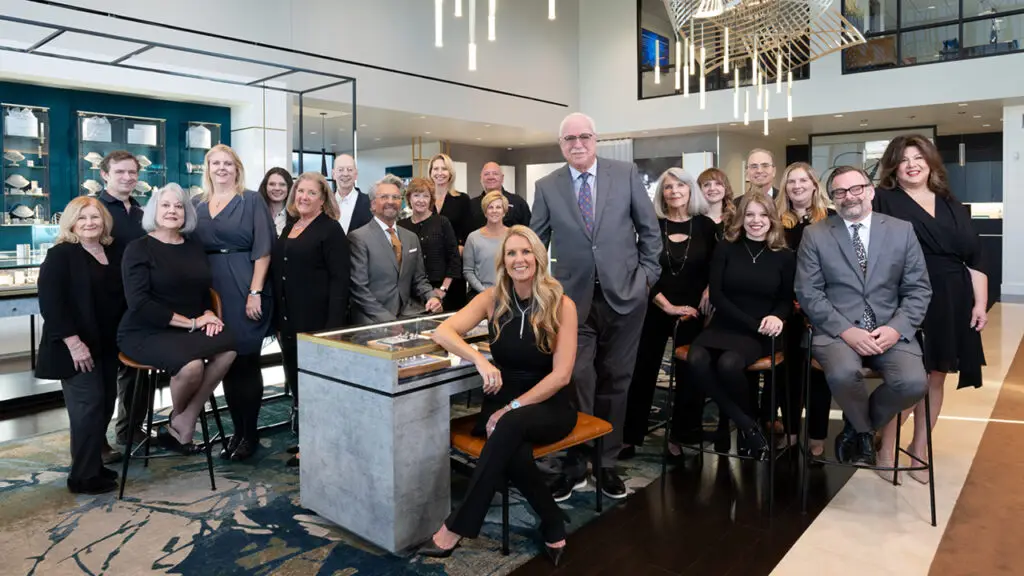
Hale’s Jewelers
Greenville, South Carolina
By 2020, Hale’s Jewelers had occupied the same location for 40 years. Owner Lucian Lee was eager for a space that reflected Greenville’s unprecedented growth and offered a fresh, modern shopping experience. The new location is 8,000 square feet — and Lee already wishes he had gone bigger. “You probably can’t go too big,” he says.
The shopping center’s master plan required two-story construction, which created a soaring interior. The challenge: to ensure that the space still felt warm and welcoming.
The wow factor: A floating, jewel-like metal sculpture designed by a local firm both fills the vertical space and draws the eye toward key selling areas. Outside, a striking roofline creates the impression of a jewelry box opening — a hint at the luxury inside, says Meg Terry, principal at DP3 Architects in Greenville.
The results: The new store opened during pandemic-era uncertainty, but the customer reaction was strong from day one. Business has doubled in five years, and shoppers still routinely walk in and say, “Wow.”
“We’ve been in Greenville since the 1850s,” Lee says. “But this made us look new. It creates excitement.”
Main image: Hale’s Jewelers in Greenville, South Carolina. (Hale’s Jewelers)

What Does Love Look Like? Not Out-of-Touch Lab-Grown Messaging
The natural-diamond industry won’t attract couples by telling them synthetics devalue their relationship.

Bridal Shopping in the Age of AI
Couples are researching online, but they still want to make the ring purchase personal – and that creates opportunities.

Six Brands Serving Fresh Engagement-Ring Designs
Whether it’s hand-sculpted organic gold or reimagined divorce jewels, these designers are setting trends that resonate with bridal shoppers.