

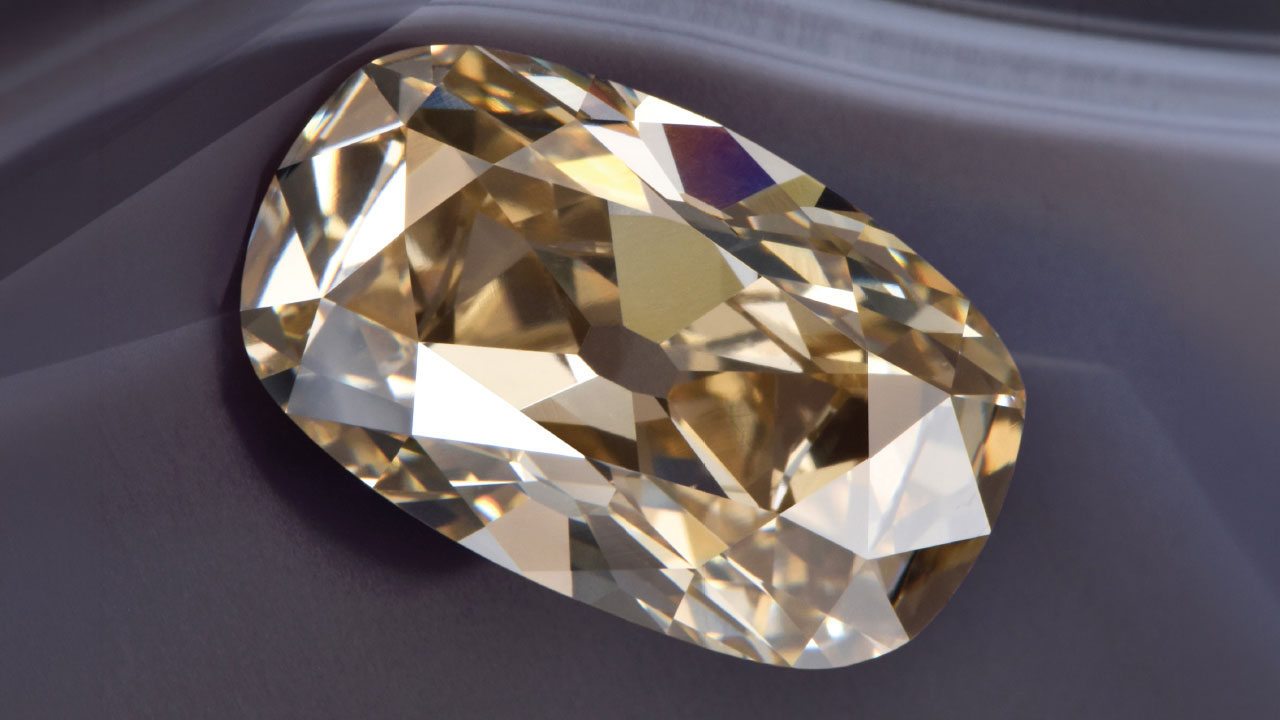
When it comes to old-cut diamonds, each one “is inherently unique,” says New York-based designer Mindi Mond. “They were all hand-cut, guided by the eye rather than a machine.”
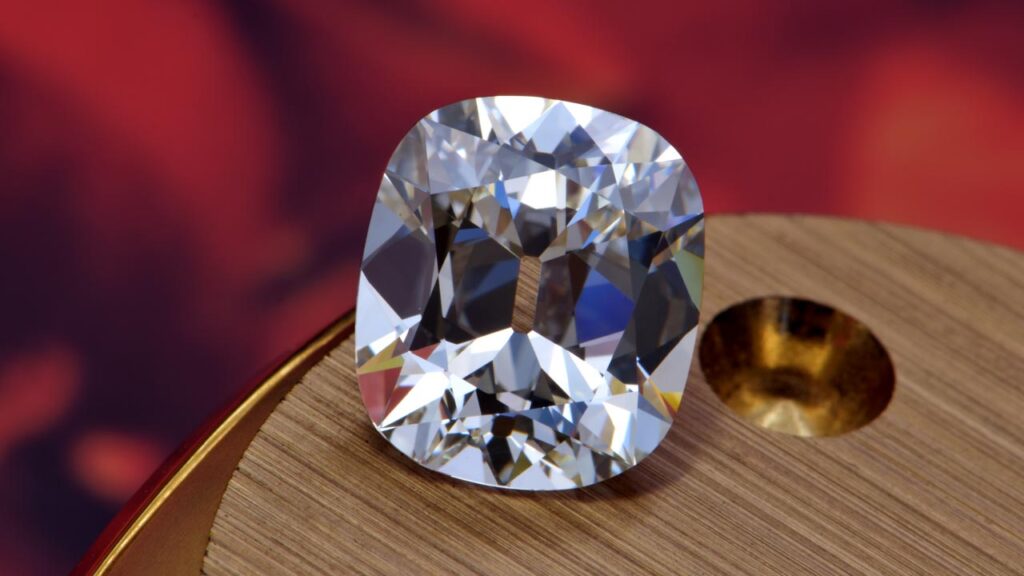
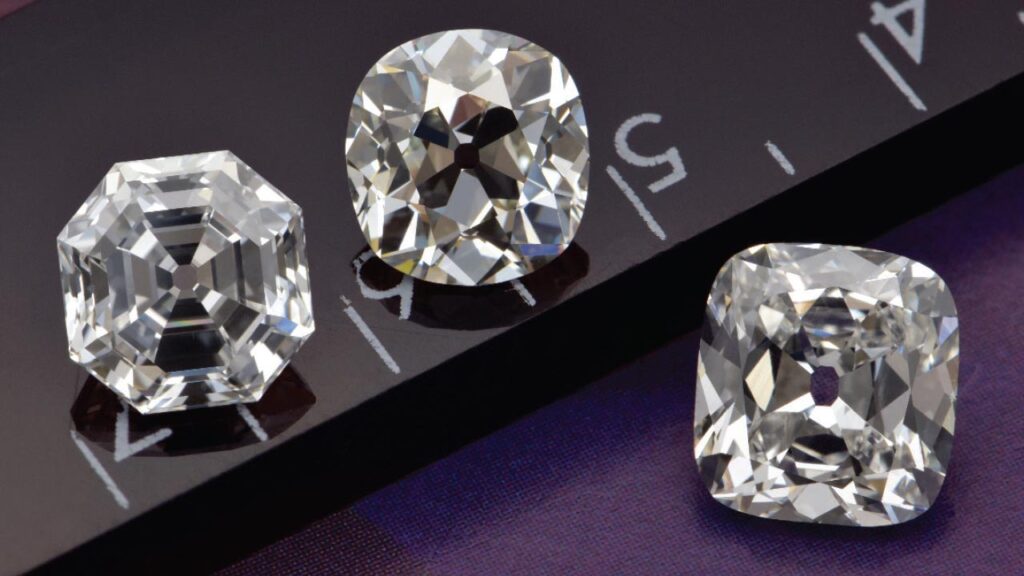
Chunky, characterful and softly luminous, these diamonds possess a glow distinct from modern stones. Their broad facets and irregular angles reveal the hand of the cutter; the facet patterns are visible to the naked eye, allowing craftsmanship itself to become part of the diamond’s aesthetic expression.
Dealers have seen demand for old cuts rise steadily over the past decade and sharply in the last five years. Once largely confined to estate jewelry and specialist dealers, old-cut diamonds have now entered a broader contemporary landscape as designers increasingly pair them with modern aesthetics.
To their advantage
Maarten de Witte, a master diamond-cutter with more than 50 years’ experience in the US, has observed a clear shift. For much of his career, commissions focused on recutting stones to meet modern ideals. Only in the past decade, he says, have clients actively sought to preserve old mine and old European cuts in their original forms.
Part of the appeal lies in the character of the antique cut itself. With broad facets and varied proportions, old-cut diamonds offer a softer, more nuanced brilliance that makes each stone distinctly individual. As diamond supplier Randy Poli of Poli Trading Company notes, antique diamonds were traditionally “meant to be enjoyed by candlelight,” coming alive in dim, natural settings.
Proportion-wise, old cuts are typically shallower than modern brilliants, making them appear larger for their weight. “Their lower profile creates a more tailored look on the finger,” explains Poli, “rather than a stone that sits high above the hand.”
Interest in the style surged after football star Travis Kelce proposed to Taylor Swift with an old-cut diamond engagement ring in August 2025. The design by jeweler Kindred Lubeck pushed elongated old mine cuts firmly into the spotlight.
“I’m seeing solid demand for antique material from melee sizes all the way up for contemporary work,” says Poli. Elongated old mine and cushion cuts remain the most sought-after shapes, followed by vintage ovals and pears. “We’ve seen a huge spike in awareness since the [Swift] engagement, but it was already the most popular shape by a healthy amount over the past five years.”
A dwindling art
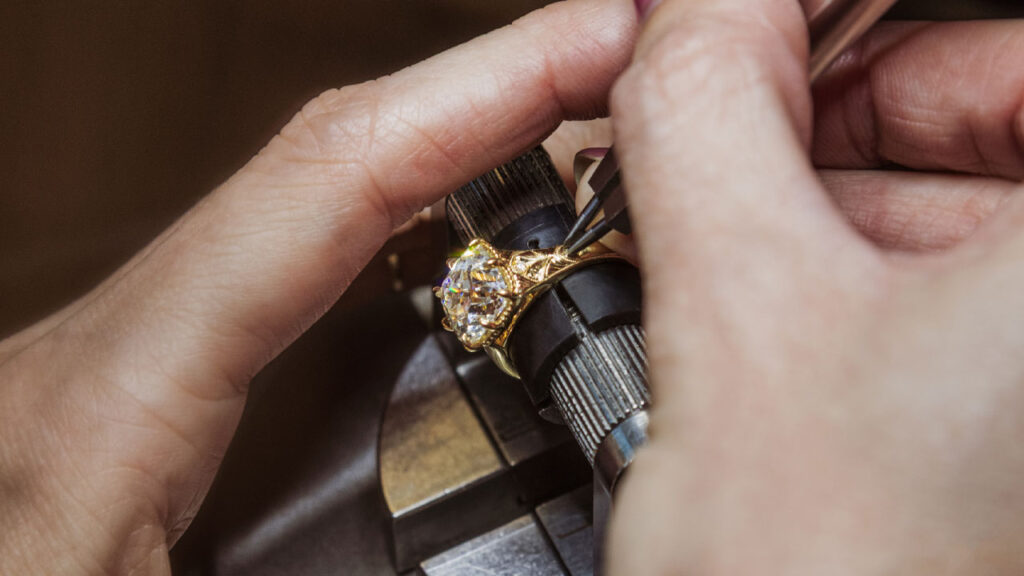
As demand grows, so does the prevalence of modern reproductions emulating historic cutting styles. At the same time, however, the number of artisans capable of producing true old-cut diamonds has declined.
“The old-school cutters are few and far between,” says Mark J. Klein, vice president of Julius Klein Diamonds. Traditional cutting centers like Belgium, Israel and New York have relatively few practitioners working in historic styles, he notes. Small pockets remain in London, Amsterdam and India, though many cutters there rely on hybrid approaches combining traditional techniques with modern technology.
“It’s hard to teach anyone the real tricks of the trade,” Klein says.
In the US, firms such as Jack Reiss Cut have been producing refined cushion brilliants and old mine-style stones for years, though overall production in the country remains limited. Only a handful of US-based cutters are producing old-cut material today, often using a modern plotting software before executing the cut by hand, according to Poli. Most work involves recutting modern or vintage stones rather than cutting directly from rough, he adds.
Klein agrees that recutting vintage material is often the most practical solution for meeting demand. “It’s much easier to achieve an antique look with a stone that’s already halfway there. The facets are broader, the girdles thinner, and the overall aesthetic more consistent with older material.”
The signs are there
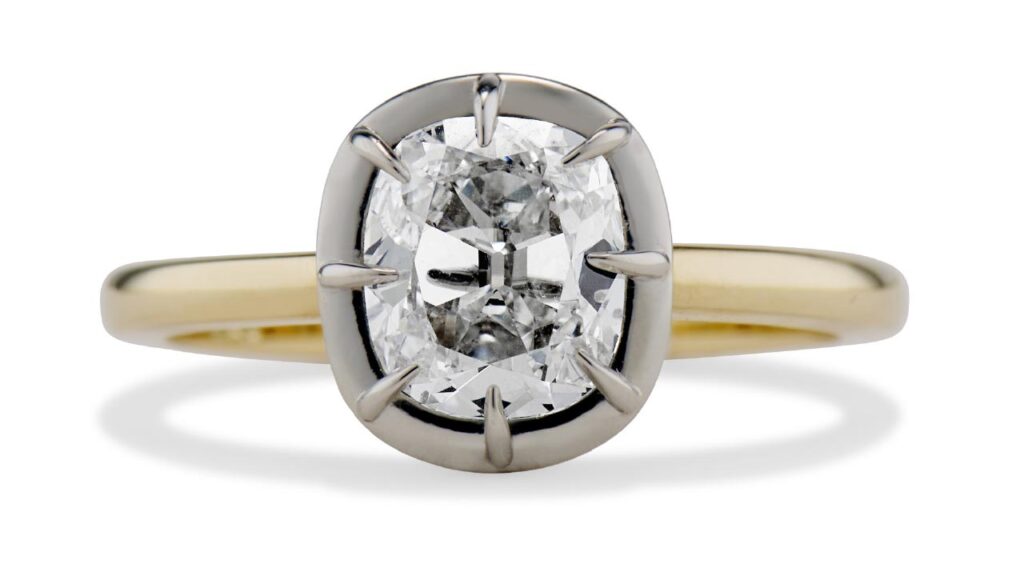
Certain visual cues still distinguish originals from reproductions. A smooth or overly finished girdle often signals a modern cut; antique diamonds typically feature extremely thin, bruted or rough girdles. General wear, small nicks, or abrasions can also point to genuine age.
“There’s still an extra 5% of charm that’s hard to replicate,” comments Poli. “Even the best reproductions tend to feel just a little too fresh.” Beyond the technical markers, “older stones have an organic feel that’s difficult to quantify.”
The limitations of historic tools left subtle but telling signs, affirms Klein. “They couldn’t cut as precisely as we can today. Diamonds were held differently in dops and hand tools, so certain areas were polished while others were left untouched.”
Design solutions
While some designers insist on using true antique diamonds in their work, others are increasingly open to modern interpretations as supply tightens.
“There’s a small group of purists who only want originals, but for elongated antique cushions, ovals or pears, supply simply can’t meet demand,” says Poli, adding that shortages are most pronounced in the 2- to 3-carat range and in I color and below. “Once the client comes to terms with this, they are generally happy to accept the modern alternative.”
New York-based designer Lauren Addison is among those who take this pragmatic approach. While she has a deep appreciation for original antique diamonds, she has no qualms about offering antique-inspired cuts.
“Antique diamonds carry beautiful imperfections that reflect their journey through time,” she says, “but they can be challenging for clients who prioritize certificates and ideal makes. Inspired cuts offer a similar aesthetic and are often more accessible, both in availability and price.”
Mond, for her part, sometimes acquires diamond-heavy period pieces that people no longer want, and reworks them into contemporary designs.
Matching the vibe
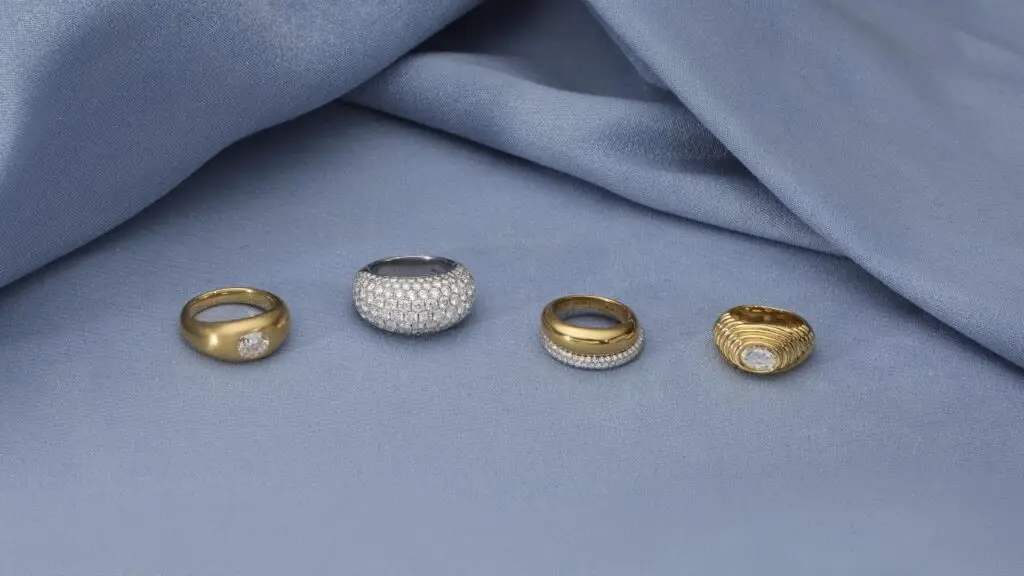
Jewelers with antique-inspired aesthetics have long used old mine cuts to anchor their design language — among them Lubeck, Jessica McCormack, Ashley Zhang, and Prounis. But today, even designers with a more contemporary aesthetic, such as Hemmerle, Uniform Object, Nghi Nguyen, and Jenna Blake, have embraced old cuts in pared-back compositions.
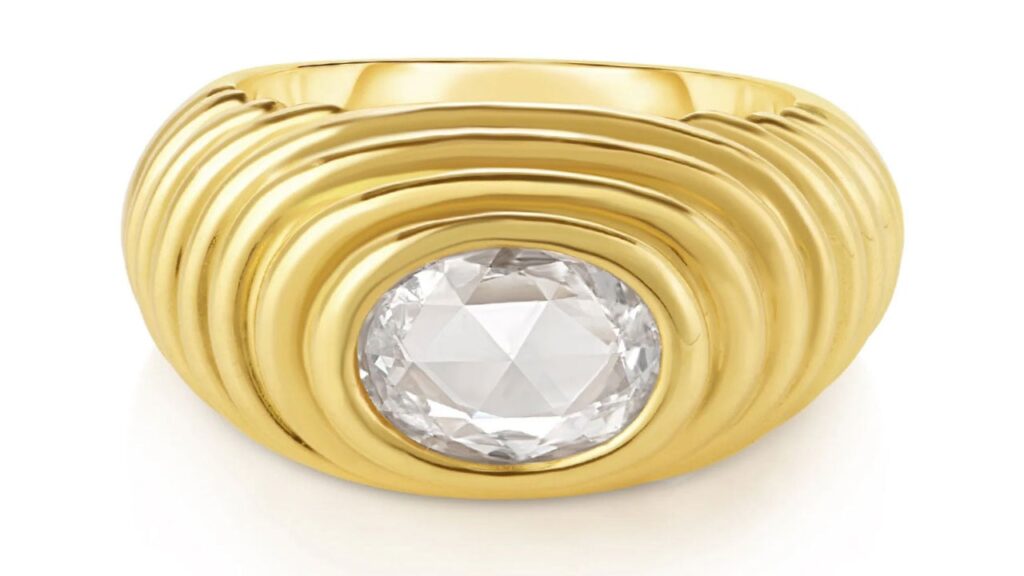
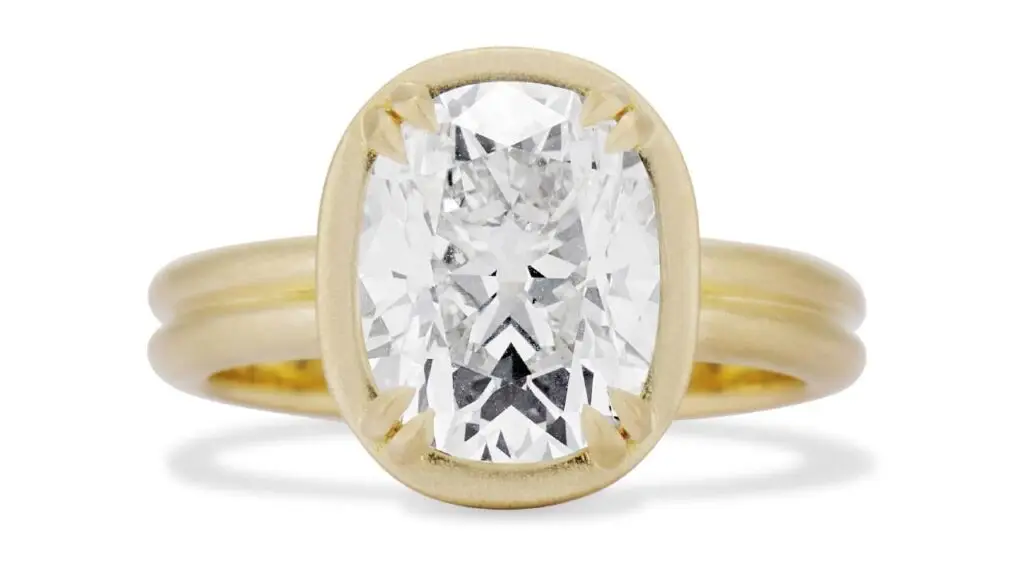
“These stones are incredibly versatile,” says Poli. “Some clients favor clean yellow-gold solitaires or understated bezels that allow the diamond to stand alone, while others embrace more antique-inspired settings, flanking center stones with additional old cuts in varying shapes and sizes.” In general, he finds that the larger the stone, the simpler the setting.
Mond mixes old cuts with modern brilliant diamonds in her Reconceived collection. “It helps to modernize the piece while still honoring its history,” she says. The clean metal finishes and restrained settings allow the old-cut diamonds to feel current without losing their depth.
For Addison, clients increasingly value both beauty and historical significance. Craftsmanship — through millegrain, cut-down styles or traditional settings — adds texture, depth and character. “Today, the right stone is one that exudes charm [and] a soft sparkle, and above all, inspires,” she says.
The particulars of pricing
Historically, old-cut diamonds have been subject to heavy discounts. The long-established valuation models from the Gemological Institute of America (GIA) assess a stone’s value based on what it might achieve if recut to modern, ideal proportions.
“This deduction-based valuation system is also applied to fancy cuts,” adds cutter Maarten de Witte. “That’s why fancy and old cuts historically had their own lower price lists, creating strong incentives to recut stones for profit.”
Today, the pricing logic has shifted, with fewer traders using the GIA model as their baseline. Antique and old-cut diamonds are increasingly competitive with modern cuts, according to Poli Trading Company’s Randy Poli, with certain stones commanding premiums due to their rarity, cutting styles, proportions and overall quality.
“There are some variations in cutting styles for old mine cuts [in particular] that bring premiums and are more desirable than the ‘classic’ old mine look,” he elaborates
Antique cutting styles often mask a diamond’s body color, allowing buyers to move lower on the color scale without sacrificing visual whiteness.
“The bang-for-your-buck factor is definitely at play,” Poli explains. “Elongated antique cuts in warmer colors — J and below — are trading at or near Rap in many cases.”
They also stand in contrast to synthetics, he suggests. “In the age of lab-grown diamonds, you can certainly achieve a bigger and more impressive look by going antique, which I think resonates with some people subconsciously.”
Main image: An old-cut, 9.70-carat diamond. (Poli Trading Company)

What Does Love Look Like? Not Out-of-Touch Lab-Grown Messaging
The natural-diamond industry won’t attract couples by telling them synthetics devalue their relationship.

Bridal Shopping in the Age of AI
Couples are researching online, but they still want to make the ring purchase personal – and that creates opportunities.
Six Brands Serving Fresh Engagement-Ring Designs
Whether it’s hand-sculpted organic gold or reimagined divorce jewels, these designers are setting trends that resonate with bridal shoppers.