


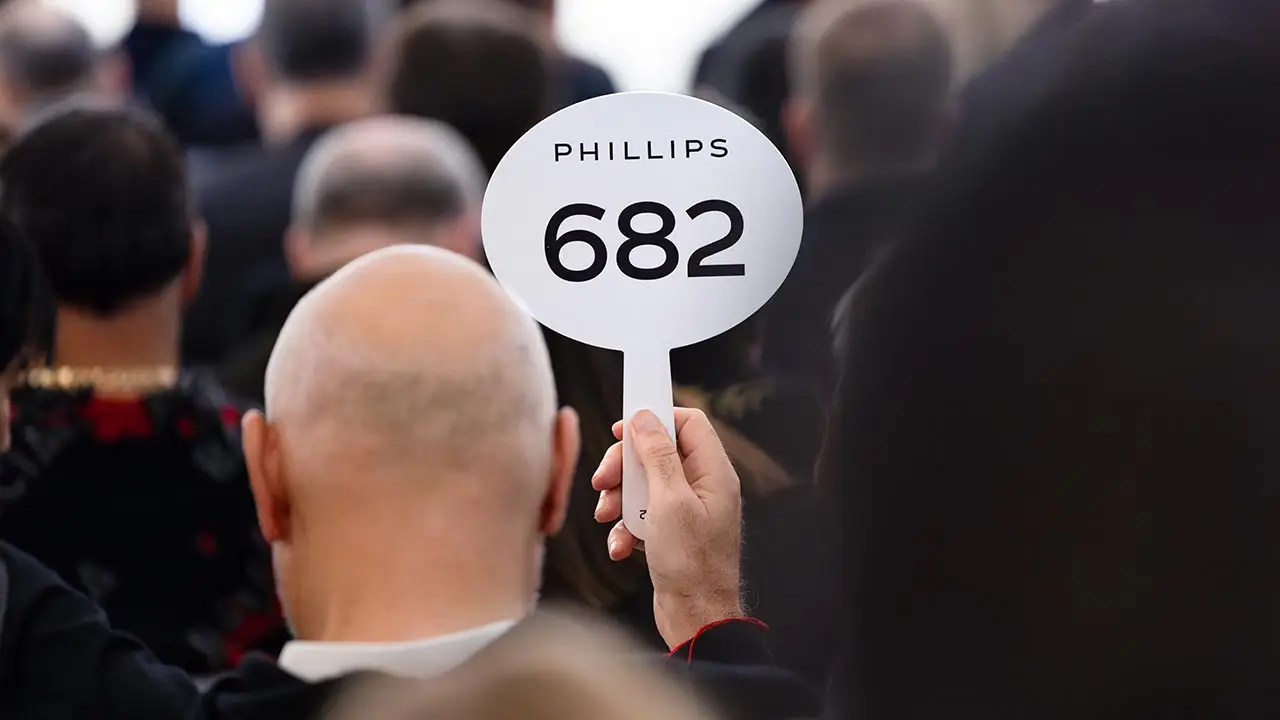
The auction house conjures a familiar image: an auctioneer commanding the room, paddles rising in competition, and chandelier bidding to heighten the drama as jewelry masterpieces fetch premium prices. It’s theatrical, glamorous and designed for spectacle.
Tenders operate differently. This is wholesale — the top of the gemstone supply chain, where business-to-business relationships drive trade. The buyers are not collectors browsing an evening catalogue, but expert gemstone dealers, cutters and manufacturers who know exactly what they’re looking at.
Walk into any trade show or sorting facility, and you’ll hear the words “tender” and “auction” used almost interchangeably. Yet there are distinctions between them. While the familiar names from the auction world are houses such as Christie’s, Sotheby’s, Phillips and Bonhams, companies like Gemfields, Fura Gems, Grizzly Mining, and Bonas Group all operate on the tender model.

Keeping it discreet
In a traditional tender, qualified buyers submit sealed bids for as many lots as they choose, without being able to view competing offers. Over time, repeat participants develop a sense of what different goods are worth, informed by market history and their own expertise.
“With our rough tenders, especially those that have been ongoing for some time, the market has a good idea of the prices,” says Tim Denning of Bonas Group. As a tender house that runs sales for both rough and polished gems, Bonas has begun adding estimate ranges on some lots to help orient buyers price-wise amid larger offerings. “With many hundreds of lots, buyers can easily get a little bit lost,” he explains.
Discretion is integral to the tender process. The sellers keep access tightly controlled through rigorous know-your-customer procedures, vetting potential participants to make sure they’re legitimate companies. The qualified buyers then view goods privately before submitting their sealed bids — a system that ensures prices reflect a considered assessment rather than public bidding momentum, says Rupak Sen, chief marketing officer at Fura.
“Because bids are confidential, buyers focus on the intrinsic quality and commercial potential of the gemstones rather than on competitor behavior,” he explains. “This leads to more rational pricing and reduces the risk of speculative bidding,” contributing to greater stability throughout the supply chain.
Viewing the competition
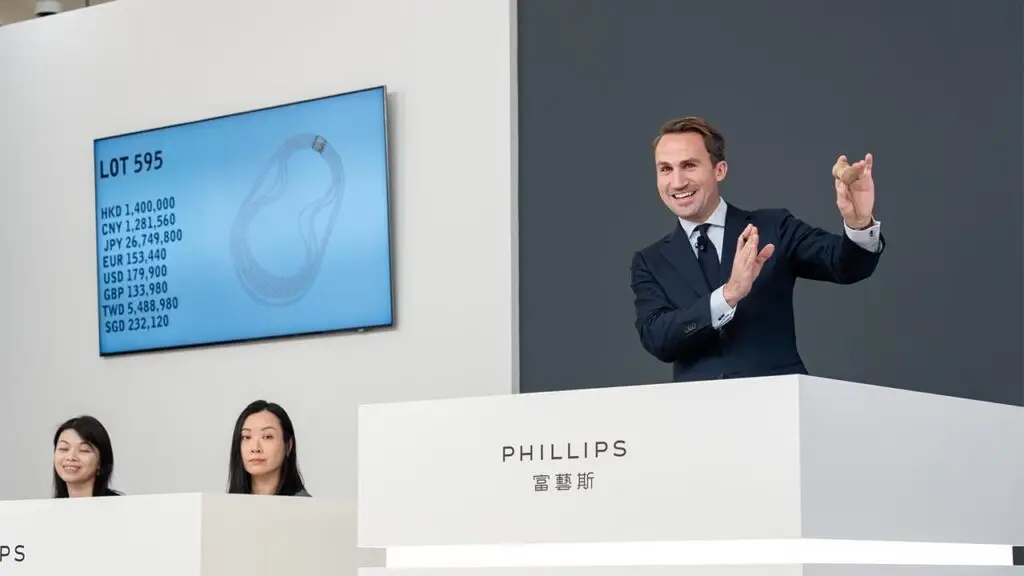
Auctions, in contrast, thrive on transparency and real-time competition.
“The auction model sees an opening price — which is not normally the reserve — and buyers follow the prices up in rounds until the last man standing wins the lot,” says Denning.
For Phillips, that visibility is central to its appeal. Public bidding and estimates anchor expectations and reinforce market confidence, says Benoît Repellin, the auction house’s worldwide head of jewelry. As rival interest unfolds in real time, bidders may become more decisive, particularly on rare or high-value pieces. The transparent estimates, he adds, also signal valuation expertise, fostering trust and competitive momentum that can translate into stronger results.
“When collectors and the trade see strong participation in the room or online, it strengthens long-term confidence in the category and validates estimates for exceptional pieces,” he says. “That momentum and transparency contribute to a robust, trusted market, where prices are set in full view of the global collecting community.”
Tenders, meanwhile, have other operational advantages, says Denning, such as speed and efficiency. With hundreds of lots, auctions can be time-consuming, and while their open-bidding model can boost prices when the market is strong, it can have the opposite effect when the market is weak. Tenders allow for faster closure and stable pricing regardless of market strength.
Both tenders and auctions aim to maximize exposure and achieve optimal prices, though, which give them an edge over one-on-one dealer sales, he adds. “Selling goods privately between traders will not be subject to the same level of competition.”

Step by step
The tender process begins at the mine. “Rough gemstones undergo an initial sorting based on color, clarity and size,” explains Sen. “A team of expert graders evaluates each stone that comes out of the mine, assigns grades, and securely prepares them for transport.”
When goods arrive at the tender house, verification comes first. “The very first thing we do is confirm that what has been sent matches the shipment details we receive,” says Denning. Then comes the sorting stage, which “takes considerable time and skill to ensure that the grades are consistent, repeatable and logical.”
At Fura’s Bangkok sorting facility, gemstones get assessed under carefully controlled lighting conditions to mirror buyer viewing environments — a detail that matters when color can shift dramatically with the lighting. A final quality-control check by two head graders ensures nothing slips through before the company preps the goods for sale: grouping them into structured lots, sealing them, and registering them in its systems. Gemfields follows a similar protocol, screening production at the mine before further refinement in the gem hubs of Bangkok or Jaipur.
At auction, the process is equally rigorous, though the emphasis shifts toward presentation and narrative. From the moment a piece is consigned, Phillips documents every stage — intake, cataloguing, photography, promotion, exhibition, and sale day. “Each lot is carefully logged with detailed descriptions, measurements and condition notes,” explains Repellin. “Where appropriate, we commission additional gemological reports — Gemological Institute of America (GIA) certification for diamonds, and specialized testing for natural pearls and colored stones from the Swiss Gemmological Institute (SSEF), Gübelin, and American Gemological Laboratories (AGL).”
Researching the lots’ provenance strengthens the story behind significant jewels, building trust among bidders. Every lot gets professionally photographed, and the auction house integrates them into catalogues, marketing and press campaigns. “This process [ensures] that collectors and the trade can bid with confidence at a fair, market-driven price,” Repellin says.
Tender catalogues perform a comparable function, detailing color grades and clarity categories to guide buyers ahead of the viewing stage.
Working in tech
In both tenders and auctions, technology enhances logistics but does not replace expertise.
At Phillips, digital platforms allow clients to browse imagery, read condition reports and bid remotely. Technology “has greatly expanded our reach and made the early stages of inquiry more accessible,” says Repellin. Yet the trusted relationship between specialist and client remains central. Online condition-report requests frequently evolve into direct dialogue, and it is those conversations, inspections and expert judgments that ultimately guide collectors.
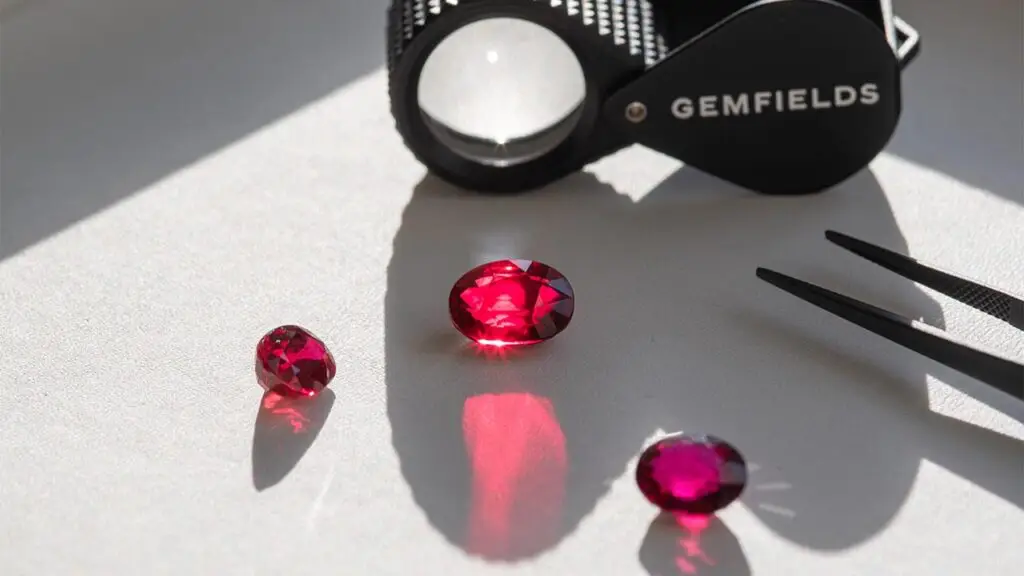
For miners and tender houses, the balance is similar. At Gemfields, buyers typically receive several days to inspect goods in person before bidding opens on AI-based platform BidGemmer. Sales consist of multiple rounds, allowing customers to plan their expenditures carefully; those unsuccessful in an earlier round can participate in subsequent ones without the risk of overspending.
Elena Basaglia, head of partnerships and product for Gemfields’ downstream business, stresses that the technology supports rather than replaces connoisseurship. “No digital image, color description, or automated system can fully convey the subtle nuances of a natural gemstone. Seeing a gem firsthand far exceeds the ability of words or technology to capture its color, clarity and character.”
That goes for the miner’s initial assessment process as well. “The final grading of our emerald and ruby production is performed by our expert graders, whose experience, trained eyes and judgment cannot be replicated by machines,” she says.
Fura employs secure, auditable digital systems to track lots from mine to sale, and to manage registration and sealed bids. But there are other aspects of colored-stone processing that are harder to automate.
“Unlike in the diamond industry, where advanced handheld machines show the best yield from a rough stone, in color we are still not there,” says Sen. Without that predictive planning technology, buyers must rely on experience and judgment, and this can affect their bids. “Once we have that kind of innovation, bidding [will likely] become more aggressive, as clients would know exactly what they could do with the rough.”
In Bonas’s diamond tenders, stone-mapping files from diamond-equipment specialist Sarine Technologies may accompany individual stones, offering technical insight before buyers submit bids. Meanwhile, the tender house’s proprietary bidding platform streamlines participation and keeps commercial data in-house. However, Denning echoes Basaglia’s sentiment that photographs rarely capture gemstone colors accurately; he believes buyers must see them in person to assess color, clarity and inclusions properly.
A digital trail
Because traceability starts at the mine for gemstone tenders, vertically integrated producers like Gemfields and Fura can keep documented chains of custody from source to sale.
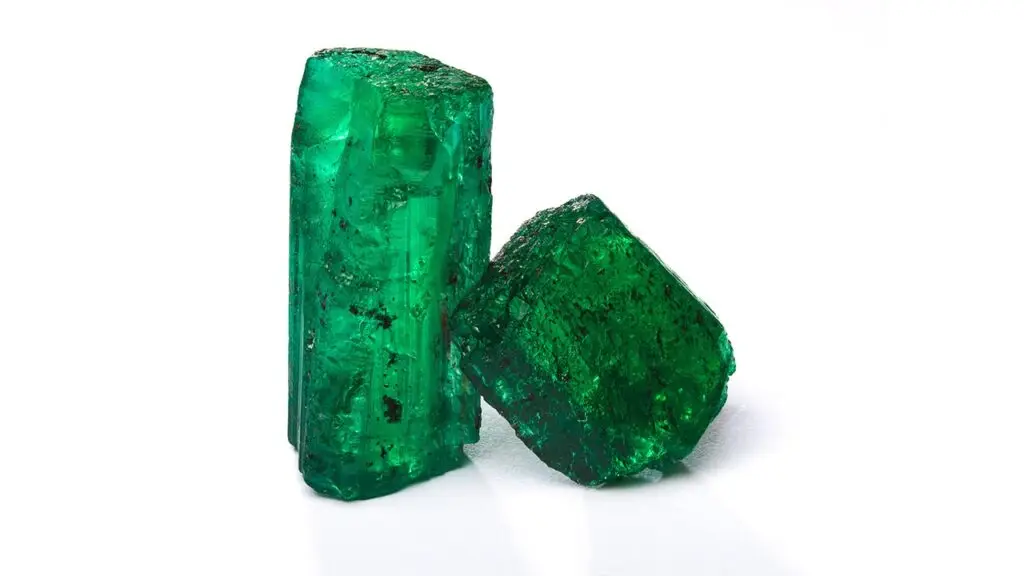
Gemfields reinforces this by using the Provenance Proof blockchain system to record every ruby and emerald it offers at auction. For its highest-quality emeralds, it also utilizes Provenance Proof’s Emerald Paternity Test, infusing the stones with encoded DNA nanoparticles that contain the gems’ origin data. “Together, these measures provide buyers and downstream partners with full transparency and confidence in the provenance and chain of custody of their gemstones,” says Basaglia.
Fura registers its goods with government authorities upon export, including providing official provenance certificates, and pays mineral royalties to the state before shipment. Once it’s assembled the lots for sale, Fura enters each one into the Provenance Proof blockchain, creating a digital key with the gem’s mining data and other relevant responsible-sourcing information. That key transfers to each buyer, following the stone from mine to retail.
For independent tender houses like Bonas, the traceability structure is somewhat different. As a Responsible Jewellery Council (RJC)-compliant intermediary working with multiple mining partners, Bonas doesn’t own the goods; it just facilitates the sale.
“All of the processes that we undertake must be audited and completed in the most transparent way possible,” says Denning. “So when we say the goods come from a particular mine, we must be 100% secure knowing that this is the case.”
In diamonds, tools such as De Beers’ Tracr platform, Sarine’s traceability programs, and the GIA’s Diamond Origin Report assist auction and tender houses’ tracking, though comparable systems for colored gemstones remain limited.
Sen expects digital traceability to continue developing. The more companies adopt blockchain, he predicts, the more transparency and stability there will be in the colored-gemstone market.
Main image: A bidder at a Phillips auction. (Phillips)

What Does Love Look Like? Not Out-of-Touch Lab-Grown Messaging
The natural-diamond industry won’t attract couples by telling them synthetics devalue their relationship.

Bridal Shopping in the Age of AI
Couples are researching online, but they still want to make the ring purchase personal – and that creates opportunities.

Six Brands Serving Fresh Engagement-Ring Designs
Whether it’s hand-sculpted organic gold or reimagined divorce jewels, these designers are setting trends that resonate with bridal shoppers.