

RDI Diamonds founder Michael Indelicato’s introduction to the world of jewelry came via his father. But this is by no means the usual tale of a second-generation business; rather, it’s a story of inheriting an entrepreneurial spirit that would help him build one of America’s largest wholesale diamond dealers.
Indelicato’s parents immigrated to Rochester, New York, from Sicily. By the 1980s, his father worked a nine-to-five at Xerox as a quality-control inspector, but was also constantly inventing side hustles.
“He would be a realtor on the weekends, and then he would also sell something on the side — Herbalife shakes, costume jewelry…all kinds of stuff,” Indelicato remembers.
In 1985, Indelicato senior began selling gold chains, charms, and other jewels. In order to set up a wholesale account, he had to prove he had a jewelry store — which, of course, he didn’t. He did, however, have a friend who owned a barbershop, and in a moment of roguish genius, the friends made a jewelry sign to place over the real one, and wheeled in a display cabinet. A gold-jewelry wholesaler accepted photographs of this retail mirage as proof, and Indelicato’s father started to place orders and sell jewels to his colleagues at Xerox.
“He was very smart, my father,” says Indelicato. “He was buying [gold jewelry] for $12 a gram and trying to sell it for $16 a gram, but they wouldn’t buy. So he raised it, tripled it to $36 a gram, asked for a third of the money down, and then the rest would be on credit. Credit was starting to be a big thing in the 1980s, and [it worked]. They gave him his third down, which is the money that he had [invested] into it, and the rest was on credit. So his risk was just the profit.”
The scheme worked, and soon Indelicato would spend his Saturday mornings helping his father tally up what was owed to them, which could be as much as $50,000 in pure profit. It was a good business, but sadly his father’s time as a jeweler would run short: Less than a year later, he was diagnosed with lymphoma and passed away within six months.
Never giving up
It was a heavy time for the teenaged Indelicato. Not only was he grieving, but he felt a responsibility to look after his mother, whose English was limited, and his 12-year-old sister, Sara. Like his father, Indelicato had a passion for business and had tried various ventures to turn a buck. He would take money he’d earned mowing lawns and invest it in get-rich-quick schemes he’d read about in Success Magazine. Nothing had yet panned out. His father’s final advice to him was not to give up these dreams, but to “stick to something” and make it work. With $30,000 of leftover gold stock, Indelicato decided to stick it out in the same business where his father had struck gold.
He sold the jewels to people in his social circles, and enlisted family members to sell at their workplaces using the credit blueprint. When the stock finally ran out, Indelicato found that there was still demand — people wanted more gold jewelry. He called his father’s supplier to see if he could help him acquire more inventory, and the supplier did. Indelicato soon had a network of more than 30 people selling for him. He set up an office in his mother’s basement to run his operations.
“They averaged about $1,000 per month per person, and I was selling $5,000 [of stock a month],” says Indelicato, who upped that sum when his girlfriend’s mother allowed him to sell jewels in her beauty salon. After this proved successful, he added 13 more salons to his growing list of distributors. It all added up, and he soon had a monthly revenue in the region of $58,000 — equivalent to more than $150,000 a month in today’s economy, or $1.8 million a year. He was 19 years old.
“It was crazy money,” he exhales.
The next natural step, in Indelicato’s mind, was to sell to jewelry stores. “By the time I was 21, I went everywhere — Buffalo, Syracuse, Rochester.”
His reputation spread, and soon he received a call from a South African diamond dealer looking for someone to take over sales in that part of the US. Indelicato jumped at the chance, and they arranged a shipment of $16,000 worth of diamonds.
Indelicato waited nervously, cash in hand, for a UPS driver to knock on the door and swap the parcel for cash, as Indelicato had always done in his gold dealings. But the knock never came; instead, the delivery driver threw it in a bush and left. Indelicato called the dealer in a panic to apologize and reassure him that he had the money, but the dealer told him the diamonds were on memo. “I said, ‘What do you mean, memo?’ I didn’t even know the word.”
A ‘cuckoo’ start
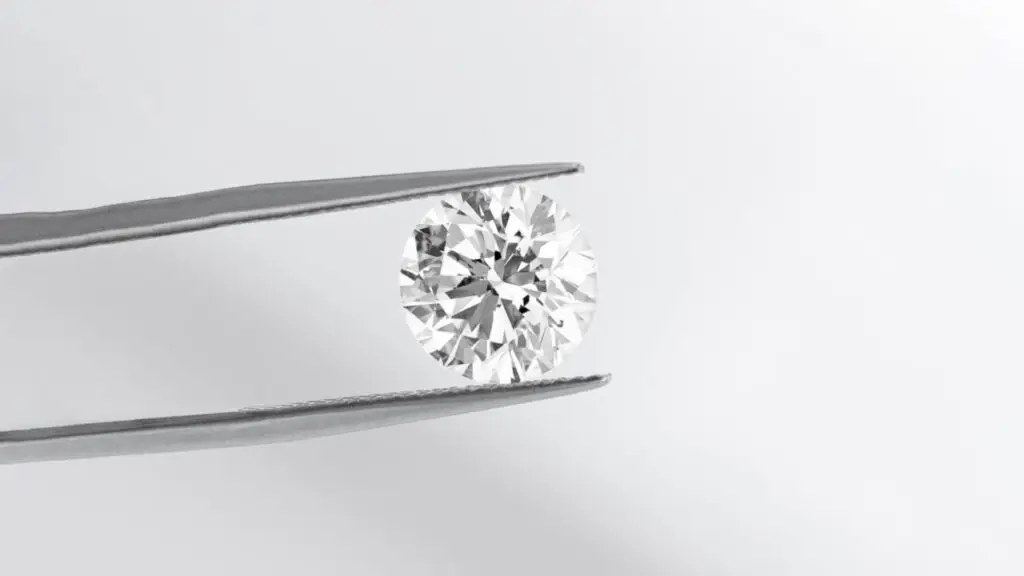
Indelicato went out to sell the diamonds…and found that he couldn’t. The parcel was full of round, 0.30-carat, D- to F-color, VVS- to VS-clarity goods. There was zero variety, making it “a very tough item [to sell],” he recalls.
Indelicato wanted to save face with the diamond dealer. His usual methods failing him, his brain went into overdrive. He thought of buying them himself, just so he could say he’d made the sale, but realized this would still leave him with stock he couldn’t move. Then he hit on what he describes as a truly “cuckoo” idea. He tracked down the phone number of a former schoolmate who was known locally for handling stolen property, and he decided to pretend the diamonds were stolen in the hope that this man would buy them.
They met in a parking lot on a hot summer’s day, and his former classmate took him to a bad part of town, where an older man greeted them in a dilapidated office and offered to take him to a “jeweler friend who knows about diamonds.” In the car ride over, Indelicato started to sweat.
“I went in with the intention of making a profit,” he says. “As soon as I saw [who I was dealing with], I said, ‘Oh my God, they better [believe they’re] really stolen.’” He dropped his asking price to the cost price of the diamonds.
As they waited in the big black Lincoln outside the jewelry store where the on-memo diamonds had been taken, Indelicato began to panic and confessed what he’d done, in whispers, to his acquaintance, who struggled to comprehend.
“He goes, ‘What are you worried about?’ I go, ‘Listen, they’re not my diamonds.’ He goes, ‘I know, that’s why we’re here, they’re stolen.’” Just as Indelicato’s nerves reached a fever pitch after 40 minutes of waiting in the car, the door opened, and a substantial stack of cash dropped into his lap with the words: “Kid, you got yourself a deal.”
“That was my first diamond deal,” he says, still a little shell-shocked after all these years.
Same town, bigger business
Since that nerve-wracking summer’s day, Indelicato has done thousands of diamond deals — although that first one was his last of that kind. Today, his business, RDI Diamonds, deals with hundreds of stores across the US and holds thousands of stones in inventory.
The business is still based in Rochester. In fact, RDI is an acronym for Rochester Diamonds Incorporated. Its first office opened there in 1993, in the city’s Sibley Building, a former department store. Today, RDI also has offices in New York City, including a space it opened in 2019 at West 47th Street’s International Gem Tower — a 34-story haven for jewelry companies.
By 1994, RDI had stopped selling to consumers and focused solely on wholesale accounts, kickstarting a decade of growth that would lead it to become one of the biggest players in the US. Indelicato declines to provide figures for the scale of the business today, but estimates that RDI is one of the “top five” dealers in America. The majority of its business consists of small to mid-size retailers, but it does have “at least 20 big players.”
“I’m not a billion-dollar company,” he says — but it’s a dream of his to become one.
A culture of trust
Ask Indelicato what sets RDI apart, and he will tell you it is exemplary service, top-quality vetted diamonds, an unmatched tenacity in helping retailers get the stones they need, and the ease of buying direct from an American “one-stop shop” that holds stock in the US.
Another defining element is RDI’s Lifetime Trade-Up offer, which Indelicato dreamed up in 1997. A jeweler who buys a certified diamond from RDI and wants to trade it in for a new one will get the same value for it as they originally paid, as long as the new order is for at least $1 more. That offer stands even if the jeweler has already sold the diamond once and the customer is selling it back years later — say, after a divorce.
“Everybody in the industry thinks I’m nuts,” says the RDI founder — and there are times when he wonders if they’re right. “When the markets go down and people want to trade in their diamonds, I still give them full credit. In the last few years, they really went down, and I’m still taking the [Lifetime Trade-Up].”
As the softening diamond-market prices led to a rush on trade-ins, RDI found itself taking in as much as $500,000 worth of exchanged diamonds a month at one point, per Indelicato’s estimates — though he says things are starting to slow down now. “I lost millions, but I honor what I said. I’m not going to change.”
While a policy like this puts pressure on RDI’s business, it has the opposite effect on the company’s clients. It means jewelers can buy with confidence, because if their diamonds don’t sell, they have the recourse of a trade-in. That can be especially helpful for retailers looking to buy unusual stones they wouldn’t normally carry, or those seeking security during times of stock expansion or new ventures.
The offer creates a culture of trust, says Indelicato, and he describes his clientele as incredibly loyal as a result.
“It’s like an insurance policy,” he says. “You got to be crazy not to deal with us.”
Outside the box
Another of Indelicato’s strengths has been marketing. Here, he mirrors some more of his father’s ability to think outside the box. He placed his first ad in the trade press in 1992: a black-and-white print advertisement at a time when all ads were in color. His sister, who had joined RDI as a gemologist in 1991, thought he’d done it to save money, but his real motive was to make people stop and notice the ad. He later moved on to colored ads, and his dream spot was the back cover of Rapaport Magazine. He spent years at the end of a long waiting list for that coveted spot, and when it came up, he held on. The back-page ad has been RDI’s now for nearly eight years straight.
RDI prides itself on sharing its diamond-selling and marketing expertise with its clients. Twice a year, it hosts a weekend event called the RDI Academy, which it packs with guest speakers offering business advice. It also brings its customers together in thoughtfully curated round-table scenarios that allow them to brainstorm — and socialize — with each other.
Besides these efforts, the company has invested in technology to enhance its offering. Its Rare & Forever Natural Diamonds collection uses AI grading to weed out brown, green or milky (BGM) goods. RDI has all of its diamonds verified by Gemprint, a system that scans each stone and creates an optical “fingerprint” to identify it. Customers can also host RDI’s full inventory on their websites — with native store branding — so shoppers can choose from thousands of stones that the store doesn’t have to keep in stock. The stores can adjust the pricing to include their own markups, and the diamond images are magnifiable up to 300 times so customers can inspect the stones.
One of the newer initiatives is RDI’s Select program, which the company launched in August 2024 for its higher-spending jewelers. Members of this program — it has 40 retailers on board so far — get access to bespoke inventory management, as well as store-staff training from Indelicato’s son Sam. (“He’s phenomenal,” says Indelicato with fatherly pride, but also professional respect.) There are three tiers within Select, and the top one offers access to rough diamonds straight from Botswana.
Comparing the young Indelicato, who knew nothing of diamonds during that first sale, with today’s leader of a multimillion-dollar business that gets its stones straight from the source reveals an incredible arc. Yet some things haven’t changed: While he’s moved on from risky parking-lot deals, his approach to business is still all about fixing problems. The difference now is that he’s using his mentorship programs, tech initiatives and Lifetime Trade-Up to solve problems for hundreds of other businesses as well.
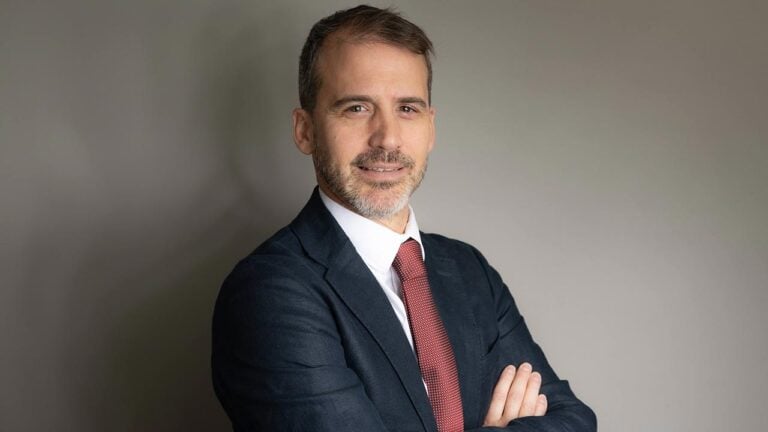
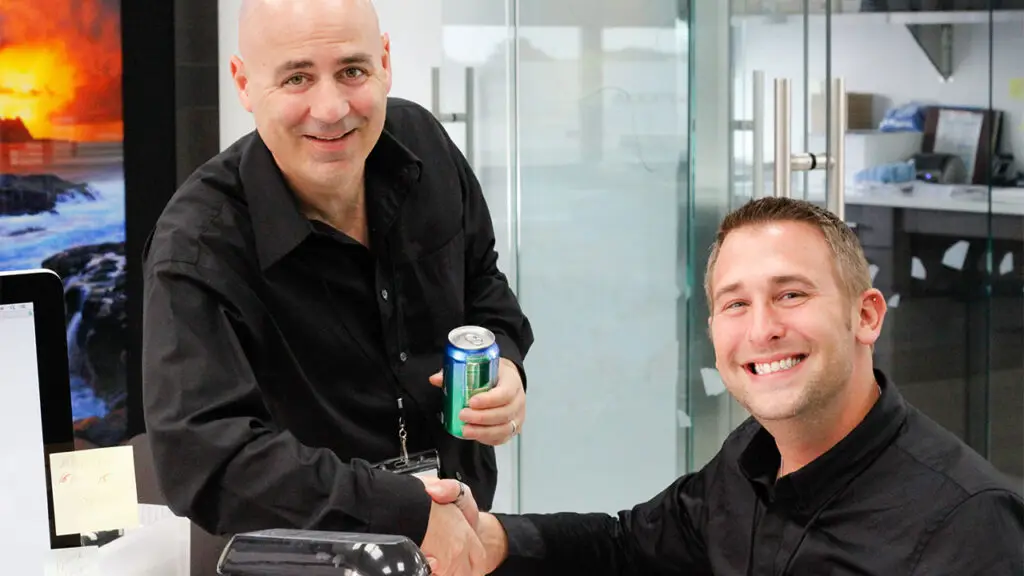
Main image: RDI Diamonds founder and CEO Michael Indelicato. (RDI Diamonds)