

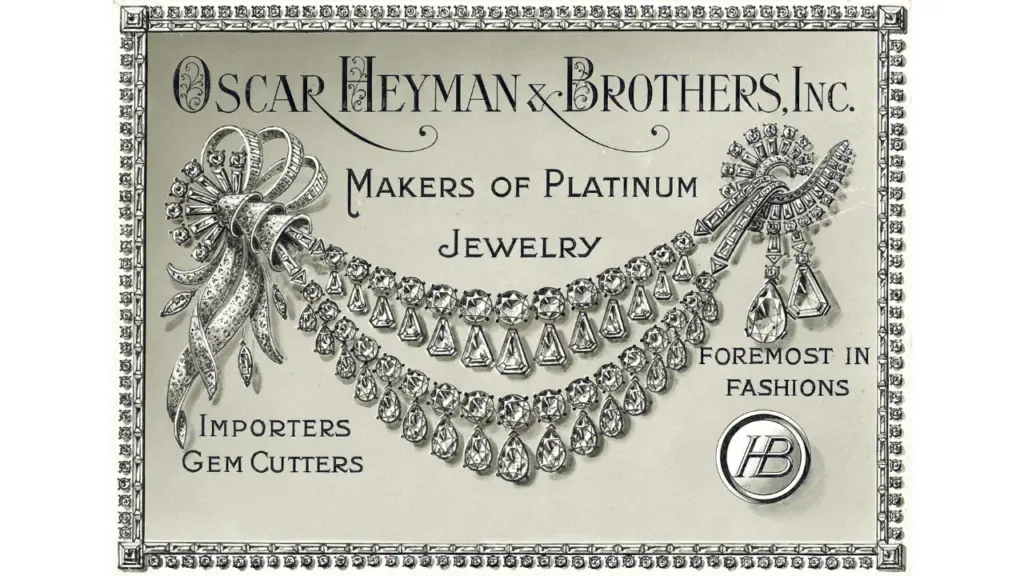
“Speak softly and carry a big stick” is a saying well applied to Oscar Heyman & Brothers. Since this band of brothers formed a company on New York’s Maiden Lane in 1912, they have quietly and successfully become known for their selection of superb gemstones and the high quality of their work. Never a seeker of bright lights and fame, OHB, as it became known, is an exemplar of consistently beautifully made jewelry. The company, which in time included eight of nine Heyman siblings, has a variety of skills to offer — most importantly a facility with platinum, which Oscar himself learned when working in the Fabergé workshop in Kharkov prior to arriving in the US.
Oscar Heyman jewelry — the brand shortened its name on its centenary —speaks for itself. It earned the company a decades-long relationship with Cartier, which hired young Oscar as the first non-French jeweler to work in its New York workshop in 1909. Its ties with Tiffany & Co. and Van Cleef & Arpels are similarly long-lasting. This quiet jeweler was content to provide goods to wholesale accounts, which in the early days included Marcus & Co., Black, Starr & Frost, and J. E. Caldwell. Regardless, its reputation grew, and its pieces always commanded the respect of its peers.
Flying its flag
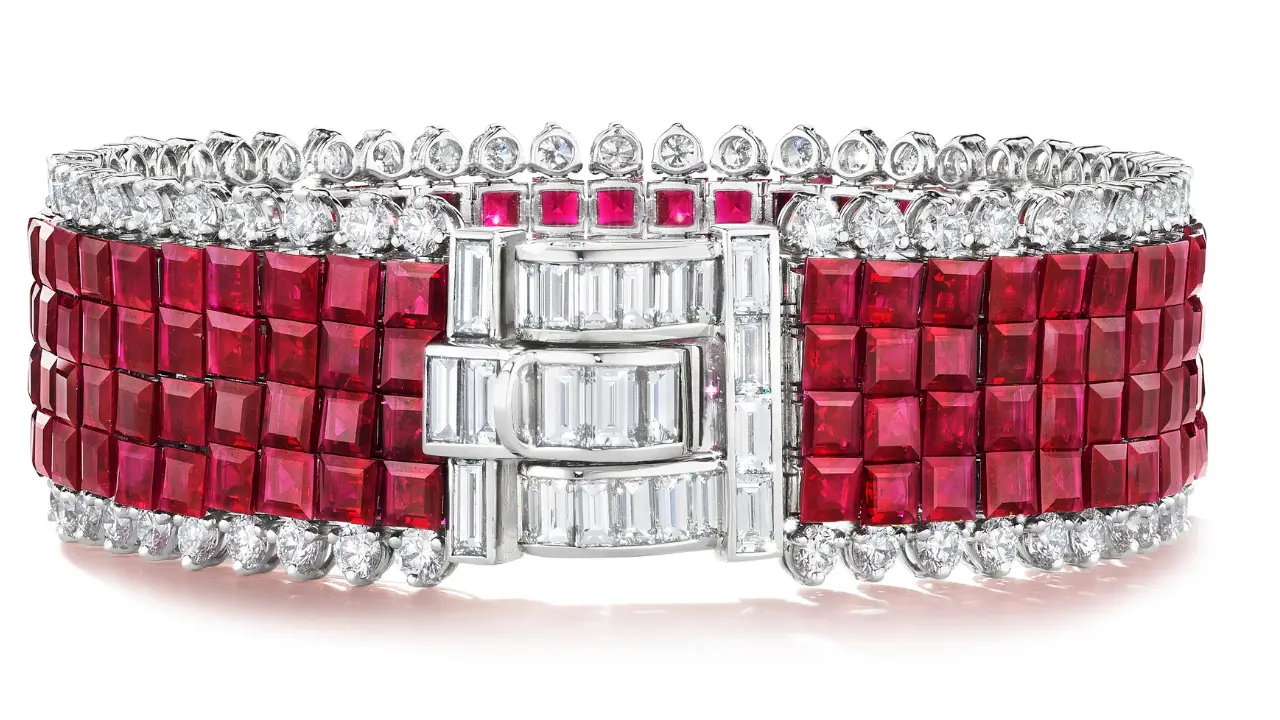
Standouts are plentiful. There is the patriotic flag brooch the brand made in recognition of World War I, with calibré-cut rubies and sapphires and diamond stars — an iconic design that has sold steadily over the years. Significantly, there is the invisibly-set jewelry the company made for Van Cleef’s American clients, beginning in the 1930s. And there is the colorful pansy brooch that OHB introduced in the same decade and later produced exclusively for Tiffany; today’s jewelry lovers now associate it equally with both houses.
Yet if there is a couture benchmark for Oscar Heyman jewelry, it would be the company’s stunning Art Deco strap bracelets. The best known among them is the Birds in Flight bracelet from 1925, inspired by the vogue for Japonisme at the time. The piece’s fluidity and composition reflect the level of expertise that went into making it, yielding a result not unlike the finest kimono. When it came up for auction at Sotheby’s Geneva in May 2022, it went for CHF 1.4 million, or $1.8 million in today’s prices. Another exquisite Art Deco bracelet, this one featuring three large marquise-shaped diamonds, sold in 2014 — also at Sotheby’s — for $293,000.
The company takes undeniable pride in its large single-stone rings, such as the Ballerina ring that sold for $88,900 at Christie’s in October, featuring a 12.37-carat Colombian emerald and diamonds. Statement diamond rings by the brand also soar at auction: A ring with a rectangular-cut, 26.16-carat diamond fetched $727,500 at Christie’s in 2016, and one with an emerald-cut, 20.14-carat diamond brought in $752,500 at a 2010 Sotheby’s sale.
Enduring pieces
Heritage and history — key words in the lexicon of Oscar Heyman jewelry — come through exquisitely in the Post brooch, a magnificent jewel featuring a 60-carat carved emerald from the 17th century. The brooch, which the jeweler made for Marcus & Co. in 1929 and which remained in heiress Marjorie Merriweather Post’s family for generations, is now in the collection of the Museum of Fine Arts, Boston.
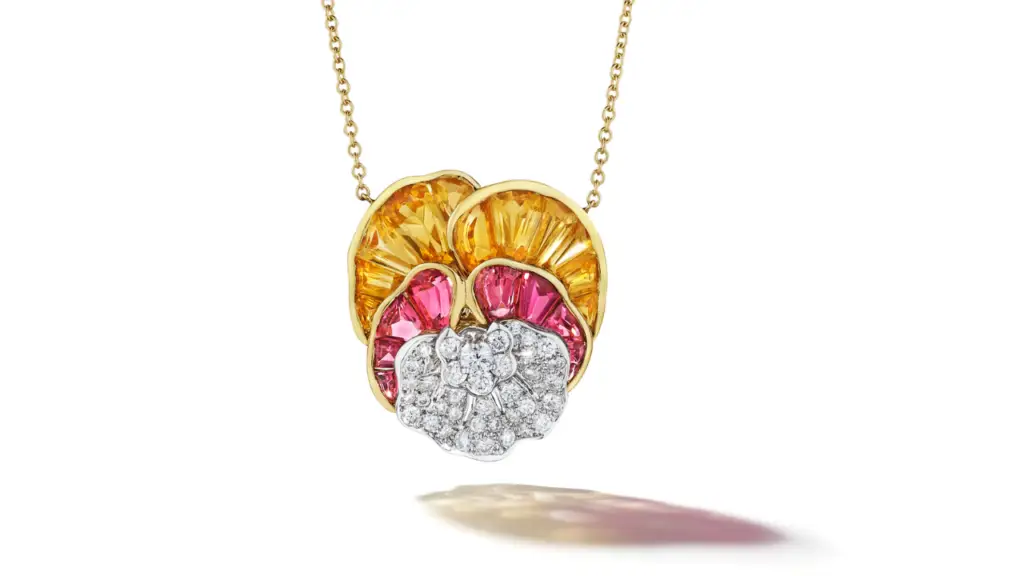
As for that pansy brooch, it has appeared in countless colorways. The flower, which symbolizes love, has been rendered in amethysts, citrines, rubies, sapphires, peridots and, of course, diamonds. By company president Tom Heyman’s reckoning, the jeweler has made some 1,500 pansies — a sure sign that love endures.
The dealer’s take
Company president Tom Heyman reflects on Oscar Heyman’s craftsmanship and its relationships with the big houses.
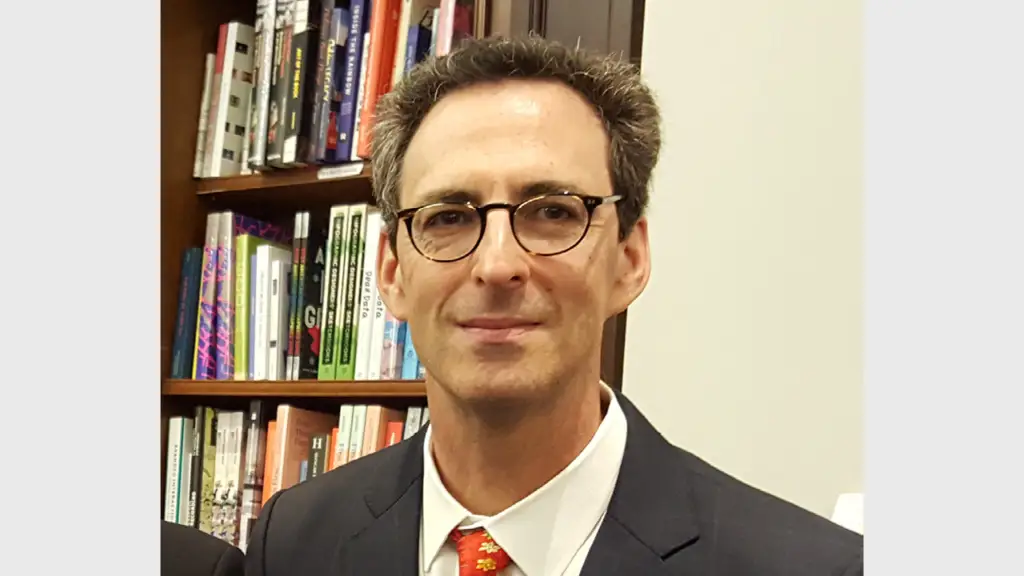
At Oscar Heyman, we aim for three main points. First, our forte is gorgeous colored gemstones. Our buyers travel the world treasure-hunting this sort of beauty. We’re aiming for the finest colored gemstones anywhere. Second, our design: clean lines, elegant and classic. We want our jewelry to be something you can pass down to your grandchildren, who will all fight over it. The third point would be craftsmanship. We want to make the finest jewelry anywhere. We essentially do it all in-house, because we want to be paying close attention to all the little details, even polishing the inside of the prongs before setting the stone.
We take pride in the relationships we’ve had with Cartier, Tiffany & Co., and Van Cleef & Arpels. We had a strong relationship with Cartier going back to my great-uncle Oscar. That connection with Cartier continued through the late 1980s, including when the maison asked us to make the Taylor-Burton necklace. Elizabeth Taylor and Richard Burton were essentially American royalty at that point, and they had just bought this Cartier diamond at auction. Cartier could have gone to anyone, and they came to us. That showed their confidence in us.
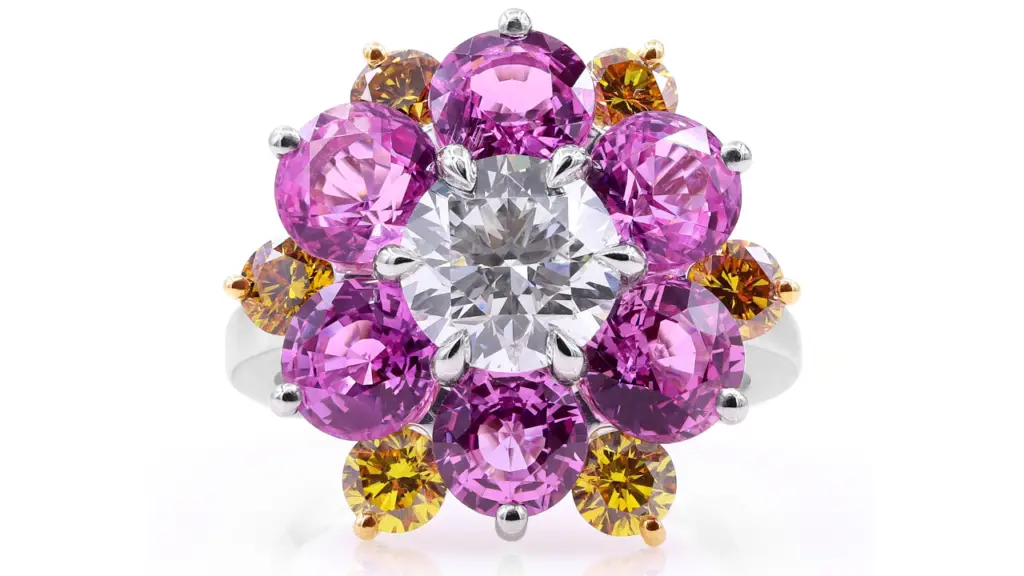
Our relationship with Van Cleef started in the mid-1930s and lasted up until the business was sold to Richemont. We had seen the invisibly-set jewelry Van Cleef made in Paris, so we met with its representatives in New York and said we had figured out how to make it. We had a handshake agreement that we would make invisibly-set jewelry exclusively for Van Cleef, and it would buy what we made.
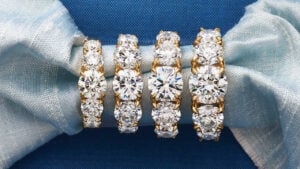
I know we made pieces for Tiffany beginning at least in the early ’40s, though I think it was even earlier. Tiffany was an important relationship for decades, through the early 2000s. We made our pansies for Tiffany, and we made thousands and thousands of gemstone wedding bands for the company as well. Thanks to my great uncle George, Oscar Heyman & Brothers was the originator of the Ballerina ring in the late 1950s, which Tiffany bought from us, often as many as three to four every month.
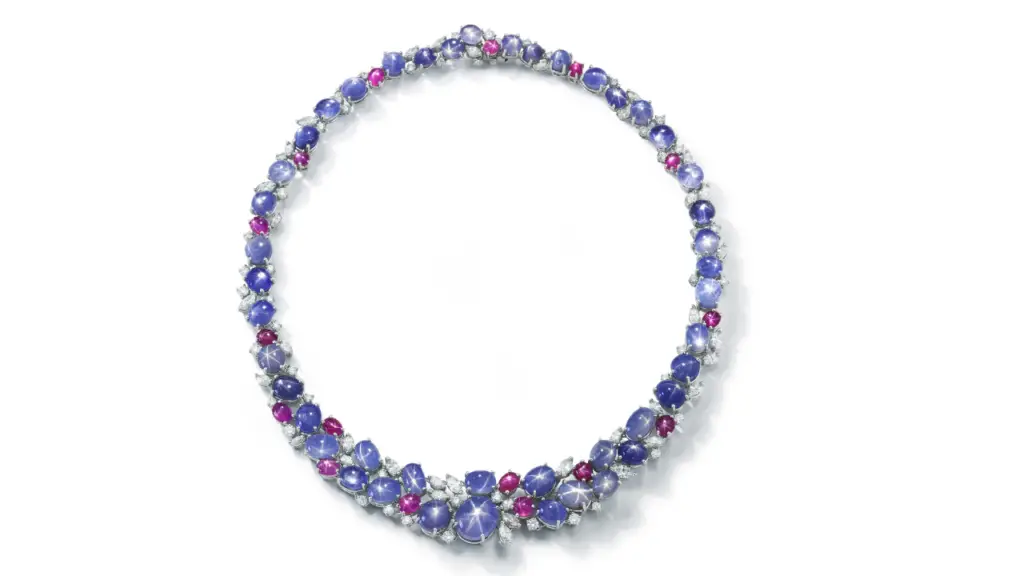
My favorite pieces change. Right now, it’s a necklace with star sapphires, star rubies, and diamonds — a one-of-a-kind collectors’ necklace, using stones in our inventory. We have a necklace with single-row diamonds and 15 or so multicolored stones in all different shapes. It’s a great cornucopia of color. Both are modern classic jewelry. We want our customers to say that our jewelry is so beautiful that they always want it. Sure, there are shifts in style, but if the foundation is classic, it lasts longer. That’s who we are.
Main image: A ruby and diamond bracelet showcasing the jeweler’s invisible setting style. (Oscar Heyman)
What Does Love Look Like? Not Out-of-Touch Lab-Grown Messaging
The natural-diamond industry won’t attract couples by telling them synthetics devalue their relationship.
Bridal Shopping in the Age of AI
Couples are researching online, but they still want to make the ring purchase personal – and that creates opportunities.
Six Brands Serving Fresh Engagement-Ring Designs
Whether it’s hand-sculpted organic gold or reimagined divorce jewels, these designers are setting trends that resonate with bridal shoppers.