

In the not-too-distant past, jewelry stores were often hushed and formal establishments with dark wood furnishings, few windows, and sales associates stationed behind showcases, creating what one might consider an intimidating atmosphere. Interior designers who specialize in jewelry stores have since helped shop owners make dramatic changes, bathing showrooms in natural light and outfitting them with residential-style furnishings and experiential features such as selfie stations, bars, visible repair shops, and custom design stations.

Up to brand standards
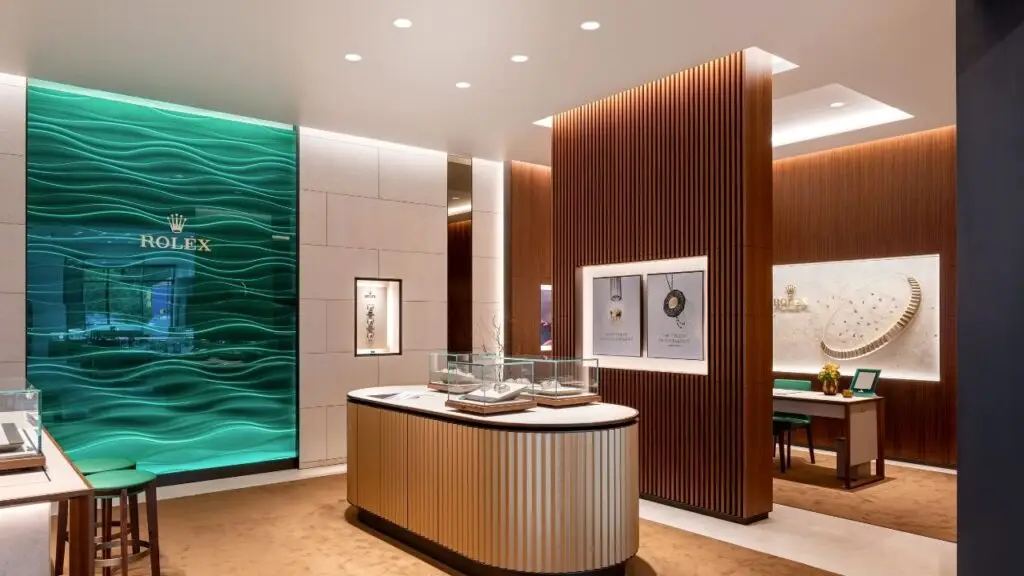
As that evolution continues, architect and store designer Jesse Balaity, owner of Balaity Property Enhancement, has observed another phenomenon: The increasing influence of major brands and their desire for immersive shop-in-shops and boutiques within their client stores. Retailers are elevating the entire experience to meet luxury brand expectations of more space, more seating and higher design standards.
“The lesson is in the total mind-set,” Balaity says. “We try not to elevate just one section of a store as a Band-Aid, because customers will see it that way.”
Meeting brands’ requirements means major investments in renovations, expansions and, increasingly, new construction. CEO Bill Jones and family, owners of Arkansas-based retailer Sissy’s Log Cabin, wanted their Memphis, Tennessee, store’s design to guide customers through immersive brand experiences, with dedicated spaces for Rolex, Breitling, Tudor, Cartier, Rahaminov and Roberto Coin. The boutique-style areas offer ample seating, allowing customers to view and try on pieces comfortably. Balaity designed the shop to ensure that Sissy’s itself was the primary focus, and spread the individual brand zones throughout the store.
The luxury experience
But even jewelers who don’t rely on branded spaces are rethinking what a luxury jewelry environment looks like. The question becomes: If you no longer carry — or never carried — certain prestige brands, how do you offer an experience that feels equally luxurious?
“For many of our clients, the answer lies in creating store environments that compete head-on with the best brand boutiques [by] offering even more distinctive, personalized and locally inspired experiences,” Balaity says.
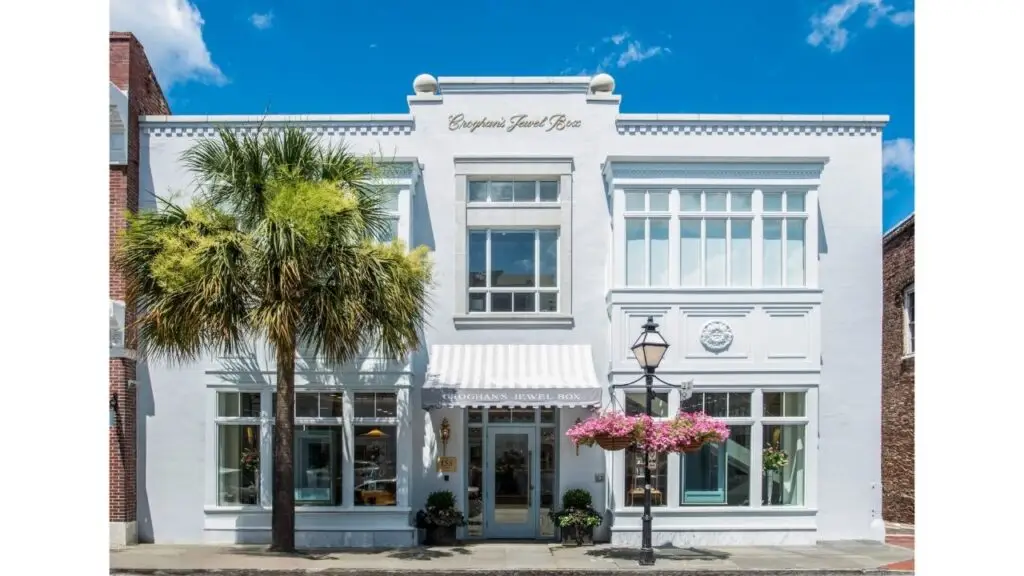
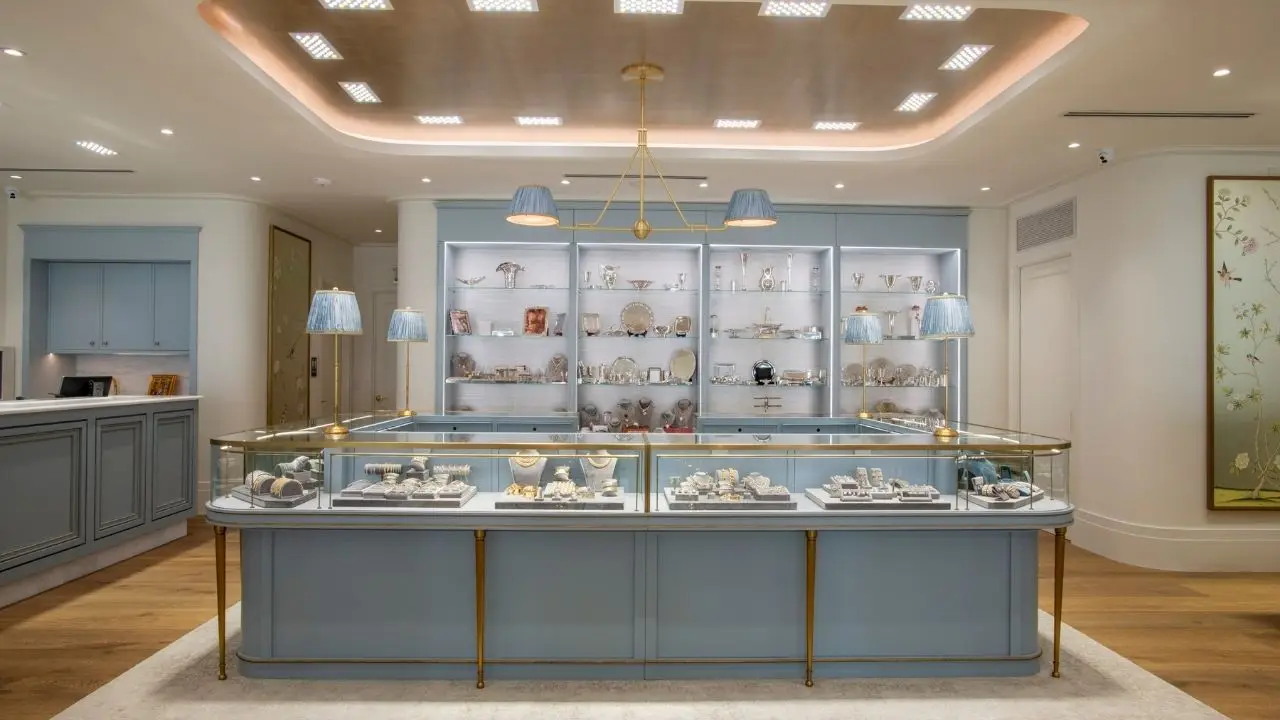
A quest for more space led Croghan’s Jewel Box in Charleston, South Carolina, to leave a circa-1797 house with a disjointed floor plan — its location for more than a century — for a 6,000-square-foot building that’s a mere 50 years old. The move not only doubled the jeweler’s space, but opened an opportunity to graduate from a casually eclectic treasure-hunt experience to an elevated interior design that could stand shoulder to shoulder with any high-end store. Every detail in the new location is custom, down to the brass legs on the showcases.
“That level of detail is unusual,” says Balaity, who collaborated with Charleston interior designer Melissa Ervin on the project. “It’s become the very definition of Charleston luxury, with classic materials, understated glamour and exquisite detail.”
“The devil was in the details,” affirms Rhett Ramsey Outten, third-generation co-owner of the 120-year-old business. “We wanted to have fine craftsmanship be apparent, and we wanted the showcases to last another 120 years. We did not want to spare any expense…. It’s happy, bright and full of light. Change is hard, but it’s been a great move for us, and it’s showing in the numbers. It’s all paid off.”
Dare to pare back
Another example Balaity cites is Colonial Jewelers in Frederick, Maryland. When Rolex pulled out of the store in 2021, fourth-generation owner Sarah Hurwitz Robey considered it a big blow to the business, which had been the oldest Rolex dealer in the state.
“But then we realized we had a huge opportunity,” she says. Although she did not have the space to install a Rolex boutique in her downtown store, she did have a lot to work with architecturally in the former Maryland National Bank building her family had bought.
“It was the most beautiful existing space I’d ever seen,” Balaity says. “High ceiling, great trim.”
He convinced Hurwitz Robey to restore the interior and make it brighter. “Much of the work was paring back to show off the architecture, taking off weird gold paint, making it more pristine,” recounts Balaity, who describes Colonial as the textbook example of “life after Rolex.”
Although Hurwitz Robey was worried that the detail in the columns would be lost without an intricate paint job, the columns are actually more noticeable in crisp white. She and Balaity redesigned the whole store, getting rid of wall cases and replacing dark oak showcases with ones sporting white bases and pale wood-tone accents.
“It wasn’t just the aesthetics; it changed the whole flow,” she recalls. “Rolex was a big part of our business when we lost it, but other parts of the business tended to be neglected. Our business is back up to significantly over what it was when we had Rolex, with a much better profit margin.”
Main image: The interior of Croghan’s Jewel Box. (Croghan’s Jewel Box)