

The Devil Wears Prada 2 opens in theaters in early May, and the choice of fashion and jewelry brands the actors wear in the film will be a subject of thorough scrutiny. What clothes and jewelry Miranda Priestley and her long-suffering assistants wear is down to the costume designer and director, but it is far more nuanced than that.
Blockbuster films have long been showcases for luxury products. The James Bond franchise is a perfect example for its product placements with Omega (which was rumored to be a $2 million one-off deal) and Aston Martin. Such partnerships blur the lines between storytelling and marketing. Bulgari’s jewels made memorable appearances in Casino (1995) and House of Gucci (2021), while Tiffany & Co. pieces featured in Guillermo del Toro’s Frankenstein last year for Netflix and, earlier, in Death on the Nile (2020) and Baz Lurhmann’s The Great Gatsby (2013).
Negotiating some of these deals between studios and luxury brands is Createology, a firm founded by Kathryn Vanderveen, who has been in the film industry for over 20 years. She first learned about brand integration while working with a friend on the set of Casino, watching wardrobe and props teams secure clothes and jewelry, and she found the ecosystem fascinating. She then went into film production, liaising between Swarovski and costume designer Catherine Martin in the making of 2001’s Moulin Rouge.
“I work closely with the filmmakers who are the creative heart of the story. This includes the director, who is the visionary, and the costume designer, which is the sweet spot for jewelry in film,” explains Vanderveen. “Jewelry, especially high-end pieces, cannot simply be placed; they must be integrated [into the storytelling].”
Partnerships pay
Vanderveen’s expertise is long-established relationships, research, creativity, knowing her brands intimately, and understanding what is bubbling up in Hollywood and culture at large — an important quality, considering that films like Gatsby and Frankenstein are several years in the making and have a lasting impact. “Cinema moves culture: When a brand creates the opportunity to be part of the cinematic sphere, it becomes part of that emotional and cultural memory,” she says.
Every integration deal is constructed differently, according to Vanderveen; “there is no single formula.” She believes luxury brands offer intrinsic value and should not pay significant fees, if any, to place their products in films. The situation varies, she elaborates, “for categories like cars, beverages, and watches, or when there is significant logo visibility. Some films, particularly franchises, are inherently fee-based because the iconic nature of the project drives enormous deliverables [for the brand].”
Most luxury jewelry houses do not have electronic-media budgets, so having them pay large fees is not realistic — and it’s not how they market themselves. “Their value lies in authenticity, craftsmanship, and their relationships with customers, often opening a new demographic for the film and vice versa,” Vanderveen explains. “Together they benefit from elegant, engaged partnerships.”
The integration world includes many business models: Films like Wicked, F1 and Barbie lend themselves to large paid placement fees and to electronic and retail promotional tiers, says Vanderveen. “Luxury integration in film is an artistic activation, not always a commercial one, though the value still benefits the bottom line for both the film and the brand. It is simply a more nuanced approach.”
Becoming part of the story
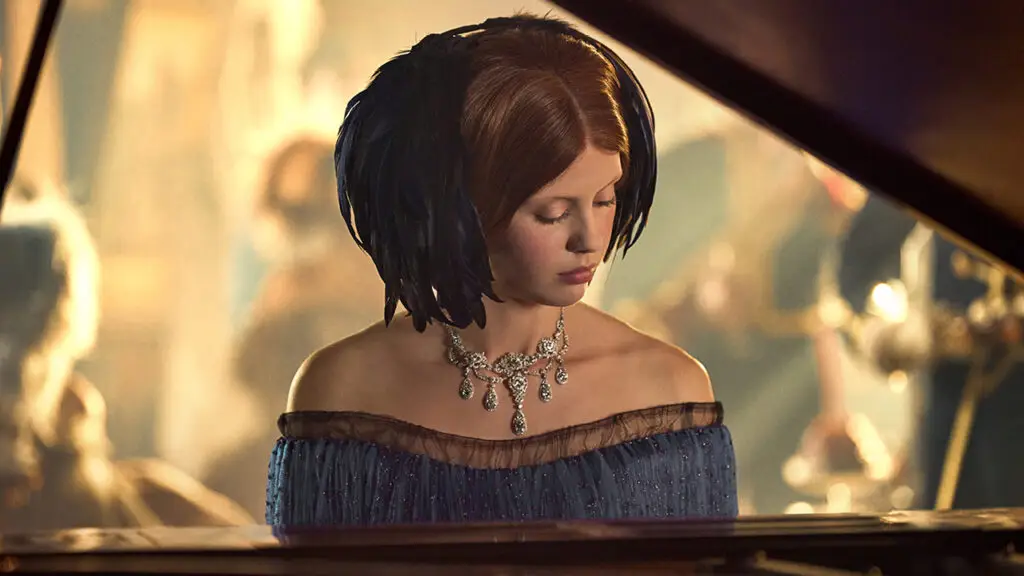
Luxury jewelry can amplify a film’s reach and storytelling. The selection of 27 archive and custom-made pieces from Tiffany for Frankenstein was story-driven. However, sometimes when brands and filmmakers collaborate, the label supports its activity with its own funding — for example, the in-store promotions in the US and at Selfridges in London that added value to Frankenstein’s marketing efforts.
Not all jewelry brands have deep pockets for film promotions, but there are opportunities for retailers to loan or create exclusive pieces for the screen. Vanderveen has worked on smaller projects like the iconic Zales heart pendant for 2005’s Bewitched adaptation, and Autore’s South Sea pearls for Bridgerton. Sometimes jewelers can leverage friendships with actors and scriptwriters, like the shout-out in the script for designer Jennifer Meyer’s personalized necklace in season 2 of the TV series Nobody Wants This.
Vanderveen views brand integration with studios, streamers and networks as cost-effective, high-impact marketing that should be at the top of every luxury brand’s list. The red carpet, she believes, “is more directional, like live advertising. The red carpet is not storytelling, it is showcasing, and the immediate impact fades quickly, [whereas] film integration and partnerships are storytelling and marketing. It’s an organic relationship based on art and culture, [and] that is absolutely worth pursuing.”
Unforgettable movie moments
A look at some of the standout silver-screen jewelry cameos in recent years
Death on the Nile (2020)
“The camera knows the difference, and so do the actors,” says Createology’s Kathryn Vanderveen. While she would not be drawn on whether the real 128-carat Tiffany diamond appeared on set during the filming of Agatha Christie’s Death on the Nile, where it played a central role, she confirms that it was in the Tiffany & Co. box when actress Gal Gadot’s character, heiress Linnet Ridgeway Doyle, opened it. “You can read between the lines with its obvious high insurance value, but it appeared in the important scenes.” It was one of many Tiffany pieces to appear in the film and featured widely in the brand’s promotion via its stores in New York, Los Angeles and London, as well as on digital platforms.
Downton Abbey: The Grand Finale (2025)
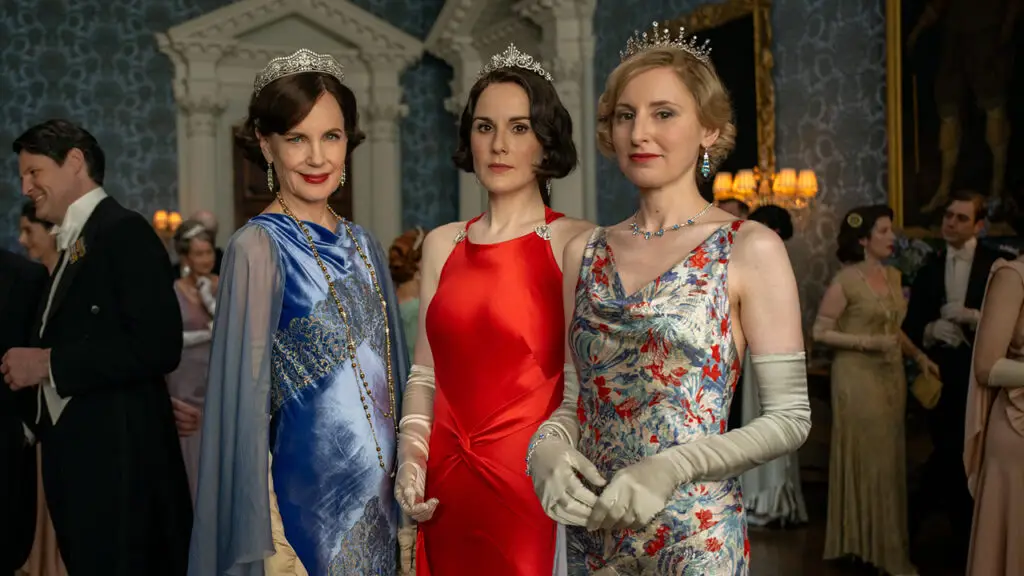
Julian Fellowes’s beloved Crawley family saga bowed out in grand aristocratic style with over $1.4 million of tiaras and antique jewels on loan from London antique specialist Bentley & Skinner. Authentic period jewelry has charted the history of the Crawleys from the Edwardian era — the point where the series debuted 16 years ago, with its tiaras and brooches — through the Great War, and into Art Deco diamonds and the finale in the 1930s. After using their pieces in the TV series, costume designer Anna Mary Scott returned to the Bentley & Skinner experts for the movie. Among their period-appropriate suggestions were a Belle Epoque tiara for Lady Downton, a delicate circa-1900 fringe tiara and a Hennell aquamarine brooch for Lady Edith, and 1930s pieces for the resolutely modern Lady Mary. Bentley & Skinner showcased the pieces at an in-store exhibition when the film came out.
House of Gucci (2021)
This was another one of Vanderveen’s integrations, with Kristina Musailov — formerly Bulgari’s director of celebrity and now a partner in Createology — and costume designer Janty Yates. They dressed Stefani Germanotta — aka Lady Gaga — in bold gold and period-correct 1980s Bulgari pieces for her role in the true-crime drama as the ambitious, social-climbing Patrizia Reggiani, who married into the Gucci dynasty. The actress, together with Yates, picked out some heritage pieces like a 1991 necklace and a 1972 tubogas bracelet, as well as contemporary pieces from the 2021 high-jewelry Le Magnifiche collection: a ruby and diamond necklace and earrings, which Reggiani wore with a hot-pink dress for a scene in a New York nightclub. The jewels appeared in the trailer and, says Vanderveen, went viral when jewelry super-sleuths identified them. The film subsequently became known as “House of Bulgari” — much to Gucci’s annoyance.
007: No Time to Die (2020)
As the official partner of the Cannes Film Festival since 1998, Chopard has had a long relationship with cinema, making the jeweler an obvious choice for the 25th James Bond film. Chopard loaned a suite of stunning high-jewelry pieces — a pear-shaped diamond necklace, bracelet and hoop earrings — which actress Ana de Armas wore with a plunging midnight-blue gown in her role as Paloma. The jewels were from the Green Carpet collection, which used ethical Fairmined certified gold. As part of the brand’s promotional activity around the collaboration with EON Productions, Chopard launched a capsule jewelry collection called Happy Hearts – Golden Hearts, a play on the French word coeur (heart) and the Latin cor (courage). Each heart was gold as a reference to Bond nemesis Goldfinger of the eponymous 1964 movie.
Main image: Still from Frankenstein on Netflix, featuring Tiffany & Co. jewelry. (Tiffany & Co.)

What Does Love Look Like? Not Out-of-Touch Lab-Grown Messaging
The natural-diamond industry won’t attract couples by telling them synthetics devalue their relationship.

Bridal Shopping in the Age of AI
Couples are researching online, but they still want to make the ring purchase personal – and that creates opportunities.
Six Brands Serving Fresh Engagement-Ring Designs
Whether it’s hand-sculpted organic gold or reimagined divorce jewels, these designers are setting trends that resonate with bridal shoppers.