

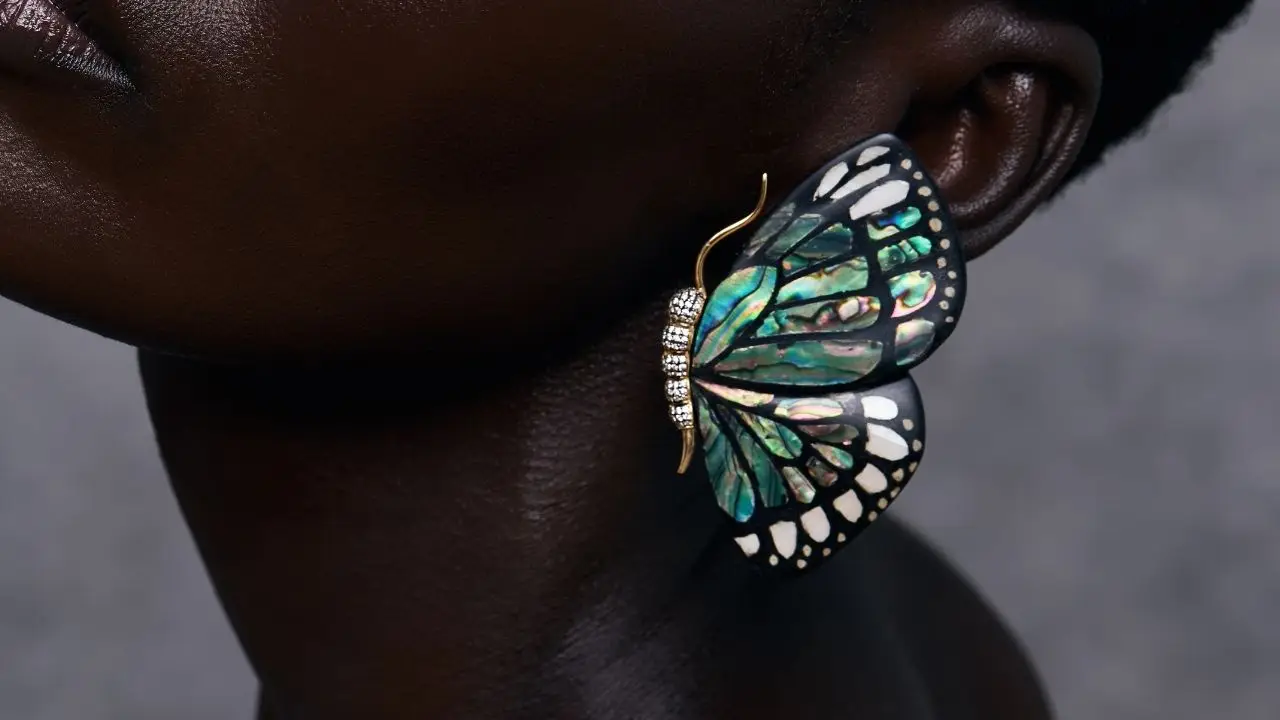
Shimmering, iridescent and peacock-bright — it’s no wonder blue-green abalone shell has been a celebrated material for First Nations people around the world for centuries.
In Native American folklore, abalone — the shell of a large sea snail that lives in cold water — represents prosperity and healing. Indigenous tribes such as the Lakota, Navajo and Hopi use it as a sacred object in rituals and ceremonies.
In Māori culture, abalone, or pāua, represents a “living link to the moana (ocean), to whakapapa (ancestry), and to the atua (gods),” says artist and curator Jade Townsend, co-director of Season Aotearoa Gallery in Auckland, New Zealand.
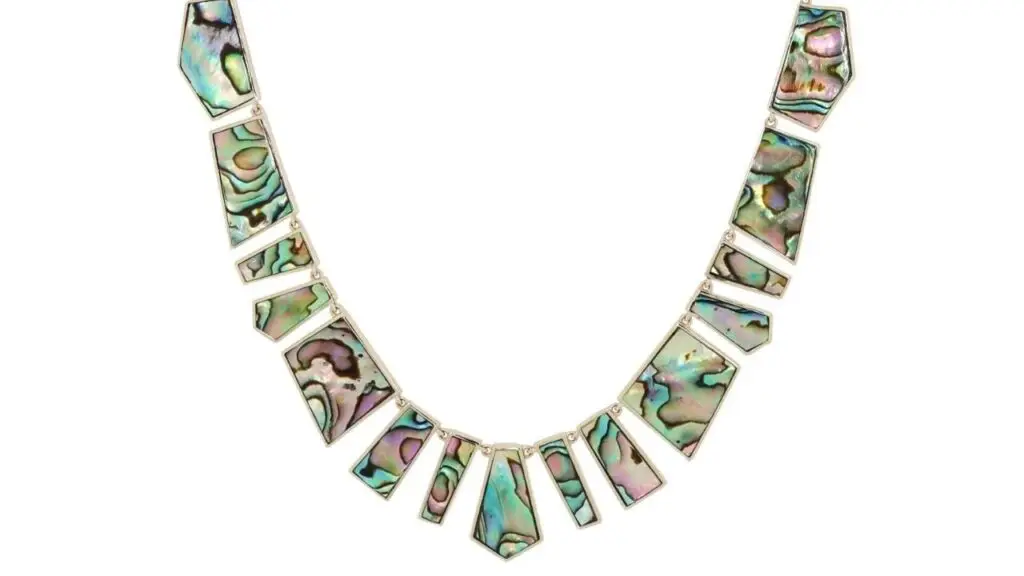
Although people have worn it for millennia, abalone has rarely shown up in the modern fine-jewelry world. Recently, however, more jewelry designers have started featuring it in their collections.
A sea of possibilities
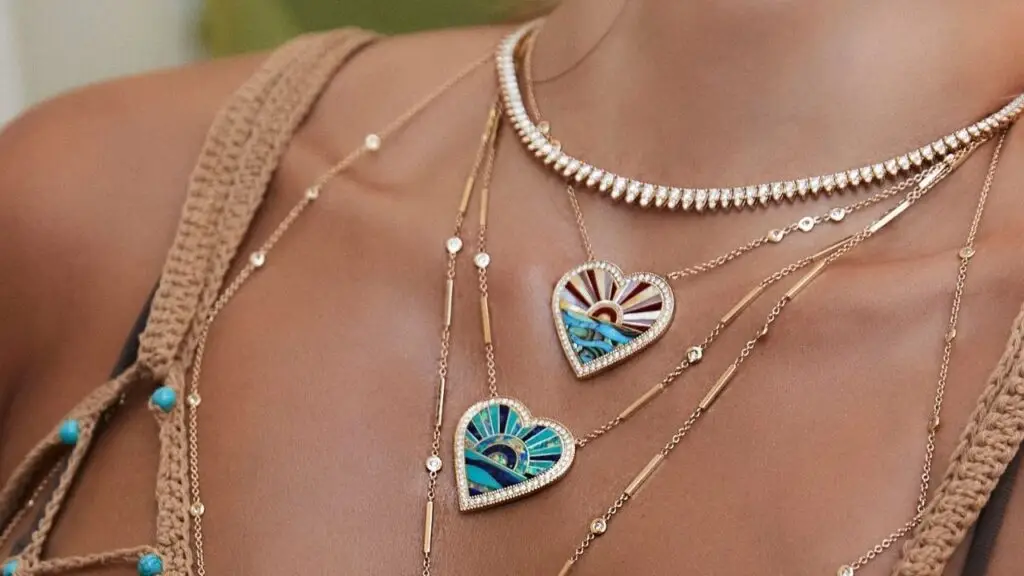
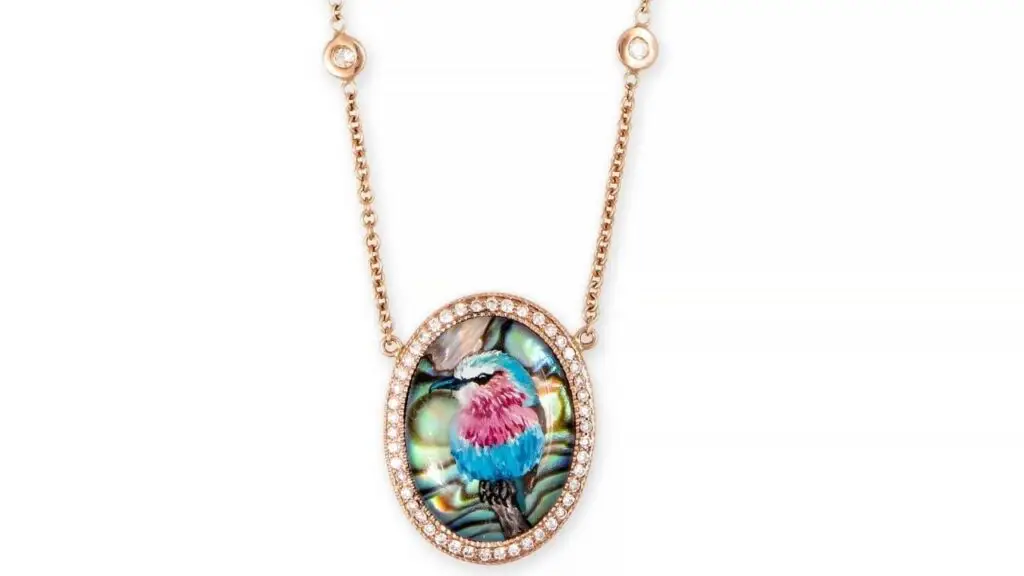
“I’ve always been inspired by the ocean, and abalone is one of Mother Nature’s treasures that holds so much more than meets the eye,” says California-based jeweler Jacquie Aiche, who uses the shell in her eponymous modern-bohemian brand. “I love how its subtle shine reflects the light with every move you make. And I’ve found that pairing it with diamonds and gold just enhances its organic beauty. There’s something special about balancing the magic of nature with luxury.”
This connection with the sea also attracted Melanie Georgacopoulos, who has become known for her innovative pearl designs. “The colors of abalone are especially beautiful and intriguing,” she says. “It has a very aquatic feel.”
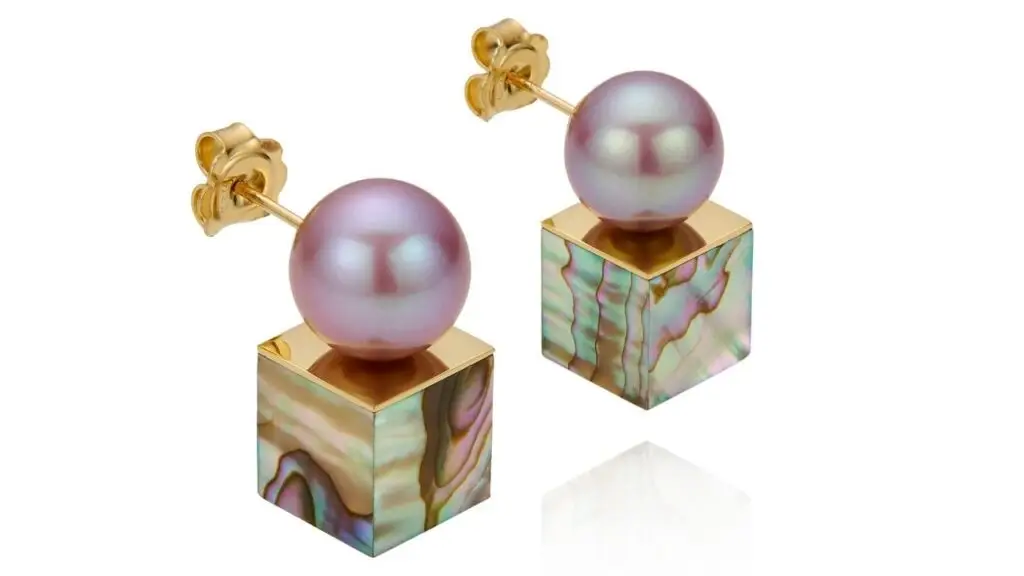
This season, Georgacopoulos introduced abalone to her contemporary Cube collection, combining it with lavender freshwater pearls that she carefully selected to match. The result is a sculptural and modern reimagination of the organic material.
“It is a shell that is rarely used in jewelry, and in my opinion, it has incredible potential due to its unique color play and formation lines,” she remarks. “Because of its structure and lines, it makes every piece seem unique. Even though each Cube is a standard form, because of the shell formations, each one comes out different.”
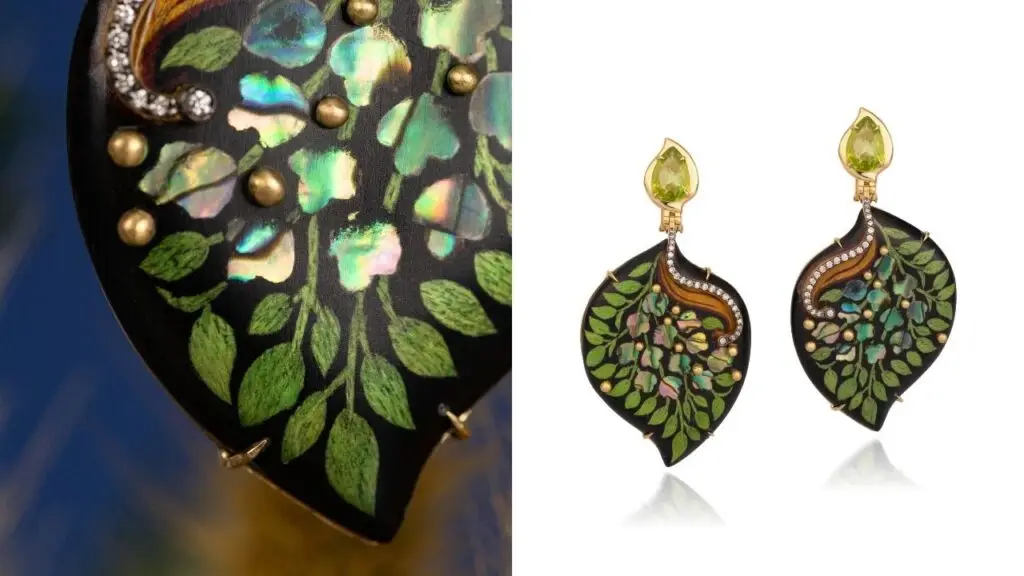
A pair of abalone earrings that Laura Kay picked up on holiday in Portugal inspired the very first designs for her Métier fine-jewelry brand. She’s used it again this season in her Tesserae collection, which explores the play of light via carefully selected gemstones, mother-of-pearl and abalone. “It has that holiday romance to it,” Kay says of the shell. “It feels so nostalgic.”
Repairing a reputation
However, it’s this casual kitschiness — and an association with low-value trinkets — that may have prevented people from viewing abalone as a fine-jewelry material until now.
Townsend points to a piece of New Zealand legislation that might have influenced abalone’s global standing: Between 1943 and 1987, the government introduced an export ban on pāua as part of wartime resource management and conservation.
“After the ban and licenses ended, the tourism industry flooded the market with souvenir pendants and earrings,” she explains. “They were deemed cheap and for teenagers or kids. This obviously damaged the public perception of pāua shell, and it has taken many years to reverse that.”
Conservation efforts
As with all natural materials, sustainability is also a concern when it comes to abalone. The combination of climate change, rising ocean temperatures, and the popularity of both the meat and the shell of this mollusk has led to overfishing and near-extinction in many areas of the world. Out of the 54 abalone species that the International Union for Conservation of Nature (IUCN) examined for its Red List of Threatened Species, 23 are endangered, vulnerable or at risk of extinction.
Wild abalone fishing is prohibited in California, where numbers for white abalone in particular have dropped by 99% since the 1970s. Over in New Zealand, careful management and strict quotas for wild fishing have helped maintain the sea creature’s numbers, as have rules that only free divers without a breathing apparatus can collect it from local waters. However, poaching continues to be a problem there as global demand for abalone increases, and Australia and South Africa are facing a similar issue.
Careful sourcing is therefore essential to ensure that jewelers are not contributing to the decline of the species. All of the designers who spoke to Rapaport Magazine for this article use sustainable sources for their abalone shells. Kay uses cultured abalone that’s grown in a freshwater environment in China. She keeps the shell at Métier’s India-based atelier, where artisans slice off nacre as needed.
“You have to be really careful when it comes to sourcing any natural material like abalone — that it’s being used commercially in the right way for repeat use, and that you’re not affecting any wildlife in the process,” she says.
One-of-a-kind wonder
The burgeoning interest in and use of abalone’s lustrous swirling patterns makes sense at a time when jewelry customers are searching for colorful, distinctive designs. There is a growing fascination in the market with one-of-a-kind gemstones, as opposed to traditional white diamonds or mass-produced pieces, according to market research company PW Consulting.
Kay in particular is enthusiastic about how every slice of abalone she transforms into jewelry is different, sporting a cornucopia of hues. “One person might prefer a more purple abalone, and another might suit a more turquoise abalone. I think that’s the beauty of using any natural material like abalone — it’s totally unique every time.”
Aiche also notes the emotional response her abalone pieces get from customers. “It’s what makes it so powerful. It speaks to the heart, inspiring a sense of calm and presence.”
For Townsend, pāua shell forges a deeper connection to her Māori culture and history. “When I wear pāua shell, it feels like armor — both spiritually and physically,” she says. “Pāua against flesh is such a natural relationship. When I wear an earring and the shell is dangling close to my head and mouth — that quivering movement makes me feel anchored and creates a channel for my ancestors to influence the things I think and say.”
Abalone’s global significance shows there’s just something about the shell that strikes a chord with humans. As with all natural raw materials in jewelry, though, ensuring sustainability and traceability are of paramount importance. Ultimately it’s about finding ways to use abalone that celebrate its past and ensure that future generations will be able to experience its magic for themselves.
Main image: Silvia Furmanovich Kashmir butterfly earrings with mother-of-pearl and abalone inlay. (Silvia Furmanovich)

What Does Love Look Like? Not Out-of-Touch Lab-Grown Messaging
The natural-diamond industry won’t attract couples by telling them synthetics devalue their relationship.

Bridal Shopping in the Age of AI
Couples are researching online, but they still want to make the ring purchase personal – and that creates opportunities.
Six Brands Serving Fresh Engagement-Ring Designs
Whether it’s hand-sculpted organic gold or reimagined divorce jewels, these designers are setting trends that resonate with bridal shoppers.