

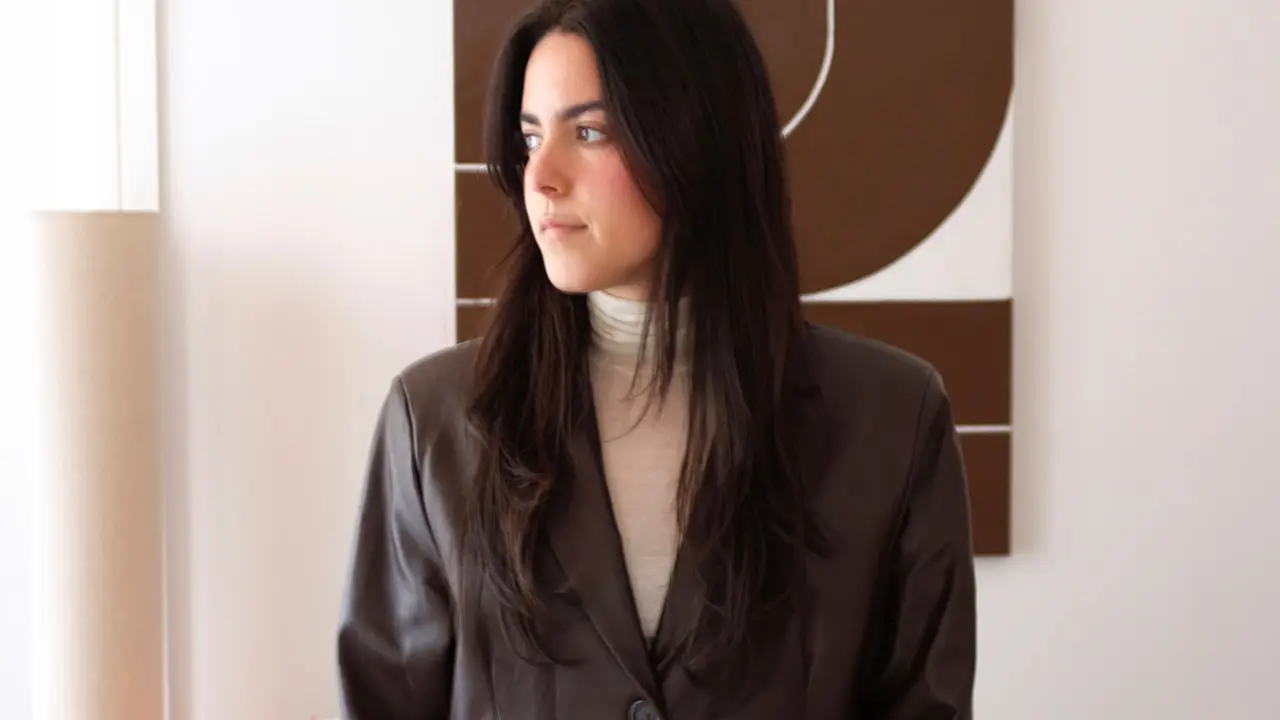
It is rare for a new designer to make an impression with just one piece. Yet when Danielle Sultan unveiled her inaugural Lozenge ring at the beginning of the year, it was enough to signal the arrival of a distinctive voice. Deliberate and anchored in structure, the piece, which she later presented at the PAD Paris design fair in April, revealed a way of thinking about jewelry that draws as much from architecture as it does from high-jewelry tradition.
A New York-born, Paris-based architect, designer and private jeweler, Sultan trained at Columbia University and in the Paris studio of architect Kengo Kuma before turning to the Haute École de Joaillerie. Here, she discusses her Contours series, her approach to exceptional gems, and why she sees jewelry as one of the most enduring forms of design.
What role do diamonds play in your artistic universe?
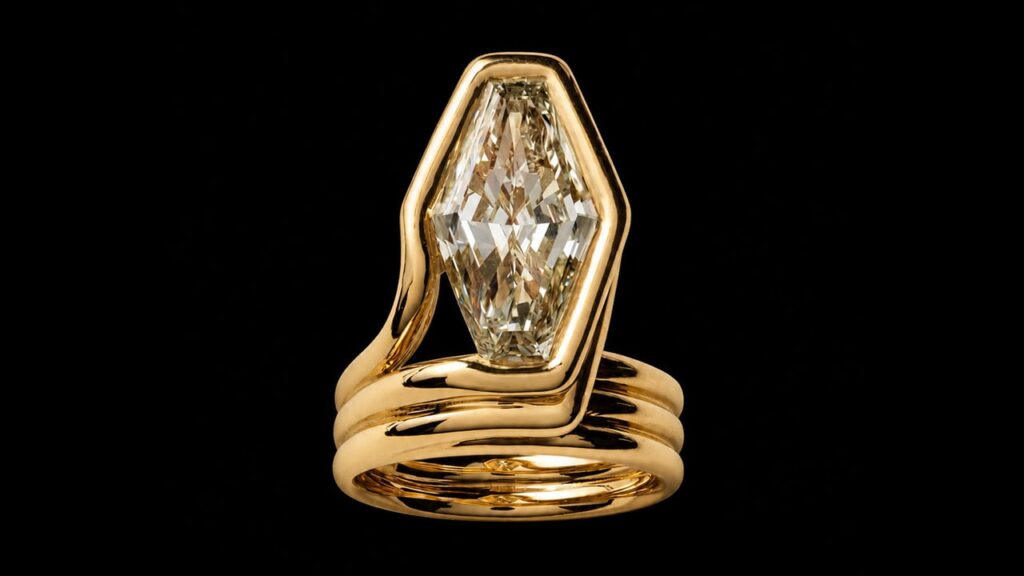
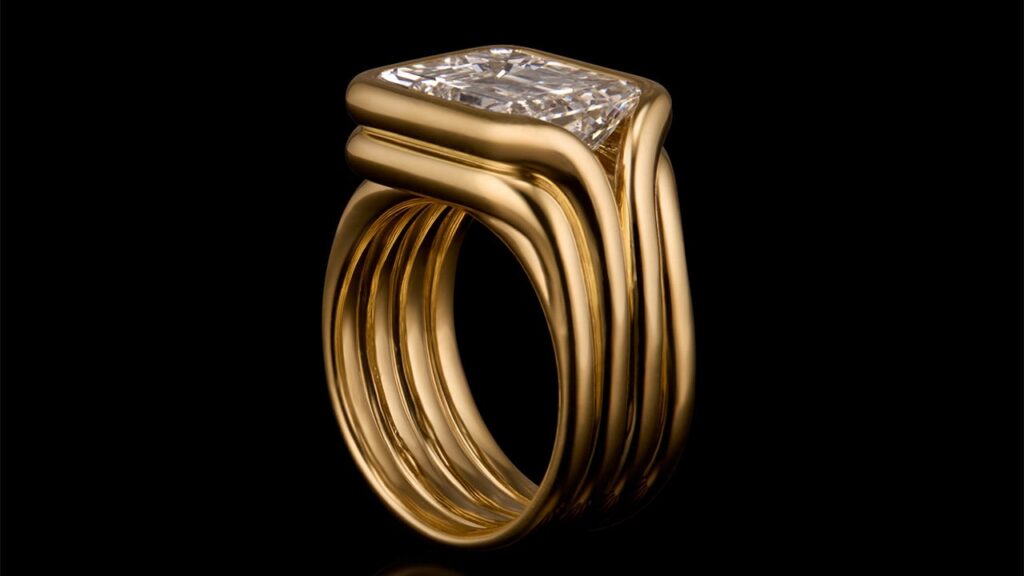
Diamonds and gemstones are central to my work. Each piece begins with the stone, and the design develops in direct response to its individual form. In my ongoing Contours series, I explore how the gold contour as an element can be multiplied, bent and layered to create structural forms that mediate between the geometry of the gemstone and the topography of the body. The language is intentionally reductive, but the complexity comes from the individuality of each stone. The structural form is developed to heighten the gemstone’s presence through a precise architectural response rather than serving a secondary role.
The Lozenge ring is designed around an exceptional natural diamond sourced from [Belgium manufacturer] Fima Diamonds, whose approach to stone-cutting is both ambitious and design-driven. The stone is newly cut, with attractive proportions and a striking modified lozenge geometry featuring intricate faceting reminiscent of the Art Deco period. The Double Contour ring is designed around a collector’s existing natural emerald-cut diamond, which they wanted to bring new life to in a way more aligned with their evolving point of view.
As a new designer, how do you position yourself within the high-jewelry market?
My work is situated at the intersection of high jewelry, architecture, and contemporary design. I approach jewelry as a design discipline, applying the same methods and rigor found in architecture or furniture design, but at a different scale and through precious materials.
Each one of my pieces is signed and numbered within a series, and conceived through drawings that articulate the underlying structure and intent. The work resonates with collectors who are interested in both the progression of a designer’s body of work and in the conceptual framework within each piece. These pieces are natural extensions of a collector’s design and art collection, carrying their point of view through objects that can be worn and are not bound to a fixed space.
As a designer, I am influenced by 20th-century pioneers such as Suzanne Belperron and Andrew Grima, as well as figures like Eileen Gray, Donald Judd, and Sol LeWitt, whose work explores how restraint and discipline can generate complexity in design and art. Their work shaped my understanding of what high jewelry could become when approached within a strong design framework.
Among the warm and enthusiastic welcome your first creations received, are there comments that surprised you?
This is not specific to my work, but rather a broader observation that in the context of design, there is still a perception that jewelry lacks a clear “function” [like] architecture, furniture or lighting [has]. I do not agree with that position.
Jewelry, like architecture, is a form of design with inherent longevity, given the durable materials from which both are constructed. Throughout history, some of the oldest surviving forms of design exist at these two polar extremes: architecture and jewelry. As a form of design that exists in immediate contact with the body, jewelry can also capture, carry, and witness personal histories across multiple lifetimes. In this way, jewelry becomes a vessel capable of carrying both intellectual ideas and personal meaning across generations, which is a powerful quality for an object to possess.
How do you see your brand evolving?
I am building a design practice rather than a traditional brand structure. The practice operates in two parts: developing a conceptual framework through which I investigate form, material, and space in relation to the body, and then translating those developed ideas into high-jewelry pieces using exceptional gemstones, precious materials, and refined techniques. My practice is structured through focused series of works, each reflecting a distinct formal inquiry over a defined period.
The nature of my practice requires a slower pace of production, allowing each work to be fully developed. As Contours unfolds, uniquely cut diamonds and precious gemstones are incorporated in new ways, with the concept extended across more areas of the body. As I continue building my body of work, I am continually expanding my knowledge and technical expertise in executing more complex constructions, in collaboration with the ateliers I work with, and aim for the pieces to reflect this evolution over time.
Main image: Danielle Sultan. (Danielle Sultan)

What Does Love Look Like? Not Out-of-Touch Lab-Grown Messaging
The natural-diamond industry won’t attract couples by telling them synthetics devalue their relationship.

Bridal Shopping in the Age of AI
Couples are researching online, but they still want to make the ring purchase personal – and that creates opportunities.
Six Brands Serving Fresh Engagement-Ring Designs
Whether it’s hand-sculpted organic gold or reimagined divorce jewels, these designers are setting trends that resonate with bridal shoppers.