

On Aziz Basalely’s most recent monthly trip to Asia to buy pearls, he got a serendipitous surprise: There was more merchandise because the Chinese weren’t buying as much.
“When China is quiet, the prices are softer,” explains Basalely, owner of Eliko Pearl in New York. “China dictates price trends in pearls. Some 75% of pearls end up in China.”
While pearl sales in the US are historically smaller than diamonds and gold — pearls account for just 3% of retailers’ annual sales — it’s a category with opportunity and margins, provided dealers can get their hands on quality goods and deliver sales pitches with passion.
The Asian-demand arc
After Hong Kong and Japan, the US is the biggest importer of cultured pearls in the world, to the tune of $77.5 million in 2023 — the most recent year for which international data is available. So says data platform SkyMinder by CRIF, which tracks a variety of business-to-business (B2B) markets. When trade shows reopened in China after Covid-19, demand in Asia skyrocketed, and so did prices. “From 2022 to 2023, [global] pearl exports increased by 30.8%, rising from $985 million to $1.29 billion,” says last year’s SkyMinder report, with nearly half of those shipments by value going to Hong Kong and China.
Dealers at the September 2022 Diamond, Gem & Pearl Show in Hong Kong sold out of nearly every pearl they had, thanks to a frenzy created by a Chinese influencer and pent-up demand. Then pearl producer Robert Wan canceled the Tahitian pearl auction he had planned for that fall, because a private buyer offered to purchase his entire harvest at a great price. These events led to a shortage of pearls over the next year and higher prices for available goods.
“[The Asian market] was just buying everything at any price. That’s why they kept going up,” says Ankeet Shah, owner of Continental Pearl in Los Angeles.
Since then, the market has calmed, and US buyers are finding it easier to access merchandise because of the diminished Chinese appetite. That dovetails with a surge in sales of colored gems and pearls amid dwindling consumer confidence in diamonds.
In April, average jewelry-store sales were up 17% year on year, according to the latest data from The Edge Retail Academy. In particular, said the business-coaching firm, “colored stones and pearls led the month, with sales up 18% and [the] average retail sale increasing 31%, despite a 10% decline in units. This category continues to support larger transactions and drive overall performance.”
“There’s opportunity to grow — I see it,” says Anil Maloo of Baggins Pearls, a Los Angeles-based purveyor of loose and finished goods. After seeing a record year in 2024, his company was “a little down in 2025, but it was still very good, and 2026 is off to a great start.” He predicts that “pearls and color are both going to be very hot going into Las Vegas.”
Finger on the price pulse
In source countries, prices of many pearl categories have softened, though tariffs — for now — remain an obstacle to further discounts until reimbursements occur.
At press time, annual spring auctions of akoya pearls in Japan had just ended with nary an increase in price. Imperial Pearl’s buying team was abroad on a buying trip the day Rapaport Magazine spoke with Kathy Grenier, vice president of business development for the pearl jewelry manufacturer in East Providence, Rhode Island.
“There was no increase in April on the akoyas that we buy on a regular basis from our primary source,” she reports. “Usually we have an increase every year.”
Basalely noticed as well. “The Japanese yen weakened by about 10% since a year ago, so akoya prices are slightly softer,” he says.
For Chinese freshwater pearls, it’s a similar story: no price hikes.
“Prices are somewhat stable compared to 2022 and 2023, when everything was skyrocketing,” observes Eric Yen, sales manager at San Francisco pearl wholesaler Yen’s Jewelry & Accessories, which sells a great deal of Chinese freshwaters.
Production has ramped up on smaller sizes — 3 to 6 millimeters — as well as 7 to 8 millimeters in bead-nucleated freshwater pearls. Prices for traditional tissue-nucleated freshwaters vary; these take up to four years to grow, compared to bead-nucleated ones, which grow in as little as a year.
South Sea pearls, including white ones, continue to command a premium, though the cost hasn’t increased much. Here, too, says Basalely, “the prices are softer because of China.”
Tahitian pearl prices are attainable overall this year, Grenier maintains. Some material that her firm’s buying team recently sourced “was within the realm of reasonable, though they weren’t the prices we used to get.”
However, Tahitians over 12 millimeters remain a challenge to find and are more expensive, vendors say.
Fashion-forward thinking
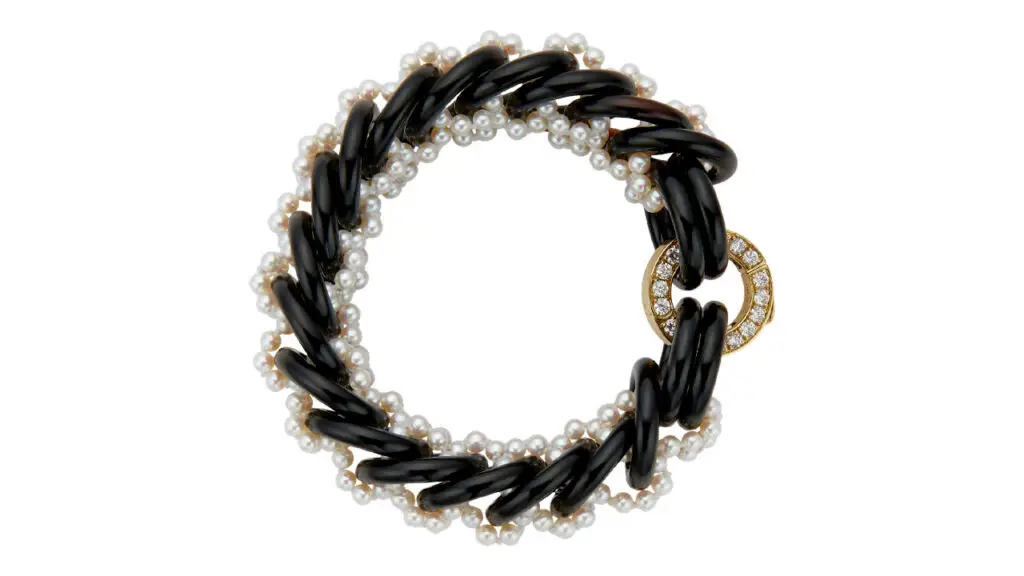
Finding top-quality pearls continues to be problematic for dealers, but American buyers are still opting for adventurous, sophisticated designs. A case in point: Multicolor Tahitian strands are high performers despite shortages of this premium category.
“Multicolors are doing better than uniform colors,” reports Fran Mastoloni, a company principal with Mastoloni Pearls in New York.
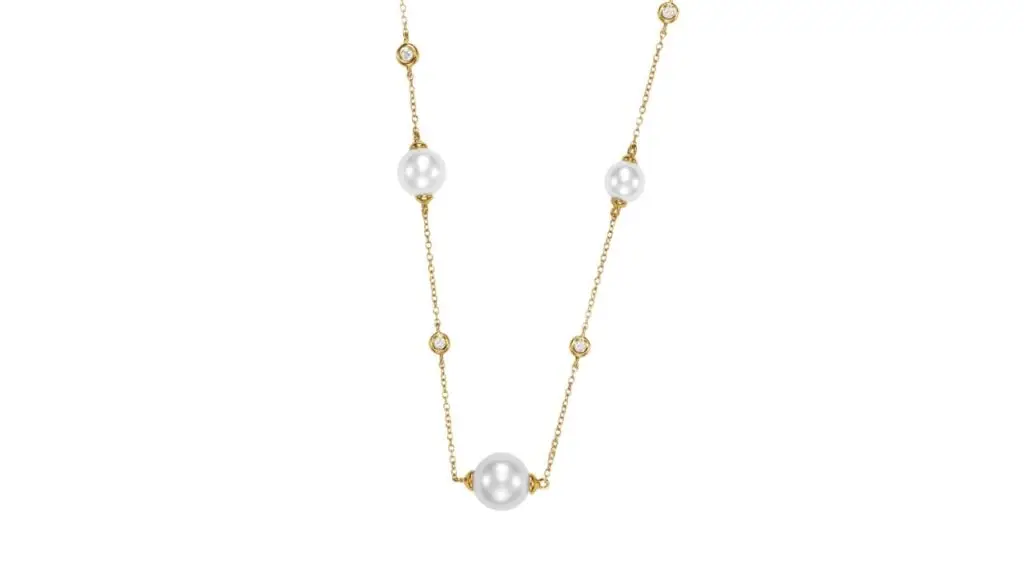
Many interviewees confirm that younger collectors are buying pearls in strands and fashion-forward designs. Mastoloni says her brand’s Tin Cup necklaces with white freshwater pearls are “still selling like wildfire.”
At Baggins, younger crowds are buying into pieces that layer, including some of the jeweler’s Vietnamese-origin baby akoya pearls, which are petite and price-point-friendly.
“The younger generation is [more] into pearls as a fashion statement [than they were] 15 years ago,” says Maloo.
And while white akoya pearls remain a staple in every store, natural-color blue akoyas have grown popular among designers — though they aren’t easy to source. “[Blue akoyas] sell well when we have them,” affirms Continental’s Shah.
In Chinese freshwater pearls, there’s always something new thanks to impressive grower techniques.
“Every six months, there’s a different color that hasn’t been shown on the market,” says Yen. At this point, “there are so many different purples available that every time a buyer comes to a show, they’re wowed à la ‘this purple is different than the purple we bought last time.’ It’s hard to replicate those colors, because each harvest is slightly different. So if you see a purple maybe this year, you might not see it next year.”
Tahitians are an important part of business at Imperial Pearl, as are pearl designs with great value. Its newest offerings for JCK Las Vegas include an expanded assortment of synthetic diamonds and pearls in bold styles, along with more of its sterling-silver and Tahitian looks, some designs in 18-karat gold vermeil, and more pieces for layering.
“[The pearl category] doesn’t have a lot of the same challenges that the gold market has,” says Grenier. “We don’t base anything on a price per carat or a price per ounce. That doesn’t exist in pearls.”
The ins and outs
Top pearl-exporting countries
Japan: $459 million
Australia: $160 million
Indonesia: $136 million
French Polynesia: $123 million
China: $99 million
Top pearl-importing countries
Hong Kong: $541 million
Japan: $361 million
United States: $77.5 million
China: $51.3 million
Thailand: $34.6 million
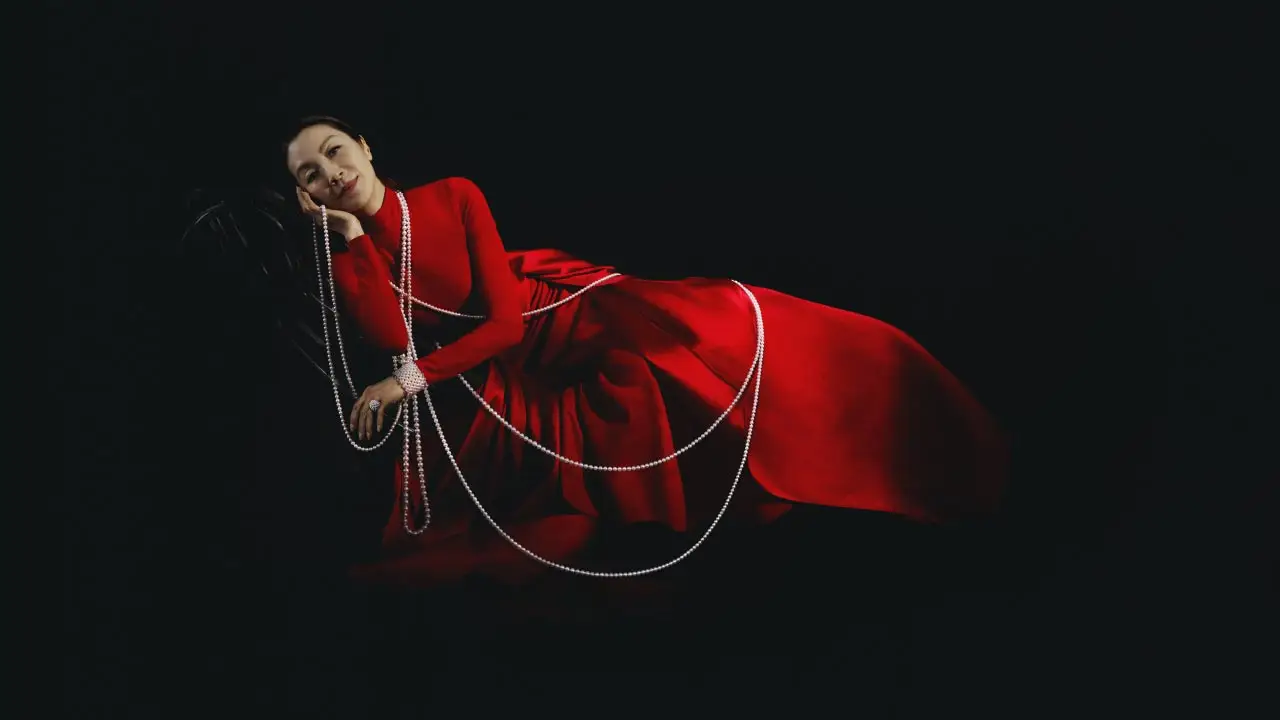
Main image: Actress Michelle Yeoh starring in the “1893 Mikimoto — Time on a String” campaign. (Mikimoto)

What Does Love Look Like? Not Out-of-Touch Lab-Grown Messaging
The natural-diamond industry won’t attract couples by telling them synthetics devalue their relationship.

Bridal Shopping in the Age of AI
Couples are researching online, but they still want to make the ring purchase personal – and that creates opportunities.
Six Brands Serving Fresh Engagement-Ring Designs
Whether it’s hand-sculpted organic gold or reimagined divorce jewels, these designers are setting trends that resonate with bridal shoppers.