
Sightholders predicted muted sales at this week’s De Beers sight as uncertainty over US tariffs impacted rough demand.
The miner’s fourth trading session of the year is the first since the introduction of duties on most imports into America. It also comes amid India’s summer vacation, during which polishing factories tend to reduce output.
Several insiders expected sightholders to refuse a lot of goods at the sight, as many of them had already used their one deferral per half year. De Beers no longer publishes the value of each sight, and observers said it was too early to estimate it or determine whether the rejections would happen.
Short-lived rebound
The previous sight, which took place in late March and early April, saw a modest improvement in sentiment as production cuts led to shortages of certain polished categories.
This unraveled on April 2, when Trump announced a 10% baseline levy on almost all imports and a 26% rate for goods from India. He later paused the higher “reciprocal” tariff for 90 days. Polished trading outside the US ground to a halt, creating a negative effect on rough.
“What I offered in the morning last month, in the evening was canceled,” said a rough-market participant involved in trading boxes of De Beers goods. “There is no business. There was a ‘market before’ and a ‘market after.’”
De Beers maintained stable prices at its May session despite the slowdown. Sightholders said profit margins were thin or negative for most categories.
This put sightholders in a difficult but not unusual situation when they arrived on Monday for the first day of the sale. The privilege of getting consistent supply 10 times a year from De Beers comes with a duty to purchase the allocation, minus a few concessions De Beers offers. Failure to do so can result in the loss of supply in future contract periods.
Immediate needs
In this context, one source projected that sightholders would reject around 50% of their allocations. Not all of this would count against future access to goods, since De Beers continued to allow clients to sell up to 20% of their purchases back to the miner — a process known as buybacks. However, sightholders cannot defer goods from the first half of the year to the second.
“Sight sales are still slow — I think they will see refusals this month,” said another executive at a sightholder. Demand for De Beers rough on the secondary market has slowed as buyers wait and see what happens next, he added. “No one is considering the [deferral] rules right now. [They are] acting purely on immediate urgencies and profit-based realities.”
There is also uncertainty about how De Beers will reward purchase history when it introduces a new contract system and trims its sightholder list from January 2026.
Rough over 5 carats is moving better than smaller goods, reflecting demand for 2-carat and larger polished at retail as well as shortages — a trend that was also visible at the last sight, insiders explained. However, actual sales volume is low, as few goods are available.
Polished production remained steady in April, manufacturers said, following a spike in India’s rough imports to $1.3 billion in March — the highest since March 2024. This has raised concerns that the Indian market had accumulated too many goods just ahead of the crushing tariff announcement. Factories in Surat will likely reduce their operations during the Indian summer break, which occurs in May.
Trade deal
The possibility of tariffs on Indian-manufactured diamonds rising from 10% to 26% in early July — when the US’s 90-day pause expires — is a cloud over the industry. Market participants were optimistic the two countries would reach a trade deal and the problem would go away.
India has already agreed to reduce tariffs on American goods to zero, Trump said on Tuesday.
“While there are multiple factors that can influence sightholder purchasing decisions, we have been encouraged to hear the positive commentary regarding the prospects for a US-India trade agreement,” a De Beers spokesperson said on Tuesday.
De Beers fully supports the appeal by the World Diamond Council (WDC) for an exemption for diamonds from tariffs, the spokesperson added. (WDC president Feriel Zerouki is also senior vice president for provenance, ethics and industry relations at De Beers.)
For now, however, the White House’s policy places significant pressure on sightholders as they gather in Gaborone, Botswana, for the sale, which ends this Friday.
“I am genuinely hurt in a big way [by the tariffs],” said an executive at a sightholder that manufactures in Africa. The company incurs levies on polished it sends to the US and India, which charges 5% customs duty. “I cannot bring [my polished] to Mumbai. I cannot sell it in New York. So I’m stuck.”
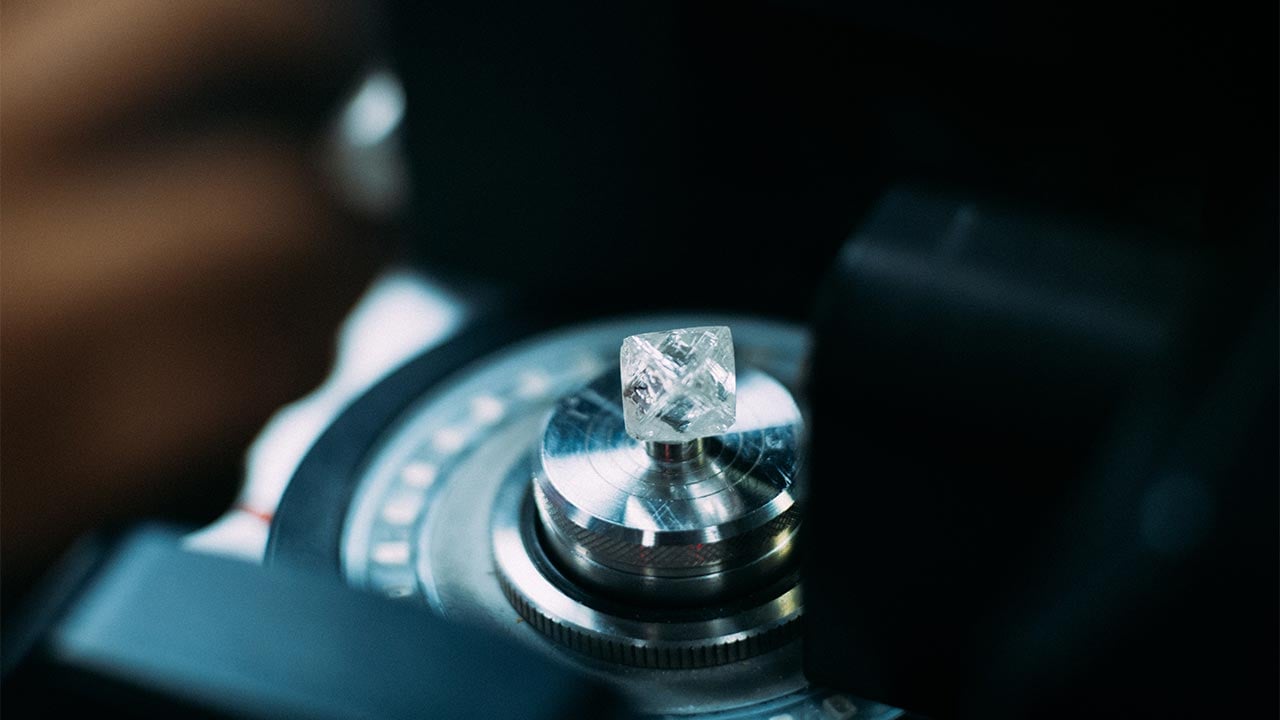
Image: A rough diamond under analysis at KGK Diamonds’ Botswana cutting facility. (Ben Perry/Armoury Films/De Beers)