
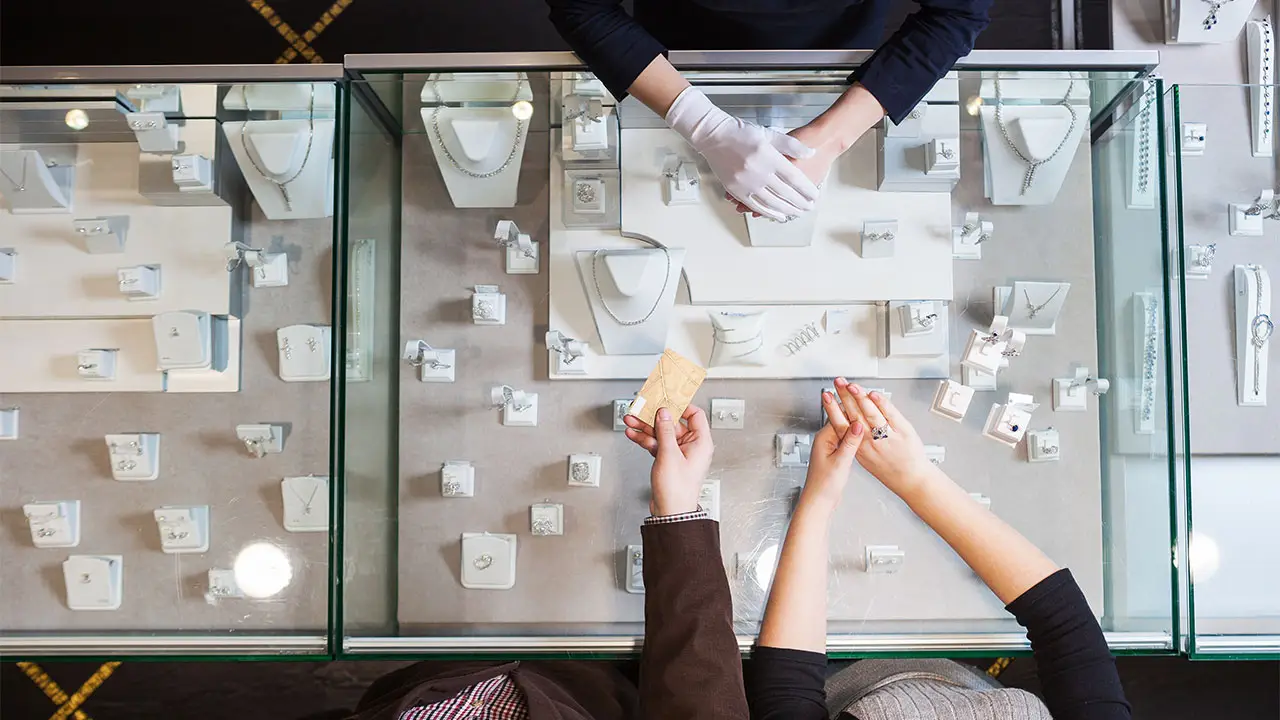
Independent US jewelers are helping keep the diamond industry on track amid considerable challenges for the market.
Major retailers are buying less than in past years and shifting more to lab-grown. Overseas suppliers are suffering from the White House’s tariff policy. But business ahead of the holiday is brisk between US dealers and the country’s mom-and-pop stores — and especially the larger or higher-end independent chains.
Behind this is steady demand from consumers, who, according to industry participants, are weathering the impact of tariffs relatively well.
“[Consumers] are buying because of the panic about tariffs and not knowing what is coming next,” said Dan Moran, owner of Concierge Diamonds, a bespoke jewelry retailer based in Los Angeles. “There is a level of guarded optimism about the upcoming season.”
Retail revenues from sales of diamond jewelry were flat year on year in July, reflecting an increase in the average selling price, according to data provider Tenoris. The number of units sold declined more than 8%, it said.
Similar trends were visible in August, with gross sales at independent jewelers up 1% as a 10% increase in the average price outweighed an 8% decline in unit sales, according to the Edge Retail Academy.
Signet Jewelers, the archetypal major, reported a 3% year-on-year increase in sales for the second fiscal quarter, which ended August 2. However, this mostly reflected strong sales of lab-grown fashion jewelry and growth in smaller divisions, such as services and watches.
Fancy and nimble
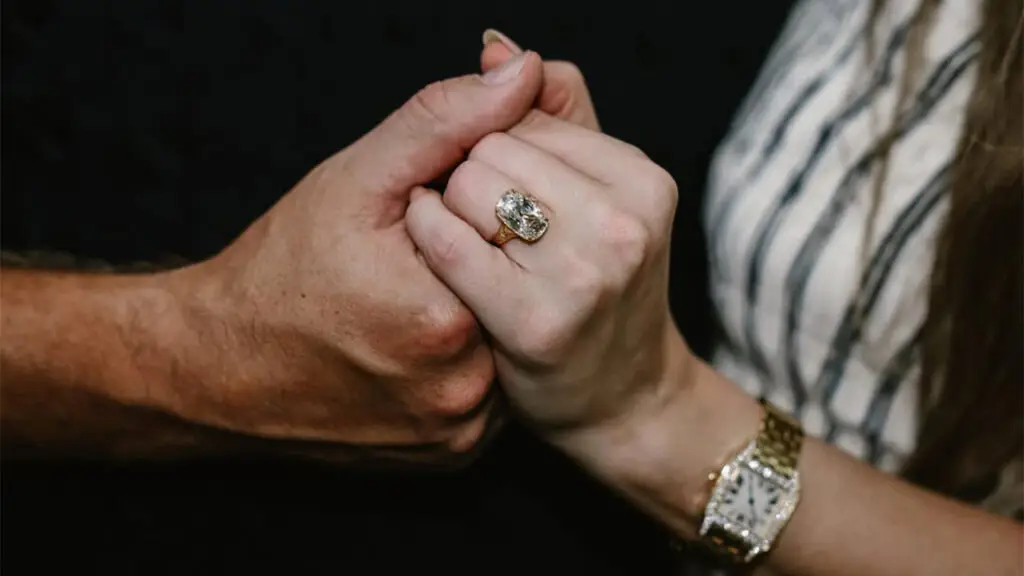
Specifically, the independents are benefiting from the relative strength of the market for 2-carat and larger natural diamonds, notably in elongated fancy shapes. These have gained further popularity thanks to Cristiano Ronaldo’s gift of an oval-shaped diamond for now-fiancée Georgina Rodriguez and the cushion-cut stone that Taylor Swift received from Travis Kelce.
The independents, known as the destination for these higher-end goods, are in a better position to take advantage of the current demand, according to Ari Jain, chief financial officer of New York-based manufacturer and dealer House of Diamonds. The majors have shifted their focus to lab-grown in search of volume rather than value.
“Independents have more skin in the game and life-long customers,” Jain commented. “They are getting a much larger chunk of the natural market, which enables them to do more business.”
They are also more flexible than the majors, able to buy according to trends and personalize products for customers. This is especially important in the fast-changing situation with tariffs.
“[With] the majors, there’s politics involved — before you make any decision, they have to ask the board, ask [a lot of] people,” Michael Indelicato, CEO of Rochester, New York-based wholesaler RDI Diamonds, told Rapaport News in late August. “[With] the bigger independents…the owner…can decide right away.”
Memo conversion
For the trade, this demand is mostly materializing as memo orders rather than outright inventory purchases.
“The majority of the independents are still taking goods on consignment,” said Ashish Karnavat, managing partner at Manhattan-based polished wholesaler Belgium New York. “There is an increased demand, but I still don’t see them purchasing for inventory. Many of them are confused regarding the tariff policies, so they are just calling for goods on memo as and when they have clients walk in.”
Memo volumes spiked in the second half of August, Indelicato at RDI reported. “There’s demand for especially marquises and ovals and elongated cushions,” he said. “Especially now with [the] Taylor Swift [effect], that’s going to make it even harder now [to source goods].”
Indelicato has also observed an increase in demand for round, 1- to 3-carat, D-flawless diamonds, as well as D to F, VS goods. Memo goods have been converting into retail sales at a high rate, he said.
These consignments have also become shorter-term because of shortages resulting from the US’s import tariffs. “Natural suppliers are eager to hold on to their stones,” said Moran at Concierge Diamonds. “You ship Tuesday, and by Friday they are calling for an update. They don’t want their stones sitting, whereas the lab-grown guys are perfectly willing to have their stone sitting.”
Big but not too big
Size does benefit independents: The bigger ones are performing better than smaller ones, said Jain at House of Diamonds.
“Larger independents have a lot of synergies,” Jain explained. “For example, for a company with 30 branches, if I send goods on memo and [one branch] can’t sell it, someone else at another branch could.”
The diseconomies of scale start to kick in once management chases short-term profits, he added. “If the CEO thinks short-term, that’s where the problem starts. Then the brand starts getting hurt.”
The larger family-owned chains also tend to skew toward the bigger, higher-quality diamonds and jewelry that are more sought-after than the price-point items.
“I see that tennis bracelets, diamond [rivière necklaces], things like that are through the roof,” said Sean Dunn, co-owner of J.R. Dunn Jewelers — which perhaps bucks that trend as a luxury retailer with just the one store in Lighthouse Point, Florida.
“As far as sales goes, I’m having big increases. Colored gemstones [are] the same,” according to Dunn, who spoke to Rapaport News on Tuesday for a forthcoming episode of the Rapaport Diamond Podcast. “If you have something unique, a story, basically something that you believe in… that’s what’s moving the needle for us as high-end independents.”
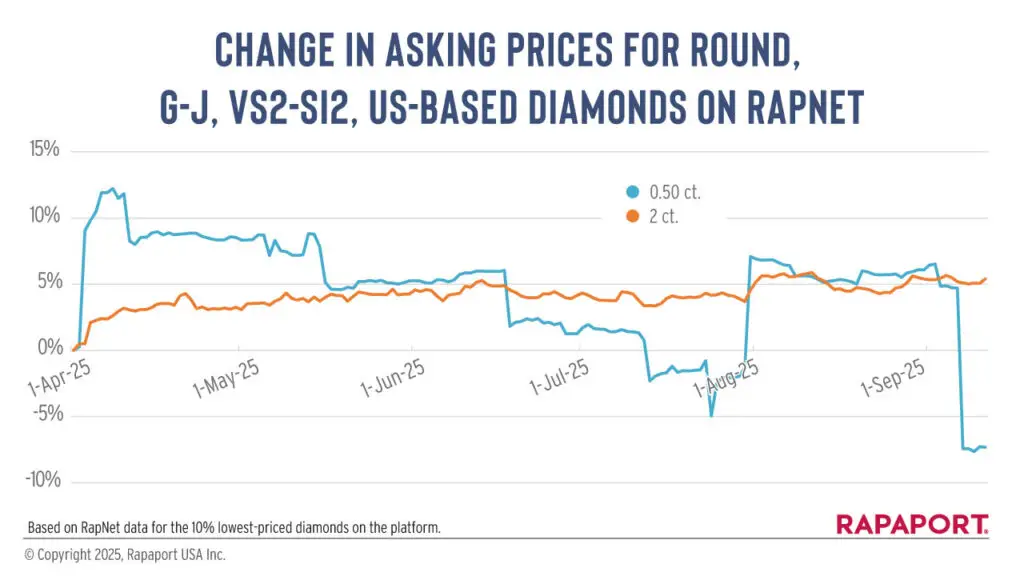
Prices of US-based polished inventory have matched the split. Round, 2-carat, G to J, VS2 to SI1 diamonds on the RapNet platform listed as being in America have risen in value by around 5% since April 1. Prices of 0.50-carat goods with the same other characteristics have declined by just over 7%.
It looks like it will be a good season for independent jewelers and those that supply them, especially at the higher end. However, those represent only a small segment of the potential market. The likely result of this is a further downsizing of the diamond industry.
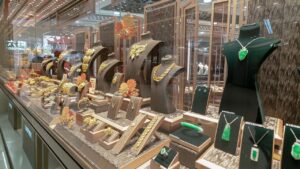
Main image: Inside a jewelry store. (Shutterstock)