 WhatsApp
 Email
Email
 Facebook
 Twitter
 LinkedIn

It’s the most important technological advancement in decades, with the potential to transform the world as we know it. It’s also the subject of intense debate, with concerns about everything from misinformation to intellectual property to privacy. Despite these controversies, it’s clear that artificial intelligence (AI) is here to stay.
Its use in education is one of its most contentious, with teachers globally reporting that it’s affecting students’ critical thinking skills as well as their creativity. One such concerned educator is Kim Nelson, the assistant chair of jewelry design at New York’s Fashion Institute of Technology (FIT). “We are required to touch upon AI in terms of digital literacy and critical thinking,” he says of the FIT jewelry syllabus. “We also teach its use as a market research tool in our business-practices courses.”
However, he is opposed to AI encroaching on the creative design process. “It is the very last place it should ever be applied,” he asserts. “In an educational environment, we are trying to develop aesthetic judgement and taste. This culturing of a student only takes place through mistakes: It takes a lot of ugly to understand beauty.”

Support role
Corey Russo, vice president of academic affairs at the Gemological Institute of America (GIA), is also cautious about implementing AI in jewelry education. “GIA jewelry training prepares our students to be craftspeople, to channel their creativity and passion into beautiful designs and expertly crafted jewelry pieces,” he says. “While AI can support this training, it currently cannot replace it.”
The GIA has introduced various AI tools for design and jewelry manufacturing into the continuing-education workshops it offers for its alumni. However, the institute’s accredited courses focus on the human foundational skills that graduates need, whether in gemology or the jewelry arts.
Russo’s concerns mirror Nelson’s. “The risk, especially in education, is that without thoughtful implementation, AI might undermine educational outcomes, such as subject matter expertise, aesthetic understanding, and true craftsmanship,” says the GIA executive.
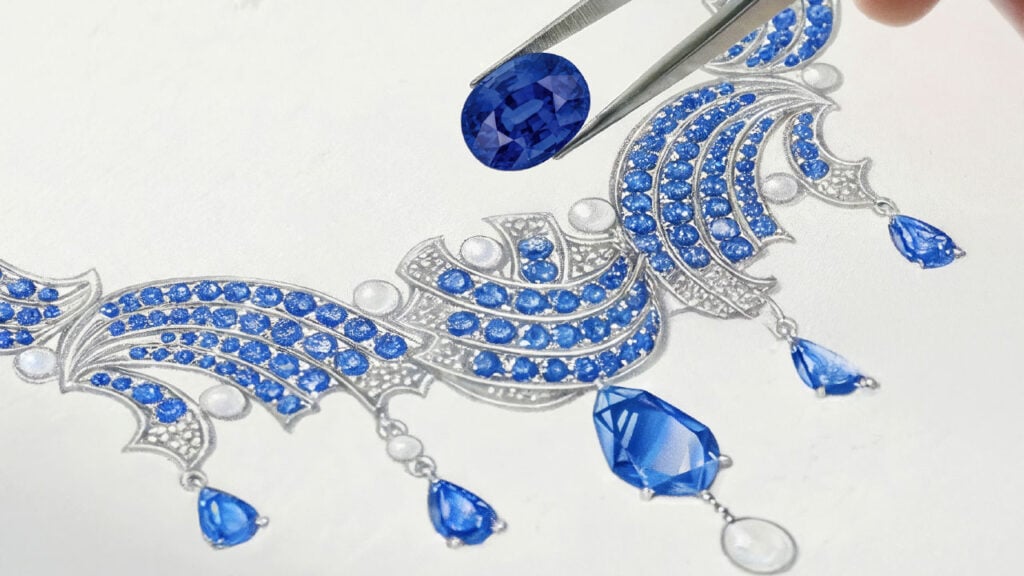
Meanwhile, at Savannah College of Art and Design (SCAD) in Georgia, the curriculum combines hands-on studio training with the use of AI-supported design platforms.
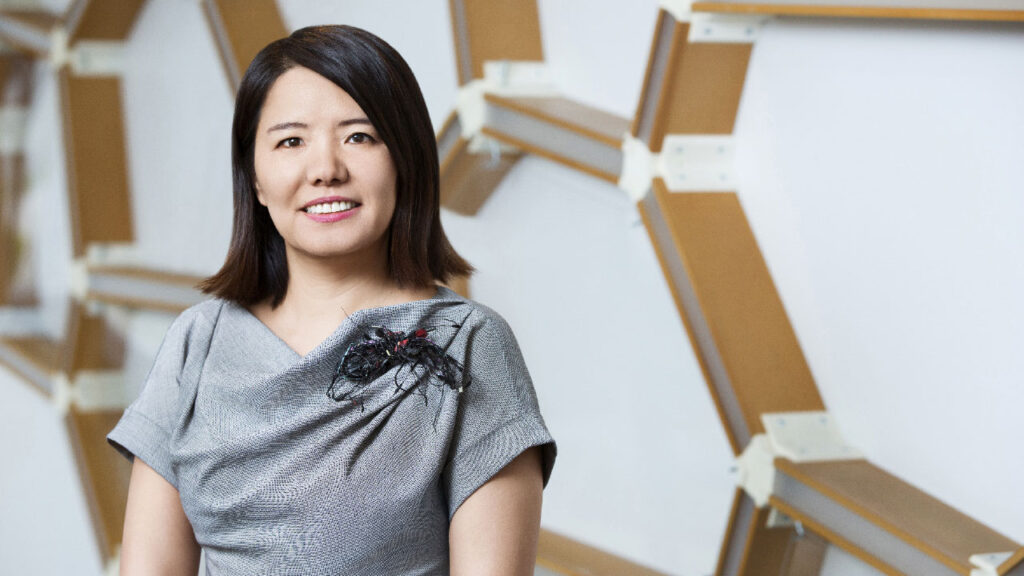
“We approach AI as an opportunity to expand how students research, visualize and develop ideas – while remaining grounded in the material knowledge and craftsmanship that define the field,” says Jay Song, chair of jewelry design at the college.
“Jewelry is inherently interdisciplinary,” she points out. “It brings together design, engineering, material science, fashion, and advanced manufacturing. Because of this, technologies such as AI-assisted visualization, digital rendering, and generative design can play an important role in helping students explore new aesthetic directions, analyze market trends, and rapidly test multiple design possibilities.”
Approaching the bench
A growing focus on AI could also widen the existing skill gap in the jewelry-making field. That gap – resulting from an aging workforce and the decline of traditional crafts – has been decades in the making. Nelson attributes it to “the lack of proper apprenticeship opportunities, which is the result of economic stressors rendering apprenticeships unprofitable. The only way to bridge a skill gap is hours of practice with proper oversight. AI is not intelligent enough to provide reliable oversight, nor can it replace the hours required to develop independent skills.”
Efforts to close the gap are underway. SCAD recently received a $10 million endowment from insurance firm Jewelers Mutual to support the college’s bench-jeweler education program. “Precious metals, gemstones, structural integrity, wearability, and finishing cannot be fully understood without direct experience at the bench,” Song maintains.

Easing the admin side
While nothing can replicate spending time learning vital skills, AI is already in use across the jewelry industry. Shahla Karimi, who launched her New York-based eponymous fine-jewelry brand in 2014, is an early AI adopter and uses tools such as Claude Coworker extensively across her company as a digital assistant to streamline admin, communication and planning. She also uses image-generating models such as DALL-E for “rapid visual prototyping” of new designs, and is using AI to redesign the business’s website in-house, saving the $95,000 that an agency quoted her. Karimi estimates that AI saves her between $250,000 to $500,000 a year and increases her output and productivity.
However, she is clear on the importance of investing in human creativity and craft. “The problem with AI is that everything is becoming homogeneous,” she says.
Another worry is intellectual property. “We see our designs popping up faster and faster [elsewhere],” says Karimi, which she puts down to AI’s ability to replicate at speed. As a result, her business is now focusing on creating bespoke pieces and honing the customer experience. “We’re building a flagship retail store, and it doesn’t look like a jewelry store – it looks like a restaurant, because our approach is about hospitality. We’re thinking ahead about what AI can’t do.”
While AI has replaced admin work in her company, Karimi believes there will actually be more jobs and remuneration in the future for the bench work that only humans can carry out, especially with the current shortage of skilled labor. “We’re in the last generation of manufacturing jewelry in New York City,” she says. “After this, there’s nobody who has the training. So I think we will be paying more for those types of jobs.”
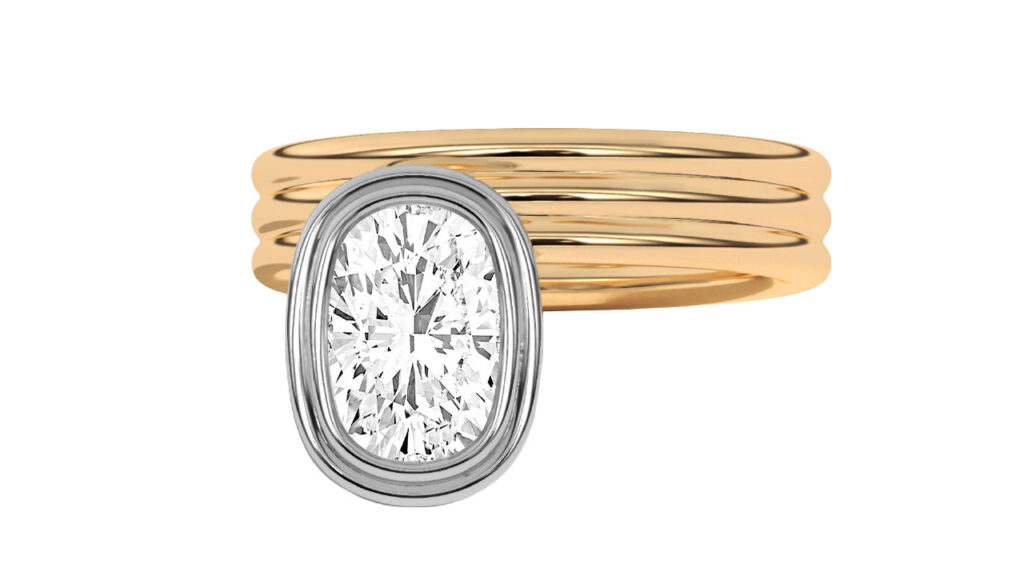
Main image: Rendering by Yaling Wang from the SCAD jewelry program. (Savannah College of Art and Design)