 WhatsApp
 Email
Email
 Facebook
 Twitter
 LinkedIn
It’s a challenging time for colorless diamonds in the broader market as public demand softens and prices continue to decline. At auction, however, important white diamonds traded steadily in 2025, and early 2026 has already produced a few bright spots.
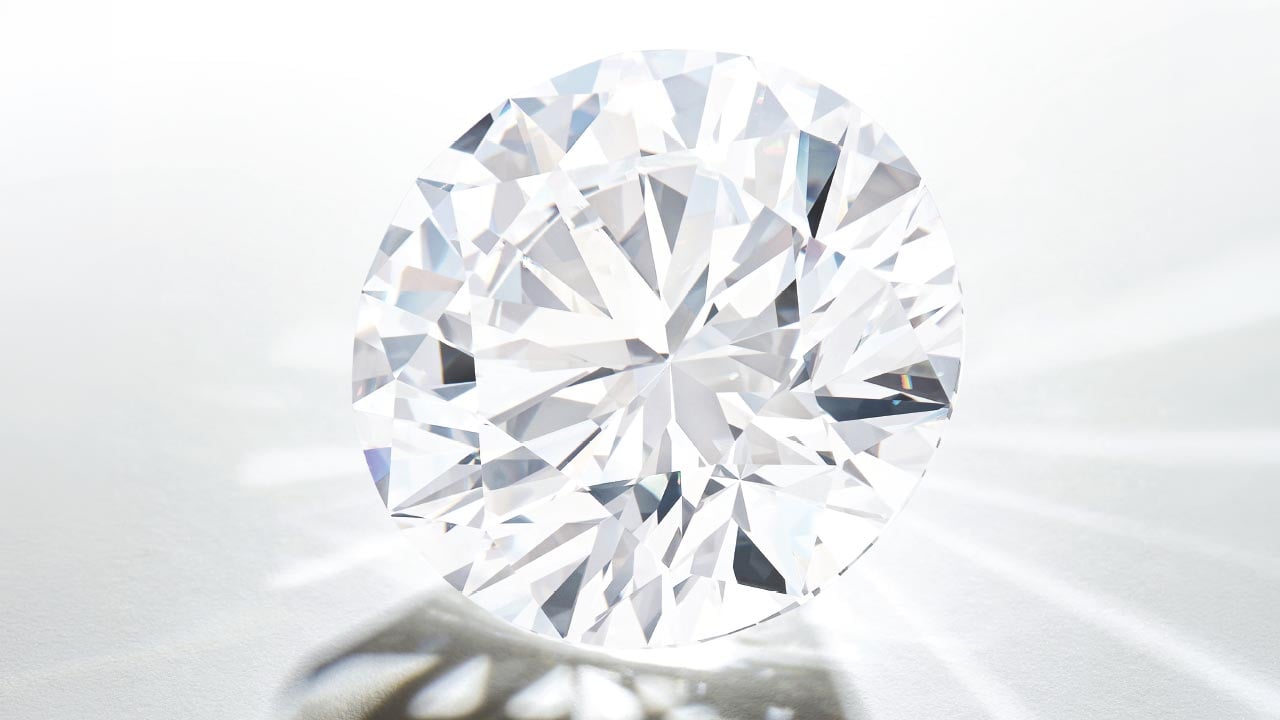
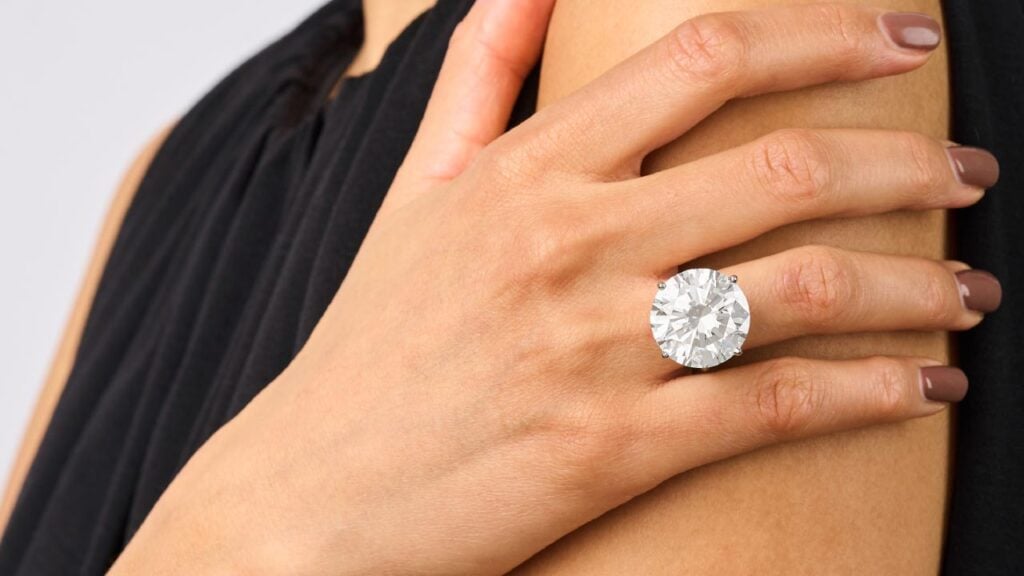
Arguably the highlight of the early auction season so far was the sale of an unmounted diamond from De Beers, the Jwaneng 28.88, which brought in HKD 21 million ($2.7 million) at the April 23 Sotheby’s High Jewelry sale in Hong Kong. The round, 28.88-carat, D-flawless stone, which hails from the miner’s Jwaneng deposit in Botswana, sold within estimates.
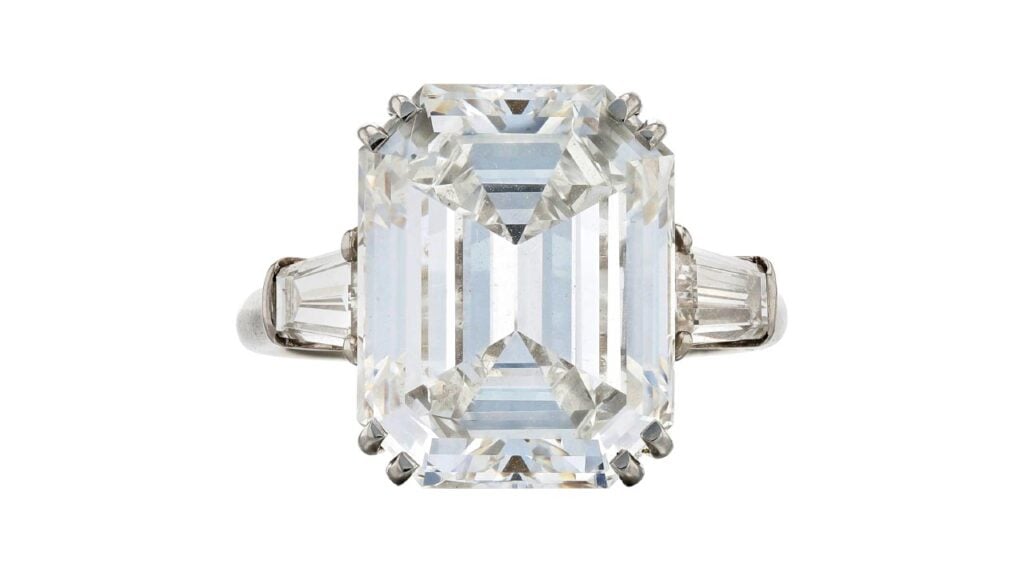
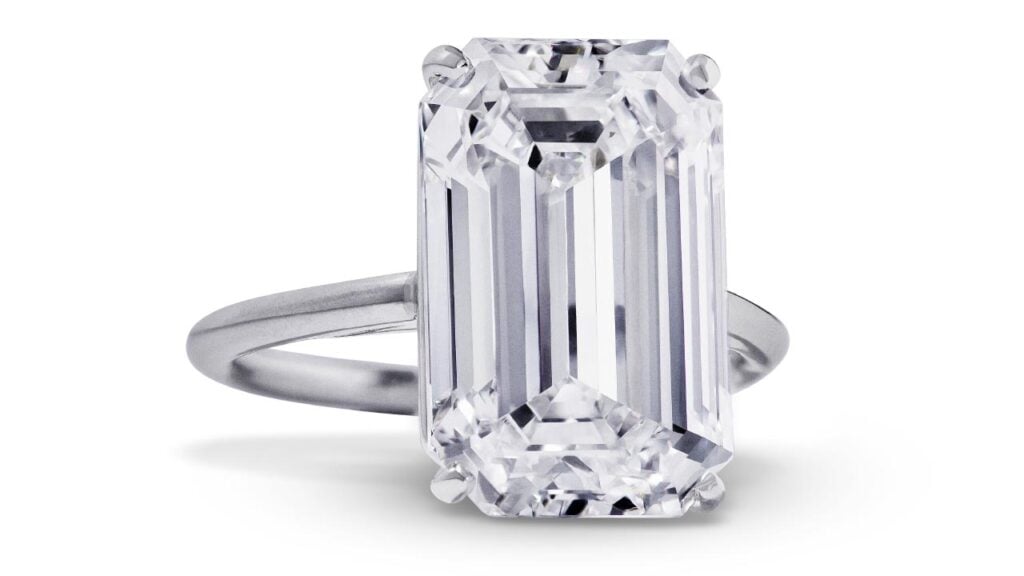
On March 17, a round brilliant-cut, 26.36-carat diamond of I color and VVS1 clarity achieved just over GBP 1 million ($1.3 million) — slightly above its high estimate — at London auction house Elmwood’s. It was the largest white diamond to come to market in the UK in more than a decade. The top lot at the Christie’s Jewels Online auction, which closed March 19, was a Tiffany & Co. ring that fetched $520,700, featuring an emerald-cut, 10.02-carat, D, internally flawless, type IIa diamond. And at the Sotheby’s Paris Fine Jewelry sale on March 31, a Harry Winston ring with a rectangular cut-cornered, 7.83-carat, E, VS1 diamond sold for EUR 217,600 ($250,675), well above its high estimate.
The upper end
The resilience of colorless diamonds at auction seems to apply mainly to large stones of high quality, which remain both highly prized and increasingly scarce, according to jewelry experts.
“Availability is probably the most important factor underpinning the market at the moment,” says Sophie Padfield, head of jewelry at Elmwood’s. “Truly exceptional colorless diamonds are rare, and that rarity is only becoming more pronounced. The number of large, high-quality rough diamonds being recovered globally is limited, and only a small fraction yields top-grade polished stones. From an auction perspective, that means we see very few genuinely important examples each season. When they do appear, there is often strong competition simply because opportunities to acquire them are so infrequent.”
April Matteini, who heads the jewelry department at US auction house Freeman’s, affirms that demand for large, fresh-to-market diamonds appears to be returning, due in part to collectors seeking alternative assets and rarity. “In December 2025, four of our top five lots were diamonds weighing over 10 carats,” she reports. “While prices for smaller diamonds — 2 carats and below — may not be where we would like them to be, they appear to have stabilized, and larger stones are performing well.”
The auction circuit is not the only secondary-market channel that has followed this trend. George Peralta, jewelry sales manager at New Orleans antique gallery M.S. Rau, has also seen pricing at the very top end surge in recent years even as the broader market has softened.
“Over time, white diamonds have gradually increased in price,” he says. “More common stones — like 1-carat, G, SI diamonds — tend to rise steadily. But the real price jumps are in rare, one-of-a-kind stones. Those are getting the most attention, with celebrities purchasing them and auction records reaching new highs. Rather than a gradual upward trend, we’re seeing pronounced spikes at the very top.”
What moves the collector
Recent auctions suggest that collectors are becoming more selective, focusing on stones that truly stand out, according to Jacqueline Di Sante, New York-based head of sale for the jewelry department at Christie’s.
“Even if results don’t always match past highs, there’s still real opportunity in this category,” she says. “When we’re thoughtful about selection and pricing in today’s market, we continue to see very strong results.”
Over the past two years, exceptional diamonds have benefited not only from rarity, but also from renewed demand for high-quality jewels, she adds.
Provenance, while still relevant, appears to play a secondary role to a diamond’s intrinsic qualities.
“Clients are looking very closely at the fundamentals — size, color, clarity and cut,” Padfield says. “If those elements are right, the stone will find its audience, regardless of whether it has a named history.”
Di Sante, however, finds that provenance still carries weight alongside classic diamond traits. “Both factors matter — a lot, in fact. The fundamentals like carat weight, color, clarity and cut will always drive interest, and details such as type IIa classification or lack of fluorescence add extra appeal. But provenance really brings a diamond to life. A great story creates an emotional connection.”
The sourcing conundrum
Sourcing rare, high-demand gems remains a significant challenge for auction houses and dealers.
“It’s a full-time, multi-person effort to identify these stones,” says Jesse Venable, M.S. Rau’s jewelry sales coordinator.
Specialists draw from a range of sources, often competing for the same stones. Many important diamonds sell privately, further constraining public supply.
“At Elmwood’s, like most auction houses, we work closely with private individuals, collectors and members of the trade,” Padfield says. “Many important diamonds come from long-held private collections, often entering the market after many years. Others are more recent stones that have been cut and placed into the secondary market. Increasingly, some of the very best stones are sold privately before they ever reach auction, reflecting a broader shift toward discretion at the highest level.”
Di Sante cites the global reach of Christie’s as a key advantage in sourcing. “We source from both the trade and private clients,” she says. “Our global team works seamlessly across regions, sharing information and relationships so we can find the best stones for our clients, whether they’re buying or selling.”
Ongoing interest
Natural diamonds in general, observes Di Sante, have gained strength “from long-term supply tightening as major mines mature and new discoveries slow. With collectors refocusing on craftsmanship, quality and emotional resonance, natural diamonds continue to hold a strong place in the luxury world.”
Looking ahead, Padfield expects current dynamics to persist.
“Supply is unlikely to increase in any meaningful way, which supports prices,” she says. “Demand remains international and resilient, particularly among collectors who value tangible, portable assets. We may also see more important diamonds sold privately rather than publicly, but when exceptional stones do come to auction, they should continue to perform well.”
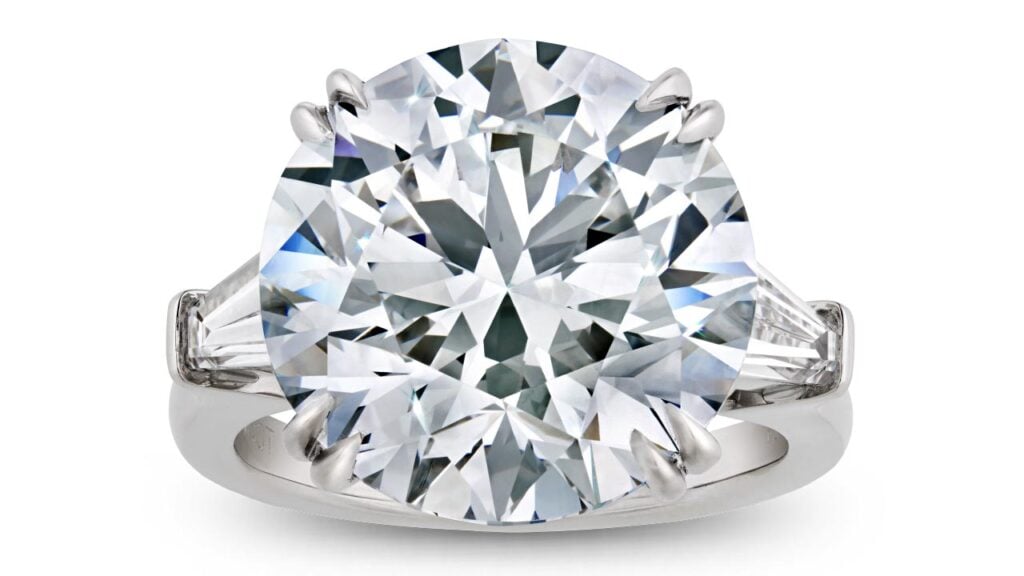
Peralta points to M.S. Rau’s acquisition of a Harry Winston ring featuring an 11.30-carat, D-flawless diamond as emblematic of what top clients are seeking.
“For us, this is the prize — what people remember when they come into the gallery,” he says. “In the coming year, we’ll find more. It may be harder and require greater effort, but we will continue to source these stones and bring them to market.”
Main image: The round, 28.88-carat, D-flawless Jwaneng 28.88 diamond. (Sotheby’s)