 WhatsApp
 Email
Email
 Facebook
 Twitter
 LinkedIn
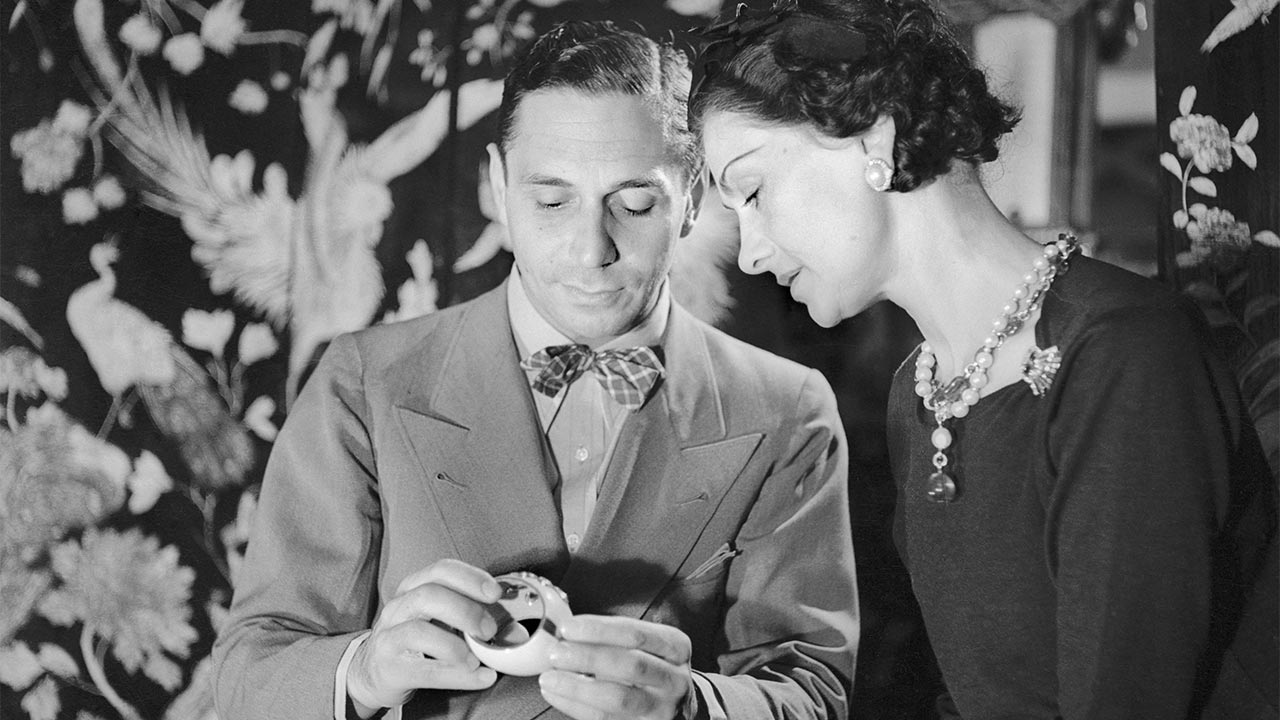
He was born Fulco Santostefano della Cerda, duke of Verdura and marquis of Murata la Cerda, the scion of an aristocratic family from Palermo, Sicily. But to his far-flung friends, he was simply Fulco. By any measure, he was in the who’s-who of jewelers: whether in the United States or in Europe, anyone who was someone in the second half of the 20th century knew and adored him.
Fulco di Verdura’s social wingspan was enviable for his vast connections. Through composer Cole Porter, for example, he met Coco Chanel in Paris; a few years later, Harper’s Bazaar fashion editor Diana Vreeland introduced him to Paul Flato in America. From each of these relationships, his fame spread further and wider, eventually making him the jeweler du jour to society sophisticates and Hollywood stars.
Star appeal
Much of the Verdura jewelry that was popular in its day has grown even more so over the years. For a one-man shop, there is an impressive quantity of easily identifiable pieces — in part because the original owners are so widely known.
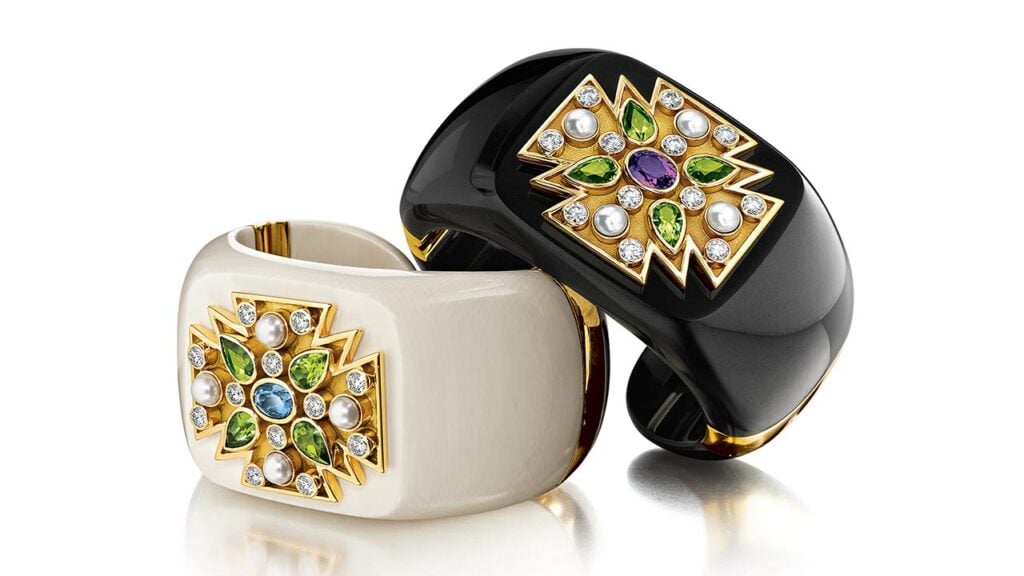
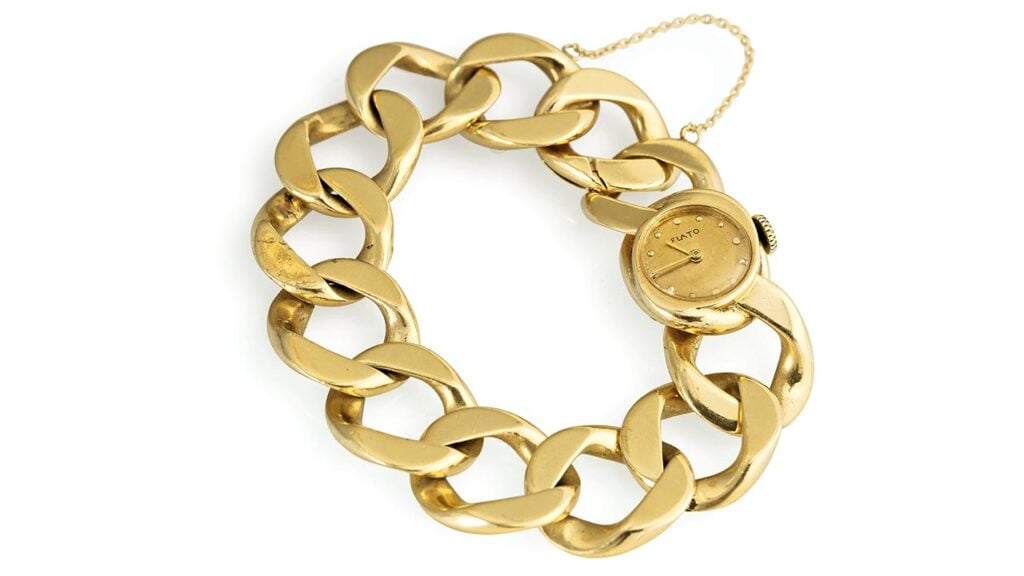
There’s the pair of Maltese Cross cuffs that belonged to Chanel; actress Greta Garbo’s flat curb-link bracelet watch; and Vreeland’s gemstone-rich Theodora and Ravenna Maltese Cross brooches. Socialite Babe Paley, often credited as Verdura’s muse, owned countless pieces, including an outstanding 21.25-carat canary-diamond ring, a pair of emerald and diamond earrings, and a pair of torsade bracelets with black and white natural pearls. For Porter, there were engraved gold cigarette cases to commemorate his many musical productions, and for heiress Marjorie Merriweather Post, there was the house’s gold and diamond double-crescent bracelet. Verdura’s much-beloved Wrapped Heart brooch with cabochon rubies dates to 1941, when actor Tyrone Power commissioned it for his wife.
Building a house
The other character in any story about Verdura is New York itself, which became more important to the luxury trade in the US as the war was taking over Europe. Fortuitously, Verdura’s natural joie de vivre was the cocktail that American women wanted when he decided to open shop in New York in 1939. Success was immediate. He personally ran the business until 1973, when he shuttered the New York salon and retired to London.
Although Verdura himself died in 1978, the story of his jewelry picks up again in 1985, when Ward Landrigan, formerly head of the Sotheby’s jewelry department in the US, purchased Verdura, Inc. Since then, the Landrigan family has been the house’s caring steward. The Landrigans wisely returned Verdura to its esteemed stature by leaning into its storied past and reviving the jewelry that Fulco made so iconic.
On the block
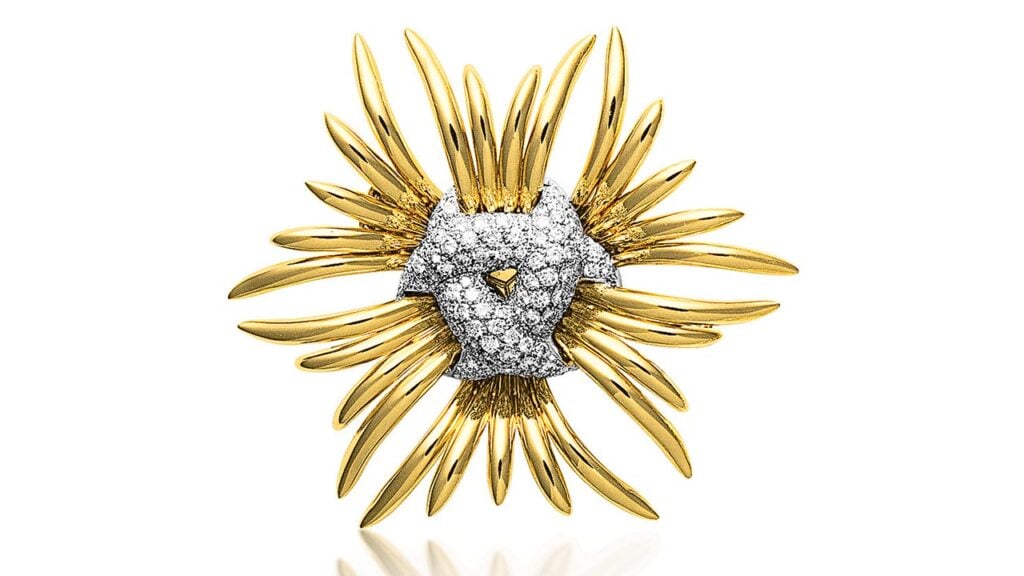
Whenever these designs and other signature Verdura pieces come up at auction, the pedigree of their former owners indelibly enhances their value, and auction houses eagerly play up this provenance. Consider the Maltese Cross jewelry: When Vreeland’s circa-1930 Maltese Cross brooches came up at Christie’s in 2004, they sold for $192,300. Similarly, a pair of Maltese Cross cuffs in nephrite sold at Sotheby’s Geneva in 2024 for CHF 190,500 ($244,296). In 2009, to mark 70 years in business, Verdura released 70 Maltese Cross cuffs, each slightly different; 16 years later, a pair sold at Christie’s for $88,900.
The Wrapped Heart brooch has shown similar strength. At Sotheby’s, a heart with pink tourmalines sold for $57,600 in 2024, and another with yellow sapphires went for $40,640 last year. A ruby version fetched $82,550 in December 2025 at Christie’s.
However, nature seems to have triumphed over the heart, at least in terms of price: A life-size iris brooch from 1999, with a 14.37-carat, fancy-vivid-yellow diamond wrapped in sapphire petals, sold 20 years later at Sotheby’s for nearly $2.1 million.
How fitting that Verdura’s jewelry, which brought so much joy and success in Fulco’s day, endures with an evergreen appeal.
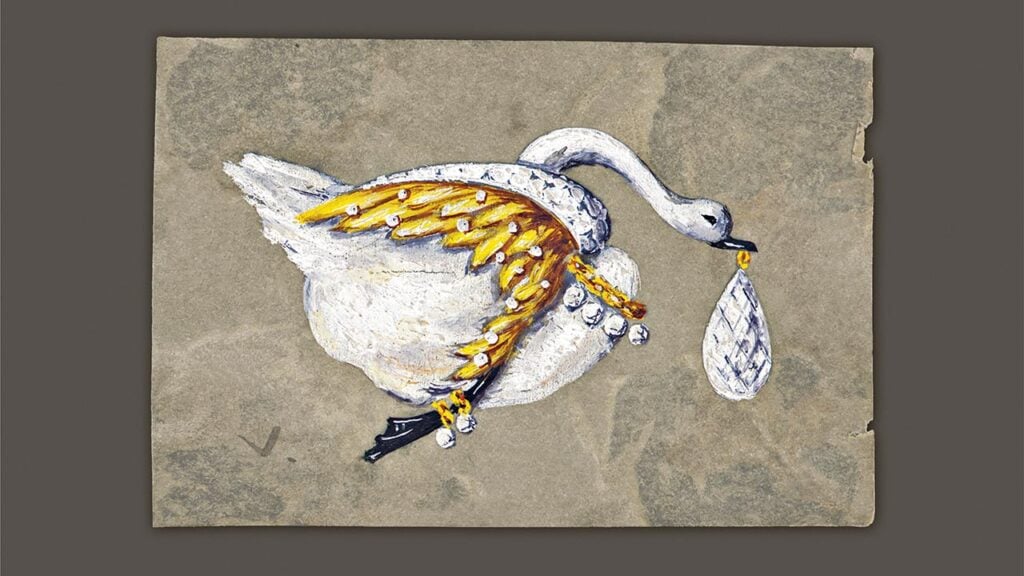
The dealer’s take
Verdura president Nico Landrigan discusses the sophisticated designer’s cultural influences and how the company keeps his spirit alive
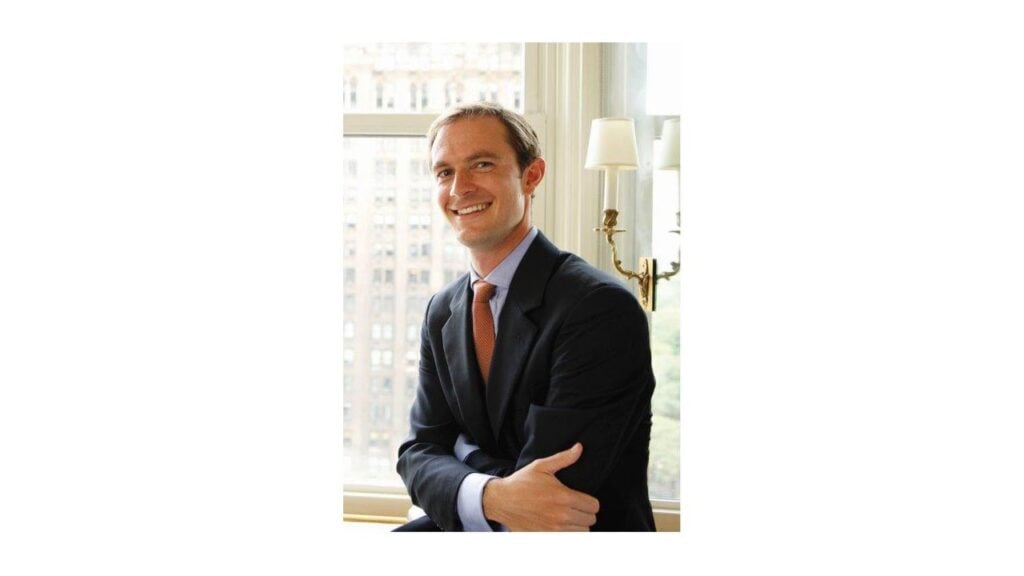
At Verdura, we’re still in our heyday. It’s fun to do something with integrity.
Verdura was a playful, brilliant, erudite, multilingual, educated duke born in the 19th century. To us, it’s as though he was from another planet. It was the end of the Old World. What we think of as café society was the life of the aristocracy at the time. These were people who were his friends and peers, well before he ever designed for them. Perhaps because he was from that world, he never felt the need to prove himself. By the time Verdura found his way into American society, he had the liberty to be playful, which translated into his jewelry. It’s this other dimension to the designs that continues his philosophy and makes it stand apart from commercial jewelry. I feel this is a large reason the jewelry has endured. We’re very lucky to have the thousands of drawings Fulco made, but we also embrace his philosophy to make it fun and to have it last.
Today, for example, it’s great to see new stones and old stones and imagine what Fulco would have done. It’s a fun line to walk, because I get to translate the designs in Fulco’s native tongue. For example, Fulco was conversant in Greek and Roman mythology. So when he used thunderbolts, they were a reference to Zeus, and pomegranates weren’t just a pretty fruit, but about fertility. He knew what he was referring to.
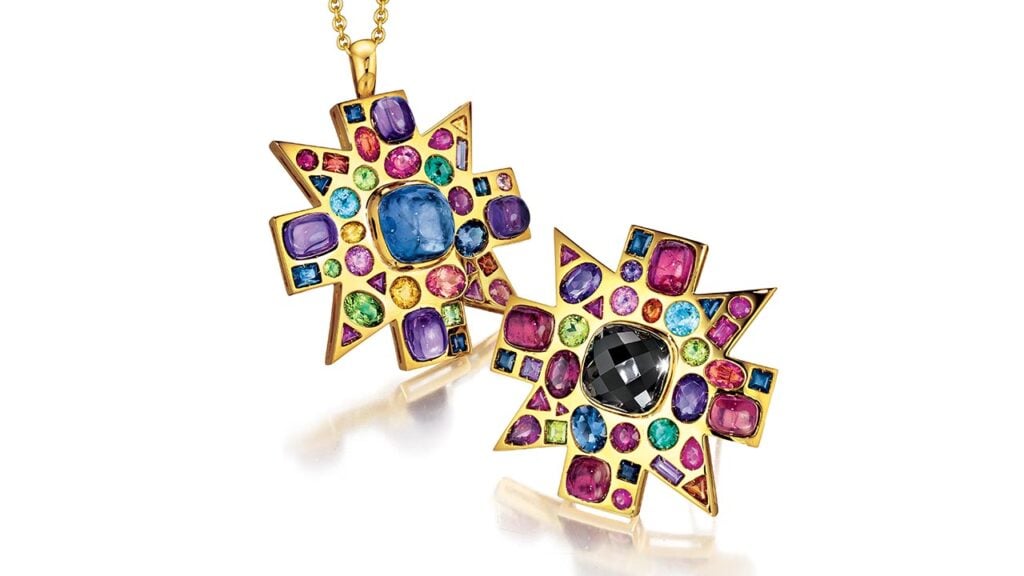
That said, Fulco wasn’t trying to impress, he was trying to amuse. Look at his cuffs and the variety of stones. He couldn’t care less about the hierarchy of jewels, and I think that comes through. It’s about the art of the final piece, not the ingredients. With Verdura, it’s always about the effect. The idea was to look chic, not to seem wealthy.
I surprised my dad [Ward Landrigan] by joining him in the business. For 21 years, I got to be his business partner, and we would have all sorts of debates, especially, “What would Fulco do?” I was so lucky that we got to do this together.
Verdura is one of the last original houses that still does bespoke work. It’s not efficient, but it’s a pleasure to sit down with clients who really understand what they want and have come to us because of what we do. We can go through thousands of our designs and say, “Let’s adapt!”
Main image: Fulco di Verdura poses with Coco Chanel in Paris, 1937, while admiring the Maltese Cross cuffs he designed for her. (Boris Lipnitzki/Roger Viollet)