 WhatsApp
 Email
Email
 Facebook
 Twitter
 LinkedIn
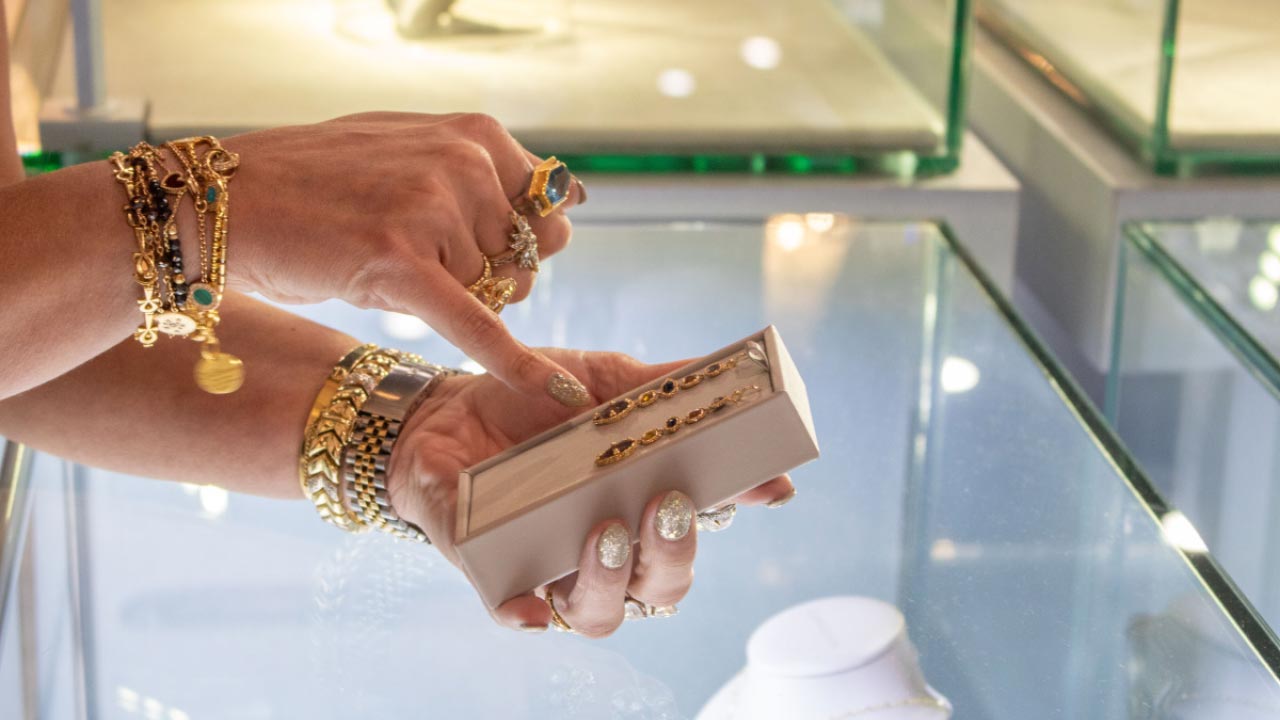
When attorney Fernanda Beraldi learned that century-old Windsor Jewelry, steps from her Indianapolis office in Indiana, was closing, she saw an opportunity to pursue a long-held dream.
Beraldi grew up in Minas Gerais, Brazil’s most significant gemstone-producing state, famous for tourmaline and amazonite deposits. She wore colorful, affordable gemstone jewelry as a child and cultivated that love of adornment by learning more about gemstones as an adult.
She and her partner, Ed Broecker, also an attorney, had been looking into buying a jewelry store for a couple of years. This would serve as both an investment and a potential second, post-retirement career.
“I had a laundry list of the things I wanted,” Beraldi says. It included a strong local foundation: at least 50 years in business, clear community ties, an up-to-date inventory system, and staff willing to stay. Crucially, she didn’t want to purchase inventory.
When Beraldi stopped in at Windsor during a busy going-out-of-business sale, she quickly assessed that the store would likely check off everything on her list. This included the use of Edge software for inventory management, and the fact that the inventory was moving. “My train of thought was, if it didn’t sell after you discounted it 90%, it’s because nobody wants it. I didn’t want to deal with it,” she recalls. Six weeks later, after confirming the financials and lease terms, the couple reached a purchase agreement with the owner.

Hitting the ground running
Because the landmark store had deep Indianapolis roots and generations of loyal customers, organic TV and newspaper coverage about the last-minute save created immediate awareness and better advertising reach than they could have bought. On the flipside, they had to make sure everyone knew Windsor was not actually closing. “We felt we needed to save the store and save the employees and history of this place that has been in existence since 1919,” Beraldi told a local TV station.
The couple’s first Las Vegas buying shows proved eye-opening. Beraldi was mesmerized by the selection. They sought traditional staples — diamonds, rubies, emeralds and sapphires — but Beraldi also wanted to expand her clients’ expectations.
“I was looking to bring a little bit of my personality to the store, to be more colorful and interesting. Not to scare away the current audience, but to also attract women buying for themselves,” she explains.
Fancy-color diamonds proved revelatory. Many customers had no idea they existed. “They’re still getting used to the idea of a colored diamond in Indianapolis, but it’s so fun being part of that discovery,” she enthuses.
Beraldi has discovered that her intellectual curiosity serves her well in sales. “I assumed I would not have any selling skills, and I learned that people want to be educated about jewelry. This has been such a passion of mine that I amassed a ridiculous number of factoids about jewelry.”
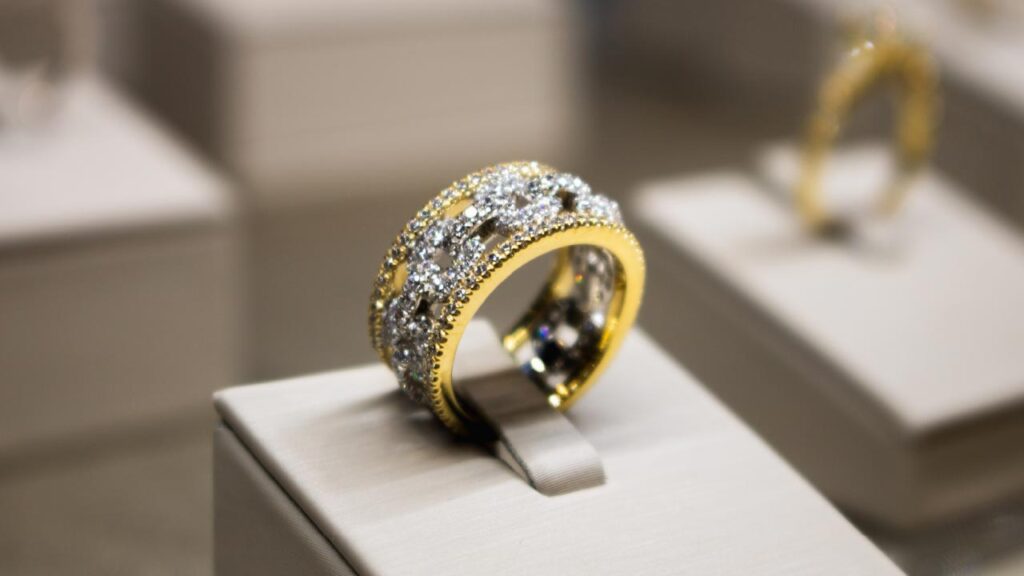
Creating a warm welcome
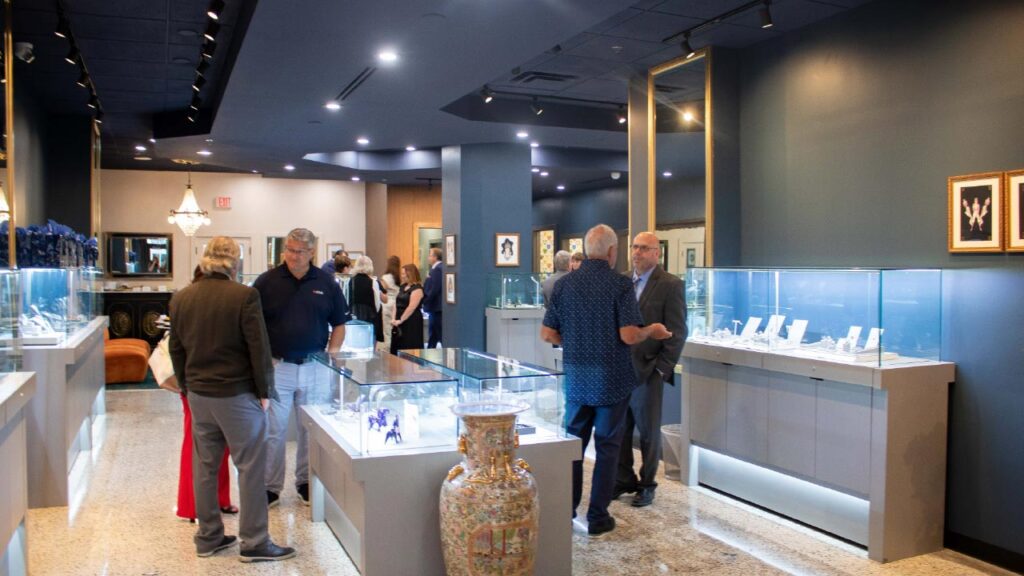
Windsor Jewelry had occupied its current downtown space since 1969, without a substantive renovation in decades. Before making any major changes, though, Beraldi spent the first three months observing traffic flow and customer behavior.
The long, narrow space felt like a hallway to her, with the checkout counter at the far end. “It didn’t feel welcoming. People had to go to the end of the hallway to be greeted by somebody,” she says.
Her priority was relocating the checkout to a sweet spot 15 feet from the entrance on the right — close enough to greet customers immediately while still maintaining security. The decision required a shift in mind-set. “Legal Fernanda would say keep the money away from the door,” she says. “But I visited all the jewelry stores in a 50-mile radius. The stores I liked the vibe in all had that setup.”
Beraldi moved the store’s bench jeweler forward into a prime spot that had been a watch-battery station and created a soundproof booth with a window. “People are super interested to see our jeweler, and he likes to show his work,” she says.
She also created a custom bridal room. “The store did a lot of custom and bridal work, but there was not a dedicated space to sit down with customers,” she explains. Now, when a client makes an appointment, the staff is prepared to dedicate the time and personalize the space for that client alone. Beraldi collaborated with a local artist to design wallpaper featuring diamond shapes that sales staff could use as visual aids.
She reconfigured showcases for side-by-side selling instead of allowing cases to be obstacles between customer and salesperson. The renovation team uncovered original terrazzo floors and painted walls deep blue, despite employee concerns that the space would be too dark.
The couple closed on the purchase in February 2025 and, with their landlord’s cooperation, moved to the second floor while renovations took place between May and August. During the grand reopening in August, they raffled off a 2-carat lab-grown diamond. Since then, results have been encouraging. “We’ve been beating the previous owner’s monthly revenue consistently,” Beraldi says.
The team had been skeptical about some of the changes, she adds, but everyone stayed put under the new ownership. “We’ve had a lot of conversations. I want them to be happy. Happy staff makes happy customers. I explain why I’m making these decisions, and I explain the vision.”
Learning on the job
The duo are still practicing law in their nearby office, and Beraldi works in the store on weekends. The plan is to move to jewelry retail full-time once she retires from law.
“I had the assumption that, because I am very risk-averse as a trained professional, I would have the same mind-set running the store,” she reflects. “I’ve been surprised that I’m making decisions that are a bit riskier.”
Beyond her Saturday shifts, she listens to all daily phone calls to assess what’s happening and what customers want. “I don’t want to try to learn everything when I retire,” she says. “If I can learn as I go, when I’m ready, I can focus on doing that rather than learning from scratch.”
Among the things she’s learned are customer preferences. “I assumed our customers would get inspired by our team’s personal style — and they do, but they want the thing that’s safe, especially the men shopping for [their] partners. They’re trying to choose the safest thing. Women will sometimes make bolder choices.”
Perhaps most surprising to the couple has been the jewelry industry’s culture of trust. “Both Ed and I worked our whole lives helping businesses mitigate risk,” she says. “The jewelry business is so trust-based — almost like you would offend someone if you asked them to sign something. You’re going to memo me thousands of dollars in jewelry without a paper? It’s mind-blowing.”
Main image: A jewelry display at Windsor. (Windsor Jewelry)