 WhatsApp
 Email
Email
 Facebook
 Twitter
 LinkedIn
You’ve spent more than three decades in this industry. Why did you believe a dedicated day for diamonds could make a real difference?
There is no heritage without a moment to remember it. That conviction has stayed with me throughout my career, and it is the foundation on which World Diamond Day was built. Despite everything diamonds represent — love, legacy, permanence — the industry has never had a single, shared moment to speak collectively. No unified voice. No common intention. Just a fragmented chorus of individual efforts, each pulling in its own direction.
Over the past decade, that fragmentation has cost us. The natural-diamond story has become increasingly diluted, not because the story isn’t compelling, but because no one has been telling it together. World Diamond Day was conceived as a direct response to that gap.
What I wanted to create was not another campaign. Campaigns are temporary. What I had in mind was something structural, one day each year when the entire industry pauses, aligns, and speaks with the same intention. The diamond and jewelry industry spans one of the most powerful global networks in existence: mining, manufacturing, brands, retail, design, and tens of millions of social media touchpoints across Instagram, TikTok, YouTube, and beyond. That network has never been activated as a unified communication channel. World Diamond Day is the moment we change that.
Its power lies in its simplicity. It is easy to understand, easy to join, and easy to repeat. It is not about selling — it is about celebrating what natural diamonds mean. And when an entire industry speaks together with clarity and genuine intention, the voice that emerges is far greater than the sum of its parts.
April 8 generated remarkable enthusiasm across the industry. How does that energy extend to consumers?
The response on April 8 was genuinely encouraging and revealing. It confirmed that unity within this industry is not just possible, but powerful. But I want to be honest: That first edition was exactly that. A first step. The work ahead is more demanding. The path to consumers follows a clear logic, and it cannot be shortcut.
First, the industry must learn to speak as one. That foundation is now laid. Second, the individuals within the industry, more than 10 million people across mining, manufacturing, design, and retail, need to be invited in not as brand ambassadors, but as human beings with real stories. When a craftsman in Antwerp, a retailer in Tokyo, or a designer in New York shares their personal connection to diamonds, something shifts. The message stops being institutional and starts being lived.
That authenticity is what reaches consumers. Not slogans, not coordinated posts — genuine stories told by real people who believe in what they are saying. Consumers are extraordinarily good at distinguishing between the two.
Looking ahead to World Diamond Day 2027, the initiative will move decisively toward consumers. Retailers and designers will engage their clients directly, not with a sales pitch, but with an invitation to celebrate their own stories, to reconnect with notions of love, continuity and meaning. The ambition is for millions of people to participate, in-store and online, making it a truly shared global moment.
What are the deepest challenges in how the industry communicates today, and how do you propose to solve them?
The most fundamental challenge is a loss of narrative ownership. For the past several years, the industry’s communication has been largely reactive. Rather than confidently defining what natural diamonds are and what they mean, too much energy has been spent responding to lab-grown diamonds. In doing so, we have gradually ceded the very ground we should be standing on. The future of the natural-diamond industry will not be found in that response.
This forces a critical question: What story do we actually want to tell? The answer will not be built on origin, traceability, or rarity alone. These remain important truths, but they no longer carry sufficient emotional weight on their own. They are facts, not feelings. And diamonds have always been about feelings.
Having led the creation and prelaunch of World Diamond Day over nearly a year, I can say with conviction that this is precisely what it is designed to enable. Not as a campaign, but as a platform: one day, one voice, and from that foundation, the conditions for a new narrative to emerge. Not defensive, but confident. Not reactive, but purposeful.
Where do you see natural diamonds not in five years, but in 20? Where do you want to take this?
In five to 10 years, I believe natural diamonds will reveal their full meaning and power in a way the industry has not yet imagined. We are entering a world defined by speed, synthetic replication, digital fatigue, artificial intelligence, and a growing human disconnection — felt most acutely by Generations Y, Z and Alpha. These are generations that have grown up surrounded by the infinite and the instant. Everything can be generated, replicated, accelerated. And precisely because of that, something is shifting. People are beginning to hunger for what cannot be manufactured. For what is irreversibly real.
That is where natural diamonds live. And that is the opening the industry has not yet fully seized. In that world, a natural diamond stops being primarily a luxury object and becomes something far more significant: a universal symbol of humanity itself. Not a status signal, but a human one. That is where I want to see natural diamonds in the next decade. Not simply as the finest thing money can buy, but as the strongest symbol of what it means to be human — to love, to remember, to pass something forward.
In 20 years, my ambition is that the world understands this. Not because the industry told them — but because the industry finally gave them the language and the moment to feel it.
What are you working on next?
Several initiatives are in development, but the one I am most excited about is the World Diamond Heritage List — an effort to identify the 100 diamonds that have shaped human history. The premise is simple but, I believe, profound. For centuries, natural diamonds have been present at the defining moments of civilization: in royal courts and peace treaties, in works of art and acts of devotion, in families across generations. And yet, unlike monuments, temples, or ancient cities, the world’s most historically significant diamonds have no global registry, no formal recognition, no unified framework for preservation. That cultural value exists; it simply has not been codified.
The World Diamond Heritage List will change that. It will preserve the stories behind the world’s most iconic diamonds and diamond creations, and it will educate future generations about the profound role these stones have played in human civilization. In doing so, it also serves a strategic purpose: It reminds the world that what makes a natural diamond meaningful is not just what it is, but the centuries of human story it carries. Like World Diamond Day, the Heritage List is designed to unite the industry around something simple and genuinely meaningful, and it forms part of a longer ambition. We are building toward Mission UNESCO 2028, a World Diamond Heritage Board (WDHB) initiative aimed at achieving formal recognition of natural diamonds as both a material and an intangible heritage of humanity.
Who is Nicolas Chrétien?
Nicolas Chrétien is a consultant, brand builder and strategist, as well as a founding member of the World Diamond Heritage Board (WDHB). With over 35 years of experience in luxury and consumer goods, he specializes in natural diamonds, fine jewelry, and heritage-driven initiatives.
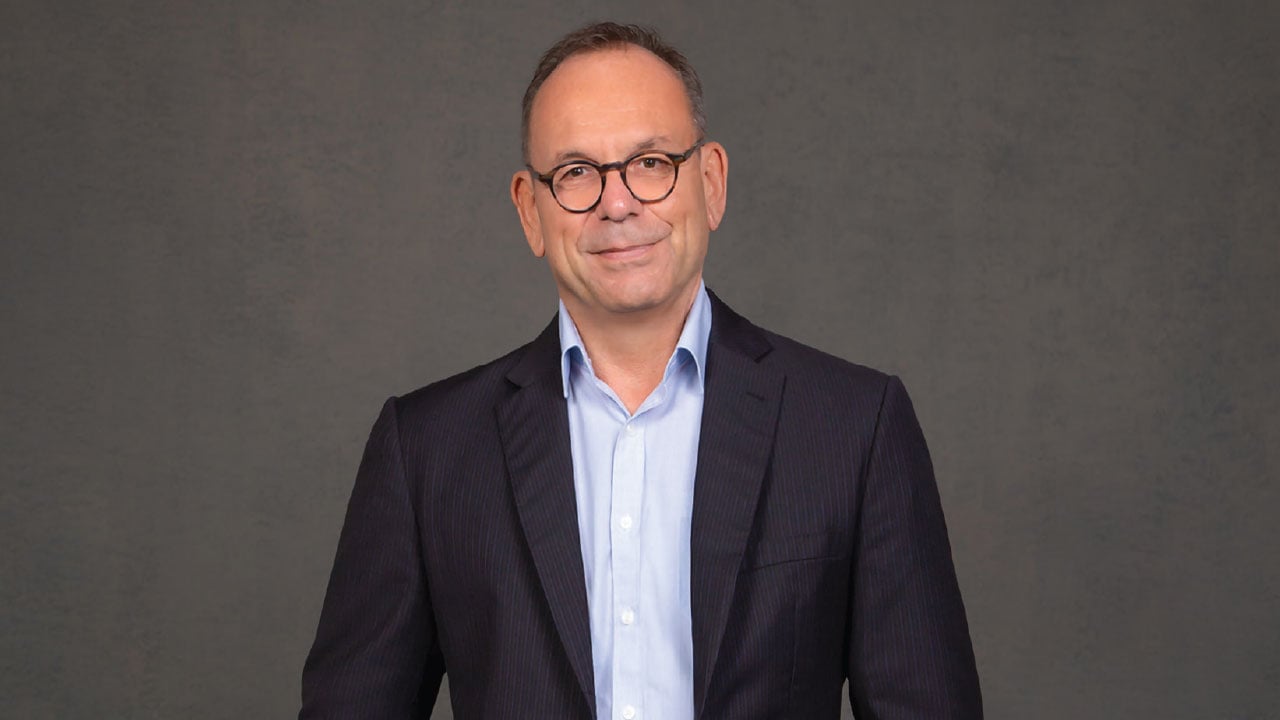
Main image: Nicolas Chrétien. (Nicolas Chrétien)