 WhatsApp
 Email
Email
 Facebook
 Twitter
 LinkedIn
In a market that has grown used to getting its supply from a handful of world-class deposits, the colored-gemstone trade is increasingly expanding to another channel: vintage and antique jewelry. For colored-stone merchants and jewelers, “pre-owned” is no longer just a design story or a sustainability add-on; it’s becoming a valuable sourcing channel, especially for rubies, emeralds and sapphires.
The reason is not that there’s a sudden shortage of gems in general, but that the supply of top-quality material has tightened. On the mining side, no large-scale gem deposits have come to light in recent years — not since the 1998 discovery of sapphires in Madagascar, 2008’s ruby finds in Mozambique, and the Gemfields mining operations at Zambia’s Kafubu emerald fields that have been underway since the company’s establishment in 2007.
For the trade, the implication is blunt: Irrespective of market movements, the cost to produce a carat of reliable, documented gemstone material is going up.
That’s where the vintage channel begins to look less like a niche and more like a release valve. The secondary market is sitting on decades — sometimes centuries — of accumulated gemstones from different price eras, often set in designs that are no longer considered fashionable. When those pieces get traded back into the market, jewelers can disassemble them, assess the components, and either resell the loose stones with new lab reports or reset them into contemporary jewelry with provenance intact. For brands and retailers operating under tight restocking cycles, estate buying can be an alternative upstream source that doesn’t require waiting for the next mine auction.
Relics of a finer era
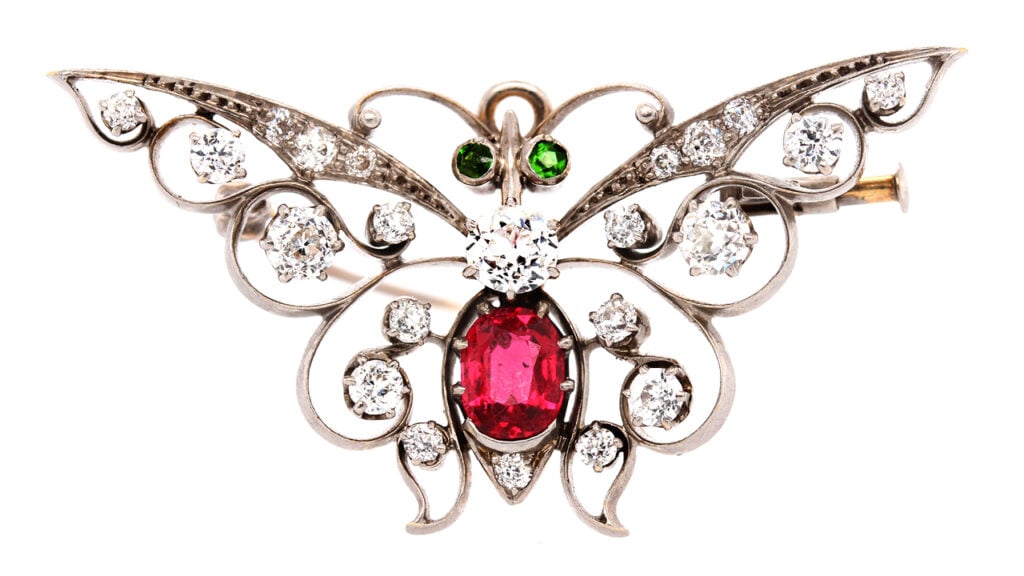
The expanding colored-stone market has resulted in greater demand for the elusive top-notch quality of untreated gems. Heavily treated stones were far less common before modern gem treatments developed in the 20th century. This and the popularity of old cuts are good reasons to source gemstones from antique and vintage jewelry.
Rare origins also play a strong role in gems’ ability to retain their value and appreciate further. That usually means Colombia for emeralds, Myanmar (Burma) for rubies, and Kashmir or Sri Lanka (Ceylon) for sapphires. The near-total exhaustion of the latter two sources — historically significant gem deposits that once defined the peak of the quality pyramid — has put tremendous sourcing pressure on the industry. Since the supply of rubies and sapphires, at least, now comes largely from existing jewelry rather than new production, the vintage and antique market is gaining importance for dealers seeking the provenance of historical origins.
Recutting conundrums
The trade has become more comfortable with recutting thanks to improvements in lapidary tech and tools, polishing standards, and cut evaluation. But stones from the vintage market come with their own challenges. Recuts sacrifice precious carat weight and require highly skilled lapidaries to do the work, which can lead to unplanned costs that erode profit margins. Furthermore, an older jewel’s setting may conceal the stone’s true form, color and clarity, so the lapidary needs to acquire the piece at a price that provides a buffer for potential mistakes in both quality assessment and the recut itself.
The growing consumer appreciation for vintage and antique jewels — especially in the last 15 years — has increased competition among trade buyers at vintage jewelry auctions. Between the higher demand and the rising costs of both rough and polished stones on the primary market, the pre-owned segment has become not just an optional source for colored gems, but a vital one.
The experts’ view

Max Fawcett
Global head of jewelry, Christie’s
“Throughout 2025 and before, we have witnessed a substantial increase in demand for colored stones. As a result of white-diamond prices decreasing [in recent] years, more buyers have moved to colored stones, driving prices up further. The most sought-after gemstones are emeralds, sapphires and rubies, but Paraiba tourmalines and spinels — just to name two out of many — are also seeing an increase in demand and [therefore] price. This increase in demand for gemstones has also had the side effect [of helping push up the price] for antique jewelry (less so for signed pieces, [which were already fetching high prices]) that dealers purchase for the colored stones they hold.”

Alan Nacht
Owner, Bernard Nacht and Under the Crown
“Sourcing colored gems from the vintage and antique market can yield some profitable surprises. I remember we had made an offer on a secondhand bracelet; the setting was ugly, and the color of the blue sapphires didn’t match, but once we bought the piece, unmounted the sapphires and checked [them], they turned out to be all from Kashmir. All we had to do was a light round of repolishing to enhance their natural beauty. Someone probably took the Kashmir sapphires out of their original jewel [and] set them in a modern bracelet.”

David Nassi
President, 100% Natural
“We’ve always sought colored gems from the vintage and antique segment, especially [stones from] historic origins where the mines are no longer producing. But competition has increased, especially in recent years. [Among the] other challenges in sourcing from the secondary jewelry sector is that supply is inconsistent. You don’t know what will come up for sale. You may not always have the opportunity or the time to thoroughly examine a jewel before you are required to place a bid. If you are considering a high-value loose gem in the [primary] market, it will typically come with two or three lab reports confirming its origin and [any] treatment. That is not the case when buying a vintage jewel in an estate sale or at an auction. [Still,] we keep returning to source from the vintage segment because the opportunity is there. We mitigate the risks I’ve stated by placing conservative bids.”
The state of supply
The world’s primary source for rubies is Mozambique — particularly Montepuez, which is home to the highest-producing ruby mine in the world. However, Gemfields, which operates that deposit through subsidiary Montepuez Ruby Mining (MRM), described 2024 as challenging, with MRM yielding only 40,006 carats of “premium” rubies versus 62,392 in 2023. The company cited increased intrusions from illegal miners, along with disruptions from general unrest following the country’s contested October 2024 election, as factors contributing to this meaningful drop in higher-value output.
Ruby isn’t the only gem facing supply trouble. For emeralds, the top two source countries are Zambia and Colombia. Gemfields’ Kagem mine in Zambia produces nearly a quarter of the world’s emeralds, according to estimates. However, Gemfields’ emerald inventory fell in the first half of 2025, primarily because the company paused activity at Kagem to keep mining costs low.
Over in Colombia, illegal incursions in mining tunnels have negatively impacted emerald supply at the Coscuez deposit, as they led mine operator Fura to suspend activity there less than two years after starting production. In 2024, Colombia exported $162 million in rough and polished emeralds, reports Edwin Molina, CEO of the Santa Rosa (Cunas) mine and president of the Association of Colombian Emerald Producers (APRECOL). As of October 2025, however, that figure stood at $116 million, with top-grade material making up less than 1%.
Security costs have become an explicit line item, coming to $11.2 million for Gemfields in 2024 versus $10.4 million in 2023. Fuel expenses also rose year on year to $27.1 million from $22.6 million in 2023, part of broader inflation in mining costs.
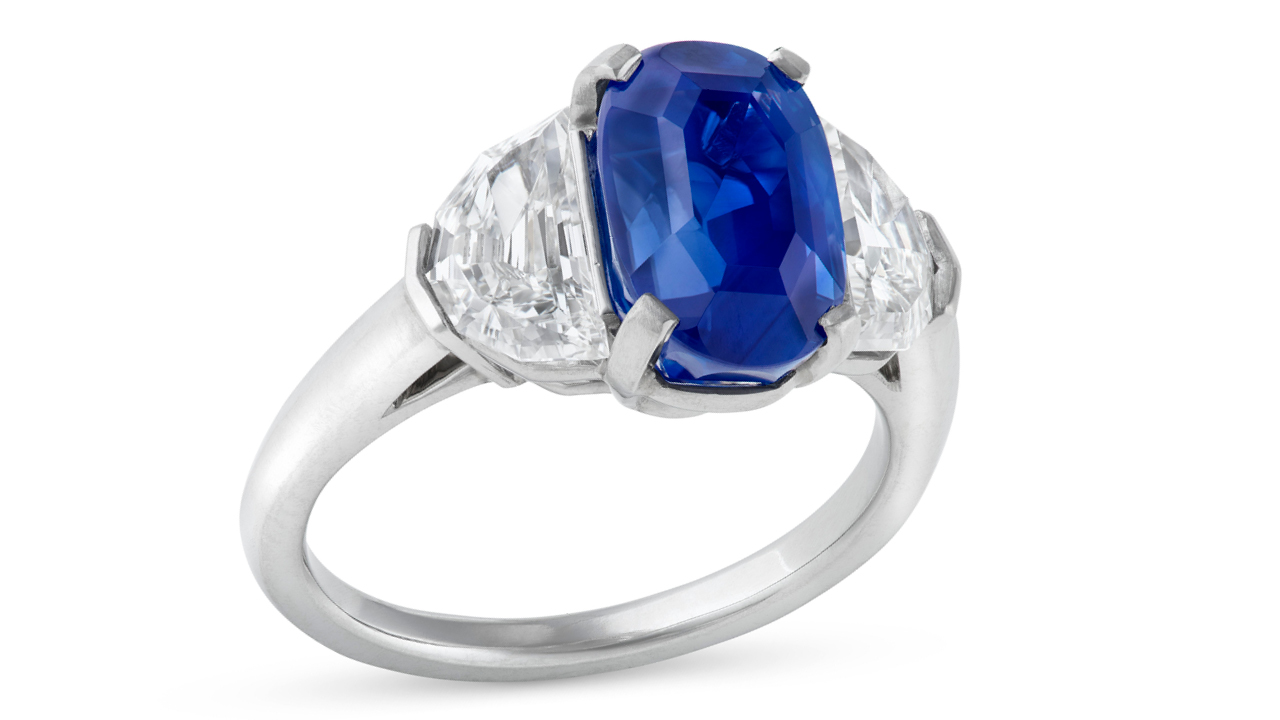
Main image: A sapphire and diamond ring that sold at Christie’s Jewels Online in March 2026. (Christie’s)