 WhatsApp
 Email
Email
 Facebook
 Twitter
 LinkedIn
The United States has been a defining market for Indian diamond jewelry exporters. Despite trade disruptions, evolving tariff structures, and rising regulatory demands, it continues to exert an undeniable pull, commercially and strategically, for India’s gem and jewelry industry.
At the center of this relationship lies India’s manufacturing advantage. Despite periodic uncertainty amid the recent tariff negotiations, Indian exporters keep returning to the same conclusion: India remains unmatched as a production base, which is why many local companies continue to center their operations at home. And while margins have tightened in the wake of tariff-related pricing pressure, Indian diamond companies have reacted by sharpening their strategies and finding creative ways to add value, rather than diluting their partnerships with US firms.
The struggle to stay stable
The US remains “the world’s largest and most trend-setting diamond market,” asserts Hitarth Dholakia, head of global sales and operations at manufacturer Hari Krishna Exports (HK). Despite its trade volatility, America offers both high volumes and branding potential. These and other advantages have made it worthwhile for Indian companies to find ways of keeping a foothold in the States while they wait for the two countries to resolve the tariff crisis.
Like many Indian diamond firms, HK has kept its prices stable thanks to the inventory it shipped before the tariffs went into effect last year, according to Dholakia. However, cost pressure has been unavoidable.
“Most players have tried to absorb costs rather than pass them on,” he reports. He and other large-scale manufacturers expect that tariff relief will eventually ease pricing pressure on end consumers.
At fellow diamond manufacturer Shree Ramkrishna Exports (SRK), the tariffs have so far been disruptive but not destabilizing. “The US tariff actions imposed on Indian exports in 2025 significantly altered short-term trade economics without fundamentally undermining underlying demand,” says Shreyans Dholakia, the company’s director and brand custodian. The February 2026 interim trade agreement that reduced the duties to 18% after they peaked at 50% restored a degree of predictability for manufacturers, even though negotiations continued afterward.
Rather than react hastily to the initial 50% tariffs, SRK focused on resilience, making efforts to become more cost-efficient, add further value in India, and maintain “stable, transparent pricing for our partners,” according to the director. As buyers increasingly prioritize ethics and traceability, the company’s investments in responsible practices have given it a strategic advantage, he adds.
While he agrees that the US remains “a very important and strategic partner,” SRK and other exporters are trying to offset American trade volatility by diversifying toward Europe, India and the Middle East. “Businesses are agile,” he reflects. “We have to move like flowing water.”
Prepared to pivot
At HK, customers who previously bought larger volumes for stock have cut back by around 10% to 15%, indicating a clear shift toward more focused, order-based purchasing, reports Hitarth Dholakia.
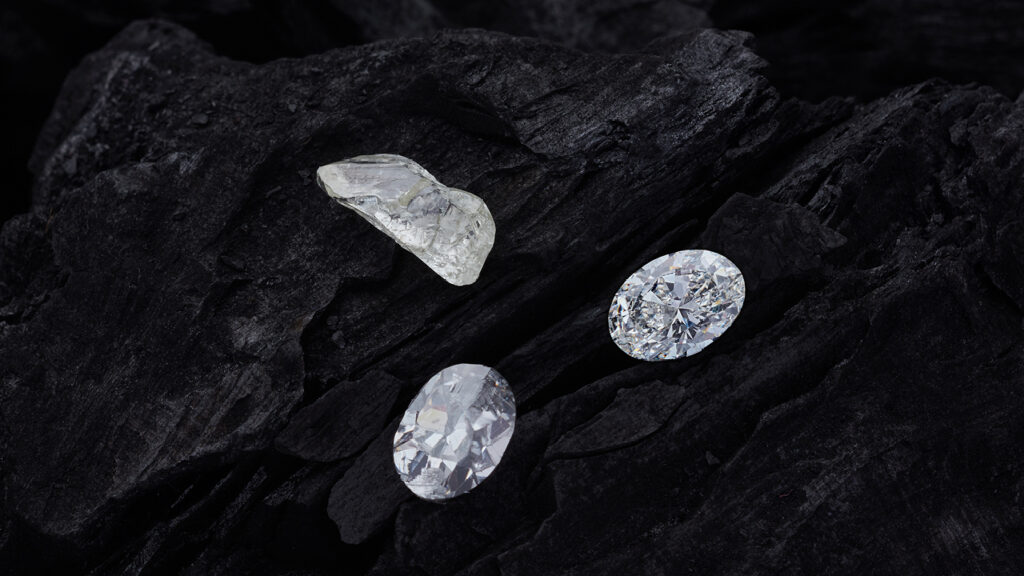
As such, HK is putting greater emphasis on special cuts like hexagons, customized layouts, matching pairs, and other assortments that let jewelers source all their stones in one place for a design. “When bracelets fall in the $10,000 to $30,000 range, [assortments like these make it] much easier for customers to make decisions [about buying],” explains Dholakia. “Better volume and more symmetrical goods make the offering even more appealing.”
That kind of adaptability has become critical for Darshit Hirani, cofounder and director of Mumbai-based colored-diamond specialist P. Hirani Exports. Tariffs have made the US more price-sensitive, he says, with “[American] retailers and wholesalers becoming very selective in what they buy,” as costs “can’t be passed on immediately.” Suppliers are often expected to bridge the gap, squeezing margins and slowing the movement of goods. His response to the market challenges has been to focus on scarce stones and difficult-to-source shapes.
Local advantages
Jewelry manufacturer Kama Jewelry has been exporting its diamond pieces to the US since 1996. American consumers appreciate design, quality, and trusted brands, says company managing director Colin Shah, pointing to the US market’s scale, retail infrastructure and purchasing power as other core assets.
While some companies have considered relocating their manufacturing operations to the US, Shah maintains that exporting from India continues to make economic sense: “There is still a cost advantage in terms of labor as well as quality.”
He’s not the only one to point out the upside of keeping manufacturing local. Indian trade members all seem to agree that cost efficiency, skill, and the scale of operations are high on the list of advantages. HK’s Dholakia also cites the country’s “integrated supply chains, broad inventory, and faster turnaround.”
Akhil Dhaddha, creative director of jeweler Gem Plaza in Jaipur, hails the Indian industry as offering “the cheapest high-quality labor.” In terms of jewelry production, he adds, the country’s CAD-led design efficiency, bulk stone sourcing, and reduced gold waste give it a significant edge.
Bhuwan Seth echoes that sentiment. As the director of Jaipur-based jeweler Silver Creations, he’s found that India “brings a mix of handcrafted design sensibility [and] modern machinery, [which leads] to improved precision and finish.”
Still, the 50% tariffs briefly pushed India out of contention when exporters couldn’t match the prices of goods from countries like Thailand and Indonesia.
“Margins were already too tight to absorb the increased costs, orders were paused, and some of our US clients even explored local production,” relates Dhaddha. With the drop to an 18% duty, however, “it is now viable to make jewelry in India.”
Flexibility in the jewelry space
As a jewelry supplier serving both Indian diaspora retailers and non-Indian American partners, Kama has adopted a multi-pronged strategy focusing on internal efficiency, selective local manufacturing in New York, and diversification to other global markets.
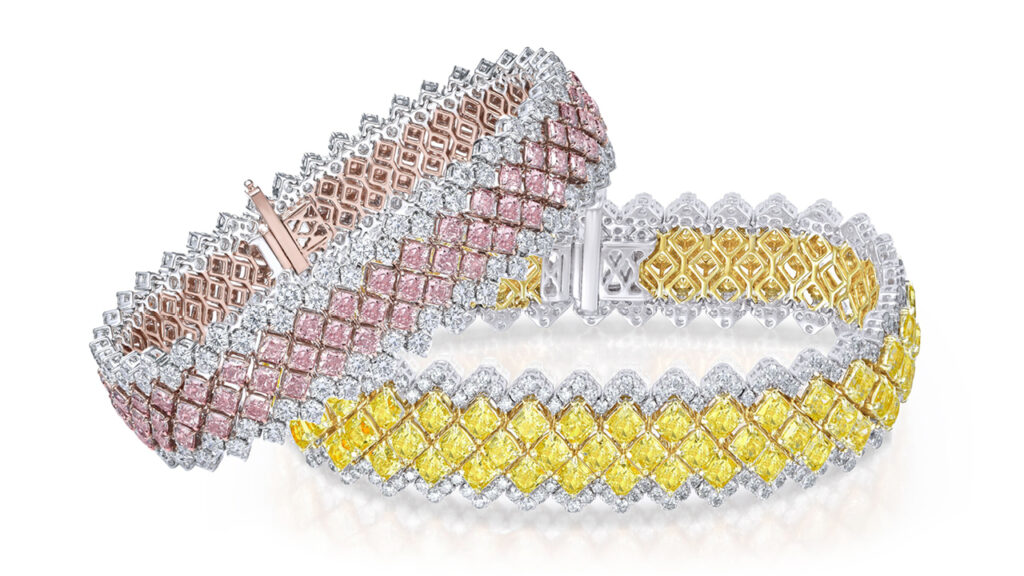
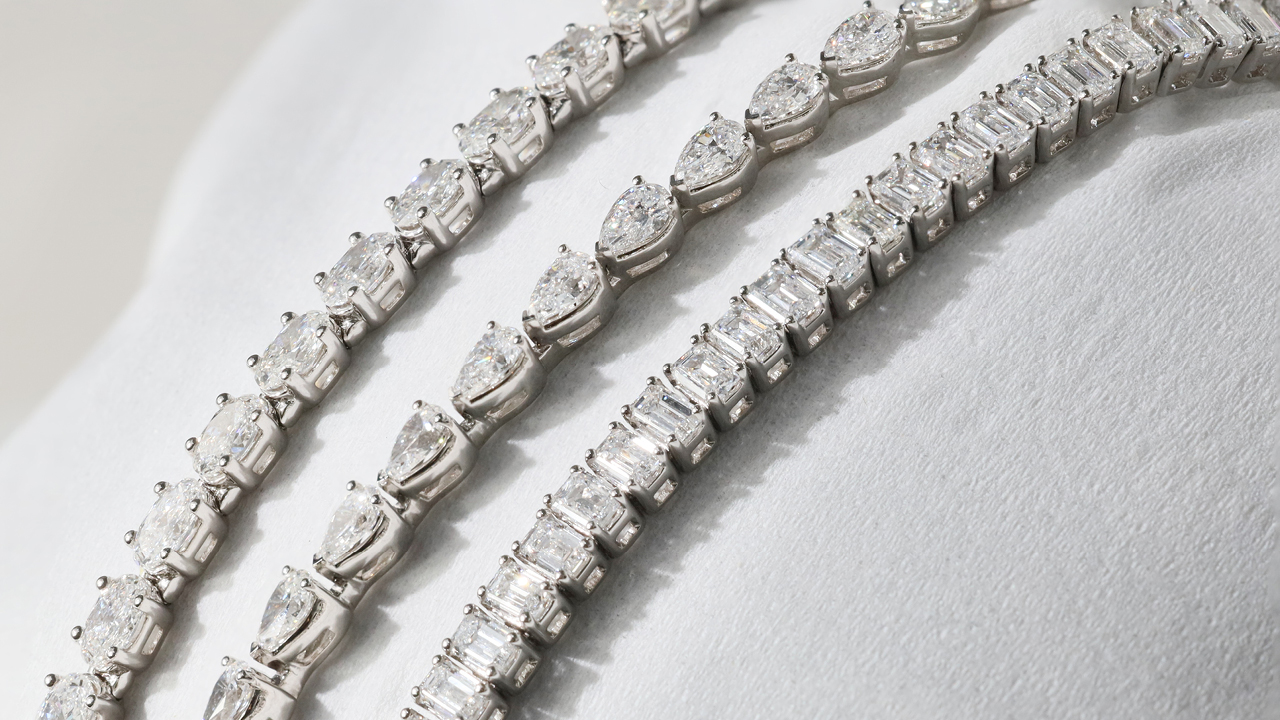
Its product strategy has also evolved. Silver, vermeil, and lab-grown diamonds now account for about half of the company’s business. “In 2025, there was great demand for lab-grown diamond jewelry such as solitaires, tennis bracelets, and lightweight daily-wear pieces,” says vice president of sales Simran Shah. Today’s consumer behavior reinforces that trend: Rings and earrings still dominate, but demand has continued moving toward ease, versatility and minimalist design.
“[Product] diversification is the go-to solution,” says the sales VP, adding that Kama has further sharpened its positioning by “emphasizing design-led, higher-end jewelry in the $2,000-plus range, and collaborating more closely with global partners to align pricing dynamics.”
Flexibility in terms of materials remains key for Silver Creations as well. The jewelry manufacturer has supplied sterling-silver and fashion pieces to US retailers for nearly three decades. Seth particularly highlights his company’s ability to incorporate gemstones and pearls “at a good price point.” The latest tariff reductions have buoyed sentiment, he reports, and he hopes business will “flow to India once again for mass-market affordable jewelry.”
Retail abroad
Meanwhile, leading Indian retailers such as Tanishq, Kalyan Jewellers, and Malabar Gold & Diamonds continue to expand their presence across the US.
India’s state-sponsored Gem & Jewellery Export Promotion Council (GJEPC) helps facilitate efforts like these, “working with government bodies and regulators to streamline exports and compliance,” comments council chairman Kirit Bhansali.
“Tariffs impact not only exports from India, but also Indian jewelry retailers operating in the US, as higher duties directly affect pricing and market viability,” he adds.
Gem Plaza’s Dhaddha is also creative director of jeweler Gyan Jaipur, which, as a brand that sells in the US, found itself “unable to replenish our inventory for the last eight months,” he says. With supply restored since the drop in tariffs, demand remains broad-based: “The US has a higher consumption appetite; there is demand for all kinds of jewelry.”
In January, India and the EU reached a free-trade agreement that GJEPC executive director Sabyasachi Ray called “a transformative opportunity for India’s gem and jewelry sector” — one he predicted would strengthen competitiveness and long-term growth. As governments negotiate frameworks and trade envoys delve into the minutiae of the US tariffs, cautious exporters in India are increasingly adapting to ensure that even in a complex, demanding market, India’s role remains not only relevant, but essential.
The bigger economic picture
The macro impact of the US tariffs on India has been significant. Exports to the US dropped sharply between April and December 2025, according to a report by India’s Gem & Jewellery Export Promotion Council (GJEPC). The period’s outbound gem and jewelry shipments fell 44% year on year to $3.86 billion, with December exports down more than 50% from a year earlier, it said.
For the industry, this decline highlights the tension between tariffs and manufacturing economics. “Given the high value and low margin structure of the gem and jewelry industry, absorbing elevated import tariffs is commercially unviable,” asserts GJEPC chairman Kirit Bhansali. At the same time, relocating production to the US is not a straightforward alternative; manufacturing in high-cost markets entails “substantially higher operational and compliance expenses,” he says, leaving “no clear break-even point where tariffs alone justify shifting production.”
India’s competitive assets, Bhansali argues, are its “integrated ecosystem, skilled workforce, and scale.” These “continue to make it the most efficient manufacturing hub for jewelry” in a world where efforts to find lower-duty locations for production have fragmented the global supply chain.
In the short term, he says, the local industry could spread the tariff-related costs out via “a shared approach across manufacturers, retailers, and sometimes even consumers,” but the shifting duty rates make business planning difficult. To succeed in the long term, he stresses, the trade needs a reasonable, stable tariff structure and “predictable trade frameworks” that support both Indian exporters and Indian retailers operating in the US.
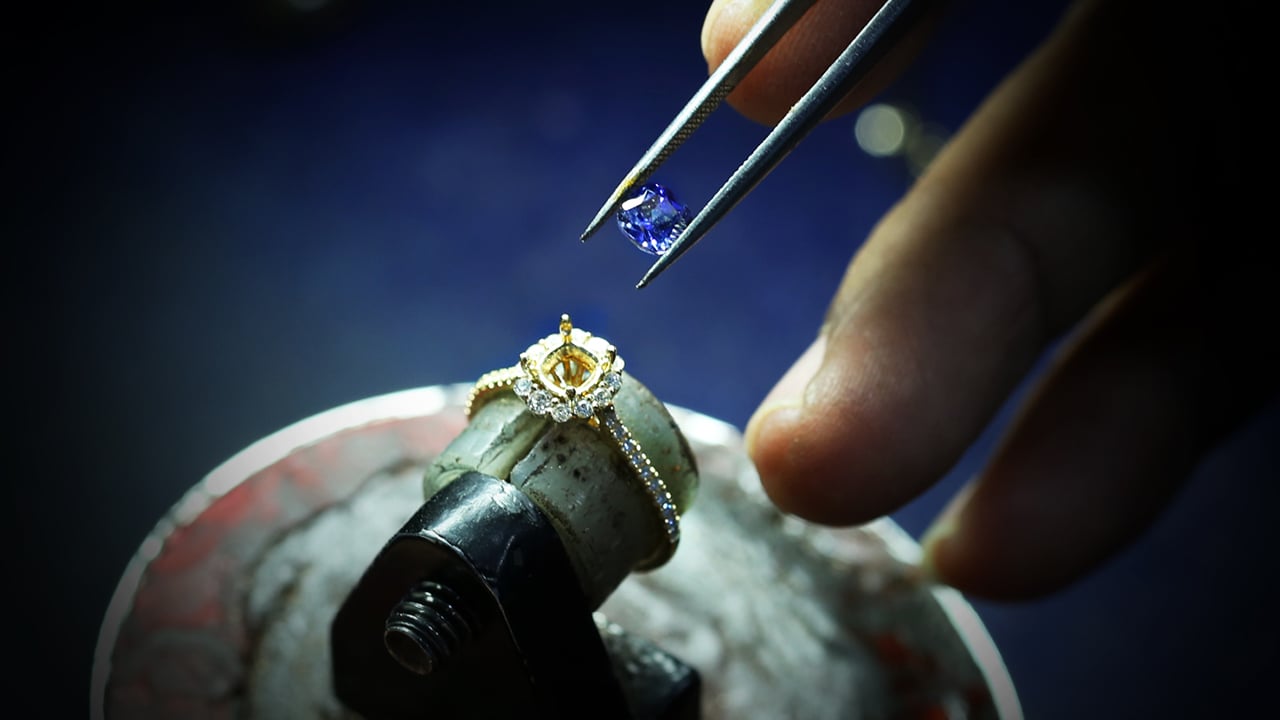
Main image: Stone-setting at Kama Jewelry. (Kama Jewelry)