 WhatsApp
 Email
Email
 Facebook
 Twitter
 LinkedIn

The global colored-gemstone industry is navigating an unusual contradiction: Demand has softened in several key consumer markets, yet prices for fine material remain elevated. The supply of top-quality stones is constrained, and structural disruptions continue to intensify in trade, policy and mining. What once moved freely across borders is now subject to layered tariffs, origin scrutiny and rerouted supply chains. At the same time, cultural visibility for colored gems has never been higher, from global celebrity moments to a sustained shift toward color in engagement rings.
In its November assessment of the personal luxury-goods market, Bain & Company estimated the sector’s global value for 2025 at EUR 358 billion ($419.72 billion) — down 2% from peak post-pandemic levels. While jewelry stood out as the strongest-performing category last year — it grew an estimated 4% to 6% — that resilience in finished pieces masks significant stress within the colored-gem supply chain itself.
Opal dealer Damien Cody describes a global market struggling under the weight of broader economic uncertainty. Most members of the International Colored Gemstone Association (ICA) — of which Cody is president — “are reporting slow demand,” he says, adding that the appetite for colored gems is down approximately 30% on average from 2022. “Global economic doldrums, driven by factors like wars, conflicts and trade barriers, have significantly impacted demand. China’s economic growth has slowed to about 4.8%, and although India remains relatively stable around 7%, the US — the world’s biggest jewelry market — is at 2%, and Europe at 1.5%. These low growth numbers mean the world is in a tough economic spot, making consumers lack the confidence to purchase discretionary items like jewelry.”
A promising shift
Yet the picture is not entirely bleak. Many jewelers and suppliers saw renewed momentum at recent trade shows, including Hong Kong’s Jewellery & Gem World and the Bangkok Gems & Jewelry Fair, both in September 2025 and both delivering stronger-than-expected sales. These green shoots suggest that while buyers remain cautious, they are not disengaged.
In the US, the bridal market continues to be a major bright spot. Veteran dealer and designer Kimberly Collins estimates that demand for colored gems at her eponymous business has risen 30% to 35% since the pandemic, with 2025 being her strongest year to date. She continues to see a substantial interest in premium-quality gemstones and bespoke jewelry.
What differentiates the current surge from earlier ones, she says, is how consumers educated themselves about color during the lockdown years. With smartphones and digital platforms continually exposing them to the joys of gems, people expanded their taste horizons beyond diamonds.
At the same time, price volatility in both the natural- and synthetic-diamond markets has prompted some buyers to reassess where they direct their spending. Collins now receives at least one inquiry a day for a colored-gem engagement ring.
“Many diamond dealers and jewelers [are] actively investing in colored gemstones today, as relying solely on white diamonds feels increasingly risky,” affirms Marco Hadjibay, creative director of New York-based house Bayco Jewels.
Celebrity influence has also played a role. From the star-studded Ambani wedding in July 2024 — still a talking point among US clients, according to Collins — to major-league baseball players wearing sapphire and rainbow tennis necklaces during games, the gemstone category has benefited from high-visibility cultural moments that reinforce its desirability.
Up for investment
From a retail and investment perspective, colored-stone prices are going up, and Hadjibay points to two main reasons.
“First, the weakening US dollar against key producing-country currencies has had a direct inflationary effect on gemstone costs. Colombian emeralds, for example, have risen close to 20% purely on exchange rates alone,” he explains. “Second, demand for very fine gemstones is extremely strong. Wealthy buyers globally are looking for tangible assets that can travel with them, and high-quality rubies, sapphires, emeralds and rare stones like fine Paraiba tourmalines fit that brief perfectly. With supply so limited at the top end, scarcity is inevitably pushing prices higher.”
The structure of the luxury market itself has changed dramatically in the US, according to Hadjibay. “There is no real jewelry-buying middle class anymore. The $5,000 to $25,000 segment, which once formed the backbone of the American market, has softened as living costs have surged. Jewelry is the ultimate luxury, not a necessity. Europe remains subdued post-Covid-19 and due to geopolitical uncertainty, [while] Asia is cautious, and even the Middle East fluctuates with regional developments.”
Skyrocketing prices
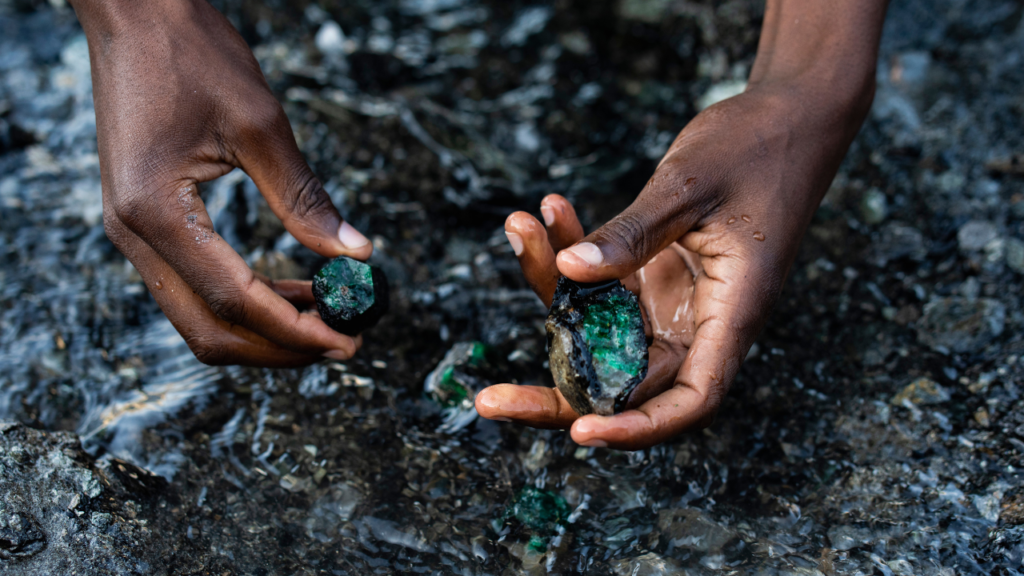
While demand has cooled moderately, prices for fine colored stones have risen sharply since the pandemic, putting pressure on dealers’ margins.
Colored-gem specialist Jay Pungalia, director of Signature Collection Jewelry, deals mainly in top-quality rubies, emeralds, sapphires and garnets — specifically tsavorite, or grossular green garnet, and bright orange spessartite. Zambian emerald prices have increased by 25% to 30%, he reports, while untreated samples of tsavorite, calibrated pink sapphires, and single blue sapphires weighing more than 3 carats have all increased by more than 50% since the pandemic. Mahenge spinels have shot up by more than 150% for exceptional material.
“But if we look at the price movements of the same gemstones in the last 12 months, prices of tsavorite have gone down by 15% to 20% because the main buyers were from China, and they are not readily accepting the elevated prices,” adds Pungalia, who supplies clients in the US, Hong Kong and India. “Rubies, Zambian emeralds, and spessartite garnets have continued to appreciate.”
From her trading experience in the US, Collins has found that “Colombian emeralds are topping the charts as most expensive, while Zambian emeralds have gone up as well, with few buying opportunities at attractive levels. Sapphires, particularly teal, mint and green tones used heavily in US bridal, have seen the strongest appreciation; finer material across all colors is likewise up 25% to 30%. Tourmaline has seen significant appreciation, with some lagoon and bi-color material nearly doubling. Mozambican Paraiba has moved from roughly $7,000 per carat to $10,000 to $12,000 per carat for fine qualities. Blue zircon, particularly Cambodian, is up around 30%.”
Bangkok-based KV Gems, which counts top jewelry brands in the US and Europe among its clients, confirms a similar trend. “A 1-carat untreated, loupe-clean royal-blue sapphire that earlier traded at near $3,000 per piece now sells in the $4,000 to $5,000 range,” reports managing director and partner Maria Belmont. “[Since] the September show in Hong Kong, the market has been quiet, but pricing remains firm because replacement cost is high. Goods between 1 and 5 carats are currently far more liquid than stones above 10 carats, where fewer transactions are taking place.”
Holding strong at the high end
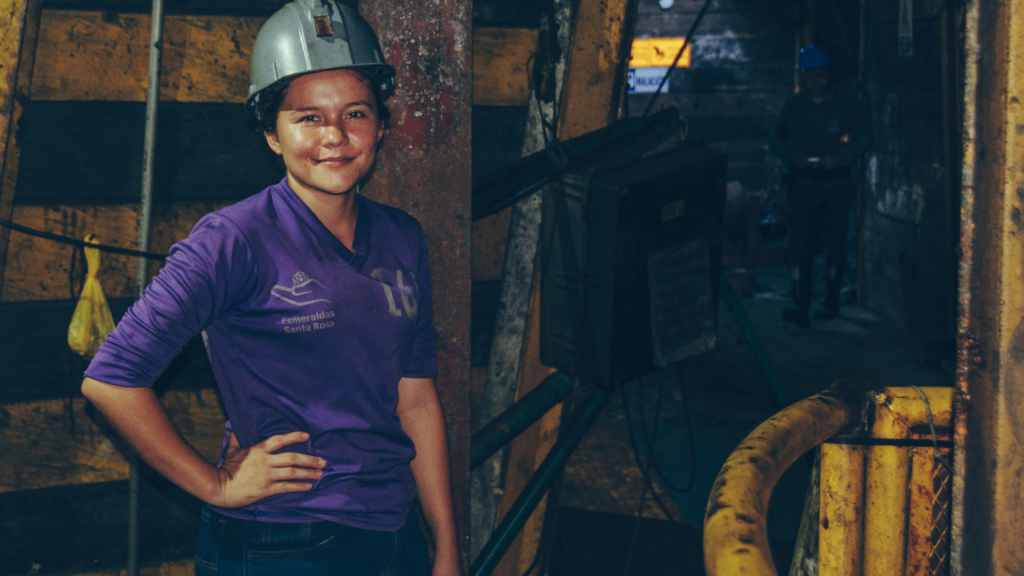
Despite escalating costs, dealers report limited resistance from buyers when stones are untreated and check all the boxes of top color, cut, clarity and crystal quality. Replacement difficulties, rather than speculative pricing, underpin much of today’s price structure. Most in the industry confirm that while demand has softened overall, the limited supply of fine-quality stones is keeping prices stable.
Even as 2026 opens with unresolved structural uncertainty, the colored-gem world remains resilient. It’s no longer operating on historical cycles of boom and correction alone — tariffs, security risks in source countries, redirected supply chains, lower demand, and other factors are shaping the market — but pricing power at the top end remains firmly intact. In a trade now defined as much by geopolitics as by beauty and rarity, colored gemstones are holding their own — not as discretionary indulgences, but as assets in a permanently altered global marketplace.
Main image: A selection of spinels from 3090 Gems. (3090 Gems)