 WhatsApp
 Email
Email
 Facebook
 Twitter
 LinkedIn

If one force has fundamentally altered colored-gem trade mechanics in 2025, it is the US import tariffs.
The current tariff framework represents “the biggest story in the industry in 50 years,” according to third-generation miner and tsavorite merchant Bruce Bridges, who serves as president of the American Gem Trade Association (AGTA).
Loose colored stones have historically entered the US duty-free. That changed on April 2 last year, when President Donald Trump imposed country-specific tariffs on gemstones and jewelry, layering that on top of the long-standing 6% import duty on set jewelry. Initial rates reached 44% for Sri Lanka and approximately 37% for Thailand.
AGTA’s central lobbying objective in 2025 was securing relief through Annex III of the Potential Tariff Adjustments for Aligned Partners Executive Order, which now allows zero-tariff entry for loose colored stones and natural pearls as long as their origin countries have signed framework trade agreements with the US. Europe has already secured Annex III status. Thailand and Vietnam have signed framework agreements, and the process of adding them formally to the exemption list was still underway as of press time.
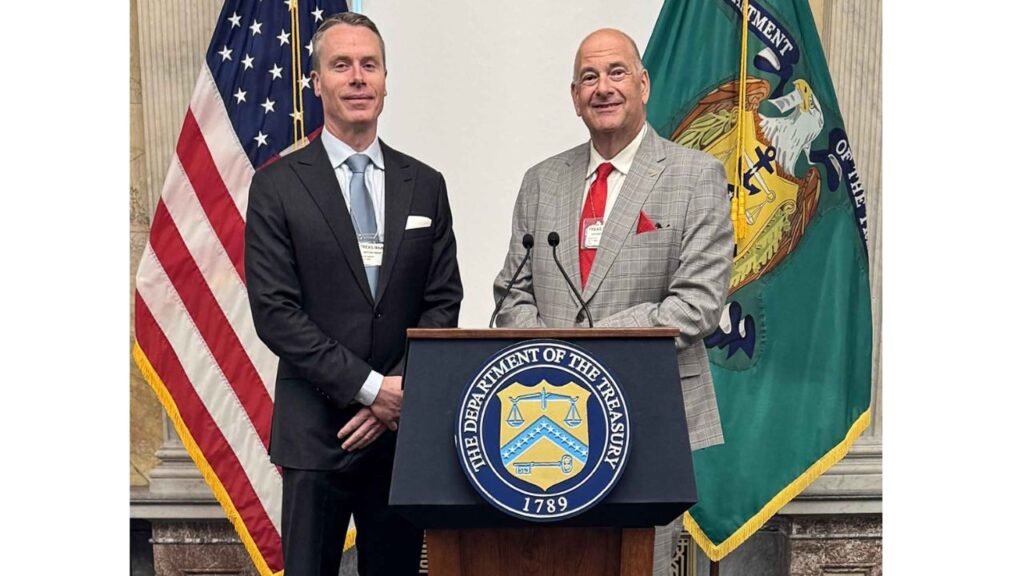
“Geologically, colored gemstones simply do not occur in the United States in commercial quantities or qualities necessary for the industry,” explains Bridges. “We are dependent on imports for more than 99% of the colored gemstones we work with.”
Traders’ current business models make the tariffs even more of an imposition than they would have been in the past, he adds. “Veteran dealers will tell you the trade once operated on deep inventory, especially in the 1970s, ’80s and ’90s. Today, that model has shifted almost entirely to memo. Jewelers keep extremely tight control on buying, and very few carry large inventories anymore.” This means most jewelers tend to import goods as needed, so “tariffs only compound the pressure: They work directly against the growth of US jewelry manufacturing by making essential raw materials both harder to source and far more expensive.”

It’s hard to overstate the importance of getting Thailand its exemption status. Bangkok remains the global hub for cutting, sorting and redistributing rubies and sapphires. “Most of the gem business is operating on the hope that when Thailand opens up, the world will in turn open up,” Bridges says.
Beyond tariff rates, exporters now face heightened scrutiny from US Customs over proof of origin. Anyone declaring goods as cut and polished in Annex III countries must have supporting invoices for rough importation, cutting records, and — in some cases — evidence of the business’s in-house production capacity. If customs deems the documentation insufficient, shipments risk rejection and return, increasing financial and operational risk across the trade.
Main image: Gemstone cutting processes in Bangkok. (Gem and Jewelry Institute of Thailand)