 WhatsApp
 Email
Email
 Facebook
 Twitter
 LinkedIn

At the top end of the diamond market, determining value is an entirely different ballgame. Standard reference points like price lists, per-carat averages, and even traditional scarcity models cease to apply in a category where the driving force is buyer appetite for extraordinary assets.
The Record-Breaking Diamonds report from the Natural Diamond Council (NDC) sets out to spotlight this ultra-high-end segment by analyzing the largest and most valuable diamonds ever recovered, cut, and sold. Drawing on mining data, gemological research, and auction results, the report explores how extreme rarity functions within the natural-diamond supply chain.
The invaluable X-ray
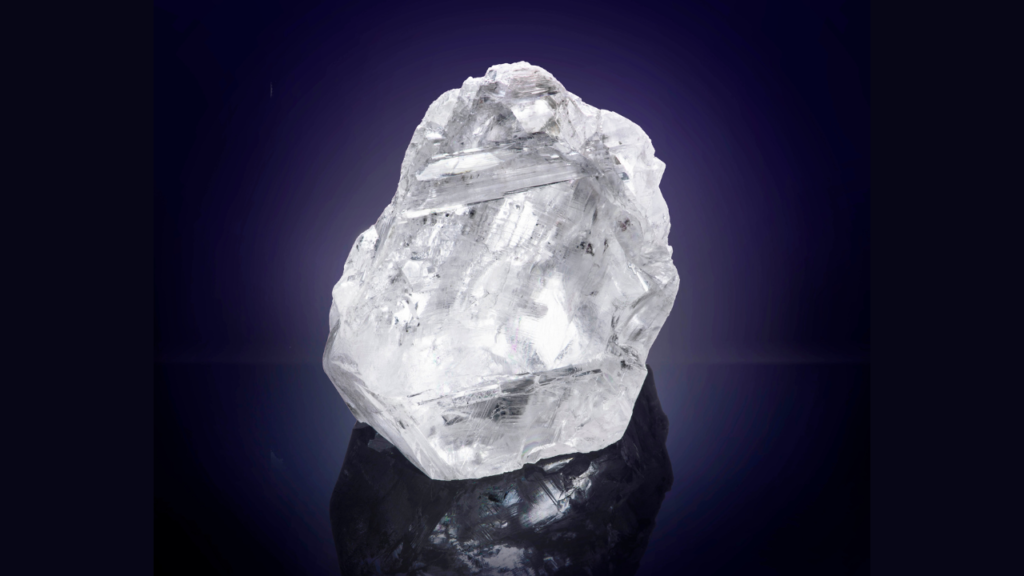
One of the report’s most interesting findings is how long the market had to wait for another massive diamond after the 1905 discovery of the Cullinan diamond in South Africa. Weighing 3,106.75 carats, the stone set a benchmark for what the industry perceived as a large rough diamond, and it stood unchallenged for more than a century: Until 2015, no one anywhere in the world unearthed another gem-quality diamond exceeding 1,000 carats.
The dry spell ended that year with the 1,109-carat Lesedi La Rona from Botswana’s Karowe mine, which marked the beginning of a measurable shift in the recovery of large diamonds. Since then, at least nine rough diamonds weighing more than 1,000 carats have come to light, including two exceeding 2,000 carats: the 2,488-carat Motswedi in 2024, and a 2,036-carat, near-gem-quality rough diamond in July 2025. Both came from Karowe, and the former now ranks as the second-largest gem-quality rough diamond in the world.
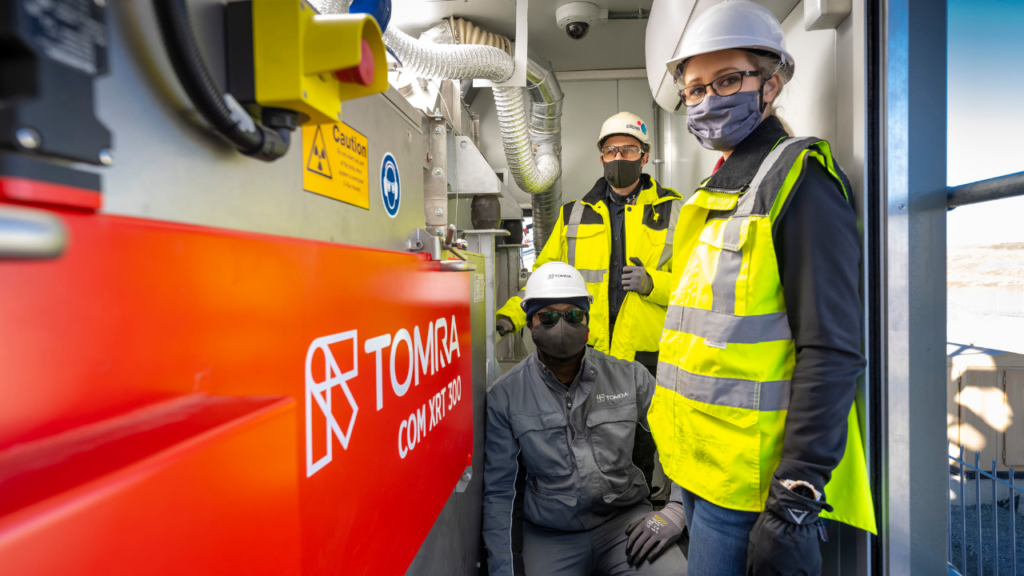
The increase in such finds does not indicate a surge in the number of discoverable large diamonds, but an improvement in how miners are extracting rough. The widespread adoption of X-ray transmission (XRT) technology has allowed them to detect diamonds based on density differences before ore reaches the crushing circuit. This significantly reduces the risk of fracturing large stones during processing.
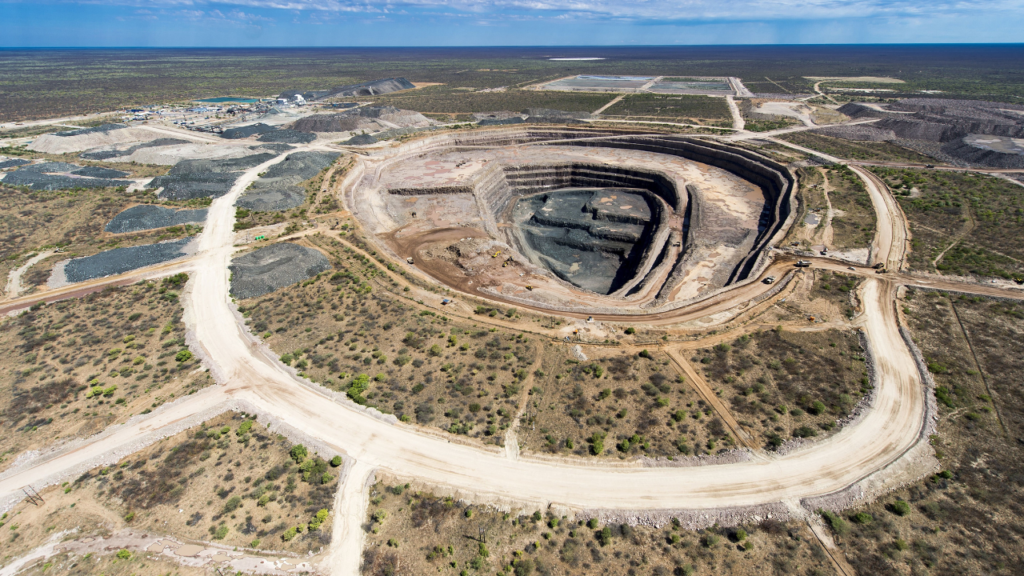
The numbers show a strong correlation between XRT deployment and the recovery of exceptional diamonds. Lucara Diamond Corp.-owned Karowe — which installed XRT technology in 2015 and introduced a Mega Diamond Recovery (MDR) system two years later to protect exceptionally large stones — accounts for the majority of super-sized diamonds that have appeared in the past decade. Other mines that have adopted similar systems, including the Cullinan deposit and Lesotho’s Letšeng site, have also reported an increase in large, high-value stones.
While the number of such diamonds entering the market has risen since 2015, they remain extremely limited in absolute terms. Even with modern mining technology, diamonds weighing more than 1,000 carats are statistical outliers.
The superdeep segment
Size, however, is only one component of value at this level. The case studies the NDC selected for its report show that many of the world’s largest diamonds are type IIa, meaning they contain no measurable nitrogen impurities. These chemically pure, highly transparent stones account for an exceptionally small fraction of global diamond production.
Some type IIa diamonds form at depths far greater than the norm, typically between 360 and 750 kilometers beneath the Earth’s surface, according to the Gemological Institute of America (GIA). These so-called “superdeep” diamonds belong to a distinct population known as Cullinan-like, large, inclusion-poor, pure, prismatic, irregular, resorbed (CLIPPIR) diamonds. The extreme pressures, chemically isolated environment, and nitrogen-poor conditions of superdeep formation allow the diamonds to grow slowly and without interruption, producing unusually large crystals with very few defects.
On the market, these diamonds form a segment where pricing behaves differently from the rest of the trade; their per-carat prices no longer scale predictably with size. Take Lucara’s 2016 sale of the Constellation diamond: At 812.77 carats in its rough form, it went for $63.1 million, making it the most expensive rough diamond ever sold. On a per-carat basis, the price far exceeded anything an uncut stone had previously achieved, reflecting the confidence that buyer Nemesis International had in the diamond’s quality and potential yield.
Flying colors
In the polished market, the 59.60-carat CTF Pink Star remains the most expensive diamond ever to sell at auction, having achieved HKD 553 million ($71.2 million) at Sotheby’s Hong Kong in 2017. While it was the total price that secured the record, subsequent sales have shown that per-carat value is often a more meaningful indicator of demand.
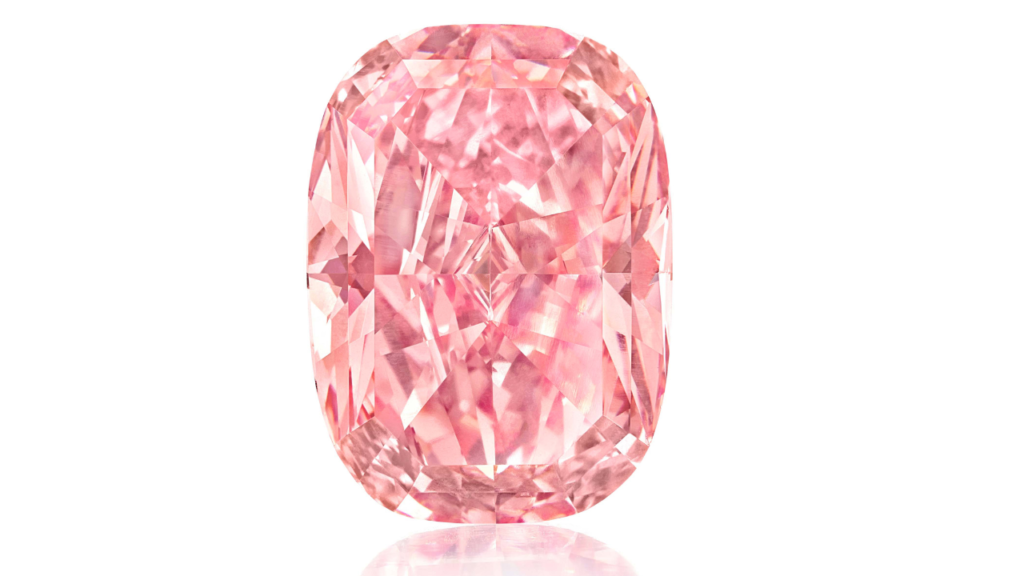
Five years later, the 11.15-carat Williamson Pink Star sold for HKD 453.2 million ($57.7 million) at a 2022 Sotheby’s auction, equating to more than $5 million per carat (compared to a little over $77,635 per carat for the CTF Pink Star). This remains the highest per-carat price a diamond has ever achieved.
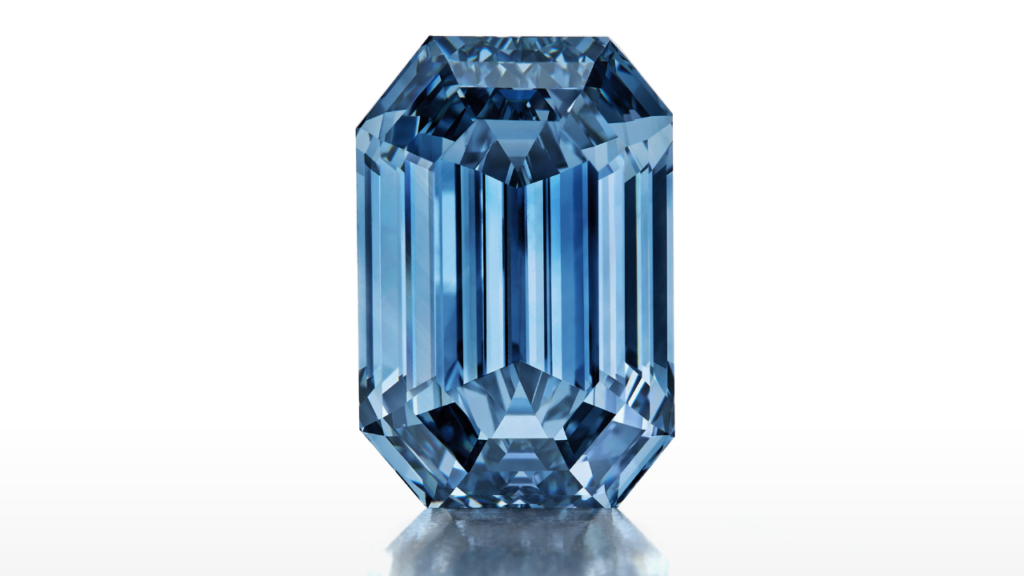
An interesting example of blue-diamond auction prices is a comparison between the two highest-grossing entries in that category: the Oppenheimer Blue and the De Beers Blue. Weighing 14.62 and 15.10 carats respectively, the emerald-cut, internally flawless Oppenheimer Blue and the cut-cornered rectangular, VVS1 De Beers Blue differ only slightly in size and clarity. Despite selling six years apart — the Oppenheimer at Christie’s Geneva in 2016, and the De Beers at Sotheby’s Hong Kong in 2022 — they achieved an identical sum of $57.5 million.
Yellow diamonds tend to trade at a significant discount to pinks and blues, even in exceptional sizes. While the top five auction diamonds the report lists for both the pink and blue categories all sold for more than $1 million per carat, none of the top five yellows did. Leading the latter list is the 100.09-carat Graff Vivid Yellow, which sold at Sotheby’s in 2014 for $16.8 million — approximately $168,000 per carat.
What’s in a museum?
Of course, not all record-breaking diamonds enter the commercial market. As the report documents, some get removed from circulation and repositioned as institutional or cultural assets, where they continue to exert influence over market perception in a more subtle manner.
The 45.52-carat Hope Diamond, currently at the Smithsonian Institution’s National Museum of Natural History, is a clear example of such a stone. Since Harry Winston donated it to the museum in 1958, more than 100 million visitors have viewed the gem, making it one of the most publicly encountered diamonds in history.
The importance of exhibition stones like the Hope or the 140.64-carat Regent diamond at the Louvre in Paris lies less in their monetary value — which is no longer subject to market forces — than in their status as reference points for scale and rarity. They reinforce the idea that certain natural diamonds are effectively irreplaceable, and provide historical context for new records. When a diamond achieves a headline price or per-carat benchmark, people implicitly measure it not only against recent auction results, but against a longer line of stones that have defined the limits of the category. By anchoring the narrative of rarity over decades — and in some cases, centuries — museum diamonds play a quietly powerful role in helping the market achieve those record-breaking moments for natural-diamond prices.
Main image: The Williamson Pink Star diamond in a ring that sold for HKD 453.2 million ($57.7 million) at a 2022 Sotheby’s auction. (Sotheby’s)